

That annoying, slow-draining kitchen sink isn't just a minor hassle – it's a clear warning sign. More often than not, the culprit is a slow, sneaky buildup of fats, oils, and grease (we call them FOGs in the trade). As they cool, they solidify inside your pipes, creating a sticky trap that catches every little bit of food and debris that follows. Before you know it, you're looking at a sink full of murky, stagnant water. Dealing with a stubborn blockage is a common reason people search for a plumber near me, hoping for a quick fix.
Understanding What’s Really Causing Your Kitchen Sink Clog
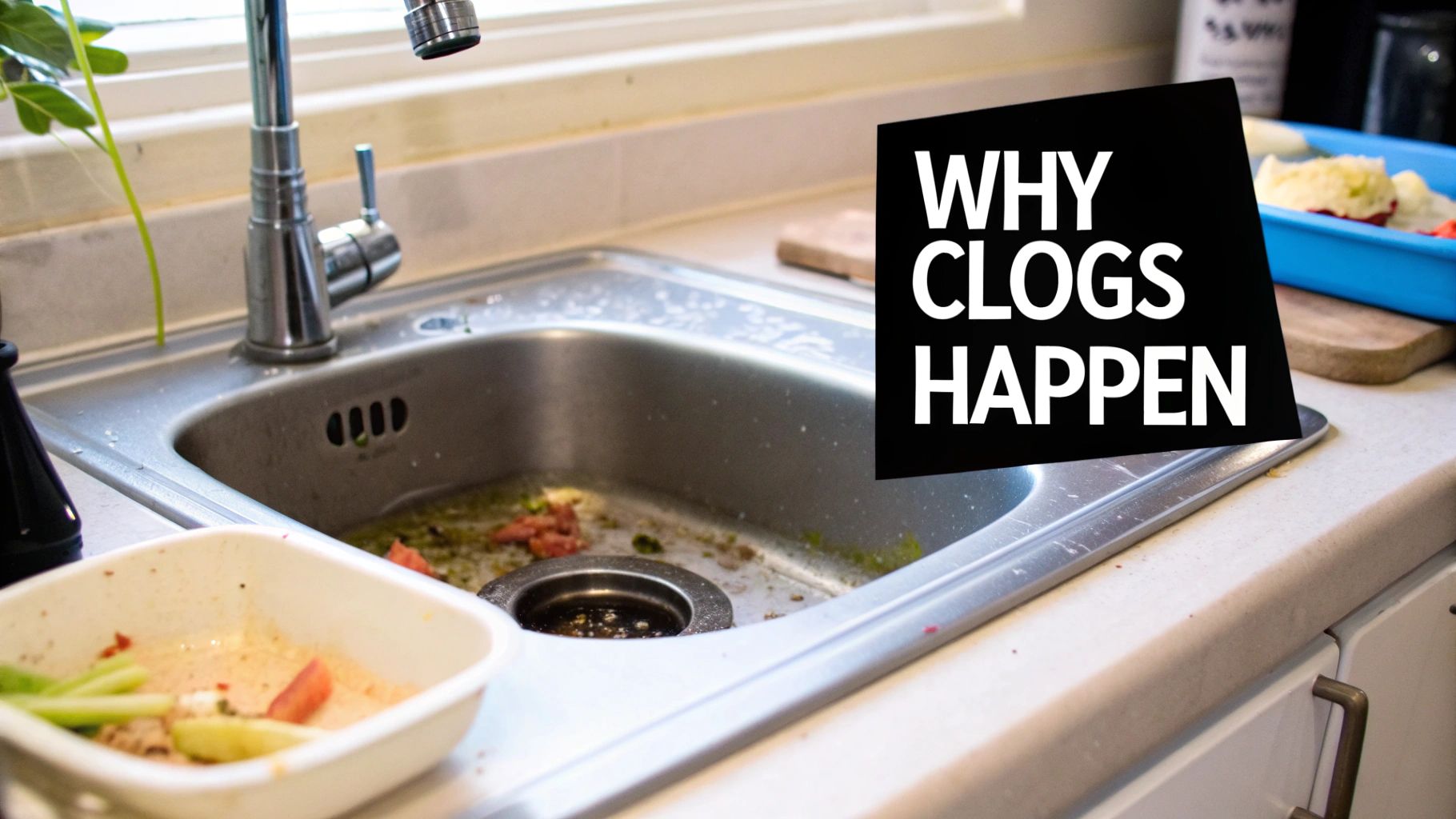
It always starts small. A drain that takes just a few seconds longer than usual. But over time, seemingly harmless habits in the kitchen can snowball into a major plumbing headache.
This isn't just about the inconvenience, either. It can get expensive, fast. Blocked drains are a massive driver of home water damage. In fact, claims data shows that blocked drains account for 13.4% of all water damage incidents in Australia, making them a top reason for home insurance claims. It really puts into perspective how a simple sink issue can escalate into a serious financial problem. You can dig into more data on water damage claims to see the full picture.
The Usual Suspects Behind a Blockage
From my experience, it’s almost always the same few things causing the blockage. Knowing what they are is half the battle.
- Fats, Oils, and Grease (FOGs): These are public enemy number one for drains. You pour hot liquid grease from the pan down the sink, and as soon as it hits the cold pipes, it turns into a solid, waxy mess. It's the perfect glue for everything else.
- Food Scraps: Little bits of food add up. Starchy things are the worst – think rice, pasta, and even coffee grounds. They absorb water, swell up, and create a dense, stubborn plug.
- Soap Scum: Your old-school bar of soap often has fats in it. This residue mixes with the minerals in your water and forms a hard, chalky buildup that slowly but surely narrows your pipes.
If you find yourself dealing with the same clog over and over, it’s a sign of a deeper problem. It means there’s already a significant buildup in there, and every new scrap of food just makes the existing blockage worse.
How a Small Problem Gets Big
A minor clog is like a net. It catches more and more gunk as water struggles to get past, turning a slow drain into a complete standstill. All that pressure building up behind the clog puts a huge strain on your pipework, which can eventually lead to leaks or even a burst pipe.
For homeowners in suburbs like Balwyn, getting professional help is easy. A good plumber in Balwyn can quickly tell you if it's a simple blockage you can fix yourself or a sign of something more serious further down the line. The trick is to tackle it early, before it turns into a costly, messy emergency. If you're wrestling with a persistent kitchen sink clog, getting an expert diagnosis from us at Amari Plumbing can save you a world of stress and money. We also serve as a trusted plumber in Hawthorn and plumber in Kew.
Simple Fixes You Can Try Right Now
Before you reach for the heavy-duty chemicals or pick up the phone, let's get that slow-draining sink sorted with a few simple tricks. Nine times out of ten, these first-line defences will clear up a minor kitchen sink clog without much drama. Always start with the gentlest method first.
The boiling water flush is the easiest place to start. Just boil a full kettle and pour it slowly, directly down the drain. You'd be surprised how often this works to melt away the greasy, congealed fats and oils that are usually the first sign of trouble.
A quick word of warning, though: if you have PVC (plastic) pipes, stick to very hot tap water instead of boiling. The intense heat can sometimes soften or damage the pipe joints over time. For metal pipes, boil away—they can handle it.
The Classic Baking Soda and Vinegar Trick
If hot water didn't quite cut it, it's time for a bit of a science experiment in your sink. The baking soda and vinegar combo is a classic for a reason. The fizzing reaction it creates is fantastic for dislodging stubborn gunk without being harsh on your pipes.
Here's how to get it right:
- First, the baking soda: Tip about half a cup of baking soda straight into the drain.
- Next, the white vinegar: Pour in half a cup of white vinegar right after. You’ll hear it start fizzing and bubbling straight away.
- Trap the reaction: Pop the sink stopper in to keep all that fizzy action down in the pipes where it needs to be. Let it work its magic for 15-20 minutes.
- Flush it out: Pull the plug and flush everything through with another kettle of hot water (or hot tap water if you have PVC pipes).
This natural approach is brilliant for breaking down food bits and getting rid of those nasty odours that often come with a clog.
Mastering the Plunger
When you need a bit more muscle, a plunger is your best friend. But there's a definite technique to it. For a kitchen sink, you’ll want a standard cup plunger, not the flanged one you use for the toilet.
The real secret to plunging isn't just brute force—it's all about creating a perfect seal. Without it, you're just splashing water everywhere. Run a few inches of water into the sink to completely cover the plunger's cup. This gives you the hydraulic pressure you need to actually push the blockage out.
Got a double sink? Make sure you stuff a wet cloth into the drain on the other side. This stops the pressure from escaping and focuses all the force right down onto the clog. Once you've got your seal, give it a series of firm, sharp pumps.
These DIY fixes will sort out most minor blockages. But if you’ve tried them all and the water is still stubbornly backing up, that’s a sure sign the problem is a bit more serious. For those persistent issues, it’s often best to call an expert team of plumbers in Doncaster before a small headache turns into a massive, messy one.
How to Tackle More Stubborn Clogs
So, you’ve tried boiling water and the plunger, but that water is still just sitting there. This is a classic sign that your kitchen sink clog is a bit more serious. Most of the time, the real culprit is hiding in the P-trap—that U-shaped bit of pipe tucked away under your sink.
That curve is designed to hold a bit of water to keep nasty sewer gases from creeping into your kitchen. Unfortunately, it's also the perfect spot for grease, food scraps, and all sorts of other gunk to build up and cause a solid blockage.
Time to roll up your sleeves. You'll need a few basic tools, a bucket, and a little bit of confidence. First things first, get that bucket or a big bowl situated directly under the P-trap. Trust me, you'll want it there to catch the water and grime that’s about to come out. A pair of slip-joint pliers or a pipe wrench will also come in handy for loosening the nuts holding the trap.
Clearing the P-Trap
With your bucket ready to go, use your pliers to gently loosen the two slip nuts at each end of the U-bend. They're often just hand-tight, but if they haven't been touched in a few years, they can be surprisingly stubborn.
Once they're loose, the P-trap should pop right off.
Carefully empty whatever’s inside into your bucket—you'll probably be surprised at what you find. Take the pipe over to another sink and give it a thorough clean. An old wire brush or even a toothbrush will work wonders for scrubbing away any leftover residue. When it’s looking clean, just put it all back together. Be careful not to overtighten the nuts, as you could crack the plastic.
This visual guide gives a good overview of the common first steps before you get into the more hands-on work like tackling the P-trap.
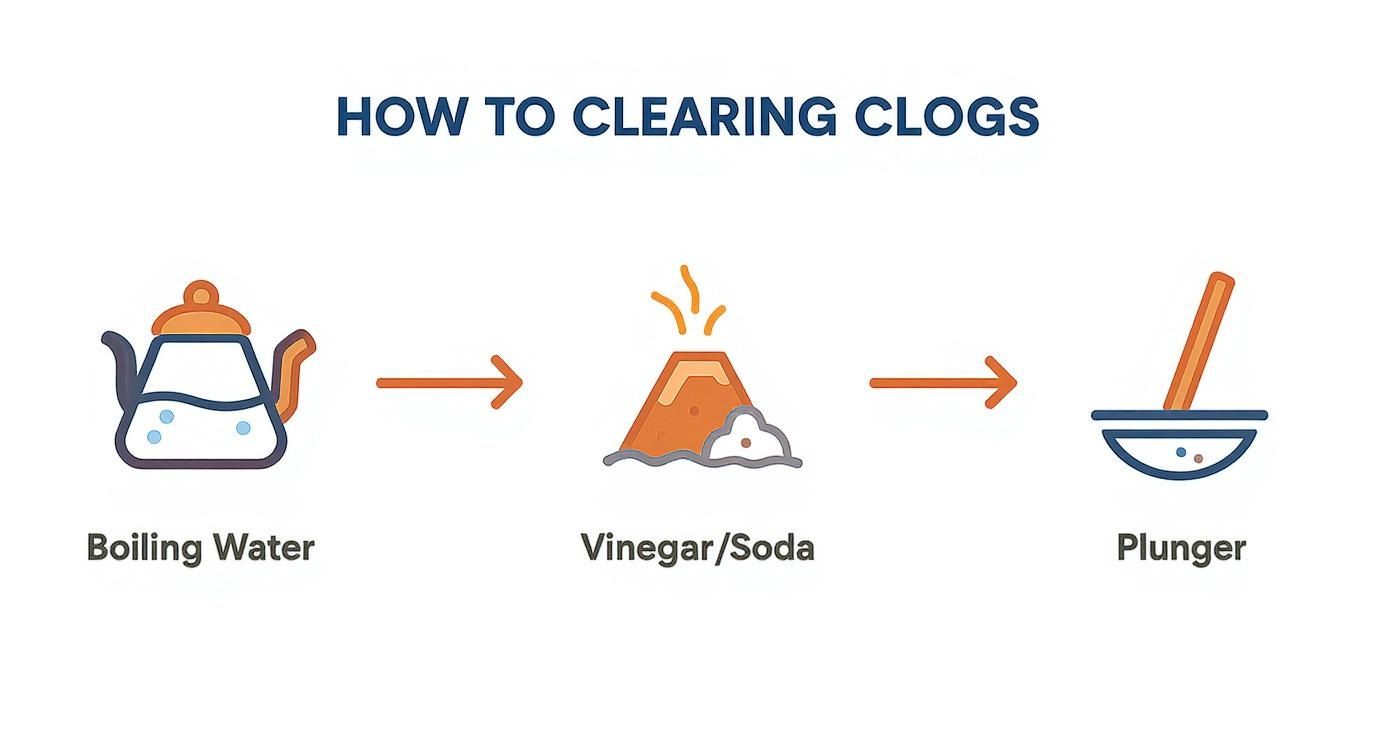
It’s all about starting with the simple stuff and only moving on to more involved methods if you have to.
Using a Plumber's Snake for Deeper Clogs
What if you clean out the P-trap and find the blockage is actually further down the line? This is when you bring out the big guns: a plumber's snake, sometimes called a drain auger. It’s basically a long, flexible steel cable that you feed into the pipe to either break up or pull out whatever is causing the trouble.
A quick word of advice when using a snake: take it slow and steady. Don't try to force it. When you feel resistance, you've probably found the clog. That's when you start turning the handle to let the tip work its magic, burrowing into the obstruction to break it apart.
With the P-trap still removed, you can insert the head of the snake directly into the drainpipe that goes into the wall.
- Feed the cable in: Gently push the snake's cable into the pipe until it stops.
- Rotate the handle: Start turning the auger’s handle clockwise. This motion helps the corkscrew tip grab onto the clog.
- Break it up or pull it back: You might feel the clog suddenly give way. If it feels like you've hooked something solid, slowly pull the snake back to drag the blockage out.
Once you’re done, reassemble the P-trap and run hot water down the sink for a few minutes to flush out any leftover debris. Deeper blockages can be a real pain, and for a more detailed walkthrough, you can check out our guide on how to clear blocked drains.
If you've tried all this and the sink is still blocked, that's a pretty clear sign the problem needs a professional with the right tools and experience.
Proactive Tips to Prevent Your Next Kitchen Sink Clog
Let's be honest, dealing with a kitchen sink clog is a massive pain. The best way to handle one? Stop it from ever happening in the first place. It’s all about shifting from frantically fixing blockages to adopting a few smart, proactive habits that keep your drains flowing freely. Our Melbourne plumbers see this daily: prevention is always better than cure.
The absolute golden rule is simple: never, ever pour fats, oils, or grease (we call them FOGs in the biz) down the sink. Sure, they’re liquid when they’re hot, but once they hit the cool pipes, they solidify into a gross, waxy mess. This gunk is a magnet for food scraps, creating the kind of stubborn blockages that bring your kitchen to a standstill.
This isn't just a problem for your house, either. FOGs are a major headache for our city's sewer systems. They clump together to form enormous blockages called 'fatbergs'—some weighing several tonnes—which can cause serious public health risks and are incredibly costly to remove. If you're curious, you can read more about how kitchen waste impacts urban sewer systems.
Simple Habits for a Clear Drain
A few tweaks to your daily kitchen routine can make all the difference. These small actions are your best defence against the slow, steady buildup that causes most clogs.
- Scrape Your Plates Clean: Before anything hits the sink, scrape every last bit of food into your compost or rubbish bin. This goes for pots and pans, too.
- Get a Good Sink Strainer: A decent mesh strainer is non-negotiable. It’s your drain’s last line of defence, catching a surprising amount of gunk that would otherwise head down the pipes.
- Give it a Weekly Hot Water Flush: Once a week, boil a full kettle and pour it slowly down the drain. This little ritual helps melt and wash away any greasy residue before it gets a chance to build up.
Think of your drain like any other part of your home that needs regular upkeep. A little prevention now saves you a world of messy, inconvenient hassle later.
What if it's the Pipes Themselves?
Sometimes, especially in older homes, recurring clogs aren't about bad habits at all. Old pipes that are cracked, corroded, or have slightly shifted joints can act like velcro for debris, causing constant blockages no matter how careful you are. This can lead to needing sewer relining or junction replacement.
Digging up floors and gardens to replace old pipes is a massive, expensive job. Thankfully, there are modern, trenchless alternatives. Techniques like pipe relining create a brand-new, seamless pipe inside the old damaged one. This seals up cracks and smooths out rough surfaces, giving you a long-term fix without the destruction.
If you suspect your plumbing is the real culprit, or if you're just sick of fighting the same clogs over and over, it’s time to get an expert opinion. Contact Amari Plumbing and Gasfitting today, and we’ll help you get to the bottom of it.
Knowing When to Call a Melbourne Plumber

While tackling a minor clog yourself can be satisfying, there are definitely moments when a bit of elbow grease just won't cut it. Sometimes, a DIY approach can even make things worse. Knowing when to put the tools down is crucial for preventing a small hassle from blowing up into a major, costly plumbing disaster. This is when you should find a plumber you can trust.
That stubborn kitchen sink clog might be more than just last night's leftovers; it could be a symptom of a much larger, hidden issue brewing deep within your pipes.
Ignoring the warning signs is a real gamble. A surprising number of water damage claims are tied back to clogged drains, often from things like grease and food scraps being washed down the sink. A professional drain clean might seem like an extra cost, but it's nothing compared to the potential bill for water damage repairs, which can easily climb to $10,000 or more. For a deeper look at the numbers, you can explore some of these water damage statistics and see just how risky it can be.
Critical Warning Signs to Watch For
If you spot any of these red flags, it’s time to back away from the sink and pick up the phone. These are clear signs the problem has moved beyond a simple blockage you can reach.
- Recurring Clogs: Is your sink blocking up every few weeks, no matter how careful you are? This almost always points to a deeper, more stubborn obstruction that your DIY attempts are only partially clearing.
- Water Backing Up Elsewhere: This is a big one. If running the kitchen tap causes water to gurgle up in your shower or bathroom sink, you're likely dealing with a blockage in the main sewer line. That's a serious issue needing immediate professional help from emergency plumbers in Melbourne.
- Persistent Foul Odours: A nasty sewer-like smell that lingers long after you've cleaned the sink is a bad sign. It often means organic matter is trapped and decaying deep in the pipes, or there's an issue with your drain's venting system.
- Strange Gurgling Sounds: Hear your pipes making loud, gurgling noises well after the water has drained? That’s the sound of trapped air being forced through a blockage, and it's a clear signal that something is obstructing the flow.
A professional plumber in Melbourne comes equipped with diagnostic tools, like drain cameras, that let them see exactly what’s happening inside your pipes. This is the only way to find the real source of the problem—whether it’s invasive tree roots, a collapsed section of pipe, or a massive grease buildup—and deliver a solution that actually lasts.
Should You DIY or Call a Professional Plumber?
Still on the fence? Use this quick guide to figure out if you should keep going or give Amari Plumbing and Gasfitting a call. We offer reliable commercial plumbing and residential services across areas like Bulleen, Camberwell, and Balwyn North.
| Symptom | Likely Cause | Recommended Action |
|---|---|---|
| Water drains slowly but doesn't stop. | Minor build-up of food, soap, or grease. | DIY First: Try hot water, a plunger, or a vinegar/baking soda mix. |
| The sink is completely blocked; no drainage at all. | A significant, solid clog in the P-trap or beyond. | Consider a Pro: If plunging fails, it might be too dense for DIY tools. |
| Foul odours persist after cleaning. | Decaying matter trapped deep in the pipes or a vent issue. | Call a Pro: This needs professional diagnosis to locate and remove the source. |
| Clogs keep coming back every few weeks. | A larger, downstream obstruction that isn't being fully cleared. | Call a Pro: A professional drain clean is needed to fix the root cause. |
| Water backs up in other drains (e.g., shower). | A blockage in the main sewer line. | Call a Pro Immediately: This is a serious issue requiring urgent attention. |
| Loud gurgling sounds from the pipes. | Trapped air being forced through a deep blockage. | Call a Pro: Indicates a significant obstruction that needs to be cleared. |
At the end of the day, if you’ve tried the simple fixes and the problem persists, or if you notice any of the more serious symptoms, calling in an expert is the smartest move.
The Value of Professional Expertise
Trying to force a snake through a major blockage without the right gear can easily damage your pipes, leading to cracks, leaks, or even a burst pipe. Our team can explain the real risks associated with burst water pipes and how to avoid them.
A trusted plumber in Balwyn won’t just get your sink draining again. They'll find and fix the root cause to make sure it doesn't happen all over again in a month. Our services also cover gasfitting in Melbourne, dishwasher installations, and fixing leaking taps.
If you're stuck with a stubborn blockage or see any of the warning signs above, don't hesitate. Contact Amari Plumbing and Gasfitting today for a fast, effective, and lasting solution.
Your Kitchen Sink Clog Questions Answered
Even after wrestling with a plunger, you probably still have a few questions about that stubborn kitchen sink clog. It’s only natural. We get asked a lot of the same things by homeowners all over Melbourne, so let’s get right into a few of the most common queries.
Are Chemical Drain Cleaners a Good Idea?
This is probably the number one question we hear. And our answer is almost always a hard no. While those bottles on the supermarket shelf promise a quick and easy fix, they’re often a recipe for disaster.
These harsh chemicals work by creating a powerful reaction to eat through the blockage. The problem? That same reaction can also eat through your pipes, especially if they're older metal ones. You might clear the gunk, but you could be causing long-term corrosion that leads to leaks and a much bigger repair bill down the track.
Why Does My Sink Keep Clogging?
It’s frustrating when you feel like you’re doing everything right, but the sink just keeps backing up. Often, the issue isn't what you put down the drain yesterday, but the slow, silent buildup of grease, food scraps, and soap scum over months or even years. If you need a Melbourne plumber to investigate, it's a wise choice.
Older homes, in particular, can have cast iron pipes with rough, corroded internal surfaces. These act like velcro for debris, making it incredibly easy for a new blockage to form.
What’s That Rotten Egg Smell Coming From My Drain?
Ah, the dreaded rotten egg smell. That’s almost certainly sewer gas making an unwelcome appearance in your kitchen. Your sink’s P-trap—that U-shaped pipe under the sink—is designed to hold a small amount of water that acts as a barrier, blocking these gases from coming up.
If that water barrier is gone because the trap has dried out, been knocked loose, or wasn't installed correctly, there’s nothing to stop that foul odour. The smell could also be from a nasty clump of rotting food stuck deep in the pipework.
A smelly drain is bad enough, but similar issues can pop up elsewhere in the house. If you're having trouble in the bathroom too, our guide on what to do when your toilet won't flush might shed some light on the problem.
Could My Dishwasher Be Causing the Sink to Block?
Absolutely. Your dishwasher and kitchen sink usually share the same drain line, so they're directly connected. Tiny food particles blasted off your plates during a wash cycle get sent down that same pipe.
If you already have a partial blockage from grease and other gunk, the sudden rush of water and food scraps from the dishwasher can be the final straw that clogs it completely.
Pro Tip: A classic tell-tale sign is water backing up into your sink when the dishwasher is running. That's a clear signal the shared drain can't handle the flow and needs a proper clean-out.
If you’ve tried all the DIY methods and you're still stuck with a slow drain, a persistent smell, or water backing up, it's time to call in the professionals. Don't let a small headache turn into a major plumbing emergency.