

Before you even think about reaching for a plunger or a chemical cleaner, you need to play detective. Figuring out what's causing the blockage is the single most important step. After all, the way you’d tackle a simple grease clog in the kitchen is completely different from fixing a sewer line choked with tree roots.
What’s Really Going on in Your Pipes?
A blocked drain is more than just a nuisance; it's your plumbing's way of telling you something's not right. Just ignoring it and hoping it goes away is a surefire recipe for a much bigger, more expensive headache down the track.
The first clues are usually pretty obvious. You might notice the sink takes forever to drain, or you hear strange gurgling sounds from the pipes after you flush the loo. Sometimes the problem is isolated, like a shower drain full of hair. But if you’ve got slow drains in multiple spots around the house, that could point to a more serious issue deeper in your main sewer line.
The Usual Suspects in Melbourne Homes
From what we see out on jobs every day, most household blockages come down to just a handful of culprits. Knowing what they are can help you get to the bottom of the problem much faster.
- Kitchen Sinks: This is almost always about grease, fat, and oil. People pour them down the sink, they cool off, and then they solidify on the pipe walls. It’s a sticky trap for food scraps, and it doesn't take long to build a seriously stubborn clog.
- Bathroom Drains: The classic combination of hair and soap scum is the villain here. It binds together to create these dense, matted blockages in showers, baths, and basins that can be a real pain to get rid of.
- Toilets: Toilets are only designed for two things: human waste and toilet paper. Anything else is asking for trouble. We constantly find wet wipes (even the so-called "flushable" ones), sanitary products, and cotton balls causing major obstructions because they simply don't break down. If you're dealing with toilet troubles, our guide on common reasons for running toilets might also come in handy.
It's a massive issue across Australia. We estimate that the improper disposal of fats, grease, and non-flushable items accounts for over 70% of kitchen blockages we see.
When It's a Bigger Problem Than a Simple Clog
Sometimes, the source of the blockage isn't even inside your house. In beautiful, leafy Melbourne suburbs like Kew and Camberwell, invasive tree roots are a huge problem. They're naturally drawn to the moisture in sewer pipes and can sneak in through the tiniest cracks, eventually growing so thick they completely block the line.
This is a serious job that definitely needs a professional. Getting it fixed properly can be a significant investment. For a simple, straightforward clog, you might be looking at $150 to $500. But for complex issues like tree root intrusion, the costs can climb much higher.
Your First Line of Defence: DIY Drain Clearing
That moment you notice the water draining just a little bit slower than usual… it’s tempting to ignore it and hope for the best. Or worse, to reach for that bottle of harsh chemical drain cleaner under the sink.
Hold up. Before you do either, know that most minor clogs are well within your power to fix yourself. Acting fast with the right approach can stop a small nuisance from becoming a full-blown plumbing nightmare.
First, let's play detective. A bit of diagnosis now can save you a massive headache later.
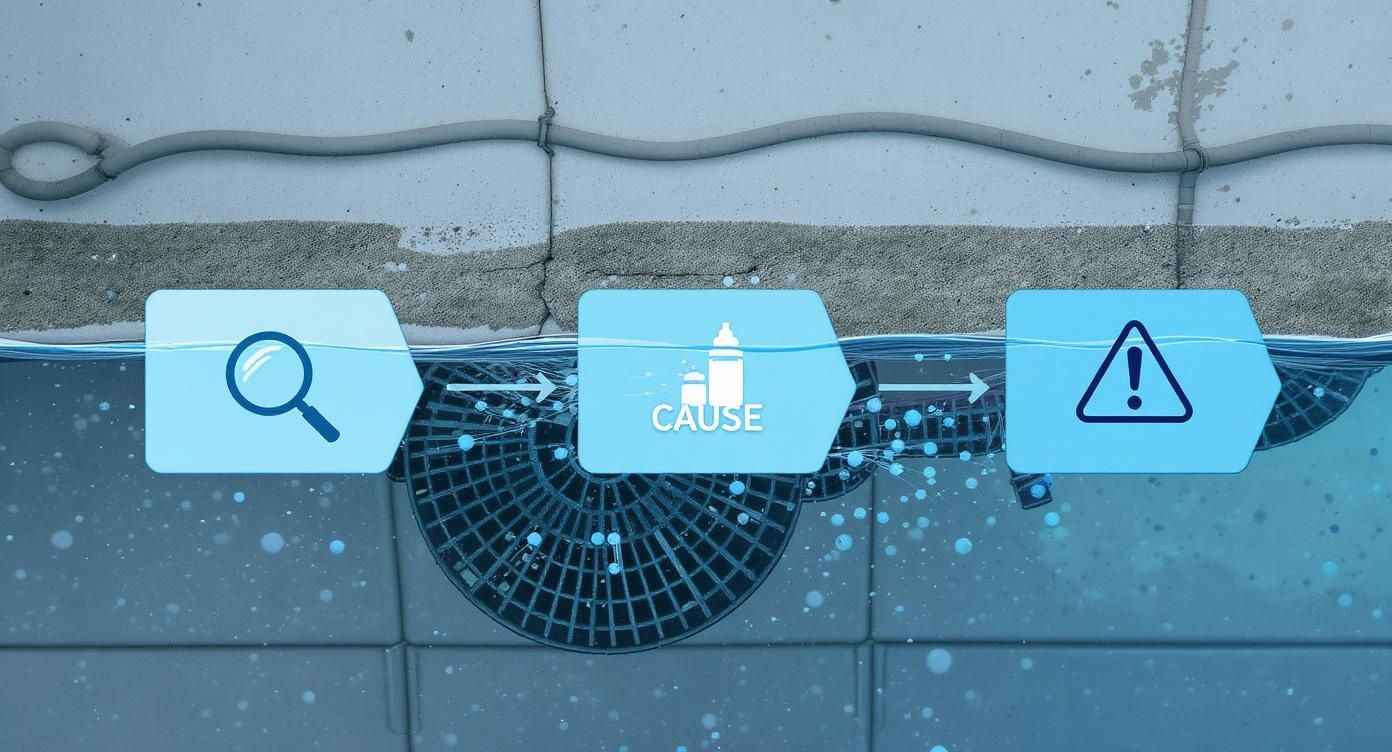
This quick visual guide helps you figure out if you're up against a simple clog or something more serious that needs a professional eye.
Simple and Safe DIY Solutions
When you're dealing with the usual suspects—grease, soap scum, and other gunk—a few things from your pantry can work wonders. These methods are always our first recommendation because they're safe for your pipes.
Start with the absolute simplest fix: boiling water. Carefully pour a full kettle straight down the drain. Often, that blast of heat is all it takes to melt and flush away a minor grease or soap blockage.
If the water is still backing up, it's time for the classic baking soda and vinegar combo. This isn't just a science fair trick; the fizzing reaction is fantastic for breaking down grime.
- First, tip about half a cup of baking soda into the drain.
- Follow it up with half a cup of white vinegar.
- Pop the plug in or cover the drain opening to keep the fizzing action contained below.
- Let it work its magic for at least an hour—or even overnight for a really stubborn, slow drain.
- Finally, flush it all out with another kettle of boiling water.
This one-two punch is a fantastic first response for sluggish kitchen and bathroom sinks. It's gentle on your plumbing but surprisingly tough on those early-stage build-ups.
Comparing Common DIY Drain Cleaning Methods
Here’s a quick look at common DIY methods, what clogs they work on, and the crucial safety considerations to keep in mind.
| Method | Best For | Pros | Cons & Cautions |
|---|---|---|---|
| Boiling Water | Minor grease, soap scum | Quick, easy, no chemicals | Not effective on solid blockages. Can damage PVC pipes if used too frequently. |
| Baking Soda & Vinegar | Organic matter, light buildup | Safe, non-toxic, cheap | Takes time to work, not powerful enough for severe or deep clogs. |
| Plunger | Soft blockages in sinks, showers, toilets | Effective when used correctly, no chemicals needed | Requires a good seal to work. Can push clogs deeper if not used properly. |
| Drain Snake (Auger) | Hair, tougher physical obstructions | Physically removes the clog | Can scratch pipes if used too aggressively. Takes a bit of practice to use effectively. |
While these methods are great starting points, always remember that forcing a tool or mixing chemicals can lead to bigger problems. Know when to stop and call for help.
Using Basic Plumbing Tools Correctly
If the pantry raid didn't cut it, it’s time for a bit more muscle. A plunger is an essential tool in any home, but there's a right way and a wrong way to use it.
For sinks and showers, make sure there’s enough water in the basin to cover the rubber cup. You need that water to create pressure. Get a tight seal over the drain opening and give it several sharp, firm pumps. It’s the push-and-pull action that dislodges the clog.
For deeper, more tangled clogs, a plumber's snake (also called a drain auger) is your go-to. This tool is designed to navigate the twists and turns of your pipes to physically break up or pull out whatever is stuck in there.
Pro Tip: When you're using a drain snake, feed the cable into the pipe slowly. Once you feel resistance, stop pushing. You've found the clog. Now, gently crank the handle to hook onto the gunk, and then carefully pull it back out. Don't just try to ram it through!
Forcing it can just compact the blockage further down the line or even damage the pipe wall.
If you’ve tried these tools and the water is still going nowhere—or if you suspect the problem is in your main line—it's time to put the tools down. Pushing your luck could turn a simple fix into a very expensive repair. At this stage, your smartest move is to call a professional plumber.
For expert help with those really stubborn blockages, don't hesitate to contact Amari Plumbing and Gasfitting. We’re here to help.
The Hidden Dangers of Chemical Drain Cleaners
When your sink starts gurgling and the water just won't go down, it’s incredibly tempting to grab one of those off-the-shelf chemical drain cleaners. They make big promises about dissolving clogs in minutes, but that convenience comes with a hefty price tag—one that can do a real number on your plumbing and even pose a risk to your family.
The powerful acids or alkalis in these bottles are designed to be corrosive. That’s how they work. They create an intense heat reaction to melt grease and obliterate hair, but here’s the problem: they can't tell the difference between the clog and the pipe it's stuck in. Using them repeatedly can seriously compromise your home’s entire plumbing system.
The Corrosive Impact on Your Pipes
It doesn't matter if you have older metal pipes or modern PVC; chemical cleaners are bad news. The intense chemical reactions can actually soften PVC pipes, which can lead to warping or cracking down the line. For homes with metal pipes, these harsh liquids massively speed up corrosion, literally eating away at the material until tiny pinhole leaks start to form. You often won't even spot these leaks until they’ve caused serious, and expensive, water damage.
Think of it this way: pouring a chemical cleaner down the drain is a bit like taking sandpaper to a delicate surface. A single go might not show any obvious harm, but keep doing it, and you'll inevitably wear down the integrity of your plumbing. You’re setting yourself up for a much bigger headache than a simple clog.
From what we see in the field, these products often just burn a small tunnel through the middle of a blockage. This provides temporary relief, but it leaves most of the build-up behind, guaranteeing the clog will return—often worse than before.
Health and Safety Risks You Can't Ignore
The danger isn't just to your pipes. The fumes these chemical cleaners kick out can be highly toxic, causing respiratory irritation and creating a real hazard for anyone in the house, especially kids and pets.
Then there's the very real risk of chemical burns. If the cleaner doesn't actually clear the blockage, you’re now left with a pipe full of highly corrosive liquid just sitting there. If you then try to use a plunger or a snake, you can get a dangerous splashback that can cause severe skin or eye injuries.
This is exactly why most professional plumbers will refuse to work on a drain where chemical cleaners have been used until the hazard is neutralised. Safer, mechanical methods are always the smarter first choice for both your plumbing and your family’s wellbeing. If you’ve got a stubborn clog that DIY methods can't shift, it’s far safer to contact a professional plumber.
When It's Time to Call a Professional Melbourne Plumber
While a bit of DIY can often sort out a minor clog, some drain problems are just the tip of the iceberg. They're symptoms of a much bigger issue lurking deeper in your plumbing system. Knowing when to put down the plunger and pick up the phone is the key to stopping a small headache from turning into a full-blown, expensive catastrophe.
If you’ve tried the usual tricks and that clog just isn't budging—or worse, it keeps coming back—that’s your first major red flag. A stubborn blockage like that means the problem isn't just some hair and soap scum near the surface. It’s likely much further down the line where your home tools simply can't reach.
Recognising the Warning Signs
Some symptoms are a dead giveaway that you're dealing with more than a simple clog. Pay close attention to these signs, because ignoring them can lead to serious damage and a hefty repair bill later on.
Don't brush these off:
- Multiple Slow Drains: Is the bathroom sink, shower, and the toilet all draining like molasses? The blockage probably isn't in the individual pipes but in your main sewer line.
- Foul Odours from Drains: If a nasty sewage smell is wafting up from your drains (even when you're not using them), it’s a sign that waste is trapped and festering somewhere in the system, releasing unpleasant gases.
- Gurgling Sounds: Hearing strange gurgles from the toilet or drains when the washing machine is running? That's a classic sign of a blocked main drain desperately trying to pull in air.
- Water Backing Up: This one is serious. If flushing the toilet causes water to appear in your shower or bath, you've almost certainly got a main sewer line blockage that needs immediate professional help.
These symptoms often point directly to a main sewer line issue. Ignoring them can lead to raw sewage backing up into your home—a serious health hazard and an expensive cleanup job.
Advanced Tools for an Accurate Diagnosis
When you call a plumber in Melbourne, they don't just show up with a bigger plunger. They arrive with specialised gear designed to pinpoint and fix the problem fast. One of the most critical tools is a CCTV drain camera.
This high-res camera is fed right into your pipes, giving the plumber a live view of exactly what's causing the blockage and where it is. No more guesswork. The camera can reveal anything from a dense wad of wet wipes to cracks in the pipe. A very common culprit in Melbourne's leafy suburbs is tree root intrusion.
Tree roots are a massive problem across Australia. To give you an idea, a 2021 study highlighted that tree roots are responsible for up to 75% of all pipe blockages and 50% of all pipe collapses and breakages, demonstrating the severe damage they can cause.
Powerful Solutions for Tough Blockages
Once the problem is diagnosed, the pros bring out the big guns. For severe blockages, high-pressure water jetting is the go-to solution. This isn't your garden hose; it’s a highly pressurised stream of water that obliterates grease, scale, and even tree roots, leaving the inside of the pipe sparkling clean.
For pipes that have been damaged by roots or are just getting old, modern 'no-dig' technology offers an incredible fix. Pipe relining is a specialised service that essentially builds a brand-new pipe inside the old, damaged one. A strong, epoxy-soaked liner is inserted and hardens in place, creating a seamless, tough-as-nails new pipe. This completely avoids the need to dig up your garden or driveway.
If you’re dealing with recurring issues from old pipes, it's worth learning about the benefits of pipe relining in Melbourne to see how it provides a permanent solution.
Spotted any of these serious warning signs? Don't wait for it to get worse. Contact Amari Plumbing and Gasfitting for a professional diagnosis and a fast, effective fix.
How to Stop Drains from Blocking in the First Place
Look, dealing with a blocked drain is a massive headache. The good news? Most of the common clogs we see are completely avoidable.
It’s not about overhauling your entire life. It’s about building a few small, smart habits to keep your pipes clear and save you from the stress (and cost) of an emergency call-out. Honestly, the best fix for a blocked drain is making sure it never happens to begin with.
Your Simple Prevention Checklist
When it comes to your drains, consistency is everything. Getting everyone in the house on board with these simple habits will stop that slow, gradual buildup that always leads to trouble.
- Get some drain guards. These cheap little mesh or silicone screens are your best mate in the kitchen sink and shower. They’re brilliant at catching hair and food scraps before they even get a chance to go down the pipes.
- Never, ever pour grease down the sink. This is the golden rule. Cooking oil, fats, and grease might be liquid when they're hot, but they turn into a solid, sticky mess inside your pipes. This gunk grabs onto everything else that goes down. Just pour it into an old jar, let it cool, and chuck it in the bin.
- Be fussy about what you flush. Your toilet is only designed for two things: human waste and toilet paper. Flushing things like wet wipes (yes, even the ones that say "flushable"), cotton balls, or sanitary products is asking for a serious blockage in your main sewer line.
- Give your drains a regular hot water blast. Once a week, just boil a full kettle and pour it straight down the kitchen and bathroom drains. It’s a super simple way to melt away any fresh soap scum or grease before it hardens up.
A Quick Monthly Maintenance Routine
On top of the daily habits, a quick monthly clean-out can tackle the minor gunk you don’t even know is there. It's a much safer way to keep things flowing than reaching for those harsh chemical cleaners.
Once a month, grab the baking soda and vinegar. Pour about half a cup of bicarb soda down each drain, followed by half a cup of white vinegar. Let it fizz away and do its thing for about an hour, then give it a good flush with hot water. It’s a gentle way to break down grime and keep things smelling fresh.
Taking these preventative steps is easily the most cost-effective plumbing decision you can make. It protects your system from the kind of long-term damage that leads to expensive jobs like sewer relining or emergency repairs.
By being proactive, you're not just dodging clogs—you're actually extending the life of your home's entire plumbing system.
If you’re doing all this and still getting recurring blockages, it could be a sign of a bigger problem. For some expert advice or to book a professional drain inspection, contact the Amari Plumbing and Gasfitting team today.
Your Go-To Blocked Drain Plumbers in Melbourne
When you’re staring down a stubborn blockage, you don't have time to waste. You need a fast, reliable fix. For homeowners across Melbourne's eastern suburbs, from Balwyn to Doncaster, Amari Plumbing and Gasfitting is the local name people trust for every kind of plumbing headache. We get it—a blocked drain isn't just an inconvenience; it’s a complete showstopper for your daily routine.
Our team of licensed Melbourne plumbers comes equipped with the right gear to figure out what’s wrong and get it sorted, fast. We tackle everything from the frantic emergency call for an overflowing toilet to the more complex jobs like sewer relining and junction replacements. We're not just about clearing the problem for today; we deliver solutions that last.
Serving Melbourne’s Eastern Suburbs
Whether you're in the leafy streets of Kew, Camberwell, or Hawthorn, our local knowledge means we're never far away. We’re the plumber Balwyn residents call for prompt service and the go-to team for businesses needing solid commercial plumbing in Bulleen. Our entire service is built around professionalism and getting your home back to normal.
- Emergency Response: We’ve got emergency plumbers in Melbourne ready to tackle urgent issues the moment they pop up.
- Advanced Solutions: Our expertise goes beyond the basics. We use modern techniques like pipe relining in Melbourne, offering no-dig repairs for damaged pipes.
- Comprehensive Services: Beyond drains, we’re your local experts in gasfitting Melbourne wide, sorting out hot water systems, and even handling dishwasher installations.
If you are trying to find a plumber you can rely on, our team of local experts are here to help. Whether you need a plumber in Doncaster or a roof plumber in Melbourne, we provide efficient, professional service every time.
Why Choose a Local Professional
There’s a real advantage when you use a 'plumber near me'. We know the common problems in your area, like the havoc tree roots can wreak on pipes in older suburbs. Our team gives you upfront, fixed pricing, so you'll never be hit with a surprise bill.
Don't let a blocked drain ruin your day. A small issue can quickly escalate, causing water damage and creating an unhygienic environment. Reaching out for professional help at the first sign of trouble is the smartest move you can make.
From a pesky leaking tap to a major sewer blockage, our friendly team is ready to jump in and provide expert help. We’re committed to getting your plumbing back in perfect working order with as little disruption to your life as possible.
When you need a reliable and affordable plumber who gets the job done right, turn to Amari Plumbing and Gasfitting. For a free quote and fast service, contact us today.