

Swapping out your old cooktop for a new gas model is a fantastic kitchen upgrade, but it’s a job that demands absolute precision and a serious respect for safety standards. The real work actually starts well before you even crack open the box. There are a few critical pre-installation checks we always run through to make sure your kitchen is ready and compliant.
This means verifying clearances, checking ventilation, and making sure your gas supply is up to the task. If you're looking for a reliable plumber in Melbourne for this job, you've come to the right place.
Your Pre-Installation Safety Checklist
Before any licensed gasfitter worth their salt even considers connecting a new cooktop, they’ll run through a non-negotiable checklist. This isn't just about making sure the appliance fits neatly into your benchtop; it's about protecting your home and family. Skipping these essential steps can lead to incredibly dangerous situations, a voided warranty, and a bill for expensive rework later on.
Clearance and Ventilation Rules
One of the first things we look at is clearance. The rules around how much space you need around a gas cooktop are strict for a reason—they prevent fires. These mandatory distances are laid out in the Australian Standard AS/NZS 5601.1.
We’ll get the tape measure out to check the distance from the edge of the burners to any vertical combustible surfaces, like a splashback or a nearby pantry wall. The same goes for anything overhead, like your cabinets.
For example, you need a minimum of 600mm between the highest point of the cooktop burners and your rangehood. You also need to maintain at least 200mm of clearance from any vertical combustible surface beside the cooktop.
Proper ventilation is just as important. Your rangehood isn't just there to get rid of cooking smells; it’s a vital piece of safety equipment. It’s responsible for extracting combustion by-products, grease, and steam. We’ll check that it’s installed correctly and is powerful enough for the job, because poor ventilation can allow harmful gases to build up in your kitchen.
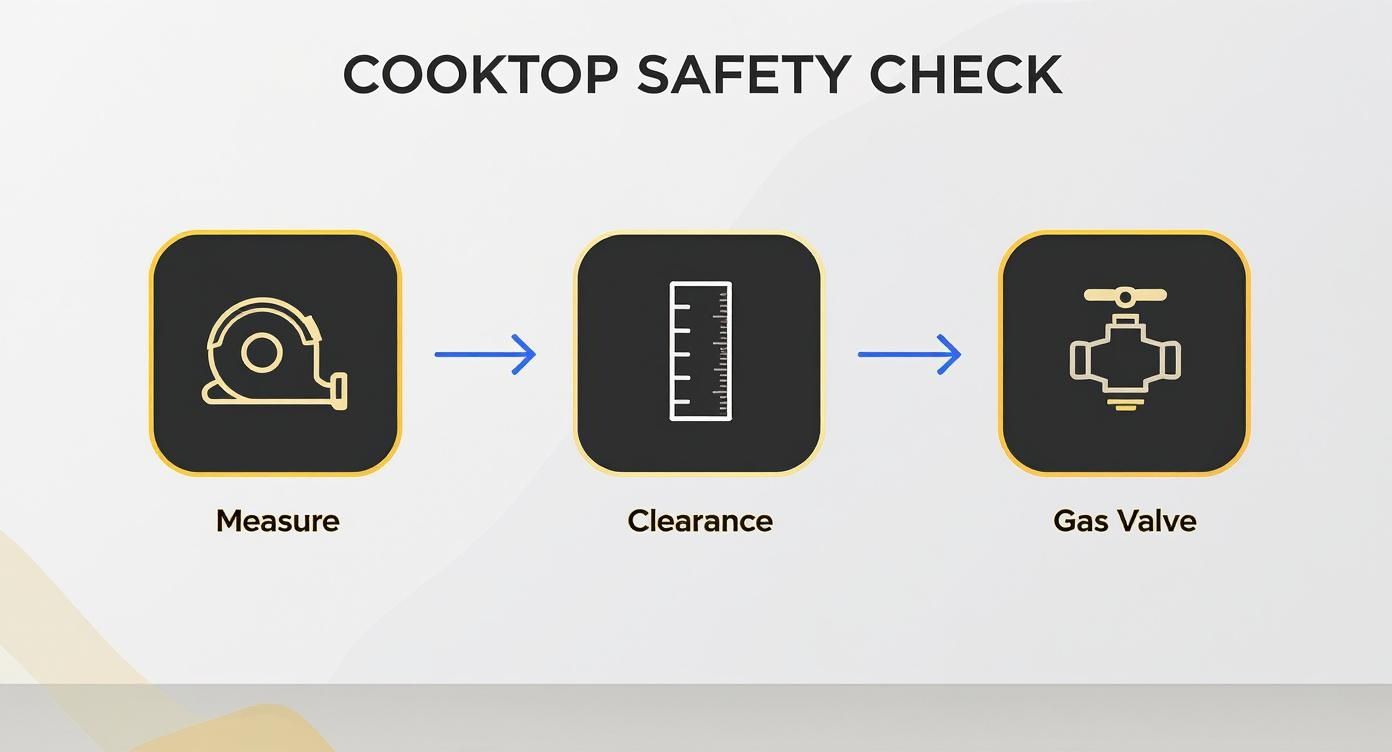
As you can see, it's a simple but crucial process: measure everything, verify the clearances meet the standard, and confirm the gas supply is safe and accessible.
Gas Supply and Isolation Valve Verification
Finally, a qualified professional will take a close look at your existing gas line. We need to be certain the pipe is the right size to deliver enough gas for your new cooktop, especially without starving other gas appliances in your home. An undersized pipe is a common cause of poor performance and can even create safety hazards.
We’ll also locate the gas isolation valve for the cooktop. It’s essential that this valve is easy to get to and works properly. This allows the gas to be shut off right at the appliance, which is critical for safe installation and any future servicing.
Essential Tools and Materials for a Professional Installation
When you hire a professional, you're not just paying for their time; you're getting access to their expertise and their specialised toolkit. There's a big difference between a DIY enthusiast's toolbox and what a licensed gasfitter carries. Here’s a look at what’s in our van for a standard gas cooktop installation.
| Item | Purpose | Professional or DIY? |
|---|---|---|
| Gas Leak Detector (Manometer) | To pressure test the gas line for any leaks before and after installation. This is a non-negotiable safety step. | Professional Only |
| Pipe Wrenches & Spanners | For tightening gas fittings to the correct torque. Over-tightening can be just as bad as under-tightening. | DIY |
| Pipe Thread Sealant/Tape | A specific type rated for gas use (usually yellow Teflon tape or approved paste) to ensure a perfect seal on threaded connections. | DIY (must use correct type) |
| Tube Cutter & Flaring Tool | For cutting and preparing copper pipes to create clean, leak-proof connections. | Professional |
| Drill and Jigsaw | To accurately cut or modify the benchtop cutout if the new cooktop has different dimensions. | DIY |
| Bubble Level | To ensure the cooktop is installed perfectly flat, which is important for even cooking. | DIY |
| Appropriate Gas Fittings | Includes items like isolation valves, elbows, and connectors that meet Australian standards. | Professional Only |
As you can see, while some basic tools overlap, the critical safety and testing equipment is highly specialised. This is why gas work is strictly regulated and should only be handled by a licensed professional from a team like Amari in Balwyn.
Getting the Old Cooktop Out Safely
Right, so you've done your homework and the new cooktop is ready to go. Now for the first real hands-on part: getting the old unit out. This isn't just a matter of yanking it from the benchtop; it’s a careful process that revolves around one thing – safety. When there's a live gas connection involved, you absolutely cannot afford to get it wrong.
The very first thing any licensed gasfitter will do is head straight for the main gas meter and shut off the supply to the entire property. Forget that little valve under the sink; we need to be 100% certain there's no gas flowing. This step is completely non-negotiable.
Disconnecting the Old Gas Line
With the gas main safely off, it's time to deal with the flexible gas line attached to the old cooktop. Using the right set of wrenches, we'll carefully loosen the fittings. You have to be precise here – using too much force or the wrong tool can easily strip the threads and damage the pipework, creating a much bigger problem.
Even with the main supply off, there’s often a tiny bit of residual gas left in the line. An experienced professional knows exactly how to handle this, letting it dissipate safely without any risk. This is one of those critical moments where proper training in gasfitting Melbourne really counts. One wrong move could lead to a gas leak, which is precisely why this is a job strictly for the pros.
Once the line is safely disconnected, we can lift the old cooktop out of the benchtop. We always take our time with this part to avoid scratching or chipping your stone or laminate benchtops. It’s a common mistake we see from rushed or DIY jobs.
You’d be amazed at what we find under old cooktops. Years of grease and food crumbs get trapped under the lip. Cleaning this area thoroughly is absolutely essential for the new appliance to sit flat and create a perfect seal.
Prepping the Space for the New Install
After the old appliance is out, we get to work cleaning the cutout. Every last bit of grime and old silicone sealant has to go, leaving a perfectly clean surface.
This preparation guarantees the new cooktop’s seal will be airtight, stopping spills and crumbs from sneaking underneath. A clean, level surface is the foundation of a professional installation. Taking the time to do this right is a hallmark of quality work, like the service we provide in suburbs such as Doncaster. If you're feeling out of your depth, it’s always smarter to contact a professional and have it done right from the get-go.
Fitting and Connecting Your New Gas Cooktop
Alright, the old cooktop is out and the space is prepped. Now for the main event. This is where the real skill comes in, because getting the fit and the gas connection spot-on is everything. It's all about safety and making sure your new appliance works perfectly from day one.
First things first, the new cooktop needs to be gently lowered into the benchtop cutout. You have to be careful here—the last thing you want is to scratch or chip your benchtop. Once it's in, it needs to sit perfectly level and snug. No rocking, no big gaps. Just a clean, flush fit.
Sealing and Securing the Unit
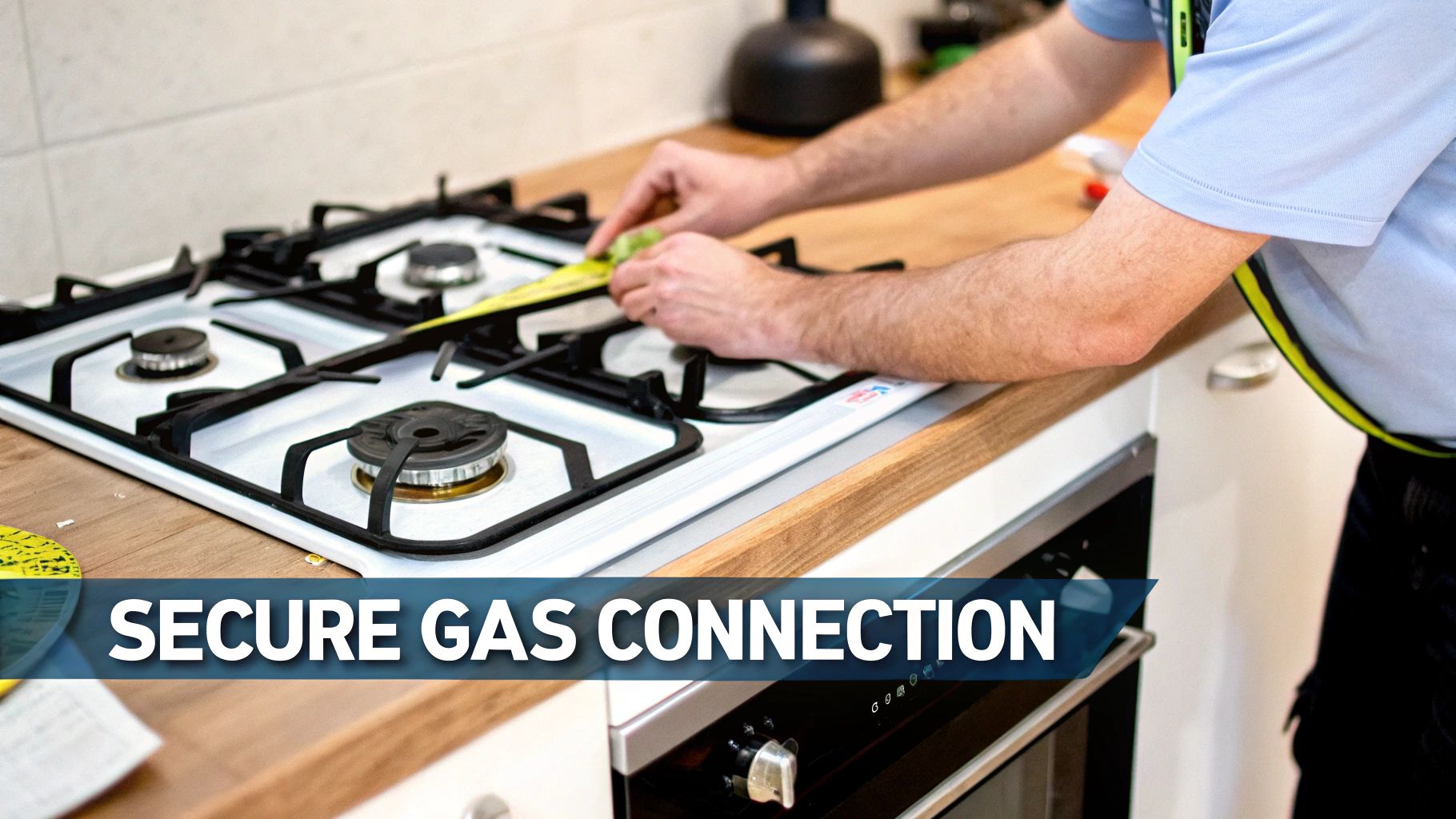
Before it gets locked down, a special sealing tape or foam gasket—which comes with the cooktop—is applied around the underside of the edge. This is a crucial little step. It creates a barrier to stop spills, crumbs, and moisture from sneaking underneath, which protects your cupboards and the cooktop's own wiring.
With the seal in place, the cooktop is carefully set and then secured from underneath with clamping brackets. This makes sure it’s rock solid and won’t shift around.
Making the Critical Gas Connection
This is the part of installing a gas cooktop that is strictly for the pros. A gas connection isn't like plugging in a toaster; it's a permanent, high-pressure seal that has to be 100% leak-proof. There's no room for guesswork.
A qualified Melbourne plumber will look at your existing gas line and grab the right fittings to connect it to the cooktop's regulator. The process involves a few key actions:
- Applying Gas-Rated Sealant: We use a specialised thread sealant or gas-rated Teflon tape on all the male threads. This is non-negotiable for creating an airtight seal.
- Correctly Tightening Fittings: Two wrenches are always used. One holds the pipe steady while the other tightens the nut. This stops the pipework from being twisted or stressed and ensures the joint is tight enough, but not so tight that it damages the threads.
- Connecting to the Regulator: The final connection is made to the cooktop's gas pressure regulator. This little device is vital for making sure the appliance gets a steady, correct pressure to work safely.
The integrity of this single connection is the most important safety factor in the entire installation. An improperly sealed joint is the primary cause of dangerous gas leaks. There is absolutely no margin for error here, which is why this work is legally restricted to licensed professionals.
For homeowners looking for reliable pipe relining in Melbourne or expert gasfitting services, getting the job done by certified technicians is the only way to go. If you have any doubts about your gas line or the installation process, it's time to contact us for professional advice.
Final Checks and Safety Commissioning
Getting a new gas cooktop connected isn't the end of the job. In fact, the most crucial part comes next: the safety commissioning. This is where a licensed gasfitter methodically checks every single detail to make sure your new appliance is 100% safe and ready to go. It’s a step you absolutely cannot rush—it’s all about peace of mind.
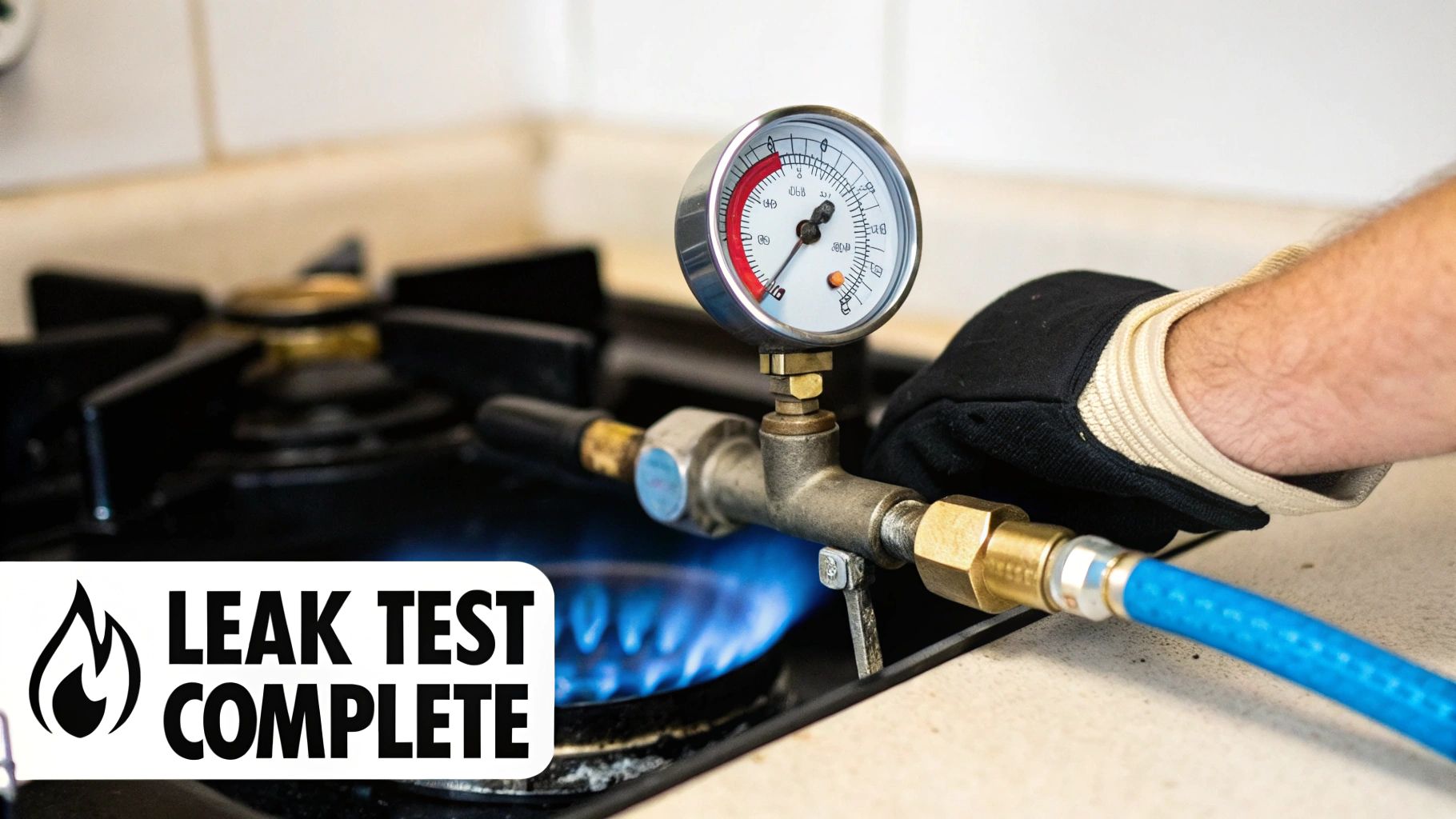
It all starts with a proper leak test. With the gas still off, we'll hook up a manometer (a professional pressure gauge) to the gas line. We then pressurise the system and keep a close eye on the gauge for a few minutes. If that needle doesn't budge, fantastic. But if it drops, even a tiny bit, it signals a leak somewhere along the line that has to be hunted down and fixed before we go any further.
Visual Inspection and Flame Testing
Once we’ve passed the pressure test, it’s time for a second layer of defence. We’ll mix up a soapy water solution and paint it onto every new joint and connection. Even the smallest leak will create obvious bubbles, giving us a clear visual cue that a fitting needs to be tightened or resealed. This dual-testing method is non-negotiable for a safe installation.
Only when we're absolutely certain the system is airtight do we turn the gas supply back on. Now for the fun part: firing up the cooktop. We test every single burner, one by one, cycling it from its lowest setting all the way up to high.
A healthy gas flame should burn a crisp, steady blue, maybe with tiny yellow or orange tips. That's the sign of complete, clean combustion. If you see a flame that's mostly yellow, orange, or making a loud "roaring" noise, something's not right with the gas-to-air mix and it needs immediate adjustment.
This isn’t just about making sure the cooktop works; it's a critical diagnostic to ensure it’s running safely and efficiently. An poorly adjusted flame can produce dangerous levels of carbon monoxide. If you ever see a lazy, yellow flame or smell gas, it's a serious sign you need an expert to investigate a potential gas leak emergency.
Final Handover and Compliance
With all the burners tested and firing perfectly, we’ll clean up the workspace and give you a quick rundown on how to use your new appliance. Most importantly, we'll provide you with a Certificate of Compliance.
This isn't just a piece of paper. It’s your legal guarantee that the work was done by a licensed professional and meets all Australian safety standards. You'll need it for your home insurance, appliance warranty, and, of course, your family's safety.
This thorough commissioning is what separates a professional, safe installation from a dangerous shortcut.
Why Installing a Gas Cooktop Is Never a DIY Job
We all love the satisfaction of a good weekend DIY project, but when it comes to installing a gas cooktop, you have to draw a hard line. This isn't about your skills or how handy you are; it's about navigating a maze of legal requirements and managing some very real, potentially lethal risks.
Trying to install a gas appliance yourself isn't just a bad idea—it’s illegal right across Australia. The consequences can be devastating and far outweigh any money you might think you're saving. When you need to find a plumber for this job, always choose a licensed professional.
The whole issue boils down to safety. Gas is a fantastic and efficient fuel, but it's also volatile. A connection that isn't sealed perfectly, even if it looks and feels tight, can cause a slow, undetectable gas leak. The outcome can be catastrophic, from fires and explosions to the silent threat of carbon monoxide poisoning.
The Legal and Financial Risks
Here in Melbourne, and throughout Victoria, all gasfitting work must be done by a licensed and insured professional. This isn’t just red tape; it’s a non-negotiable safety regulation. If an unlicensed person touches your gas lines, you’re immediately exposed to some serious problems.
- Voided Home Insurance: If a fire or any other incident is traced back to the cooktop, your insurer will almost certainly refuse your claim if the installation wasn't done by a licensed gasfitter.
- Cancelled Appliance Warranty: Appliance manufacturers are very clear: their products must be installed according to local codes. A DIY job instantly voids your warranty, leaving you on the hook for any future repair costs.
- Legal Penalties: It's against the law for an unlicensed person to perform gas work. This can lead to heavy fines and serious liability if anything goes wrong.
Think of a professional installation not as an expense, but as a critical investment in your home's safety and your financial security. The cost of hiring a licensed gasfitter is tiny compared to the potential cost of a house fire or a rejected insurance claim.
The Assurance of a Certificate of Compliance
When you hire a licensed professional from Amari Plumbing and Gasfitting, the job isn't truly done until you have a Certificate of Compliance in your hands. This piece of paper is your legal proof that the installation is up to all Australian standards, particularly AS/NZS 5601.
It certifies that the cooktop is connected safely, has been rigorously tested for leaks, and is working exactly as it should. Without this certificate, you have no official record that your appliance is safe.
Gas cooking is a staple in Australian kitchens, with about 70% of homes using gas. That's around 5.2 million households relying on gas appliances, a number that really highlights the public safety responsibility to get every single installation right. You can discover more about Australian gas standards on websites like Wikipedia.
Given how common gas is, hiring a professional isn't just a good idea; it's a fundamental duty for every homeowner. The peace of mind you get from knowing your family is safe is priceless. For a compliant and secure installation in Balwyn, Doncaster, or anywhere across Melbourne, you need an expert. If you have questions about our range of professional gasfitting and plumbing services, please don’t hesitate to contact us for professional advice.
Common Gas Cooktop Installation Questions
Getting a new gas cooktop is exciting, but it’s natural to have a few questions before you get started. Homeowners across Melbourne, from Balwyn to Camberwell, often ask us about the same things: cost, timing, and what the law requires.
Getting these details sorted out upfront means your kitchen upgrade will go off without a hitch. We’ve put together the most common questions we get asked to give you a clear picture of the whole process.
How Much Does Professional Installation Cost?
For a simple, like-for-like gas cooktop swap in Melbourne, you're typically looking at a cost between $250 and $500. This covers the labour for a straightforward replacement where everything is already in place.
Of course, that price can shift depending on the job.
- The Setup: If we need to modify the existing gas line or tweak your cabinetry to fit the new appliance, the cost will go up.
- Access: Tight spots or tricky-to-reach connections can add a bit more time and labour to the bill.
- The Benchtop: If your shiny new cooktop is a different size, cutting the benchtop to fit will be an additional cost.
A brand-new installation, where a gas line has to be run from the meter, is a much bigger project. We always give a detailed quote before starting any work so there are no surprises.
Can I Switch from Electric to a Gas Cooktop?
You sure can. Moving from an electric to a gas cooktop is a popular choice, especially for people who love the instant heat control of cooking with a flame. As long as you have natural gas connected to your property, it's definitely doable.
Just keep in mind, this is a more involved job than a simple swap. It means a licensed gasfitting Melbourne pro will need to run a brand-new gas pipe from your meter all the way to the kitchen. It’s a bit more work, but for keen cooks, it’s an investment that pays off every single day.
Any time a new gas line is installed, it's considered major gas work. This legally requires a licensed professional who must issue a Certificate of Compliance when the job is done. It's your guarantee that everything is safe and meets Aussie standards.
How Long Does the Installation Take?
If it’s a simple replacement, an experienced gasfitter can get it done pretty quickly. For a standard swap-out, including all the final safety checks and testing, you can expect the job to take about 1 to 2 hours.
If the job is more complex—like running that new gas line for a conversion or cutting into a stone benchtop—it's going to take longer. Your gasfitter will give you a solid time estimate when they provide your quote.
What Is a Certificate of Compliance?
This is a really important one. In Victoria, a Certificate of Compliance is a legal document your licensed gasfitter gives you after finishing any gas-related work.
It's the official proof that the installation is safe, completely leak-free, and meets all the rules set out in the Australian Standards (specifically AS/NZS 5601). You’ll need this certificate for your home insurance, the appliance warranty, and, most importantly, for peace of mind.
For a clear, upfront quote on your gas cooktop installation, trust the licensed professionals at Amari Plumbing and Gasfitting. Our team ensures every job is completed safely and to the highest standard. Contact us today for a free estimate.