

Burst water pipes is that awful sound of water gushing where it shouldn’t be is enough to send anyone into a panic. When you’re dealing with burst water pipes, every single second counts. Your first few moves can be the difference between a bit of a mess and thousands of dollars in property damage. The number one, most critical thing to do? Stop the water at its source.
Your First Steps After a Pipe Bursts
Finding a burst pipe is a huge stress, whether you’re in a classic old home in Hawthorn or a brand-new apartment in Bulleen. But keeping a level head and acting fast will drastically limit the damage. Think of this as your emergency action plan to get things under control while you wait for the pros. The goals are simple: stop the water, keep everyone safe, and start damage control.
Find and Shut Off the Main Water Valve
Before you do anything else, you absolutely must find and shut off your home’s main water valve. This one simple action stops any more water from entering your plumbing, immediately starving the burst pipe of its supply.
- Where to Look: Most Melbourne homes have the main valve at the front of the property, usually near the water meter. Check for a plastic or metal lid in your garden or near the footpath. Sometimes, it’s fixed to an external wall at the front of the house.
- How to Turn It Off: Most will have a tap-like handle you turn clockwise as far as it will go. Older homes might have a valve that needs a wrench to turn. A top tip from us: figure out where this is before you ever have an emergency.
Shut Off the Electricity
Water and electricity are a lethal mix. If the leak is anywhere near power points, appliances, or your switchboard, you need to kill the power to that area right away. This is crucial for preventing electrocution or an electrical fire.
Head to your switchboard and flick off the circuit breakers for the water-logged rooms. If you’re not sure which is which, or if the switchboard itself is getting wet, play it safe and shut off the main power switch for the whole house.
Your safety is the top priority. Never, ever touch electrical switches or appliances if you’re standing in water. When in doubt, kill the main power and wait for an emergency plumber.
Drain What’s Left in the Pipes
Even with the mains turned off, there’s still water sitting in your pipes. Draining this out helps release the pressure and will stop the last of the water dribbling out of the burst section.
Just open up the cold taps at the lowest point in your house—think the laundry tub or a downstairs bathroom tap. Flush all your toilets, too. This gives the remaining water a safe place to go instead of all over your floor.
Okay, deep breath. You’ve now handled the immediate crisis. Now’s the time to get a professional on the phone. For a rapid response from emergency plumbers Melbourne, get in touch with Amari Plumbing and Gasfitting.
To make it even simpler, here’s a quick-reference guide for those first critical 15 minutes.
Immediate Response Checklist for a Burst Pipe
| Priority | Action | Why It Matters |
|---|---|---|
| 1 | Shut Off the Main Water Valve | Instantly stops more water from flooding your home, preventing further damage. |
| 2 | Cut the Electricity | Prevents the deadly risk of electrocution if water reaches electrical circuits or outlets. |
| 3 | Open Lower-Level Taps | Drains remaining water from the system, releasing pressure and minimising the leak. |
| 4 | Move Valuables | If safe, move furniture, electronics, and rugs away from the water to a dry area. |
| 5 | Call an Emergency Plumber | A professional can assess the situation and begin repairs immediately to secure your home. |
Following these steps methodically will put you in the best possible position to handle a burst pipe emergency effectively.
Right, the water’s off and the initial panic is over. Time to take a breath and switch from damage control to detective mode.
Now that the gushing has stopped, you’ve got a window to figure out exactly what you’re dealing with before your plumber near me arrives. Getting a clear picture of the burst water pipes helps our team of Melbourne plumbers hit the ground running when we get there.
Your first job is to play ‘find the source’. Sometimes it’s painfully obvious – a big split in the copper pipe right under the kitchen sink. Other times, it’s a bit more subtle, like a sneaky damp patch spreading across the ceiling that hints at a hidden problem.
Pinpointing the Leak Source
Finding the exact break is crucial. If the pipe is out in the open, like under a vanity or in the laundry, a quick look should reveal the culprit. You’re searching for anything from tiny pinholes and hairline cracks to a major split along the pipe.
When the leak is hiding behind a wall, you need to use your senses.
- Look for the signs: Telltale water stains, bubbling paint, or warped plasterboard are dead giveaways.
- Listen closely: Even with the mains off, you might hear a faint dripping sound.
- Feel the surface: The affected spot will often feel damp, soft, or noticeably cooler than the wall around it.
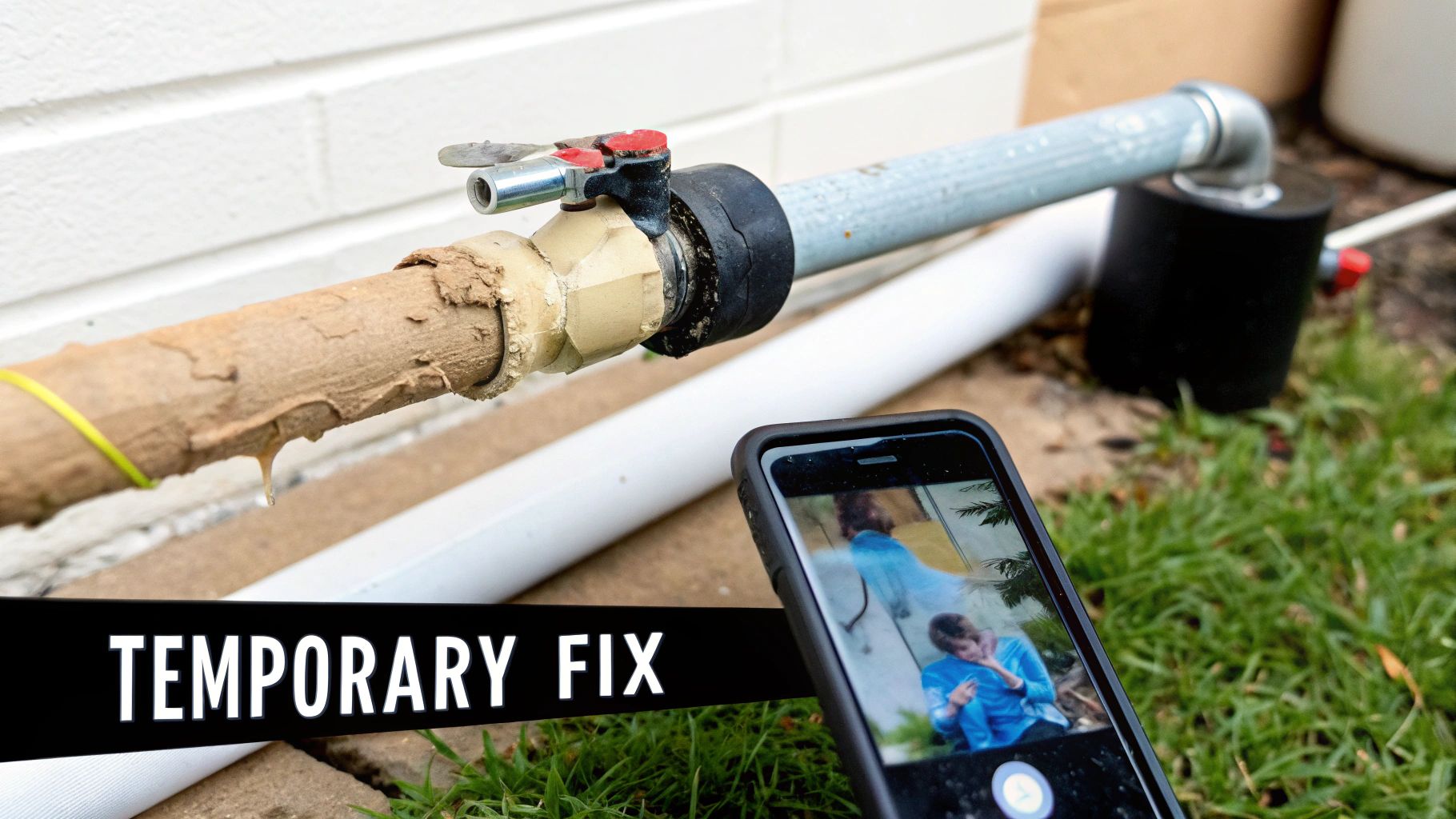
Once you’ve located the source, get your phone out. Take plenty of clear photos and even a video of the burst pipe and any water damage it’s caused. This documentation is gold when it comes to making an insurance claim later on.
Quick tip: The core of your insurance claim is the burst pipe itself. Having solid proof helps keep the focus on the initial plumbing failure, which is usually covered, and avoids getting sidetracked by secondary issues some insurers might try to argue aren’t included.
Applying a Safe Temporary Patch
While you’re waiting for an expert from Amari Plumbing, a quick temporary fix can be a real lifesaver. It’s not a permanent solution by any means, but it can stop a lot of mess when the water needs to be turned back on for us to test things.
For small pinhole leaks, a simple pipe clamp or a sleeve kit from your local hardware store works wonders. Just wrap the rubber gasket over the hole and tighten the clamp around it. If you’re dealing with a larger crack, epoxy putty is your best bet. Knead it until it’s soft, then press it firmly over and around the damaged section to create a solid seal.
These quick patches buy you time and contain the problem. They also give our emergency plumbers a head start on diagnosing the best permanent fix, whether that’s a straightforward pipe replacement or something more advanced like our pipe relining Melbourne service.
If you need an urgent, professional repair that will last, contact Amari Plumbing and Gasfitting and we’ll get it sorted properly.
What Causes Pipes to Burst in Melbourne Homes?
Understanding what makes a pipe give way is your best defence against a future plumbing disaster. From the beautiful older homes in Kew to the established properties in Camberwell, a few usual suspects are behind most burst water pipes – and they’re not always what you might think.
While we often imagine a sudden, dramatic geyser, most pipe failures actually start small and quietly worsen over time. The age of your plumbing is a huge one. Many homes in Melbourne’s eastern suburbs are still running on old copper or galvanised steel pipes that are way past their use-by date, making them prime candidates for corrosion and, eventually, a major failure.
The Problem with Pressure in Melbourne’s Suburbs
High water pressure is another silent killer for your pipes. It might feel fantastic in the shower, but that excessive pressure puts constant, relentless strain on your entire plumbing system. We’re talking pipes, fittings, and even the connections to your appliances.
Anything consistently pushing over 500 kPa is considered high and dramatically increases the risk of a blowout. Think of it like a car tyre that’s been overinflated; sooner or later, a weak spot is going to let go. This is especially true for older plumbing systems that simply weren’t built to handle the pressure common in today’s water networks. A quick pressure test from a professional plumber can tell you in minutes if this is a ticking time bomb in your home.
Ageing Pipes and the Corrosion You Can’t See
Corrosion is the slow, insidious decay of your pipework, happening from the inside out. For those decades-old copper pipes, tiny pinhole leaks are a classic calling card of advanced internal corrosion. If you have older galvanised pipes, the enemy is rust. It builds up over years, not only choking the water flow but also thinning the pipe walls until they just can’t hold the pressure anymore.
Here’s the critical takeaway: you often can’t see the worst of the damage until it’s far too late. A pipe can look perfectly fine on the outside while being paper-thin on the inside, just waiting for a small pressure surge to cause a catastrophic failure.
Melbourne’s Unique Climate Challenges
Perhaps the most surprising culprit is Melbourne’s own climate. The unique cycle of long dry spells followed by sudden, heavy downpours causes the ground to shift significantly. This “reactive soil” puts immense stress on any pipes buried in it, from your mains water line to your sewer connection.
This isn’t just a local issue; it’s a nationwide problem. Australia’s water infrastructure is under serious strain. In 2023-24 alone, over 269 billion litres of drinking water were lost to leaks and bursts, partly because these climate-driven ground shifts are pushing an already ageing pipe network to its breaking point. You can read more about how climate pressures are exposing weaknesses in Australia’s urban water networks. When the ground around your home moves, pipes can bend, joints can crack, and a major burst becomes almost inevitable.
If you suspect any of these issues might be at play in your home, whether you’re a resident looking for a plumber Balwyn or in nearby Doncaster, getting a professional assessment is crucial. Tackling these root causes is the only way to prevent a very wet and very expensive emergency. For an expert opinion on the health of your plumbing, contact Amari Plumbing and Gasfitting today.
Choosing Your Repair: Pipe Relining vs Replacement
Once you’ve got the immediate water damage under control, your focus shifts to the permanent fix. For most homeowners in Melbourne, this decision boils down to two main options: the old-school dig-and-replace method or the more modern approach of pipe relining.
The traditional solution is exactly what it sounds like. A plumber in Melbourne will need to excavate the area around the busted pipe—and that could mean digging up your lawn, your driveway, or even cutting into your home’s foundation. They physically remove the broken section and slot in a new piece. It works, of course, but it’s messy, disruptive, and often leaves you with a hefty bill for restoring everything back to normal.
The Trenchless Alternative: Pipe Relining
Thankfully, there’s a far less invasive option that’s becoming the go-to choice across Melbourne’s eastern suburbs. Pipe relining is a ‘trenchless’ technology that essentially fixes the problem from the inside out.
Instead of digging, our specialists feed a flexible, high-tech liner coated in a powerful epoxy resin directly into the damaged pipe. This liner is then inflated, pressing it firmly against the walls of the old pipe. Once it cures, it hardens to create a brand new, seamless, and incredibly tough pipe inside the original one.
The biggest win here is avoiding all that destructive excavation. Your landscaping, driveway, and home’s structure are all preserved. It’s faster, cleaner, and in the long run, often a more cost-effective solution—especially for those tricky pipes hidden under concrete slabs or established garden beds.
The image below gives you a quick snapshot of the common culprits behind burst pipes in the first place.
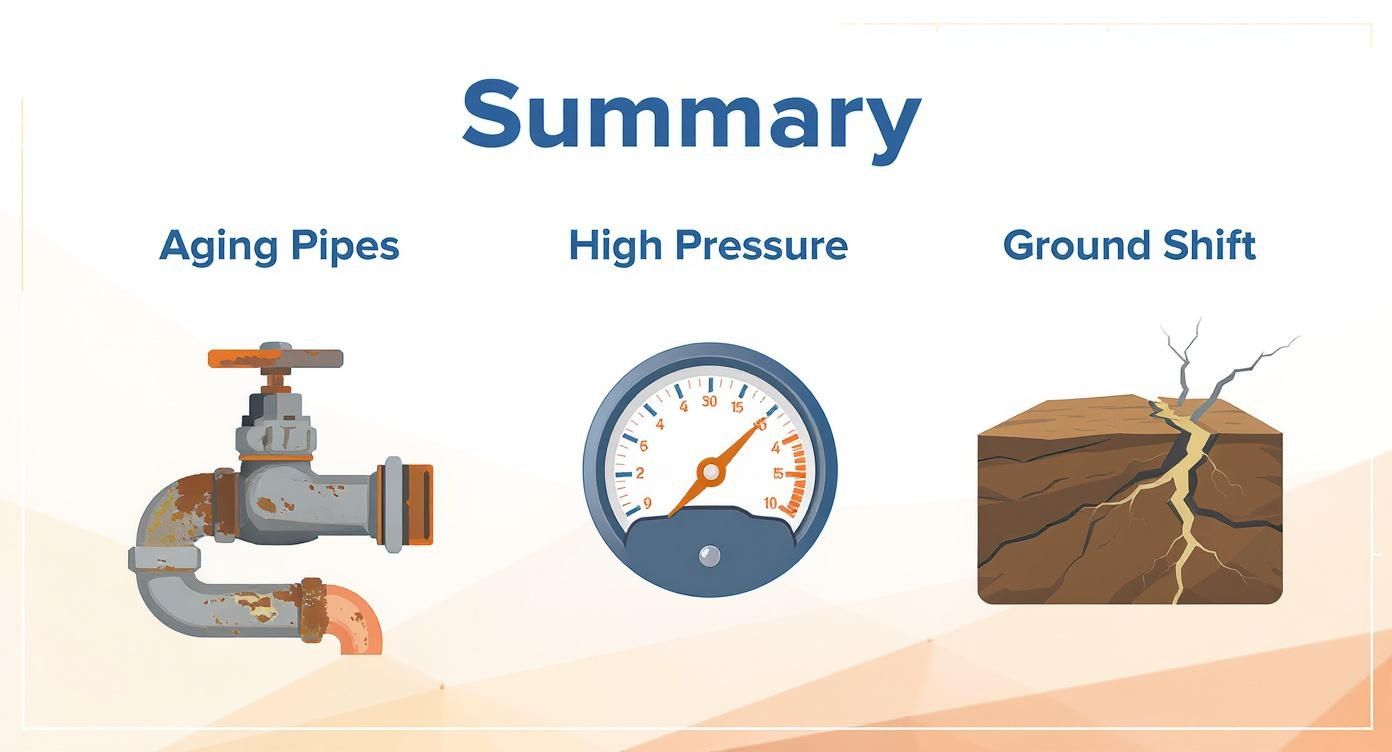
As you can see, things like ageing infrastructure, high water pressure, and ground movement are major risk factors that a robust, modern repair solution can tackle head-on.
Making the Right Choice for Your Home
So, which method is the best fit for your place? For homeowners in areas like Balwyn North or looking for a reliable plumber Doncaster, the decision usually comes down to the pipe’s location and just how bad the damage is.
Here’s a quick rundown to help you compare the two main approaches.
Pipe Repair Methods Compared
| Feature | Traditional Replacement | Pipe Relining |
|---|---|---|
| Process | Excavate the area, cut out the old pipe, and install a new section. | Insert a resin-coated liner into the existing pipe, which hardens to form a new pipe. |
| Disruption | High. Requires digging up lawns, driveways, or even concrete slabs. | Minimal. No major excavation needed, preserving your property. |
| Timeframe | Can take several days, including time for excavation and restoration. | Often completed in less than a day. |
| Durability | Depends on the material used (e.g., PVC, copper), but joints can be future weak points. | Creates a seamless, joint-free pipe that’s highly resistant to roots and corrosion. |
| Best For | Easily accessible pipes or pipes that have completely collapsed. | Hard-to-reach pipes under structures, gardens, or driveways. |
| Long-Term Cost | Can be higher when you factor in the cost of restoring your landscape or driveway. | Often more cost-effective as it avoids expensive restoration work. |
At the end of the day, both methods get the job done, but relining offers a cleaner, faster, and often more durable solution for complex problems.
Many of us in the industry, especially experts in sewer and pipe relining in Melbourne, now lean heavily towards this trenchless technique. It doesn’t just fix the immediate burst; it reinforces that whole section of pipe against future headaches like tree root intrusion and corrosion.
Ultimately, you need a professional to take a look and give you the right advice for your specific situation. For an expert assessment on whether replacement or relining is the best path forward for your home, get in touch with the specialists at Amari Plumbing and Gasfitting.
Proactive Maintenance to Prevent Future Pipe Bursts
Once you’ve dealt with the mess and stress of a burst pipe, the last thing you want is a repeat performance. The truth is, the best emergency is the one that never happens. A little bit of proactive care for your plumbing can save you a world of pain and expense down the track.
It’s not about being a plumbing expert yourself, but about understanding the hidden forces at play inside your walls. A few preventative steps can dramatically lower your risk of another catastrophic failure, especially if you’re in an older Melbourne home where the pipes have seen better days.
Manage Your Water Pressure
High water pressure is one of the biggest, and most common, culprits behind burst pipes. It might feel great in the shower, but that constant, excessive force is putting a massive strain on every single pipe, joint, and appliance in your home. It’s a silent stressor that will eventually find the weakest link and cause it to fail—often spectacularly.
A quick pressure check from a plumber can tell you if your home’s levels are in the red zone. If they are, getting a pressure-limiting valve installed is one of the smartest, most affordable investments you can make. This simple device acts as a gatekeeper, regulating the pressure coming into your home and protecting your entire system from being overworked.
Schedule Regular Professional Inspections
With plumbing, what you can’t see can definitely hurt you. This is especially true when it comes to internal corrosion. Older copper and galvanised pipes might look perfectly fine on the outside, but inside they could be paper-thin and just waiting for the right moment to give way.
This is where regular check-ups from a qualified Melbourne plumber become so important. A professional has the trained eye to spot the subtle red flags you’d likely miss, such as:
- Water that looks discoloured, often a sign of internal rust and corrosion.
- Drains that seem to be constantly slow, which could point to a blockage or a deeper issue with the pipe’s integrity.
- A noticeable drop in your water pressure when your neighbours aren’t having the same problem.
These inspections are particularly critical in areas with reactive soil. As an example, the record-breaking droughts in South West Victoria caused an 81 per cent increase in pipe bursts in a single year, all because the ground movement was putting immense stress on the pipes. You can read more about how record dry weather impacts the region’s water pipes.
And if you are dealing with slow drainage, it’s always best to get on top of it before it becomes a symptom of a much bigger problem. For some practical tips, check out our guide on how to clear blocked drains.
At the end of the day, proactive maintenance is your best defence against another plumbing disaster. To schedule a professional plumbing health check for your home, contact the experts at Amari Plumbing and Gasfitting today.
Calling an Emergency Plumber: What to Expect
When you’re staring down a burst pipe, making that call for professional help feels like a massive weight off your shoulders. But knowing what happens next can make an incredibly stressful situation feel a lot more manageable. Any good emergency plumber in Melbourne will talk you through it, but having the right details on hand from the get-go helps them respond that much faster.
When you call, try to have a few key details ready. Be prepared to give your exact address, a clear description of the problem (e.g., “water is gushing from under the kitchen sink”), and a quick summary of what you’ve already done, like turning off the water at the mains. This information is gold – it helps the team prep and get to your place in Kew or Camberwell without a moment wasted.
What Happens When Your Plumber Arrives
Once on-site, a qualified professional will immediately take charge. Their very first job is to make sure the area is safe before they even think about starting the assessment.
Here’s what you can typically expect:
- A Professional Diagnosis: They’ll get straight to work finding the source of the burst pipe. It’s not just about patching the leak; it’s about figuring out why it happened in the first place to prevent it from happening again.
- Clear Communication: Your plumber should explain the problem in plain English, outlining what’s damaged and what needs to be done to fix it.
- A Transparent Quote: You’ll receive a clear, upfront quote for the entire job before any work kicks off. No nasty surprises, no vague estimates.
Knowing how the professionals operate helps you feel confident and in control, even when things feel chaotic. A fast, expert response from a trusted Melbourne plumber is the first step toward a proper, long-lasting repair.
Even with the best maintenance, pipes can fail. In fact, studies show that water main break rates are climbing, having increased by 27 per cent over just a six-year period, especially with older pipe materials. This really highlights how vital it is to have a reliable emergency plumber on speed dial.
If you’re dealing with a plumbing emergency and need an expert you can count on, contact Amari Plumbing and Gasfitting for immediate assistance.
Your Burst Pipe Questions Answered
When you’re dealing with a burst pipe, questions pop up thick and fast. Here are some straightforward answers to the things Melbourne homeowners most commonly ask us about costs, insurance, and everything in between.
What’s the Damage? How Much to Fix a Burst Pipe?
This is the million-dollar question, but thankfully the answer is usually much less! The cost really hinges on where the pipe is and how bad the break is. A simple, easy-to-get-to leak might only set you back a few hundred dollars.
But if that pipe has decided to burst behind a wall or under a concrete slab, that’s a different story. The job gets bigger, involving access and restoration work, and the costs can climb into the thousands. This is where modern solutions like pipe relining Melbourne can be a real game-changer, often proving more cost-effective for those tricky, buried pipes because it skips the need for massive excavation.
Is This Covered by My Home Insurance?
In most situations, yes. Standard home insurance policies are designed for sudden and accidental events, and a burst water pipe definitely fits that description. Your policy should typically cover the cost to find and fix the pipe, as well as the water damage it caused to things like your walls, floors, and belongings.
The key word here, though, is sudden. Insurance usually won’t cover damage from slow, gradual leaks that have been ignored, or problems caused by a clear lack of maintenance. My advice? Document everything with photos and get in touch with your insurer as soon as you can. It makes the whole claims process a lot smoother.
Can My Landlord Make Me Pay for a Burst Pipe?
Almost certainly not. As a landlord, it’s their job to keep the property’s plumbing in good working order. If a pipe gives way because of age or general wear and tear, the responsibility for sorting it out—and paying for it—lands squarely with them.
There’s really only one scenario where a tenant might be liable: if you directly caused the damage. A classic example is drilling into a wall to hang a picture and accidentally hitting a pipe. Outside of that, for standard plumbing failures, it’s the owner’s responsibility.
For a clear, honest quote and expert repairs on burst pipes in Balwyn, Doncaster, and across Melbourne’s eastern suburbs, you can always rely on Amari Plumbing and Gasfitting. Contact us 24/7 for immediate assistance.