

When your toilet refuses to flush, the fix is usually much simpler than you think. More often than not, the problem is sitting right inside the tank.
Before you start picturing a major plumbing disaster, just lift the lid and take a quick peek. A simple look can often reveal the culprit, like a disconnected chain or a dodgy flapper. Honestly, understanding these basic mechanics can save you a lot of time, stress, and the cost of an emergency call-out.
So, Why Isn’t Your Toilet Flushing?
A toilet that won't flush properly is one of the most common headaches for homeowners in Melbourne. It feels like a massive drama, but the root cause is frequently a small, easily fixed part inside the toilet's cistern (that's the tank at the back). As experienced Melbourne plumbers, we've seen it all.
When you push the handle or button, you kick off a chain reaction that dumps several litres of water into the bowl. This rush of water creates a siphon effect that clears everything away. If any part of that sequence breaks down, you’re left high and dry.
The good news? Most of these parts are cheap and designed for a quick swap. Before you start thinking you’ve got a massive blockage or need a whole new loo, a five-minute check inside the tank will usually tell you everything you need to know.
Common Things That Go Wrong
A few key players are responsible for a solid flush. When one of these parts wears out, gets knocked out of place, or just gives up the ghost, the whole system grinds to a halt.
Here are the usual suspects we see on the job all the time when called out as a plumber in Melbourne:
- The Flapper or Seal: This is the rubber plug at the bottom of the tank. It lifts to let water out and then seals the hole so the tank can refill. If it’s warped, gone brittle with age, or not sitting right, water can’t be held back or released with enough force for a proper flush.
- The Lift Chain: This little chain connects the flush handle to the flapper. If it’s got too much slack, it won't lift the flapper high enough. Too tight, and it won't let the flapper seal properly after the flush. Sometimes, it just falls off completely. Easy fix.
- The Flush Handle: The handle itself can get loose, crack, or become disconnected from the lift arm inside the tank. If that happens, pushing it does absolutely nothing.
This flowchart is a great way to quickly figure out whether you're dealing with a simple tank problem or a more serious clog.
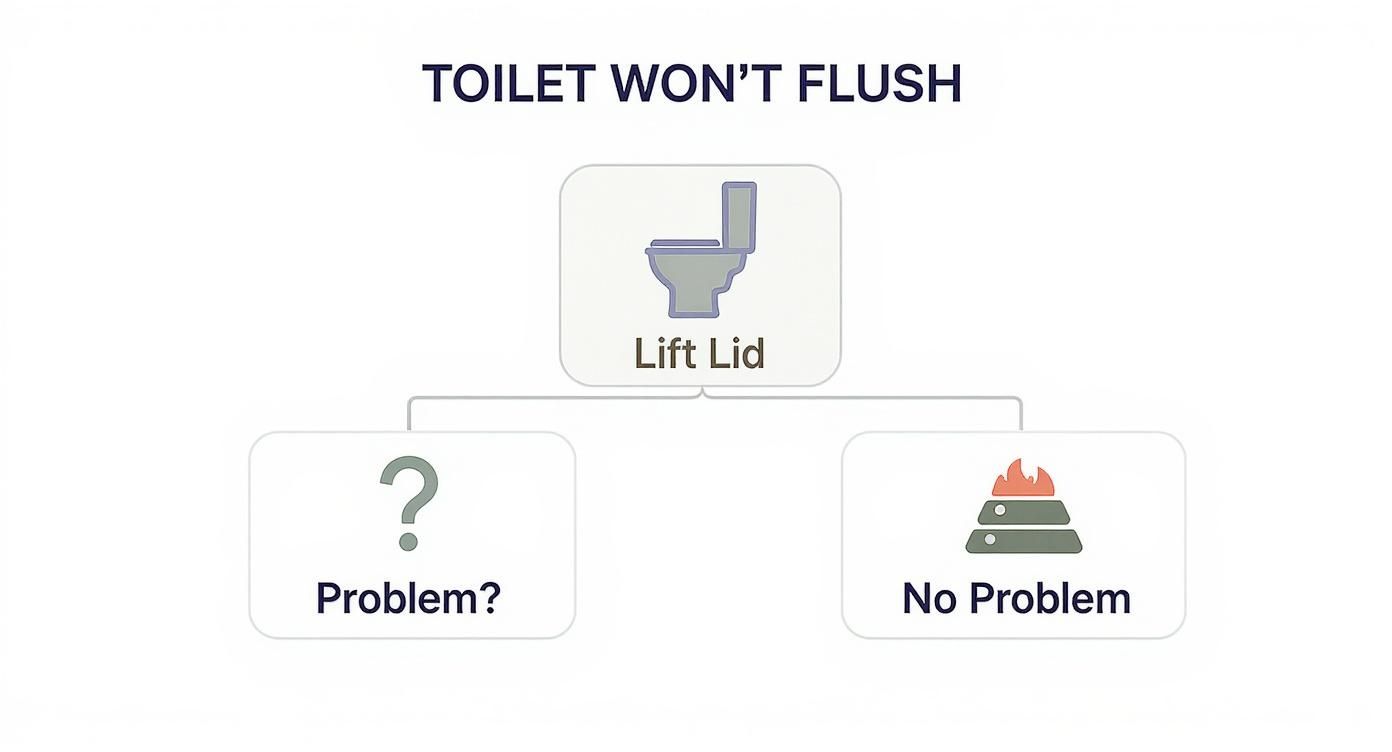
As you can see, the first thing you should always do is lift the lid and see what’s actually happening (or not happening) when you try to flush.
Pro Tip: A weak or incomplete flush nearly always points to an issue inside the tank. But if you get a powerful flush that just makes the water level rise threateningly, that’s a clear sign of a blockage preventing water from getting away.
Rapid Toilet Flush Troubleshooting Checklist
To make things even easier, here’s a quick-glance table to help you nail down the problem and find a straightforward DIY fix.
| Symptom | Likely Culprit | What You Can Try Now |
|---|---|---|
| Handle is loose or does nothing | Disconnected/broken handle or chain | Open the tank. Check if the chain has fallen off the handle's arm and reattach it. |
| Toilet flushes weakly or partially | Flapper isn't lifting high enough | The chain likely has too much slack. Reduce its length by a link or two so it lifts the flapper fully. |
| Water keeps running after the flush | Flapper isn't sealing properly | The chain might be too tight or caught under the flapper. Adjust for about 1-2 cm of slack. |
| The flush is fine, but the bowl water rises and won't drain | A blockage in the S-bend or drain | This isn't a tank issue. Grab a plunger and give it a go. If that fails, it’s time to call a pro. |
Hopefully, this checklist gives you the confidence to tackle the issue yourself. It's surprising how often a five-minute fix is all that's needed.
If you’ve tried these steps and you're still stuck with a stubborn blockage or can’t quite pinpoint the problem, the expert team at Amari Plumbing and Gasfitting is always ready to help. We can quickly diagnose the issue, whether it’s a simple part replacement or a more complex job that needs advanced solutions like our pipe relining in Melbourne.
Don't let a dodgy toilet ruin your day—contact us for fast, affordable service and we'll get it sorted.
Getting Your Toilet Repair Toolkit Ready
Before you even think about tackling a toilet that won’t flush, let's get your tools in order. Trust me, having the right gear on hand can turn a potential weekend-wrecker into a quick five-minute fix. You don't need to raid the local Bunnings; just a few key items will make the whole process cleaner, faster, and way less stressful.
First up, and this is non-negotiable, you need a proper flange plunger. Forget that standard flat-bottomed sink plunger. A flange plunger has a bell-shaped end with a soft rubber flap that folds out. This little flap is the key – it creates a perfect seal over the toilet drain, giving you a heap more power to push through whatever’s causing the blockage.
The Must-Haves for the Job
While a good plunger is your number one weapon, a few other things will save you a world of hassle.
- Rubber Gloves: Don't even think about starting without a solid pair of waterproof gloves. It’s just common sense for hygiene.
- Old Towels or Rags: Lay these around the base of the toilet before you begin. You'll thank me later when they catch any unexpected splashes.
- A Bucket: Incredibly handy. You can use it to manually flush the toilet with water or catch drips if you need to fiddle with any connections.
Sometimes, though, the problem is a bit more complicated than a simple clog, and that’s when your toolkit might need a little expansion.
A quick tip from experience: an adjustable spanner or a set of pliers is great for tightening a wobbly flush handle or adjusting the fittings inside the tank. Just be gentle! It's so easy to over-tighten and crack the plastic parts, turning a small problem into a much bigger one.
If the plunger isn't cutting it, it’s time to bring out the toilet auger, often called a closet auger. This thing is a game-changer. It's basically a long, flexible cable designed specifically to snake through the toilet's S-bend to break up or pull out an obstruction, all without scratching up your porcelain bowl.
Having these basics ready will prepare you for pretty much all the common reasons a toilet decides to stop flushing. But if you’ve given it a go and the problem is still there, you might be looking at something deeper in the pipes. For those really stubborn blocked drains in Doncaster or Balwyn, don't hesitate to give us a bell. The Amari Plumbing team has the professional gear to get it sorted fast. Just contact us for fast, reliable service.
Getting to Know Your Toilet Tank Components
When your toilet stubbornly refuses to flush, the culprit is almost always lurking inside the tank. Don't jump to the worst conclusion just yet—a quick look inside can often point you to a simple fix you can handle yourself.
First things first, let's get the toilet ready for a safe inspection. You'll want to shut off the water supply. Look for a small, oval-shaped valve on the wall behind or next to the toilet and turn it clockwise until it stops. This prevents the tank from refilling while you’re working.
Now, gently take the ceramic lid off the tank. Be careful with this bit; they can be surprisingly heavy and fragile. Pop it on an old towel on the floor to keep it safe from chips and cracks.
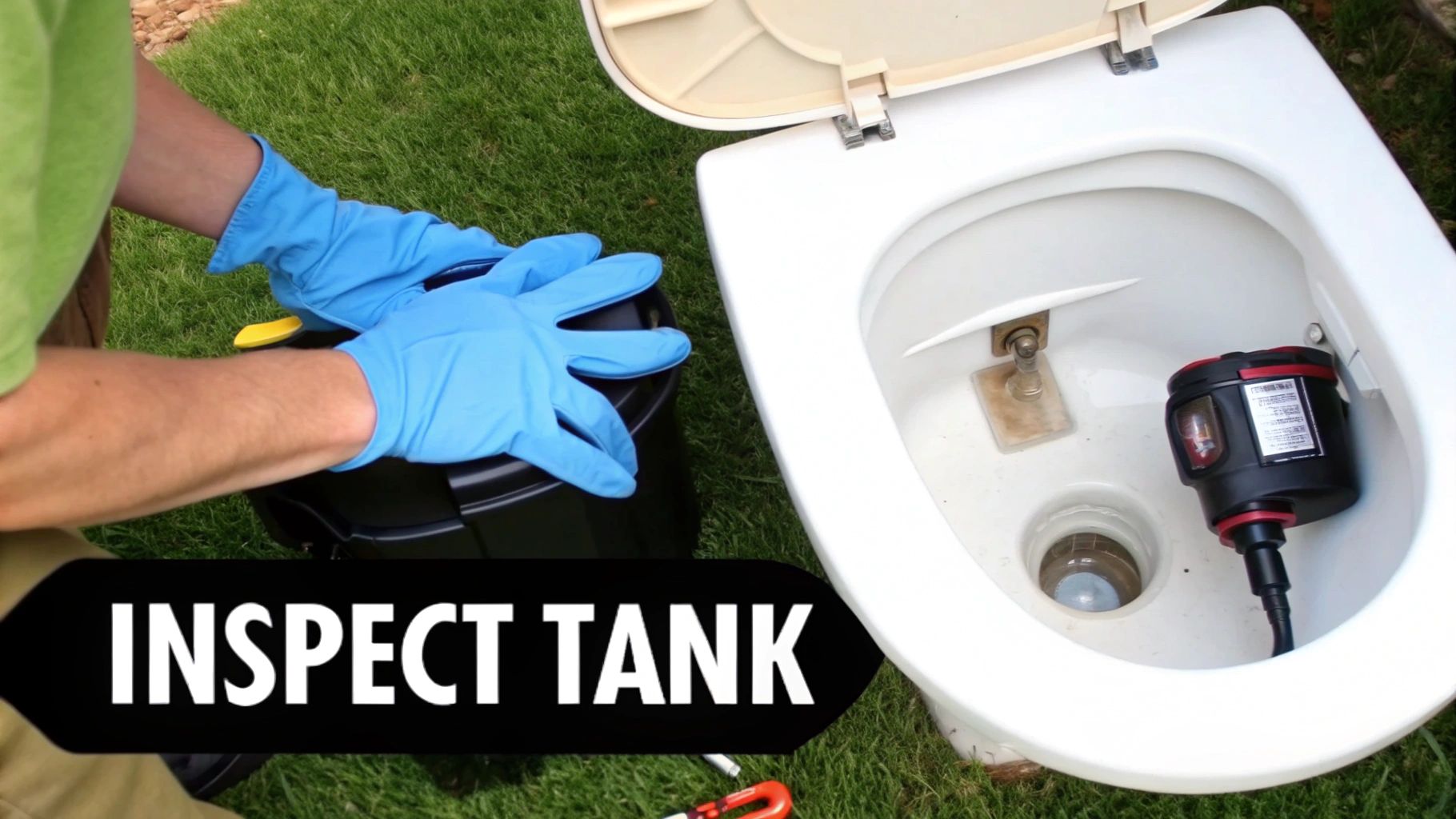
Check the Flapper and Lift Chain
Take a peek inside. More often than not, the problem is the flapper, that rubber seal sitting at the bottom of the tank. Over the years, rubber gets old, brittle, and warped, which stops it from creating a tight seal.
A dodgy flapper can cause a couple of headaches. It might let water constantly trickle into the bowl (that's a running toilet), or it won't lift properly, meaning you don't get enough water for a decent flush. Give it a gentle touch. If it feels hard, crumbles, or is covered in gunk, it's time for a new one.
Attached to that flapper is the lift chain, which connects it to the flush handle. The length of this chain is crucial.
- Too much slack: A droopy chain won't lift the flapper high enough, leading to a weak, unsatisfying flush.
- Too little slack: A chain that's too tight will pull the flapper up slightly, causing a constant, annoying leak into the bowl. You're looking for about 1-2 cm of slack—just enough give without being loose.
A worn-out flapper doesn't just mess with your flush; it wastes a staggering amount of water. If you can hear a constant hissing from your toilet, you've likely got a running toilet on your hands. We've got another guide on how to deal with running toilets in your home.
Verify the Water Level and Fill Valve
Next up, have a look at the water level in the tank. Most toilets have a waterline marked on the inside wall or on the fill valve tube. If your water is sitting well below that line, there's simply not enough in the tank to get the job done.
This usually points to an issue with the fill valve, which is the tall contraption on the left. Check that its float isn't getting stuck on anything. The float is what tells the valve to stop filling the tank once it hits the right level.
Getting these parts working correctly is also a big win for your water bill. Older single-flush toilets in Australia can use a massive 11 litres per flush. Modern dual-flush systems, by comparison, can use as little as 3 litres. For a family of four, that simple difference can save over 6,000 litres of water a month! It really shows why keeping your toilet in good nick is so important.
After checking these key parts, you should have a pretty good idea of what's causing your flushing woes. If everything looks fine but the problem won't go away, or if you're not comfortable replacing parts yourself, it’s probably time to call in a professional plumber near me.
How to Tackle Stubborn Clogs Without Wrecking Your Pipes
So, you’ve checked everything inside the tank and it all looks good, but the toilet still won't do its job. Chances are, you're dealing with a blockage. If a good old-fashioned plunge hasn't shifted the problem, it’s time to step up your game—but that doesn't mean reaching for harsh chemicals that can do more harm than good to your pipes.
For those really stubborn blockages, the best tool you can have is a toilet auger, which you might also hear called a closet auger. This handy gadget is designed specifically to get around the S-bend in your toilet, letting you either break up the obstruction or pull it out, all without scratching the porcelain.
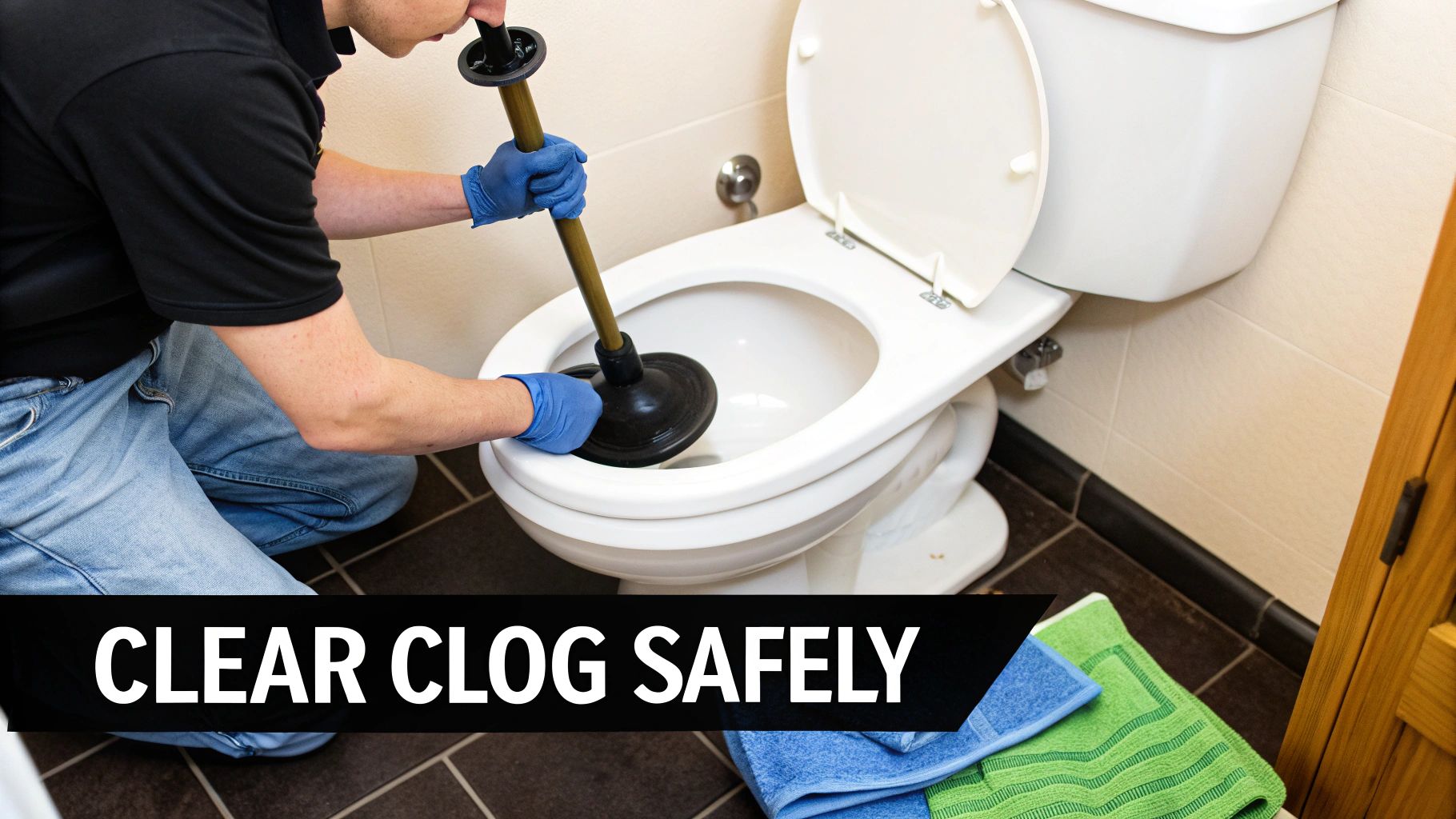
Getting the Hang of a Toilet Auger
Using an auger is pretty straightforward. Start by pulling the handle all the way up, which retracts the flexible cable into its protective sleeve. Carefully guide the end of the sleeve into the bottom of the toilet bowl, making sure it’s aimed right down the drain opening.
Now, slowly push the handle down while cranking it clockwise. This feeds the cable into the trap. You'll feel a bit of resistance once you hit the clog – that's your cue.
Keep cranking gently. The goal is to either break the clog into smaller pieces or to hook onto it so you can pull it back out. Once you feel the blockage give way or you've retrieved it, give the toilet a test flush to make sure water is flowing freely again.
What’s Really Causing These Serious Blockages?
Let's be honest, most of the serious clogs we see aren't from too much toilet paper. The real troublemakers are things that should never have been flushed in the first place. These items simply don't break down in water and end up creating dense, solid blockages deep in your pipes.
Here are the usual suspects we pull out of drains:
- "Flushable" Wipes: Don’t believe the marketing. These are probably the #1 cause of sewer blockages because they just don't disintegrate like loo paper.
- Sanitary Products: Tampons and pads are made to absorb liquid and expand, which is a recipe for disaster in your plumbing.
- Paper Towels & Tissues: They're built to be tougher than toilet paper, so they don’t break down nearly as easily.
- Cotton Balls & Q-tips: These clump together in the pipes, catching other bits of debris until they form a solid mass.
The rule is simple: the only things that should ever go down your toilet are human waste and toilet paper. Treating your loo like a rubbish bin is a surefire way to end up with a clog that a plunger can't fix.
When the Clog Goes Deeper Than Just the Toilet
What if you've used the auger and the toilet is still giving you grief? Or maybe you've noticed other drains in the house, like the shower or sink, are also slow to empty. This is a big red flag.
A clog that affects multiple fixtures usually points to a more serious problem in your main sewer line. This isn't a DIY job; it's something that needs professional gear to sort out properly. Our commercial plumbing and residential services cover everything from simple clogs to complex sewer relining.
For persistent blocked drains, our team uses tools like CCTV drain cameras to find the exact location and cause of the blockage. Sometimes it’s a massive tree root, other times it’s a collapsed pipe. Once we know what we're dealing with, we can get it cleared out for good.
A stubborn toilet clog is frustrating, but with the right tools and a bit of know-how, you can often solve it yourself. The key is knowing when you're out of your depth. If you’ve tried everything and that blockage just won’t budge, it's time to find a plumber and call for backup before a small problem turns into a major, messy headache.
When It’s Time to Call in a Professional Plumber
Look, I'm all for a bit of DIY. Many toilet troubles are simple fixes you can knock over on a Saturday morning. But there are definitely moments when putting the tools down and picking up the phone is the smartest, safest, and cheapest decision in the long run. Knowing when you’re out of your depth can save you from turning a small problem into a waterlogged catastrophe.
If you’ve wrestled with a toilet auger and the clog is still winning, that’s your first big clue. A blockage that stubborn is likely deep in the drain line, well beyond where standard home tools can reach. This is where a professional plumber in Melbourne comes in, armed with the right gear to properly locate and clear it without damaging your pipes.
Telltale Signs You Need an Expert
Another dead giveaway? Water pooling around the base of the toilet. This usually points to a leaky wax ring seal. While it might sound easy enough to replace, getting it wrong can cause slow, hidden leaks that will silently rot your floorboards and subfloor. It’s just not worth the risk.
Listen to what your other drains are doing. If flushing the loo makes your shower or sink gurgle like a drain monster, you’re almost certainly looking at a blockage in your main sewer line. This isn't just a problem; it's a plumbing emergency that needs immediate attention before raw sewage starts backing up into your house. Our emergency plumbers in Melbourne are on call for this very reason.
A Quick Word of Warning: If you suspect a main sewer line issue—multiple slow drains, weird gurgling sounds, or foul smells coming from your pipes—stop using your water immediately and call an emergency plumber. Trying to fix this yourself can lead to serious property damage and very real health risks.
What to Expect When You Call Amari Plumbing
When you call us out to a job in Balwyn or the surrounding suburbs, we come ready for anything. We are experts in everything from gasfitting in Melbourne to complex junction replacement. We can quickly diagnose whether it's a simple clog or something more serious that needs a modern solution like pipe relining in Melbourne. We've got the gear to sort out the problem while protecting your home.
This professional approach is especially important with today’s water-efficient toilets. They’re fantastic for the environment, but they use less water pressure to flush, which can make them less effective against partial blockages. Australia’s push for water conservation, driven by the WELS scheme, has seen average flush volumes drop by about 50% in recent decades. You can read more about these water-saving standards to see how they impact your plumbing.
If you're in Kew dealing with a toilet that just won’t behave, or you need an experienced plumber in Balwyn North, our team is on hand to give you an honest, upfront solution. Don't let a minor headache turn into a major disaster. For any plumbing emergency, from blocked drains to an overflowing toilet, you can get in touch for a fast and reliable assessment.
Got Questions About Your Toilet Flush? We've Got Answers
A toilet that won't flush properly can be a real head-scratcher. As plumbers working across Melbourne, from Hawthorn to Camberwell, we've heard just about every question in the book. Let's tackle some of the most common ones we get from our clients.
Why Is My Toilet Filling Up But Not Actually Flushing?
Ah, the classic ghost flush. This is almost always a problem with the flapper inside your tank. Over time, that rubber seal can get old, hard, and brittle, meaning it no longer creates a watertight seal. Instead of a powerful rush of water creating the siphon needed to clear the bowl, it just leaks slowly, and the flush is weak or non-existent.
Of course, it could also be a sign of a partial clog starting to form down the drain. If the water can't get away quickly, the flush will feel sluggish and incomplete. The first thing to do is pop the lid off the tank and take a look at the flapper. If it's warped or looks damaged, that's your culprit. If it seems fine, you might have a blockage on your hands.
What's the Cost to Fix a Toilet That Won't Flush in Melbourne?
This really depends on what's causing the problem. If it's a simple DIY fix like a new flapper or a broken lift chain, you're only looking at a few dollars for the parts from your local hardware shop.
When you need to call a professional Plumber Melbourne, the cost will naturally go up depending on the job's complexity. A straightforward fix will just be our standard call-out fee. But if you’ve got a serious blockage that needs the big guns—like a high-pressure jet blaster or a CCTV drain camera—the price will reflect that. We always give clear, upfront quotes for all our work, whether it's a minor repair in Hawthorn or more complex sewer relining in Melbourne. The best way to get an accurate figure is to give us a call.
Could a Dodgy Flush Be a Sign of Something Bigger?
You bet. While a toilet no flush issue is often a simple mechanical fault, it can sometimes be the first red flag for a major blockage in your main sewer line. If you've also noticed your sinks or shower are draining slowly, or you hear gurgling sounds from other drains when you flush, that's a huge tell-tale sign of a mainline clog.
This is a true plumbing emergency because it can lead to raw sewage backing up into your home. A broken loo is an inconvenience, but it's worth remembering that access to clean, safe sanitation is a serious issue, even here in Australia. It's surprising to learn that about 24% of the population still doesn't have what's considered safely managed sanitation, with the problem hitting remote and Indigenous communities the hardest. You can discover more insights about Australian sanitation challenges to understand the broader context.
If you suspect a mainline issue at your home in Bulleen or Balwyn North, don't wait. Call an emergency plumber right away to prevent a messy and expensive disaster.
If you've tried all the troubleshooting steps and your toilet is still playing up, Amari Plumbing and Gasfitting is ready to help. Our expert plumbers serve all of Melbourne's eastern suburbs, including Balwyn and Doncaster, delivering fast, reliable, and affordable solutions for everything from leaking taps to hot water systems and gas leaks. Contact us today for a free phone estimate and get your plumbing back on track.