

On average, a hot water system in a Melbourne home will give you about 8 to 15 years of service, but that's not a hard and fast rule. The real lifespan of your unit depends on a few things: what type of system it is (gas, electric, solar), the quality of your local water, and whether it’s been looked after over the years.
Getting a handle on these factors is the key to knowing when it might be time for an upgrade. A trusted plumber in Balwyn can provide an expert assessment to help you plan.
How Long Should My Hot Water System Last?
Trying to predict when your hot water system will finally give up can feel like a bit of a guessing game. The good news is, it doesn't have to be. Each type of unit has a general life expectancy, which gives us a pretty reliable starting point.
Think of it like the tyres on your car. You know they'll last a certain number of kilometres on average, but that changes depending on how you drive and the road conditions. Your water heater is the same. A well-maintained unit might cruise past its expected lifespan, while one that's been neglected could fail much sooner.
Research from Australian consumer groups generally pegs the average lifespan at around 10 to 15 years. You can read a bit more about what they found to see the common issues that come into play.
Average Lifespan of Hot Water Systems in Melbourne
To give you a clearer picture, here’s a quick breakdown of what you can expect from the most common systems we see in Melbourne homes. This table should help you figure out where your own unit is in its lifecycle.
| System Type | Average Lifespan | Key Considerations |
|---|---|---|
| Electric Storage | 8 – 12 Years | These are prone to tank corrosion. The sacrificial anode inside is your best friend for getting a long life out of them. |
| Gas Storage | 10 – 15 Years | Generally quite tough, but the burners and gas fittings need a professional check-up every now and then. |
| Continuous Flow | 15 – 20 Years | They last longer because they don't store water, which means no tank corrosion or sediment build-up. |
| Heat Pump | 10 – 15 Years | A bit more complex with more moving parts, so getting it installed and serviced by a pro is crucial. |
| Solar Hot Water | 15 – 20+ Years | Built to last, but the panels and backup booster need occasional servicing to keep them working at their best. |
Knowing these timeframes helps you plan ahead. If your system is getting towards the upper end of its range, it’s a smart move to start thinking about a replacement before you're stuck with a cold shower and a plumbing emergency.
If you want an expert opinion on your specific unit or need to schedule an inspection, our team of Melbourne plumbers is ready to help. Just get in touch with us for a professional assessment.
Comparing How Long Different Hot Water Systems Last
Not all hot water systems are created equal, and nowhere is this clearer than in how long they last. The tech inside your unit—whether it’s a classic storage tank or a modern continuous flow model—plays a huge role in its lifespan. Getting your head around these differences is the first step to knowing what to expect from the heater in your home.
It’s a bit like comparing a standard family car to a rugged off-roader. They’ll both get you where you need to go, but they’re built for different demands, which impacts how they hold up over the years. A traditional storage tank is a reliable workhorse, but a tankless system is engineered to sidestep the very issues that cause tanks to fail.
Electric and Gas Storage Tank Systems
The old faithfuls found in most Melbourne homes are electric and gas storage tanks. These units keep a big tank of hot water ready to go. They’re dependable and what most of us are used to, but that tank is their Achilles' heel.
Being constantly full of water, especially hard water, means sediment builds up and corrosion eventually sets in. It's the main reason their lifespan is generally shorter than other types.
- Electric Storage Tanks: You can expect these to last somewhere between 8 to 12 years. They rely on heating elements sitting directly in the water, making them a magnet for mineral scale that can cause them to burn out and speed up tank corrosion.
- Gas Storage Tanks: These are a bit tougher, usually giving you 10 to 15 years of service. The constant heating and cooling cycle still puts stress on the tank metal over time, though, leading to eventual failure.
Continuous Flow and Instantaneous Systems
A real game-changer in hot water tech, continuous flow systems (also called instantaneous or tankless) heat water as you need it instead of storing it. This one change is the secret to their long life. By getting rid of the tank, they get rid of the number one cause of failure: tank rust.
This smart design means they often last a lot longer, usually clocking in at 15 to 20 years or even more if you look after them. Since they only fire up when you turn on a hot tap, there’s far less wear and tear on the internal parts. For homeowners in suburbs like Doncaster or Kew, that long-term reliability is a massive plus. Sure, they cost more upfront, but the longer lifespan and energy savings usually make it a worthwhile investment.
The biggest reason they're so durable is the lack of standing water. With no tank, there's nowhere for sediment to settle and harden—a problem that makes storage tanks work harder and fail sooner.
Heat Pump and Solar Hot Water Systems
Moving into the more advanced options, heat pumps and solar systems deliver fantastic energy efficiency and, typically, a very impressive lifespan. They're more complex machines, but they are built to go the distance.
- Heat Pump Systems: These clever units work like a fridge in reverse, pulling warmth from the air to heat your water. They generally last 10 to 15 years. They have more moving parts than a simple tank, so getting a professional installation and regular service is crucial to hitting that 15-year mark.
- Solar Hot Water Systems: Often the marathon runners of the group, solar systems can serve a home for 15 to 20+ years. Because they use the sun's energy instead of constantly firing up burners or elements, there's less mechanical stress on the system. As the Clean Energy Council points out, this reduced strain is a key factor in their longevity. You can discover more about these findings on system longevity and see how it adds up to serious long-term savings.
This chart gives you a quick visual breakdown of what to expect from each type.
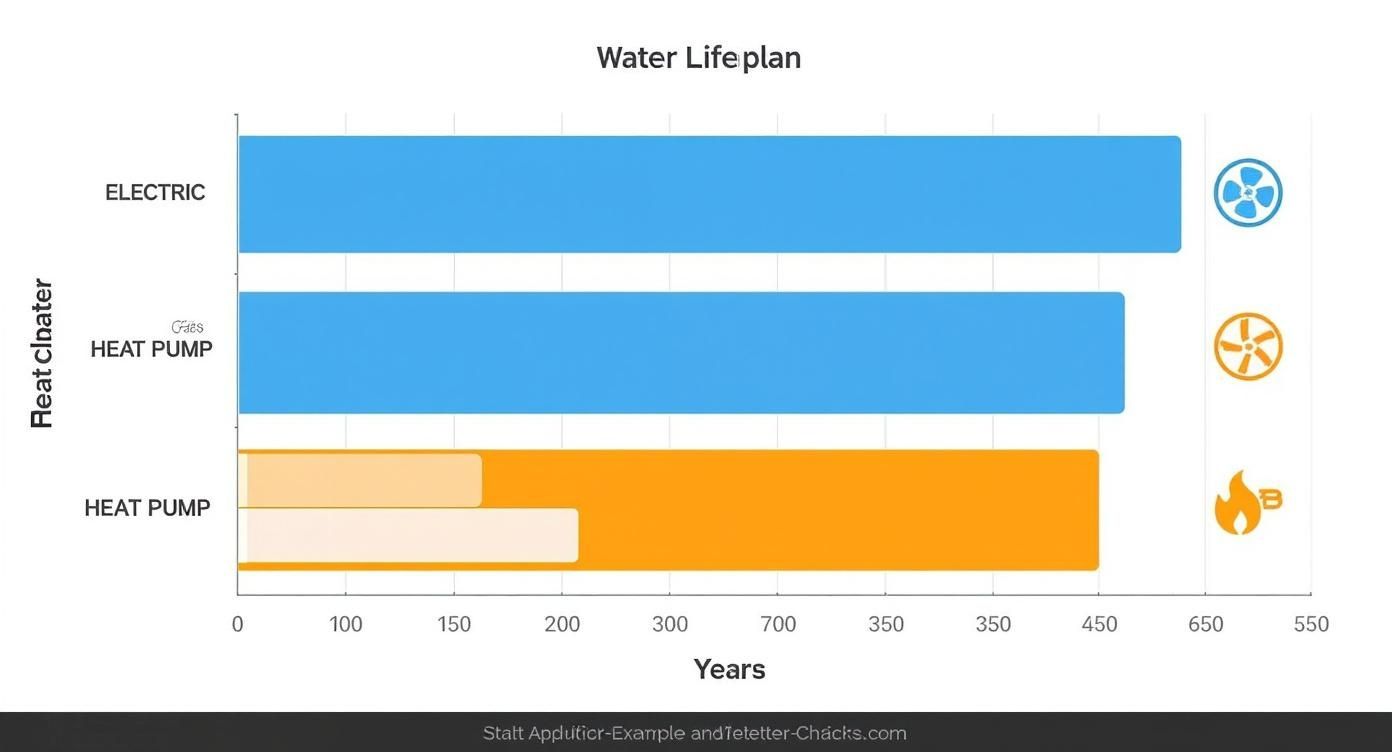
As you can see, while a standard storage system will give you a solid decade or so, jumping to a tankless or renewable option can almost double that. It really highlights the trade-off between the initial purchase price and the long-term value you get.
Understanding these lifespans helps you make a smarter choice. Whether you're staring down a failing unit or planning an upgrade, knowing how long your new system should last is half the battle. If you need a hand figuring out the best fit for your Melbourne home, don't hesitate to contact us for some expert advice.
What Shortens Your Hot Water System's Lifespan
Ever wondered why your neighbour's hot water system conks out after just eight years, while an identical one down the street is still going strong at fifteen? It’s not just luck. There are a few hidden culprits that can silently cut years off your unit's life.
Figuring out what these stressors are is the best way to protect your investment and avoid that dreaded surprise cold shower. For the most part, it boils down to three things: the quality of your water, how well it was installed, and whether it’s been looked after.
The Impact of Melbourne's Water Quality
Melbourne's water is pretty good—it’s considered relatively soft. But it still carries minerals like calcium and magnesium that, over time, can build up inside your tank and on its heating elements. When the water heats up, these minerals form a hard, crusty scale.
Think of this limescale as cholesterol in your system's arteries. It clogs things up and forces the unit to work much harder to heat the water, driving up your energy bills and putting a huge strain on its parts. In an electric unit, this can cause the heating elements to overheat and burn out. In a gas system, it can make the bottom of the tank dangerously hot, weakening the metal over time.
The Critical Role of Proper Installation
A hot water system's fate can be sealed before it even heats its first drop of water. A shoddy or rushed installation is one of the biggest reasons for early failure. Getting a professional gasfitting Melbourne expert from a trusted team like Amari Plumbing ensures all the little details are handled perfectly from day one.
Some common installation mistakes that can take years off a unit's life include:
- Incorrect Pipe Sizing: If the pipes are too small, they restrict water flow and put a strain on the whole system.
- Improper Venting (Gas Units): Bad ventilation leads to inefficient burning and a build-up of corrosive condensation.
- Inadequate Support: A heavy storage tank needs proper support. Without it, you can get stress fractures on pipes and connections.
- Missing or Faulty Valves: The Temperature and Pressure Relief (TPR) valve is a critical safety feature. If it’s not installed correctly, the tank can fail catastrophically.
The environment a system operates in plays a massive part in how long it lasts. A real-world Australian study found that things like the system type and local usage habits have a huge impact on performance and lifespan. You can read the full research about these findings to see how different systems held up under various conditions.
The Damage Done by Neglect
At the end of the day, the most common reason a system fails early is simple neglect. It’s easy to have an "out of sight, out of mind" attitude with your hot water unit, but ignoring basic maintenance is like never changing the oil in your car—a breakdown is inevitable.
For a storage tank system, the most important job is checking the sacrificial anode rod. This is a metal rod designed to corrode so your tank's inner lining doesn't have to. Once it's gone, the tank itself starts rusting from the inside out, leading to leaks and total failure. This kind of corrosion can cause big headaches, so it's good to know what to do about burst water pipes if things get serious.
Regularly flushing the tank to get rid of sediment is another must-do. If you let that sludge build up, it hardens at the bottom, kills efficiency, and makes the tank corrode faster. A quick, professional service every few years can add years to your system’s life. If you're not sure how your unit is holding up, a check-up from one of the best emergency plumbers Melbourne has to offer can give you peace of mind. To schedule a service or get expert advice, contact us today.
Warning Signs Your Hot Water System Is Failing
Your hot water system almost never gives up the ghost without a fight. Long before you're stuck in a freezing cold shower, it’ll usually throw out a few warning signs. Learning to spot these red flags is the best way to catch a small issue before it escalates into a full-blown, laundry-flooding emergency.
Think of it like the check engine light in your car. You can ignore it for a while, but that won’t make the problem disappear—it just makes a bigger, more expensive breakdown more likely down the track. By paying attention to the new sounds, strange smells, and what you can see around your unit, you can act fast and get a professional on the job.
Strange Noises and Smells
Often, the very first clue that something’s not right is a change in how your system sounds or smells. It’s easy to dismiss these things, but they can point to serious internal problems that need a plumber’s expert eye.
A healthy hot water unit should be pretty quiet. If you start hearing new and unusual noises, it's time to play detective. The most common culprits include:
- Banging or Rumbling: This is the classic sound of sediment buildup at the bottom of the tank. As the burner heats the water, steam bubbles get trapped under this layer of mineral gunk, causing them to pop and bang. This noise is a dead giveaway that your system is working way too hard and losing efficiency.
- Popping or Crackling: Just like rumbling, these sharper sounds also point to sediment and scale that has crusted onto the heating elements or the base of the tank.
- Whining or Screeching: A high-pitched squeal could be a sign of a partially closed valve restricting water flow, or it might be excessive scale buildup on the heating elements.
Strange smells are an even bigger deal. A rotten egg smell near a gas unit is a massive red flag because it often means you have a potential gas leak. Natural gas is actually odourless, so a substance called mercaptan is added to give it that distinct smell for safety. If you smell this, you need to act immediately—shutting off the gas and calling for help can keep your family safe while you wait for an expert.
Problems with Your Water
The water coming out of your taps can also tell you a lot about the health of your system. If you notice any weird changes in its colour, temperature, or pressure, your unit is probably on the ropes.
These clues are like direct messages from your heater. Pay close attention if you spot any of these:
- Rusty or Discoloured Water: If your hot water runs brown or has a rusty colour, it’s a very strong sign that the inside of your storage tank is corroding. The sacrificial anode rod has likely been completely used up, and now the tank itself is rusting away from the inside out.
- Fluctuating Water Temperatures: A system that can’t keep the temperature steady—blasting you with scalding hot water one minute and lukewarm the next—often has a faulty thermostat or dying heating elements.
- Low Hot Water Pressure: If your hot water pressure suddenly drops, it could be caused by sediment buildup clogging the pipes on their way out of your heater.
The big takeaway here? Rusty water almost always signals the beginning of the end for a storage tank system. Once internal corrosion starts, a leak is usually just around the corner, making a full replacement pretty much inevitable.
Visible Leaks and Moisture
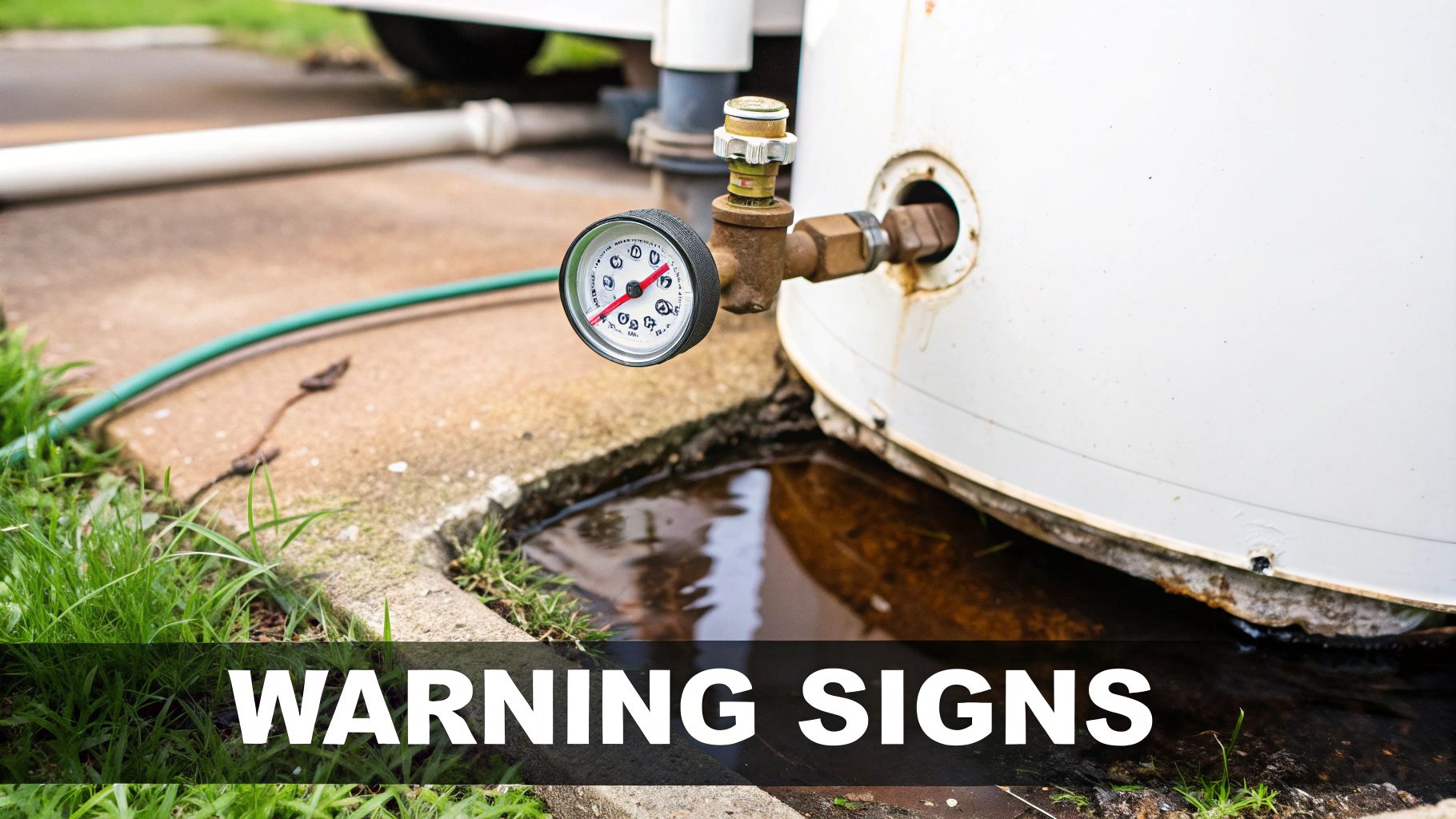
This is the most obvious warning sign of all: a puddle of water around the base of your hot water unit. While it's normal for the temperature and pressure relief (TPR) valve to release a small amount of water occasionally, a constant drip or a growing puddle is a serious problem.
Any leak, no matter how small, needs to be checked out by a licensed plumber in Melbourne. Leaks can come from a few places, like corroded pipes, dodgy connections, or a crack in the tank itself. A leaking tank is a critical failure that can't be repaired—the whole unit will have to be replaced. For anyone living in suburbs like Doncaster, spotting a leak early can be the difference between a simple replacement and dealing with major water damage.
If you've noticed any of these warning signs, don't just cross your fingers and hope for the best. A quick inspection from a professional can diagnose the issue and save you from a huge headache. Contact Amari Plumbing and Gasfitting for a fast, expert assessment of your hot water system.
Repair or Replace? Making the Right Call on Your Hot Water System
When your hot water system starts acting up, you're hit with the classic homeowner's dilemma: do you patch it up with a repair, or is it time to bite the bullet and invest in a new one? It’s more than just a question of getting the hot water flowing again—it's a financial decision that can affect your household budget for years to come.
The answer isn't always black and white. A quick fix might seem like the cheapest path forward, but if your system is on its last legs, you could just be throwing good money after bad. On the flip side, a full replacement is a hefty upfront cost, but a new, more efficient unit could save you a bundle on energy bills down the track.
To cut through the confusion, we plumbers often fall back on a handy rule of thumb: the 50% rule. It’s a surprisingly simple way to weigh up your options.
The 50% Rule: If a repair is going to cost more than 50% of the price of a new, comparable system, and your current unit is already past the halfway mark of its expected lifespan, replacement is almost always the smarter financial move.
Think of it this way: if a brand-new system costs $2,000 to supply and install, and your 10-year-old storage tank (which has a typical 12-year lifespan) needs an $1,100 repair, the rule says it's time for an upgrade. Pouring that much cash into an old unit just doesn't make sense when another breakdown could be just around the corner.
Key Factors to Guide Your Decision
Beyond the 50% rule, there are a few other crucial signs to look for. Taking a hard look at your system's age, performance, and recent repair history will give you a much clearer picture of whether a repair is a wise investment or just delaying the inevitable.
- Age of the Unit: As we've covered, every system has a use-by date. If your old electric storage tank is nudging 12 years or your instantaneous unit is nearing 20, it’s living on borrowed time. Forking out for major repairs on a system that old is rarely a good idea.
- Energy Efficiency: Let's be honest, an older unit is probably chewing through more power or gas than a modern, high-efficiency model. Upgrading from a clunky 12-year-old storage tank to a new heat pump or a 5-star gas system can lead to serious energy savings—so much so that the new unit can start to pay for itself over time.
- Frequency of Repairs: Has your Melbourne plumber become a regular visitor? If you're on a first-name basis with them because of constant callouts, it’s a massive red flag. One minor repair is one thing, but if you’re fixing it every six months, the system is telling you it's time to retire.
When a Repair Makes Sense vs. When to Replace
Sometimes, a small, inexpensive fix is all you need. A dodgy thermostat or a burnt-out heating element can often be swapped out for a fraction of the cost of a new unit, potentially giving your system several more years of faithful service.
A leaking tank, however, is a whole different story. For a storage system, rust and corrosion leading to a leak is basically a death sentence—you can't patch up a compromised tank. What’s more, a serious leak can cause a huge amount of water damage to your home, which could mean needing costly services like professional pipe relining in Melbourne to fix the mess it leaves behind. When you're facing that kind of scenario, replacement is really the only way to go.
To help you figure out which path is right for you, we’ve put together a quick decision matrix.
Decision Matrix: Repair vs Replace Your Hot Water System
Use this table as a quick reference guide to help weigh your options when your hot water goes cold.
| Factor | Consider Repair If… | Consider Replacement If… |
|---|---|---|
| Age | The unit is less than halfway through its expected lifespan. | The unit is in the last 25% of its expected lifespan. |
| Repair Cost | The cost is less than 50% of a new unit's price. | The repair cost exceeds 50% of a replacement's price. |
| Energy Bills | Your energy bills have been stable and predictable. | Your bills have been steadily climbing without a change in usage. |
| Problem Type | The issue is a minor, replaceable part (e.g., valve, thermostat). | The tank is leaking or there is significant internal corrosion. |
| Repair History | This is the first or second minor repair in several years. | The system has needed multiple repairs in the last year or two. |
Ultimately, the best way to get a clear answer is to have a professional take a look. A licensed plumber can properly diagnose the issue, give you an accurate quote for the repair, and provide honest advice on whether your system is worth saving.
If you're in Melbourne's eastern suburbs, from Balwyn to Camberwell, our team is ready to help you make the right call. For an expert opinion and a transparent quote, contact Amari Plumbing and Gasfitting today.
How Professional Maintenance Extends Your System's Lifespan
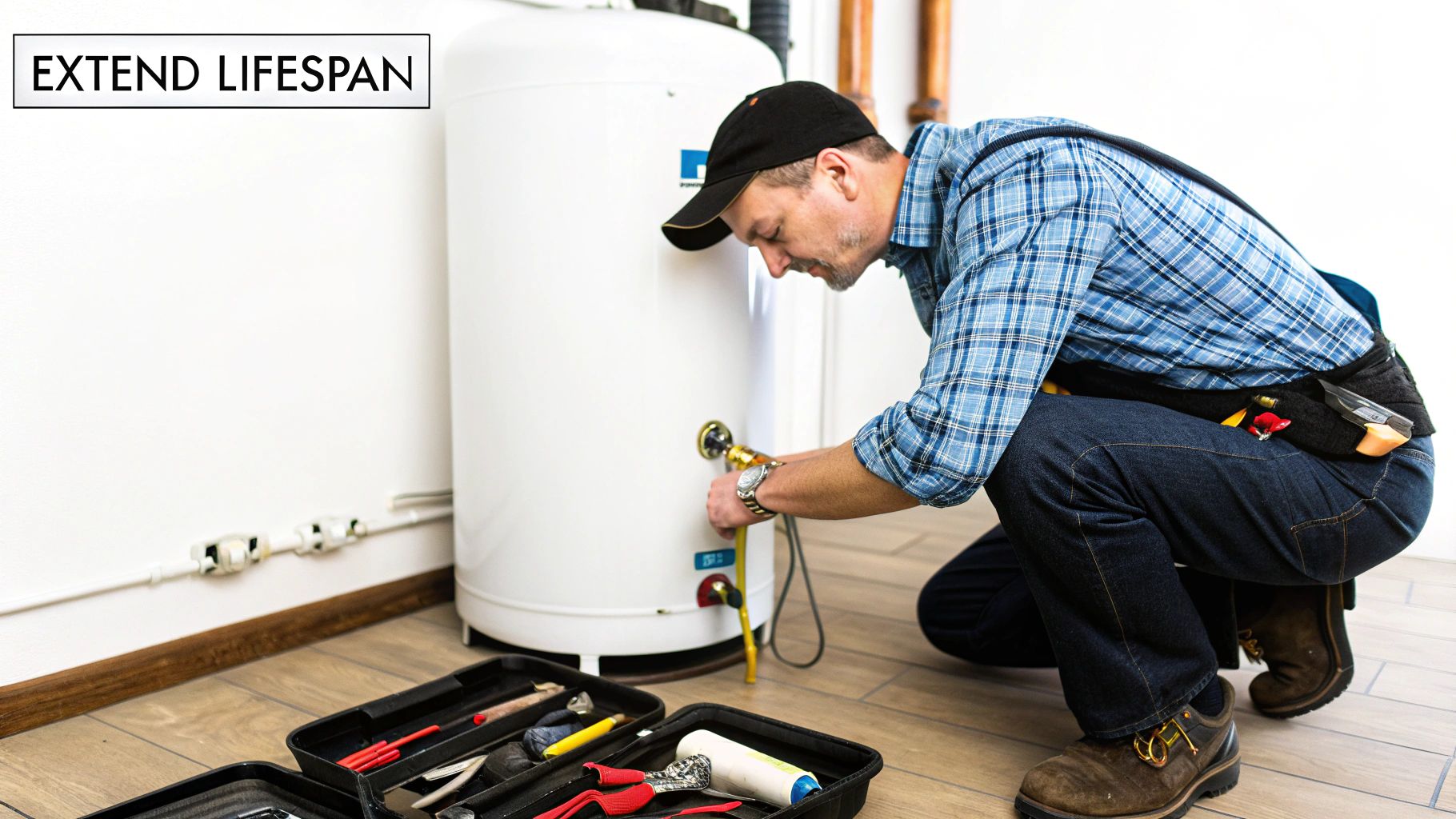
Think of professional maintenance as a regular health check-up for your hot water system. Much like your car needs a service to keep the engine humming, your water heater needs some expert attention to hit its maximum lifespan. This sort of proactive care is genuinely the best way to add years to your unit's life and dodge the nasty shock of an ice-cold shower on a winter morning.
A proper, professional service is way more than just a quick look-over. It gets into the critical tasks that tackle the slow, silent killers of hot water systems—namely, corrosion and sediment buildup. By catching these troublemakers early, you’re not just protecting your investment; you’re making sure your unit keeps running safely and efficiently.
The Role of a Sacrificial Anode Rod
Tucked away inside every storage tank system is a small but mighty component called a sacrificial anode rod. This metal rod is designed to corrode so your expensive tank doesn't have to. It’s a bit of a hero, really—it attracts all the corrosive minerals in the water, essentially sacrificing itself to stop the steel tank lining from rusting out.
An anode rod will typically last about three to five years. Once it's completely eaten away, the water starts attacking the tank itself, which is a one-way ticket to leaks and total system failure. During a service, a plumber will inspect the rod and replace it if it's on its last legs. It’s a small, inexpensive job that can literally double the life of your storage tank.
Flushing the Tank to Remove Sediment
Over time, minerals from the water supply settle at the bottom of your tank, forming a thick, sludgy layer of sediment. This gunk acts like an insulator, forcing the heating element or gas burner to work much harder to heat the water. Not only does this drive up your energy bills, but it also puts a huge amount of stress on the system's components, leading to an early breakdown.
A key part of professional maintenance is flushing the tank. Your plumber will drain the tank completely to clear out all that accumulated muck, which restores your system's efficiency and stops the internal corrosion this buildup causes.
Safety Checks and Efficiency Tuning
Good maintenance isn't just about making things last longer; it's also about keeping you safe. A licensed plumber and gasfitter is qualified to perform essential safety checks that homeowners simply can't.
A scheduled service can uncover hidden dangers before they turn into emergencies. This includes checking for tiny gas leaks on all the connections and fittings, testing the critical Temperature and Pressure Relief (TPR) valve to make sure it works correctly, and verifying that the gas burners are combusting cleanly and efficiently.
These checks are vital for any gas appliance. If you’re thinking about other gas-related jobs, it’s important to understand what’s involved, which is why we’ve put together a guide on installing a gas cooktop.
For homes in areas like Balwyn or Hawthorn, scheduling a regular check-up with a trusted local team like Amari Plumbing and Gasfitting is the smartest way to keep your hot water flowing reliably for years to come. It turns a potential emergency into a predictable, manageable task.
Got Questions? We've Got Answers
Here are a few of the questions we get all the time from Melbourne homeowners. Getting the right information upfront can save you a lot of hassle down the track.
How Much Does It Cost to Replace a Hot Water System in Melbourne?
This is a real 'how long is a piece of string' question, but I can give you a ballpark. In Melbourne, you could be looking at anything from around $1,200 for a simple electric storage unit swap-out, to over $3,500 for a top-of-the-line heat pump or solar system.
The final figure really depends on the type of system you choose, the brand, its size, and how much work is involved in the installation. Sometimes it's a straightforward replacement, other times we might need to modify pipework. The only way to know for sure is to get a detailed quote from a licensed plumber in Melbourne who can assess your specific situation.
Can I Install a Hot Water System Myself?
Look, I get the appeal of DIY, but this is one job you absolutely cannot do yourself. In Australia, installing a hot water system is legally restricted work that must be done by a licensed plumber and, if it's gas, a licensed gasfitter.
It's illegal, incredibly dangerous, and will instantly void your warranty. A botched installation can lead to catastrophic water damage, life-threatening gas leaks, or serious electrical hazards. For your own safety and peace of mind, always call in a qualified professional, like our team who provide expert gasfitting in Melbourne, to make sure the job's done right and to code.
What Is the Most Energy-Efficient Hot Water System?
If you’re looking to slash your energy bills, you can't go past solar hot water and modern heat pump systems. They are hands-down the most efficient options on the market.
Solar, of course, uses the free energy from the sun. Heat pumps are a bit like a fridge in reverse; they pull warmth from the surrounding air to heat the water, using about 70% less electricity than a standard electric storage tank. Yes, they cost more to buy initially, but the long-term savings on your power bills make them a fantastic investment for any Melbourne household looking to save money and go greener.
For an accurate quote tailored to your home or for any other plumbing headache, from blocked drains to a middle-of-the-night emergency, the team at Amari Plumbing and Gasfitting is ready to help. Contact us today for a free phone estimate.