

A stubborn toilet clog can be a real headache, but often a bit of hot water and dish soap is all you need for a quick toilet clog fix. Pouring a careful mix into the bowl can break down greasy build-ups and other organic gunk, letting everything flush away smoothly. If that doesn't cut it, a good old flange plunger can create the seal you need to shift the blockage. These simple tricks often sort things out. However, if you're dealing with persistent blocked drains or need a plumber in Melbourne, it's best to call a professional.
Your First Five Minutes With a Blocked Toilet
We’ve all been there. You flush, and instead of the satisfying whoosh, the water starts creeping upwards. It’s a moment of pure, gut-wrenching panic. But what you do in the next five minutes is crucial and can mean the difference between a simple fix and a seriously soggy bathroom floor.
First things first: do not flush again.
Your immediate job is to stop more water from getting into the bowl. The quickest way is to whip the lid off the tank, reach in, and push the rubber flapper down over the hole at the bottom. This creates a manual seal and stops a second, disastrous flush in its tracks. Once you've dodged that bullet, find the small tap on the wall behind the toilet and turn it clockwise until it stops. That's the water supply shut off.
Take a Breath and Assess the Damage
With the water contained, you can now have a proper look. Is the water draining, just very slowly? Or is it a complete standstill? Can you actually see what's causing the problem? Knowing what you’re up against will help you pick the right tool for the job.
Here in Australia, blocked toilets are one of the most common call-outs we get, right up there in the top three household plumbing dramas. The usual suspects are things that should never be flushed – wet wipes are a big one – or just way too much toilet paper. Sometimes, it's a rogue toy sent on a swimming adventure by a curious toddler. Understanding these common culprits helps you play detective before you even begin. For expert help, you might need to find a plumber who services areas like Hawthorn or Kew.
A blocked toilet isn't just an inconvenience; it's a red flag from your plumbing. Taking a moment to figure out the 'why' can stop a quick fix from turning into a recurring headache. If you're dealing with stubborn blockages, our expert plumbers in Balwyn are always ready to find a permanent solution.
If the blockage looks serious, or you've got a gut feeling it’s something more solid than paper, it’s time to pause. Trying to force something like a toy or a deodorant can just wedge it in deeper and make the problem a whole lot worse. For those recurring clogs that just don't respond to plunging, don't hesitate to get a professional in. A stubborn blockage could signal a bigger issue further down the line in your home's drainage system. If you need a hand, you can always contact us for a fast response.
Alright, let's get into the nitty-gritty. Now that you've got the overflow under control, it's time to switch from damage control to actually fixing the problem. Most of the time, a simple toilet clog can be sorted out with a few straightforward tricks of the trade—the same ones our own team would suggest before you even think about calling us out.
This visual guide shows the two most critical first steps to prevent a messy overflow.
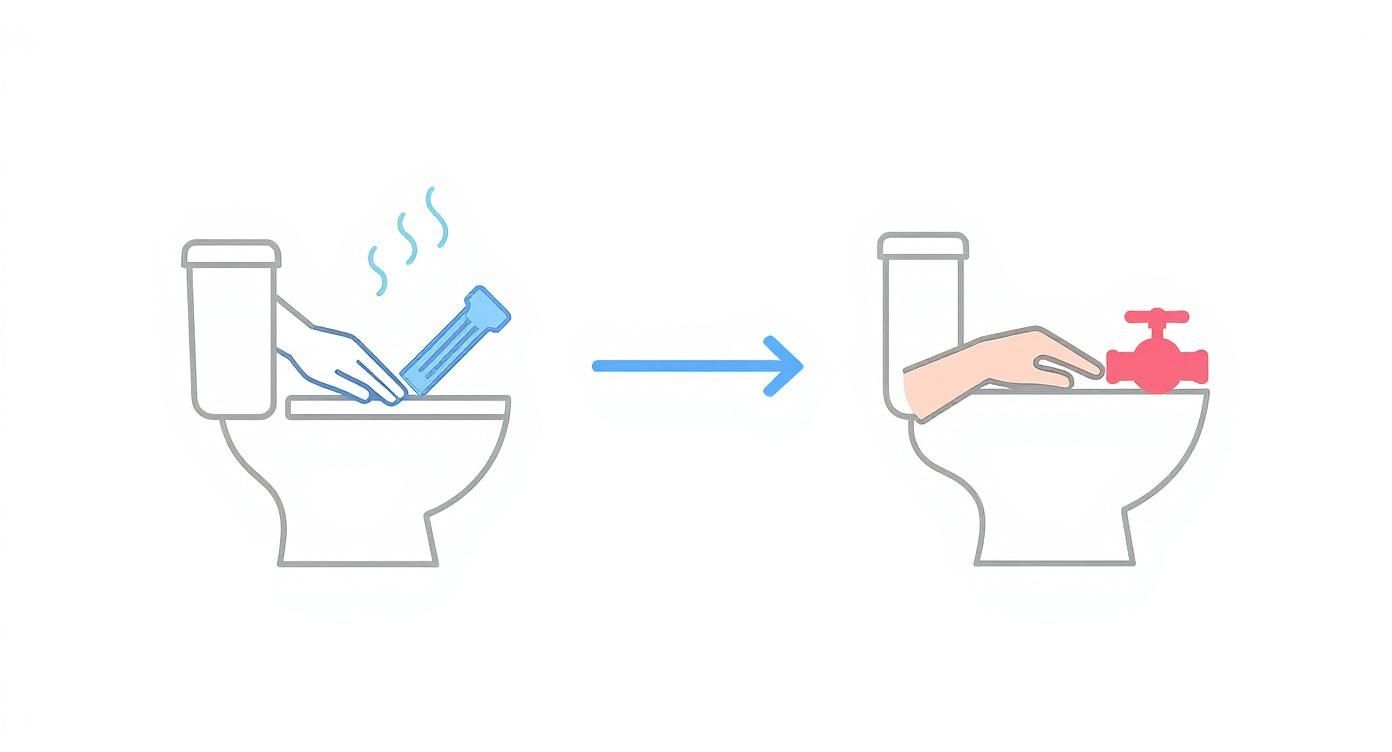
It’s all about quickly stopping the water flow so you can take charge of the situation in just a few seconds.
The Power of a Proper Plunge
First things first: that flat, flimsy plunger you might have for the sink? Toss it aside. For a toilet, you absolutely need a flange plunger. It’s the one with a bell shape and an extra flap that extends out, which is essential for creating a rock-solid seal over the drain opening.
Make sure there's enough water in the bowl to completely cover the plunger's cup. Your first push should be a gentle one—this gets the air out without splashing grubby water all over your bathroom. Once the seal is set, get to work, plunging firmly in and out for about 20 seconds. The real magic here is using the force of the water to dislodge the blockage, not just pushing air around.
A common mistake is going full-throttle from the start. A gentle first push to create a vacuum seal is the key to an effective plunge. It directs all the force right where it needs to be—on the clog itself.
The Hot Water and Dish Soap Method
If you suspect the culprit is just too much toilet paper or other organic stuff, this trick can work wonders. It's a much gentler approach that lubricates the clog and helps it break apart on its own.
Just squirt a good amount of dish soap directly into the toilet bowl. Give it about 15 minutes to work its way down and get all around the blockage. Next, carefully pour a bucket of hot water into the bowl from about waist height. I have to stress this: use hot water, not boiling. Boiling water can actually crack the porcelain, and trust me, that's a much bigger headache.
The combination of heat and soap will often dissolve and loosen the clog enough for it to clear on its own after about 30 minutes.
When to Bring in the Toilet Auger
Still no luck? If the plunger and hot water haven't done the job, it’s time to step it up with a toilet auger, sometimes called a plumber's snake. This tool is a lifesaver because it's specifically designed to snake through the toilet's S-bend without scratching up the bowl.
Gently feed the flexible cable down the drain until you feel it hit the blockage. Then, turn the handle clockwise to "hook" onto whatever is down there. From here, you can either try to push forward to break it up or, better yet, pull it back out. Learning how to clear blocked drains with an auger can definitely save you a call-out fee for many stubborn clogs.
Of course, if none of these DIY methods make a dent, it's a pretty clear sign the blockage is deeper down the line. That's when it's time to call in the professionals from Amari Plumbing. For a stubborn clog that just won’t budge, contact us for a fast and effective solution.
Knowing When to Throw in the Towel and Call a Plumber
Look, a plunger or a toilet auger can feel like a magic wand for most common clogs. But every now and then, what seems like a simple blockage is actually just the tip of the iceberg—a symptom of a much bigger, nastier problem lurking deeper in your pipes. A reliable team of Melbourne plumbers can diagnose these complex issues.
Figuring out when to put the DIY tools away and pick up the phone is probably the smartest move you can make. It can be the difference between a quick fix and a full-blown plumbing disaster that soaks your floors and drains your bank account.
If you’ve successfully cleared a clog, only to have it stubbornly return a few days or weeks later, you’re not just unlucky. That’s a classic sign of a more serious obstruction way down the drain line, far beyond the reach of your auger. Persistent clogs always need a professional eye, whether you're in Camberwell or Bulleen.
Gurgling Sounds and Slow Drains Are Big Red Flags
Start paying attention to your other plumbing fixtures. Do you hear weird gurgling noises from the shower drain or sink when you flush the toilet? That’s a tell-tale sign. It happens when the flushed water has nowhere to go, forcing air back up through the system wherever it can escape.
Even worse, if flushing the toilet makes water back up into your tub or shower, you're almost certainly dealing with a blockage in the main sewer line. These aren't just minor quirks; they are urgent warnings that the problem is way bigger than just your toilet.
Your home’s plumbing is one big interconnected system. A problem in one spot, like a gurgling sink, is often a distress signal from another part of the line. Ignoring these signs is like putting tape over your car's check engine light—it rarely ends well.
That Awful Smell Just Won't Go Away
A lingering sewage smell hanging around your drains, even after you think you've cleared a clog, means waste isn't being carried away properly. This could be from a partial blockage that’s still trapping gunk or even a venting problem somewhere in your plumbing system. For issues like this, you may need a plumber near me for a quick response.
Ignoring these issues is a massive financial gamble. Blocked drains and pipes are behind a staggering percentage of all water damage incidents in Aussie homes. The average repair bill can easily soar into the thousands, making a plumber's call-out fee look like a bargain. You can discover more about these insurance claims to get a real sense of the potential costs.
What a Professional Plumber Brings to the Fight
A licensed plumber has the heavy-duty tools and, more importantly, the experience to sort these complex problems out for good. Here’s what a professional brings to the table:
- CCTV Drain Cameras: We can run a tiny camera deep into your pipes to get a clear look at what's really going on. No more guesswork—we’ll see if it’s tree roots, a collapsed pipe, or years of grease build-up.
- Hydro-Jetting: Think of this as a pressure washer for the inside of your pipes. It uses high-pressure water jets to obliterate stubborn blockages and scour the pipe walls clean, which helps stop future clogs from forming.
- Modern, Trenchless Solutions: If we find a damaged pipe, we can often offer no-dig solutions like pipe relining in Melbourne. This clever technique fixes the pipe from the inside, so we don’t have to tear up your garden to get to it. We also specialise in sewer relining.
If any of these warning signs sound familiar, don’t wait for a small headache to turn into a huge catastrophe. Contact Amari Plumbing for a proper diagnosis and a solution that will actually last.
Alright, you’ve given it your best shot with the plunger and the toilet is still stubbornly blocked. It’s time to call in the professionals.
When you’re staring at a potential bathroom flood, it’s easy to panic-dial the first plumber you find on Google. But taking just a few minutes to check a few things can save you a world of pain from dodgy work and surprise bills. Especially here in Melbourne's eastern suburbs, knowing who you’re letting into your home is crucial. Whether you need a plumber in Balwyn North or require urgent help from emergency plumbers in Melbourne, it pays to choose wisely.
First things first: licensing and insurance are non-negotiable. Any plumber worth their salt in Victoria will be licensed with the Victorian Building Authority (VBA). This isn’t just red tape; it's your guarantee they’ve got the right training to handle the job safely. Don't be shy—ask for their license number and make sure they have public liability insurance. That's what protects your home if things go sideways.
What to Expect From a Professional Service
A good plumber doesn't just clear the blockage; they figure out why it happened in the first place.
They should also be able to give you transparent, upfront pricing over the phone for a standard job. If someone is vague about costs or only wants to charge by the hour for a blocked toilet, that’s a red flag. The best in the business usually charge by the job, so you know exactly what you’re in for. Our team of Melbourne plumbers provides clear quotes for all jobs, including gasfitting in Melbourne.
Hiring a real pro isn't just about fixing the immediate problem. It’s about getting a long-term solution and the peace of mind that comes with it. A trustworthy plumber will stand by their work, offer a warranty, and won’t leave a mess for you to clean up.
You’ll also notice a difference in the tools they use. For a clog that keeps coming back, they’ll bring out the big guns, not just a simple toilet auger. This might involve:
- CCTV Drain Inspection: A tiny camera gets sent right down the drain to get a clear picture of what’s causing the trouble. It could be anything from invasive tree roots to a collapsed pipe section. No more guesswork.
- Hydro-Jetting: Think of this as a pressure washer for the inside of your pipes. It uses high-pressure water to blast away years of built-up gunk and scale, which is far more effective than just snaking the drain.
A solid local reputation is also a massive tell. Jump on Google and look for reviews from people in your neighbourhood. If you need a plumber in Doncaster, for example, seeing positive feedback from your neighbours is a huge confidence booster. It tells you they’re reliable, responsive, and know the area.
Ultimately, when you've got a plumbing emergency, you need a team that’s not only skilled but also respects your time and your home. For anything from a seriously stubborn toilet to a major sewer line issue, contact Amari Plumbing and Gasfitting for fast, professional service you can rely on across Melbourne’s east.
Look, nobody enjoys dealing with a blocked toilet. Once you've fixed one, you definitely don't want a repeat performance. The best way forward is to get proactive and build some simple habits to keep your plumbing happy and your drains clear.
It all boils down to one golden rule: your toilet is not a rubbish bin.
This means you’ve got to be really mindful of what goes down the drain. I'm looking at you, "flushable" wipes. These things are a plumber's nightmare. They don't break down like toilet paper and are one of the biggest culprits behind stubborn blockages that need a professional to sort out. Our expertise in commercial plumbing shows us that this is a major issue in businesses as well.
Master What Can and Cannot Be Flushed
Getting everyone in the house on the same page is your first line of defence. Pop a small bin next to the toilet—it’s the perfect little reminder to toss things in there instead of flushing them.
Seriously, the only things that should ever go down your loo are human waste and toilet paper. And even with the toilet paper, don't go overboard.
To make it crystal clear, here’s a quick guide on what should never enter your plumbing system.
Flush or Not Flush: A Homeowner's Guide
We see the same offenders causing clogs time and time again. This table breaks down the most common culprits we find blocking up Melbourne drains.
| Item | Safe to Flush? | Reason |
|---|---|---|
| "Flushable" Wipes | No | They don't disintegrate and create massive, stubborn clogs. |
| Paper Towels | No | Built to absorb, they just don't break down in water. |
| Feminine Hygiene Products | No | These are designed to expand, which is a total disaster for pipes. |
| Dental Floss | No | Floss acts like a net, wrapping around other debris to form a blockage. |
| Cotton Balls/Swabs | No | They clump together into dense balls and cause serious obstructions. |
Just by sticking to this simple rule, you'll eliminate over 90% of the common causes of household toilet clogs. It’s a tiny change in habit that makes a massive difference to the health of your plumbing.
Adopt Simple Household Habits
Beyond flushing discipline, a few other habits can save you a world of trouble. First, be mindful of how much toilet paper you're using. If you need a bit more, just do a courtesy flush partway through. This simple trick eases the load on your system and helps everything go down smoothly.
Preventing a clog is always cheaper and easier than fixing one. Small, consistent actions like managing toilet paper usage and performing quick monthly checks are the best defence against unexpected plumbing emergencies.
It’s also a great idea to do a quick maintenance check once a month. Just lift the tank lid and watch it flush. Is the flapper creating a proper seal? Does the water stop running once the tank is full? Catching little issues early, like a constantly running toilet, can stop bigger problems in their tracks and save a heap of water. If you notice any issues, you can learn more from our guide on fixing running toilets.
If you've followed all these steps and still end up with a blockage, it might point to a deeper problem in your main drain lines. When prevention isn't enough, it’s time to call in the pros.
Your Toilet Clog Questions Answered
Even after you've wrestled with a plunger, it’s natural to have a few questions lingering in your mind. We get calls about this stuff all the time, so we've put together answers to some of the most common queries we hear from homeowners around Melbourne. Hopefully, this gives you a bit more clarity and confidence.
Can I Just Tip Some Chemical Drain Cleaner Down the Toilet?
Look, we strongly advise against it. It seems like a quick fix, but those harsh chemicals can cause some serious drama.
For starters, they can generate enough heat to actually crack the porcelain of your toilet bowl. On top of that, they're absolute poison for your pipes, especially in older homes. The corrosion they cause can lead to much bigger, more expensive headaches down the track.
And then there's the safety risk. What happens if it doesn't work? Now you've got a toilet bowl full of caustic, hazardous liquid. The last thing you want is that stuff splashing back at you when you try another method. Stick to the mechanical options first – a good plunger or a toilet auger is always a safer bet.
Why Does My Toilet Keep Blocking Up?
If you're dealing with a blocked loo every other week, that’s not just bad luck. A recurring clog is your plumbing trying to tell you something's wrong. It usually points to a deeper issue.
Here are a few common culprits:
- An old, first-gen low-flow toilet: Some of the early low-flow models just didn't have the oomph needed to clear the bowl properly.
- Something stuck in the S-trap: A kid's toy or another foreign object might be partially lodged in the pipe. It’s not big enough to cause a total blockage, but it’s great at snagging toilet paper and causing frequent backups.
- Sewer line trouble: This is the big one. The real problem could be further down the line, caused by anything from invasive tree roots to a nasty build-up of grease and grime. This is where professional sewer relining can be a game-changer.
A toilet that clogs repeatedly is sending you a message. Continuing to just plunge it is like hitting the snooze button on a major plumbing alarm. It’s time for a professional diagnosis to find and fix the root cause for good.
How Do I Know if the Blockage is in the Toilet or the Main Sewer Line?
Figuring out whether you have a simple toilet clog or a main sewer line issue is crucial. The easiest way is to see what your other plumbing fixtures are doing.
If it's just the one toilet acting up and all your other drains – sinks, showers, the lot – are flowing freely, the problem is almost certainly isolated to that toilet. Easy.
But if you flush the toilet and hear a gurgling protest from your shower drain, that’s a red flag. And if you see water actually backing up into the tub or sink? That’s a classic sign of a main sewer line blockage. This is a plumbing emergency that needs a professional, and fast, to prevent some seriously unpleasant water damage in your home.
For a definitive diagnosis and a quick, effective fix for any toilet clog, big or small, you can rely on the experts at Amari Plumbing and Gasfitting. Contact us anytime for professional help across Melbourne.