

There's nothing more frustrating than a shower that just dribbles or a kitchen sink that takes forever to fill up. It's one of those daily annoyances that can really get under your skin. But before you start picturing a massive plumbing bill, take a breath. Often, the fix is surprisingly simple and something you can sort out yourself in just a few minutes.
Quick Fixes for Low Water Pressure You Can Try Today
That sudden drop in water pressure can feel like a major problem, but honestly, nine times out of ten, it’s just a minor blockage or a valve that’s been bumped half-shut. These are the kinds of things you can diagnose and fix with very little fuss.
By running through a few key checkpoints, you can quickly rule out the usual suspects. The first question to ask yourself is a big one: is the problem at just one tap, or is it affecting the whole house? The answer is your first clue to finding a solution. A professional plumber in Hawthorn can quickly identify the root cause if you're unsure.
Before you get started, it's always a good idea to know what you're working with. If you're not sure what your home's water pressure should be, take a look at our guide on how to test water pressure at home.
To make it even easier, here’s a quick checklist to guide you through the first steps.
Your Water Pressure First-Aid Checklist
This simple table covers the most common culprits we see in Melbourne homes. Work your way down the list to see if you can spot the problem.
| Check/Task | What to Look For | Simple Fix |
|---|---|---|
| Check Fixture Taps | Is the pressure low at only one sink or toilet? | Look for the small valve under the sink/behind the toilet. Ensure it's turned fully anti-clockwise (open). |
| Clean Tap Aerators | Is the flow from a tap weak or sputtering? | Unscrew the very tip of the tap spout. Clean out any grit or limescale from the small filter screen inside. |
| Clean Showerhead | Is your shower more of a drizzle than a downpour? | Unscrew the showerhead. Soak it in a vinegar solution overnight to dissolve mineral buildup, then scrub the nozzles. |
| Check Main Shut-off Valve | Is the pressure low everywhere in the house? | Find your water meter. The main valve handle should be parallel to the pipe (for a ball valve) or turned fully anti-clockwise (for a wheel). |
Running through these checks will solve a huge percentage of low water pressure issues without needing to call in a professional.
Check Your Main Water Valves
Your house has a couple of critical valves that, if not fully open, will definitely choke your water flow.
- Main Shut-off Valve: This is the big one, located right where the water supply enters your property, usually near the water meter out the front. If it's a lever-style ball valve, the handle needs to be parallel with the pipe. If it's an older, wheel-style gate valve, it needs to be turned all the way anti-clockwise until it stops.
- Fixture Stop Taps: These are the little individual valves under your kitchen and bathroom sinks, or behind the toilet. They often get knocked during cleaning or aren't opened up properly after a small repair, which will kill the pressure to that one spot.
Clean Clogged Fixtures and Aerators
Over time, tiny bits of grit and mineral deposits from the water supply build up inside your tap aerators and showerheads. We see this all the time in Melbourne. This gunk basically creates a mini-dam, blocking the water and causing that weak, spluttering flow you're trying to fix. For stubborn issues with blocked drains, a specialist plumber may be required.
Honestly, a clogged aerator is probably the most common (and easiest to fix) reason for low pressure at a single tap. A quick clean can make a world of difference, making it feel like you’ve got a brand-new tap.
This little decision tree can help you visualise the process, starting with the simple stuff first.
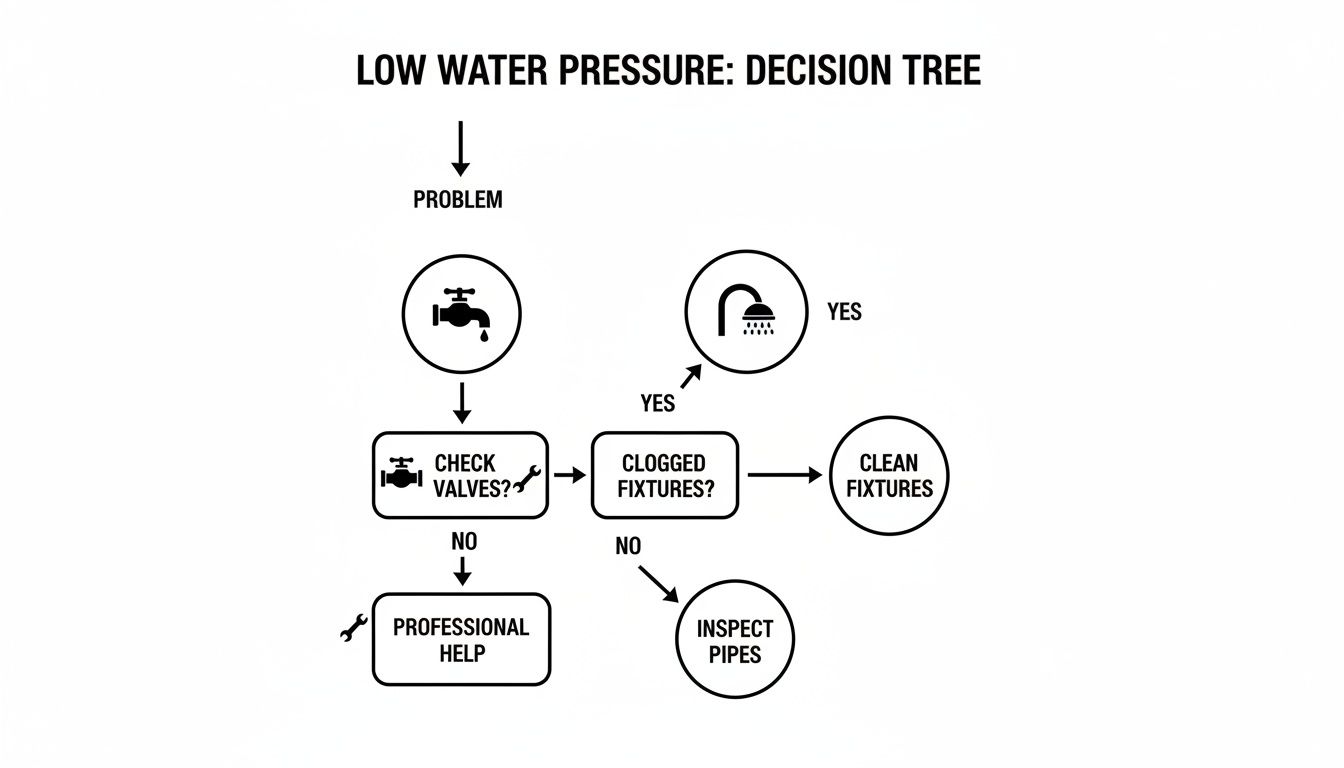
As the chart shows, you always want to start with the easy wins—checking valves and cleaning fixtures—before you even start thinking about more complicated problems.
Is Your Pressure Regulator the Hidden Culprit?
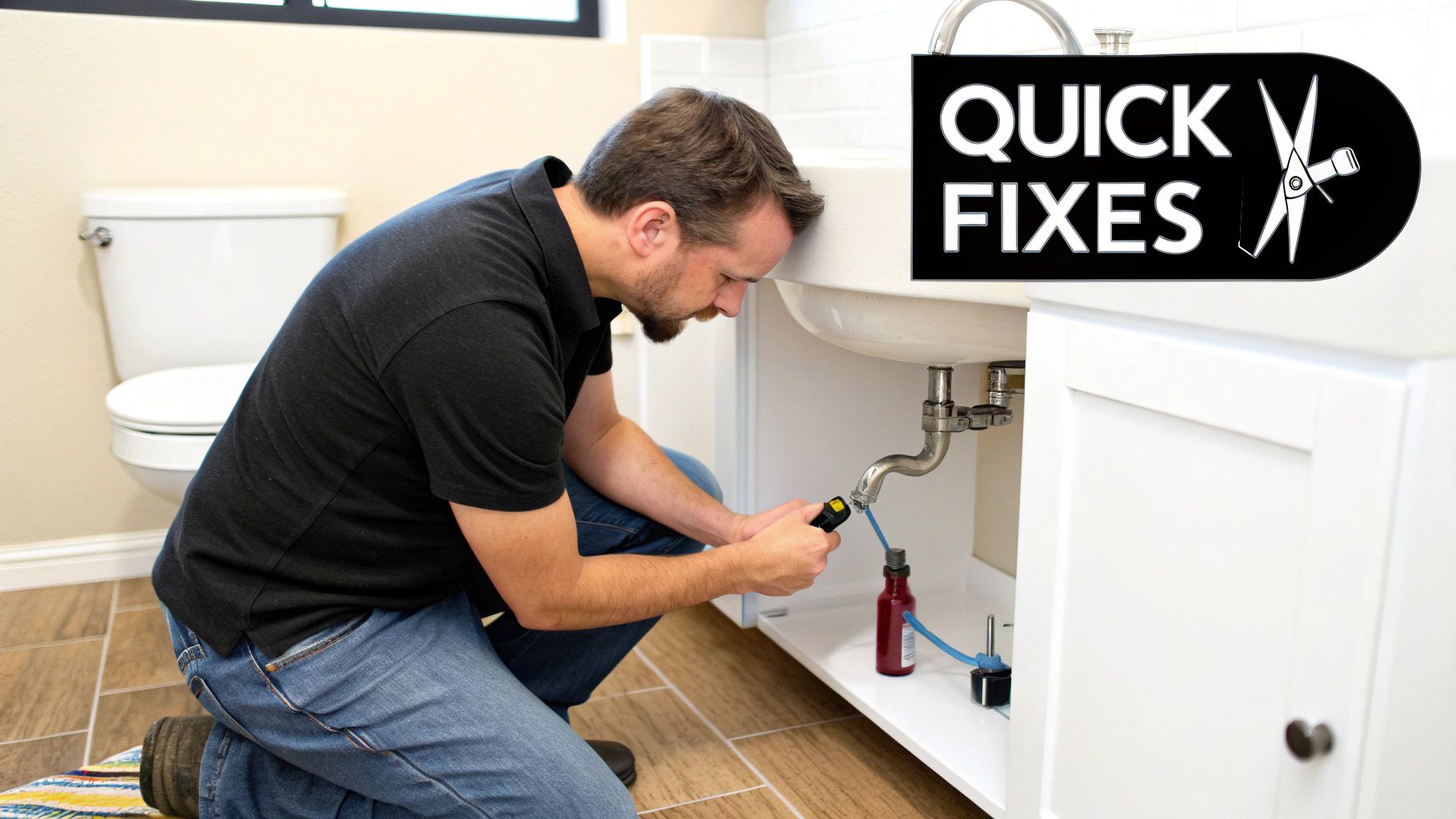
Alright, so you've descaled every showerhead and cleaned every aerator, but the water still just dribbles out. What's next? It’s time to look at the Pressure Reducing Valve, or PRV.
This little bell-shaped gadget is the gatekeeper for your entire home's water supply. It sits between the high-pressure main from the street and your pipes, stepping the pressure down to a safe level. This is crucial for protecting your appliances and tapware from getting blasted with too much force.
But sometimes, a PRV can get a bit too enthusiastic about its job. When it starts to fail or is set incorrectly, it can seriously choke the water flow to your whole property. If you're seeing weak pressure at every tap—the kitchen sink, the laundry, the shower—a faulty regulator is often the prime suspect. A local plumber in Camberwell can quickly diagnose a faulty PRV.
Finding and Checking Your PRV
In most Melbourne homes, you'll find the PRV right where the main water line enters your property. Have a look just after the main shut-off valve and your water meter, often near the front garden tap. You can't miss it; it has a very distinct bell shape with an adjustment screw sitting on top.
Once you’ve located it, give it a quick once-over. Are there any obvious signs of trouble? Look for leaks, corrosion, or that chalky mineral buildup around the valve itself. Any of these are red flags that the PRV might be on its last legs and needs a professional eye.
For a more definitive answer, you'll need a water pressure gauge from your local hardware store. Just screw it onto an outside tap, turn the tap on all the way, and check the reading. This simple test tells you the exact pressure your home is getting from the main.
What's Normal for Water Pressure in Melbourne?
So, what number are you looking for? In Australia, good residential water pressure sits between 300 and 500 kPa (kilopascals). This range keeps your appliances running smoothly without putting extra stress on your plumbing.
It's worth noting that water utilities in Melbourne actively manage network pressure to reduce wear on the mains and conserve water. You can actually see how they do this by looking into local council projects on pressure management.
If your gauge is showing a reading below 300 kPa, there's a good chance your PRV is either set too low or it's malfunctioning. This little test gives you the solid data you need to figure out what to do next.
Now, while you can technically adjust a PRV yourself by turning the screw on top (clockwise usually increases pressure), I’d be very careful. It’s a delicate balance. Overtighten it, and you could cause a massive pressure spike that might damage pipes, hot water systems, and appliances, leading to some seriously expensive repairs. A licensed gasfitting Melbourne professional can do this safely and accurately.
If you think the regulator is the cause of your water pressure woes, it’s always best to get an expert opinion. A professional plumber can diagnose the problem with certainty and make sure any adjustments are done correctly and safely. Don't risk turning a small issue into a major one—give us a call for a professional assessment.
Finding Hidden Leaks and Aging Pipe Problems
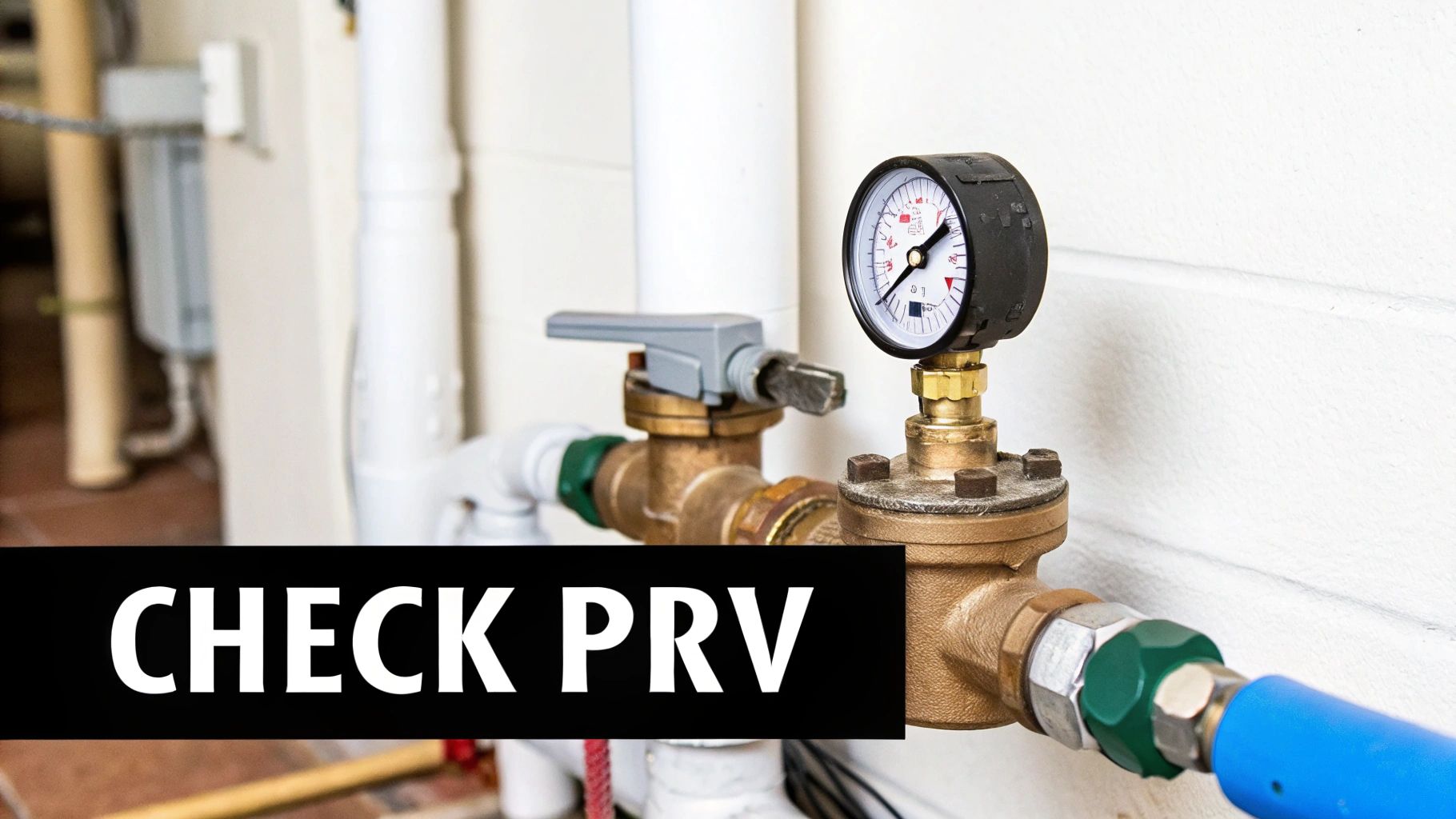
Sometimes, the culprit behind frustratingly low water pressure isn't an easy fix like a clogged tap or a stiff valve. The real problem might be something more serious hiding inside your walls or under the floorboards—a hidden leak.
Even a tiny, pinhole-sized leak is enough to cause a noticeable drop in pressure as it constantly lets water escape the system. If you leave them, these sneaky leaks can lead to major structural damage, mould growth, and some seriously scary water bills.
Luckily, you can do a simple check yourself using your home's water meter. It's one of the most reliable ways to find out if you're losing water somewhere you can’t see.
Using Your Water Meter to Spot a Leak
Think of your water meter as your own personal leak detector. Running a quick test is surprisingly easy and can save you a ton of guesswork.
Here’s how you do it:
- Shut everything off. First, make sure every tap, shower, dishwasher, and washing machine in the house is completely turned off. No water running, anywhere.
- Find your meter. It’s usually located at the front of your property, near the street. Once you find it, take a quick photo of the numbers on the dial or just jot them down.
- Wait it out. Now, don't use any water for at least an hour or two. The longer you can wait, the more accurate the test will be, especially for catching very slow drips.
- Check it again. Head back to the meter and compare the new reading to your original one. If those numbers have moved at all, even a little bit, it’s a sure sign that water is flowing somewhere on your property.
If the numbers have changed, you’ve got a leak. To get more info on tracking it down, check out our detailed guide on how to detect water leaks.
The Problem with Old Galvanised Pipes
What if your meter test comes back clear, but your pressure is still terrible? The problem could literally be the pipes themselves.
Many older Melbourne homes, especially those built before the 1970s, were plumbed with galvanised steel pipes. While they were tough in their day, these pipes are notorious for corroding from the inside out as they age.
Over the decades, rust and mineral deposits build up on the inner walls, a bit like plaque in an artery. This build-up slowly chokes the pipe, narrowing the space for water to flow and causing that persistent, weak pressure you're experiencing. A skilled plumber in Balwyn can inspect your system and advise on the best course of action.
A classic giveaway of corroded galvanised pipes is seeing a burst of brown or rusty water when you first turn on a tap that hasn't been used in a few hours. That’s a clear sign that rust is flaking off the inside of your plumbing.
If you think aging pipes are the issue, this is definitely a job for a professional. A licensed plumber in Balwyn North can properly inspect the condition of your pipes. Modern solutions like pipe relining Melbourne can often restore full flow without the massive cost and disruption of a complete pipe replacement, giving your old plumbing a new lease on life.
When the Problem Is Beyond Your Property Line
So, you've done the rounds. You’ve checked every valve, cleaned out the aerators, and stared at your water meter until you’re dizzy, but it’s not budging. If you’ve exhausted all the fixes inside your property and your pressure is still just a trickle, it’s time to look further afield.
The issue might not be your plumbing at all. Often, the real source of weak water pressure is the municipal supply network itself.
Peak Usage Times and Network Maintenance
Ever jumped in the shower at 7 am only to find the pressure has mysteriously vanished? You're not alone. When the whole neighbourhood is trying to get ready for work or school at the same time, the demand on the local water mains can cause a temporary pressure drop for everyone. It’s a classic sign of a community-wide issue.
There are a few other common culprits that are completely out of your hands:
- Local Maintenance: Water authorities are always working to maintain and upgrade the network. This sometimes means they need to reduce the pressure in an area for a few hours or a day while they get the job done.
- Fire Hydrant Use: If you see firefighters hooked up to a hydrant down the street, expect a significant, but temporary, drop in pressure. They draw a massive amount of water, which affects everyone connected to that main.
These situations usually sort themselves out. But if the problem drags on, it’s worth a call to your local water authority. As a plumber in Doncaster, we get to know the pressure quirks of different areas and can often tell you if what you’re seeing is normal for your street.
The quickest way to figure out if it's a council issue? Pop next door and ask your neighbour. If they're dealing with the same weak flow, you’ve just saved yourself a whole lot of head-scratching over your own pipes.
How Water Utilities Manage Pressure
Australian water utilities don't just blast water through the pipes at full bore. They actually regulate pressure quite carefully across the network. It’s a balancing act to conserve water and, more importantly, to prevent the strain that leads to burst mains and costly leaks.
It's a smart strategy, but it can mean that homes at the end of a supply line or on higher ground sometimes experience naturally lower pressure. Our water providers have become world-class at this, with 60% of them achieving 'Very Low' Infrastructure Leakage Index scores. This success is largely thanks to their strategic use of pressure-reducing valves across the supply network. You can read more about these national water-saving efforts in industry data reports.
Knowing about these external factors is half the battle. It helps you understand when the problem is out of your hands and a call to the water company is the next logical step.
If you've ruled out a municipal issue and you’re still stumped by low pressure, that's when it's time for a professional diagnosis. Contact Amari Plumbing, and we'll help you get to the bottom of it for good.
When It's Time to Call a Professional Plumber
There’s a real satisfaction that comes from sorting out a plumbing niggle yourself. But knowing when to put the tools down and pick up the phone is just as important. If you’ve worked through all the common DIY checks and you’re still staring at a weak trickle, it’s a sure sign the problem runs deeper than a clogged aerator or a slightly-closed valve.
Trying to tackle more complex jobs, like fiddling with a Pressure Reducing Valve (PRV), can go wrong fast. A bit too much of a turn and you could send a pressure spike through your system, which is bad news for your appliances, taps, and even the pipes themselves.
Recognising the Red Flags
Some symptoms are dead giveaways that you need a professional. If you spot any of these, it’s definitely time to bring in a licensed expert. A trusted plumber in Bulleen can offer reliable advice.
- Sudden, Severe Pressure Loss: If the water pressure falls off a cliff across the whole house, it could point to a serious leak or even a burst main. This isn't a wait-and-see situation; it needs immediate attention from an emergency plumber in Melbourne.
- Discoloured or Rusty Water: This often means your old galvanised pipes are corroding from the inside out. It's a problem that needs a proper diagnosis, not just a tap clean.
- You Suspect a Hidden Leak: Your water meter test is telling you there’s a leak, but you can't see a drop of water anywhere. A professional has the specialised acoustic and thermal gear to find it without making a mess of your walls.
- The Problem is Complicated: Anything involving the PRV, the main water line, or widespread pipe issues really needs the skills and equipment of a licensed plumber.
Why Professional Expertise Matters
Getting a plumber in isn't just about getting the water flowing again. It's about making sure the job is done safely, legally, and for good. A licensed plumber from our team brings years of hands-on experience with the unique plumbing setups found all over Melbourne's suburbs. We know how to spot the tricky issues that are easy to miss. Whether you need a plumber in Kew or require commercial plumbing services, we can help.
A major plumbing failure can turn your life upside down and hit you hard in the wallet. Investing in a professional diagnosis is often the cheapest route in the long run, stopping a small headache from becoming a full-blown disaster like the water damage that comes with hidden burst water pipes.
It’s also about water efficiency. We're all trying to be careful with water, but rising utility costs are a real worry. The Australian Bureau of Statistics noted that Victoria's typical annual household water bill went up by 5.4 percent in 2023-24. You can see more on this in the latest national water account data.
Whether it’s a tricky diagnosis or you need something like a pressure booster pump installed for a permanent fix, an expert gets the job done right. If you’ve hit the end of your DIY road, contact Amari Plumbing & Gasfitting for a reliable and professional solution.
Your Top Water Pressure Questions Answered
We get calls about water pressure from homeowners all over Melbourne, every single week. It's one of those classic "out of sight, out of mind" problems until your shower starts to feel more like a trickle.
Let's run through some of the most common questions we hear and get you some straight answers.
Can a Water Softener Kill My Water Pressure?
Yes, absolutely. A water softener can definitely be the culprit behind a sudden drop in pressure. Think of it like a filter—water has to pass through a tank full of resin beads to get softened.
If that softener is getting on in years, is clogged up with sediment, or was simply too small for your house in the first place, it creates a serious bottleneck. The water just can't get through fast enough, and you feel the result at every tap. Keeping it properly serviced is the key to making sure it’s helping, not hurting.
Will a Fancy New Showerhead Actually Boost Pressure?
This is a classic one. A new showerhead can't magically create more water pressure in your pipes. The pressure coming into your bathroom is what it is.
But what a good "high-pressure" or water-saving showerhead can do is make it feel a whole lot stronger. They're designed to force the same amount of water through much smaller holes. This makes the water spray out faster and with more force, giving you that satisfying, strong shower you're after, even with average home pressure. It’s a cheap and cheerful upgrade that makes a huge difference.
How Do I Know if It’s My Old Pipes?
Trying to figure out if your pipes are the problem takes a bit of detective work, especially if you're in one of Melbourne's older character homes. There are a few dead giveaways.
Keep an eye out for these warning signs:
- Pressure is low everywhere: You've checked the aerators and fiddled with the valves, but the pressure is weak at every single tap. This often points to a system-wide issue, like the pipes themselves.
- Gross, discoloured water: If you turn on a tap and get a blast of rusty or brownish water, that’s a massive red flag. It’s a classic sign that old galvanised steel pipes are corroding from the inside out.
- Visible rust or leaks: Take a look at any pipes you can see under the house or in the laundry. If you spot rust, flaky bits, or damp patches, you’ve got a problem.
If your house was built before the 1970s, there's a decent chance it still has the original galvanised pipes. After 50+ years, they're often at the end of the road. The only way to know for certain is to get a professional to take a look.
A licensed plumber can give you the real story on your pipework's condition. The good news is that a full-scale, yard-destroying pipe replacement isn't always needed. Modern solutions like sewer relining can often give your old pipes a brand new, super-tough inner lining without all the excavation and cost.
If you've gone through this list and you're still scratching your head, it's probably time to call in the pros. The team at Amari Plumbing & Gasfitting has seen it all and has the right gear to get to the bottom of any water pressure problem, big or small. Get in touch today for a proper diagnosis and a fix that lasts.