

That weak shower you have to put up with every morning? It might be more than just a daily annoyance – it could be a red flag for a bigger plumbing problem brewing behind the scenes.
Learning how to test your home's water pressure is one of the smartest, simplest things you can do to stay on top of your plumbing's health. It literally takes a few minutes but can save you a world of hassle and costly repairs down the track. A trusted plumber in Melbourne can always assist, but this is a great first step for any homeowner.
Why Your Home's Water Pressure Is Worth Checking
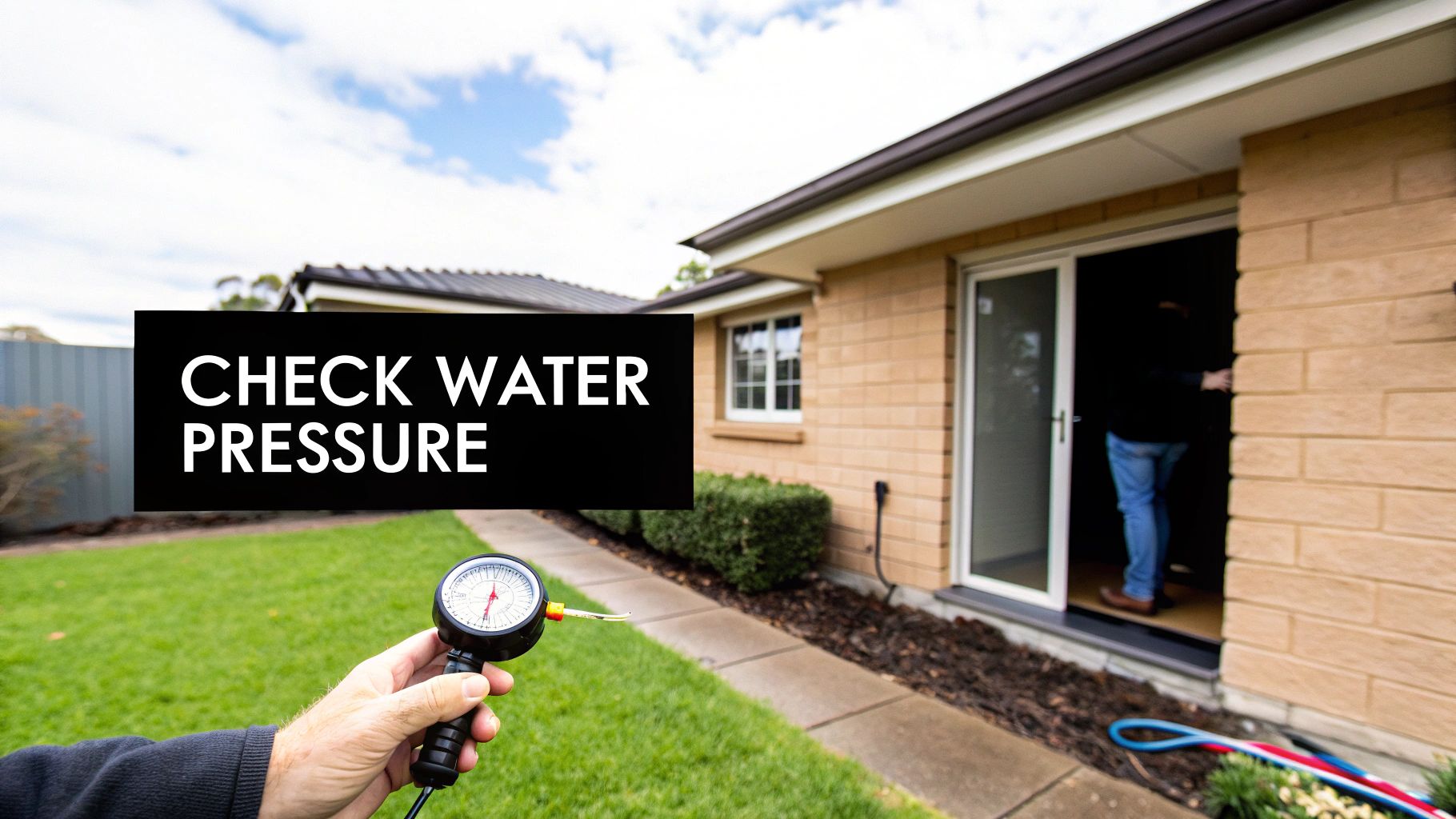
For any Melbourne homeowner, getting a handle on your water pressure is a crucial bit of home maintenance. That one number, measured in kilopascals (kPa), tells you a surprisingly large story about what's going on inside your walls and under your floors.
And it’s not just about the quality of your shower. Having the right, consistent water pressure is essential for your appliances to run efficiently and last as long as they should, from your dishwasher to your hot water system. When the pressure is out of whack, you can bet problems aren't far behind. An expert in gasfitting Melbourne will tell you that correct pressure is vital for all your home's systems.
The Risks of Unbalanced Pressure
Water pressure that's either too high or too low can cause some serious headaches. If you ignore it, you’re not just putting up with daily frustrations – you're risking expensive damage over time.
- Low Pressure Problems: This is often a symptom of something else, like a valve that's not fully open, a nasty mineral buildup clogging your pipes, or even a hidden leak. It turns simple things like rinsing veggies or washing the car into a slow, painful chore. This can also be a sign of blocked drains deep within your system.
- High Pressure Dangers: This one is far more destructive. High pressure puts a constant, heavy strain on your entire plumbing system. It's what causes noisy pipes (that dreaded 'water hammer' sound), leaky taps, and in the worst-case scenario, catastrophic pipe bursts.
Here in Australia, regulations are in place to cap the maximum static water pressure at any tap at 500 kPa. This is to protect your plumbing and appliances from damage. It's a key guideline that's also backed by the Victorian Building Authority (VBA). You can dig deeper into Australian water infrastructure data and management here.
For homeowners across Melbourne's eastern suburbs, from Balwyn to Hawthorn, knowing your home's water pressure is the first step towards a healthy, reliable plumbing system. It’s a simple check that brings genuine peace of mind.
If your test shows a reading outside the ideal range, that's your cue that something needs a closer look. While some fixes are simple, it's always best to get a professional diagnosis from an expert plumber for anything complex. Whether it's a quick adjustment or a more involved solution like sewer relining, getting an expert on the job means it gets fixed right the first time.
Should you uncover a serious issue, don't hesitate to contact Amari Plumbing and Gasfitting for a professional assessment.
Performing a Static Water Pressure Test
Alright, let's get a proper baseline reading of what’s happening inside your pipes. The best place to start is with a static water pressure test. It's a straightforward check that measures the pressure in your plumbing system when all the taps are off, giving you a clear snapshot of the force your pipes and fixtures are dealing with day-to-day. If you're looking to find a plumber to handle this for you, a local professional can do it quickly.
The good news? You only need one simple tool for this: a water pressure gauge. You can grab one from any local hardware store like Bunnings. They’re cheap, easy to use, and an essential bit of kit for any homeowner. Just make sure you get one that reads in kilopascals (kPa) and has a standard hose connection.
Setting Up Your Test
First things first, you need to find the right spot. An outdoor garden tap is usually perfect for this job, especially if it's the one closest to your home's water meter. Using this tap often gives you the most accurate reading straight from the mains supply, before the water has travelled all through your house. This is a standard procedure for any quality Melbourne plumber.
Now for the critical part: before you even think about attaching the gauge, you have to make sure absolutely no water is being used anywhere on your property. I mean anywhere.
- Shut off every single tap, both inside and out.
- Check that the washing machine and dishwasher are off.
- Make sure no one is about to jump in the shower or flush a toilet.
Why is this so important? Because any water flow, no matter how small, will skew the reading. It turns your static test into a dynamic one (which we’ll get to later), and that's not what we're after right now.
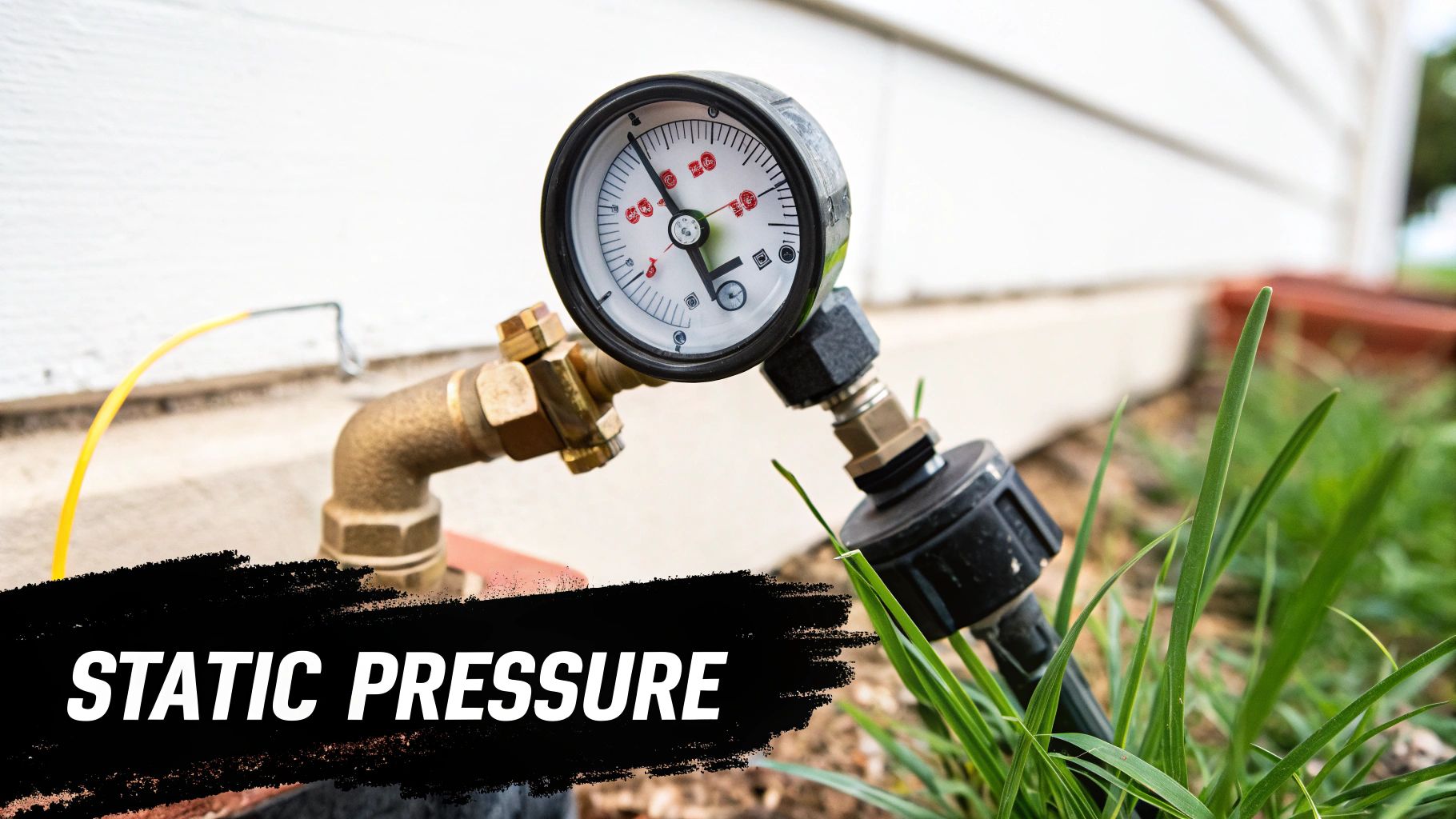
This is the kind of standard gauge you'll be using. The dial clearly shows the pressure, making it simple to see where your home's pressure sits.
Taking the Measurement
With all the water off, go ahead and screw the pressure gauge onto your chosen tap. It should tighten up nicely by hand. If you see a little dribble of water, give it an extra quarter-turn with a pair of pliers to get a good, tight seal. A leaky connection will give you an inaccurate, low reading, which defeats the whole purpose.
Once it's securely on, turn the tap on all the way. You’ll see the needle on the gauge jump up instantly – that's your home's static water pressure. Jot this number down. This is the single most important piece of information you're trying to get.
This initial reading is your baseline. If it immediately shoots well above the 500 kPa Australian standard, you've got a high-pressure problem that needs sorting before it starts causing damage. On the flip side, a very low reading could point to flow issues or even a hidden leak somewhere in the system.
If a low reading has you worried about a leak you can't see, it’s definitely worth investigating. Our guide on how to find water leaks underground has some really practical tips for tracking down those sneaky problems. A plumber in Balwyn can also use advanced equipment to find hidden leaks.
For the most accurate measurement possible, professionals will often test directly at the property's water meter. Hooking a gauge up right at the meter outlet gives a raw reading of the mains pressure before your internal pipes have any effect on it.
Checking Your Dynamic Water Pressure
A static pressure reading is a great start, but it really only tells you half the story. I like to think of it as checking your car's tyre pressure while it's parked—it doesn’t tell you a thing about how it performs on the road. The truth is, many plumbing issues like hidden blockages or old, corroded pipes only rear their ugly heads when water is actually flowing. This is a common issue that Melbourne plumbers deal with daily.
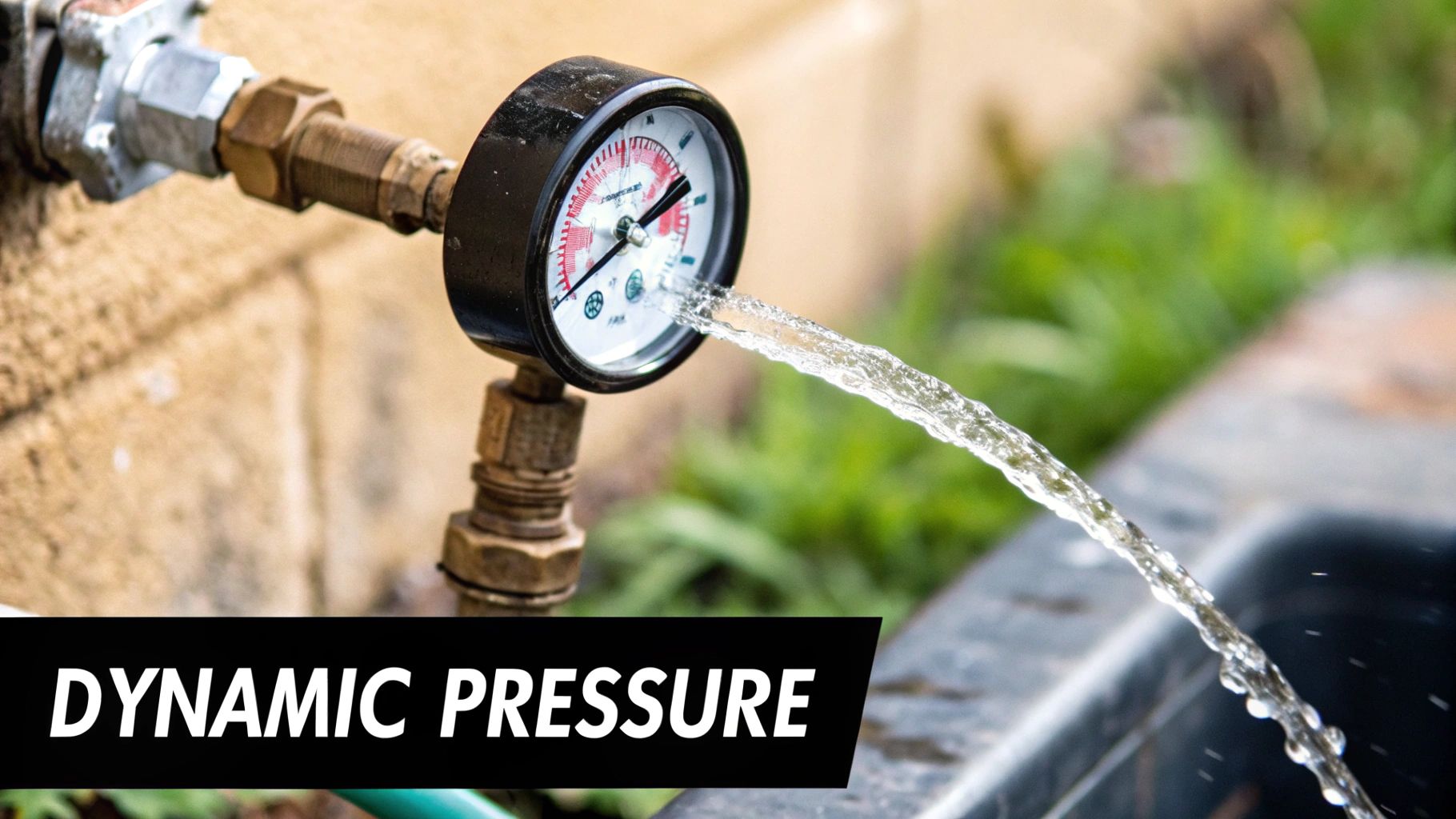
This is exactly why a dynamic water pressure test is so important. Also known as a 'running' pressure test, this second check shows you how your system holds up under demand. It’s a simple but incredibly effective way to diagnose those issues that cause frustratingly low flow, a complaint we hear all the time in Melbourne homes.
Performing the Dynamic Test
The process itself is dead simple. Just leave the pressure gauge attached to the same outdoor tap you used for the static test. Now, you just need to get some water moving through the pipes.
Head inside and turn on a tap fully. The shower in the main bathroom is a great choice because it demands a high volume of water, putting the system under a bit of stress. If that’s not convenient, turning on a garden hose or a bath tap will also work perfectly.
With the water still running, wander back outside and take another look at the gauge. You'll see the needle has dropped from your original static reading. Don't panic, this is completely normal and expected. The real question is, how much did it drop?
A minor dip in pressure is perfectly fine—typically, a drop of around 70-100 kPa is nothing to worry about. However, if you see a dramatic plunge, that’s a clear red flag that something is restricting the flow somewhere in your system.
What a Large Pressure Drop Signals
A big drop during a dynamic test is your plumbing system's way of screaming for help. This loss of pressure under load can point to several culprits you'd never spot with a static test alone.
Common causes we see include:
- Corroded or Blocked Pipes: Over time, especially in older homes around suburbs like Kew or Camberwell, galvanised iron pipes can corrode internally. This narrows the path for water to flow, like a clogged artery. For severe cases, pipe relining in Melbourne is an effective solution.
- A Partially Closed Valve: You’d be surprised how often we find a main shut-off valve that isn't fully open, which can seriously choke your water flow.
- A Hidden Leak: A sneaky leak in your main water line can cause a significant pressure drop the moment a tap is turned on.
- Faulty Pressure Regulator: If your home has a pressure regulator, it might be malfunctioning and restricting flow when it shouldn't be.
Understanding how your pressure behaves dynamically is a critical part of learning how to test water pressure at home. If this test reveals a major drop, it’s probably time to get a professional opinion. Issues like hidden blockages or internal pipe corrosion often need expert gear to find and fix properly. If you suspect a serious issue, it's wise to contact a professional plumber for an accurate diagnosis.
Right, you've got your numbers. But what do they actually mean for the plumbing in your house? Think of those static and dynamic pressure readings as a health check for your pipes. They can either give you a clean bill of health or flag a problem that needs a closer look.
For most homes here in Melbourne, the sweet spot for water pressure is somewhere between 400 and 500 kPa. That's the Goldilocks zone – strong enough for a decent shower and to keep your appliances happy, but not so strong that it's putting your pipes under serious strain.
What to Do About Low-Pressure Readings
If your gauge is showing anything under 300 kPa, you've officially got low water pressure. That explains the weak, dribbling shower and the kitchen tap that takes an age to fill a pot. But more than just being an annoyance, it often points to a bigger issue hiding somewhere in your system.
A low reading can pop up for a few reasons, some simple, some a bit more serious:
- Someone might have partially turned off the main stopcock or the valve at your water meter.
- Your pipes, especially if they're older galvanised steel, could be clogged with years of mineral buildup.
- The Pressure Reducing Valve (PRV) on your system could be on its way out.
- You might have a hidden leak in the main water line coming into your house – a pretty serious problem.
When you're dealing with a sudden drop in pressure, it pays to know what you're looking for. We've got a whole guide on what to do when there's no water pressure in your house that dives deeper into troubleshooting. Don't just put up with it, as that constant low pressure could be a sign of a leak that's quietly wasting water and costing you money.
The Hidden Dangers of High Water Pressure
On the flip side, a reading that shoots past the Australian standard of 500 kPa is a major red flag. Sure, a high-pressure shower might feel fantastic, but that extra force is silently causing chaos throughout your home's plumbing. It's like running your car's engine in the redline, all the time.
We see it constantly – high pressure is one of the biggest killers of hot water systems, washing machine hoses, and tapware. It places every single joint, seal, and pipe under immense, constant stress, which drastically cuts their lifespan and leads to sudden, messy, and expensive failures.
That intense pressure is also the main culprit behind water hammer. That's the loud thump or banging you hear from inside the walls when a tap is turned off quickly. It’s a violent shockwave slamming through your pipes, and over time, it can weaken joints and cause serious damage. If you're experiencing this, it's time to search for a "plumber near me" to get it assessed.
If your tests show your pressure is creeping up too high, the best fix is to get a licensed plumber to install a pressure limiting valve (PLV). We fit these for homeowners all the time. It’s a straightforward device that goes on your main water line and acts as a gatekeeper, capping the pressure to a safe, consistent level. It protects every tap, appliance, and pipe in your home.
Don't wait for a burst pipe or a flooded laundry to take it seriously. If your pressure is too high, it's time to get a professional on the case.
To help you connect the dots, here's a quick look at some common issues we see in Melbourne homes and what they might mean.
Common Causes of Water Pressure Problems in Melbourne Homes
This table breaks down the typical symptoms you might notice and points to the most likely cause, whether your pressure is too low or too high. It's a handy starting point for figuring out what's going on.
| Symptom | Low Pressure Cause | High Pressure Cause |
|---|---|---|
| Weak shower, slow-filling sinks | Clogged pipes, partially closed valve, or a hidden leak. | N/A |
| Banging pipes (water hammer) | N/A | Pressure is above the 500 kPa standard. |
| Leaking taps or toilet cisterns | Could be a symptom of a larger leak in the system. | High pressure is forcing water past seals and washers. |
| Washing machine/dishwasher hoses fail | N/A | Constant high pressure is causing hoses to burst. |
| Hot water system relief valve drips | This can indicate a fault in the system. | Excess pressure is forcing the safety valve to release. |
Hopefully, this gives you a clearer picture. Remember, while a pressure gauge gives you the raw data, interpreting it correctly and knowing what to do next is what really matters for keeping your home's plumbing in top shape.
When You Should Call a Professional Plumber
Knowing how to test your own water pressure is a fantastic skill for any homeowner. It gives you a real insight into what’s happening with your plumbing. But let's be honest, a pressure gauge can tell you there's a problem, but it can't actually fix it.
That's where knowing when to put the tools down and call a licensed plumber becomes just as crucial. For urgent issues, you'll need one of the best emergency plumbers Melbourne has to offer.
Some jobs simply aren't safe or practical for a DIY fix. Diving into complex plumbing work without proper training can quickly turn a small hassle into a very expensive, very wet disaster.
Clear Signs It’s Time for an Expert
If your pressure test throws up a few red flags, it's a pretty clear signal you need a professional to take a look. Don’t wait around if you spot any of these issues.
- Consistently High Pressure: If your static reading is constantly sitting above the 500 kPa Australian standard, this isn't something to ignore. It needs immediate professional attention before it starts causing damage to your appliances and pipes.
- A Sudden, Sharp Pressure Drop: A big, unexplained drop in your water pressure often points to a serious problem, like a major leak somewhere or even an issue with your main water line.
- You Suspect a Hidden Leak: Did your running pressure test show a massive drop, but you can't see a single drop of water anywhere? An expert can find that hidden leak without needing to tear your walls or floors apart.
- Stubborn Blocked Drains: Sometimes low pressure is a symptom of a massive blockage deep in your pipes that a bottle of drain cleaner just won't touch.
A licensed plumber doesn't just treat the symptom; they get right to the root cause. This means the problem gets fixed properly the first time, saving you a world of stress and money down the track.
How a Professional Plumber Can Help
When you bring in a pro, you’re getting access to years of experience and a van full of specialised gear. A qualified plumber from Amari Plumbing can pinpoint the source of your pressure problems, whether it's a quick fix or a more complex job. Our team is always helping homeowners in suburbs like Camberwell and providing fast, reliable service to people needing plumbers in Doncaster.
We can spot a faulty valve, clear out a stubborn blocked drain, or identify if an old pipe has corroded and needs a modern fix. For those high-pressure situations, we can install a pressure limiting valve (PLV) to protect your entire home's plumbing system.
A sudden plumbing crisis is always stressful. A sharp pressure drop could be a sign of something serious, which is why our guide on what to do about burst water pipes offers some immediate advice while you wait for a professional to arrive.
If your water pressure test has uncovered a problem you can't tackle on your own, contact Amari Plumbing and Gasfitting today for a proper assessment and expert solutions.
Common Questions About Home Water Pressure
Even after you've learned how to test your water pressure, it's pretty normal to have a few more questions pop up. Getting your head around the numbers and what they actually mean for your home is the key to keeping your plumbing in great shape.
Here are some of the most common queries we get from homeowners across Melbourne's eastern suburbs.
What Is the Ideal Water Pressure for a House in Australia?
For most Aussie homes, the sweet spot for water pressure is somewhere between 400 and 500 kPa.
This range is strong enough to give you a decent shower and keep your appliances happy, but it’s not so high that it puts your pipes, taps, and hot water system under constant stress.
In fact, the National Construction Code mandates that water pressure at any tap inside your home must not exceed 500 kPa. That rule exists for a very good reason—to prevent the slow, steady damage that high pressure can inflict over time.
Can I Increase My Home's Water Pressure Myself?
You can try a few simple things first. Giving the aerators on your taps a good clean or making sure your main stopcock is fully open can sometimes help. But honestly, if you're dealing with genuinely low pressure, boosting it usually needs a professional touch.
Sometimes, the issue is with the mains supply itself, and for that, you'd need a chat with your local water provider.
More often than not, though, the problem lies somewhere in your property's plumbing. A licensed plumber can pinpoint the cause and might suggest installing a pressure booster system to fix it for good. This is definitely not a DIY job—it needs to be installed correctly and safely to work properly and meet local regulations.
How Often Should I Test My Water Pressure?
It’s a great habit to check your water pressure about once a year as part of your regular home maintenance routine. Think of it like servicing your car; it’s a quick, proactive check-up that can help you spot trouble before it turns into a major headache.
You should also grab your gauge anytime you notice a significant change in your water flow. Other good times to test are after any major plumbing work has been done—either at your place or even on your street—or if you start hearing that tell-tale banging noise from your pipes (known as water hammer). That's a classic sign of high pressure.
A simple, five-minute pressure test once a year can save you the stress and expense of a burst pipe or a failed hot water system down the track.
Does High Water Pressure Increase My Water Bill?
Yes, absolutely. High water pressure can definitely lead to a bigger water bill. It's a simple matter of volume—when the pressure is too high, a lot more water is forced through your taps, showerheads, and appliances in the same amount of time.
That extra water might not seem like much, but it really adds up across all the fixtures in your home. Before you know it, you're looking at a higher bill at the end of the quarter. Getting a professional plumber to install a pressure limiting valve (PLV) is one of the smartest ways to bring the pressure down to a safe level, reduce your water usage, and save money.
If your water pressure test has left you with more questions than answers, or if you've uncovered a problem that needs an expert eye, Amari Plumbing and Gasfitting is here to help. Our team provides professional diagnostics and lasting solutions for homeowners across Melbourne. Contact us today for a free phone estimate and expert advice.