

When you suddenly find yourself with no water pressure in your house, it's usually down to one of two things: a water valve that isn't fully open or a problem with the mains supply. Before you start thinking the worst, it's worth checking your main water shut-off valve and having a quick chat with a neighbour to see if they're in the same boat. This is a common issue our team of emergency plumbers in Melbourne tackles regularly.
What to Check When Your Water Pressure Vanishes
That moment you turn on a tap and get nothing but a sad little dribble is a sure sign something’s up with your plumbing. It's easy to jump to conclusions and imagine a massive burst pipe, but often the cause of no water pressure is surprisingly simple.
Before you find a plumber, running through a few quick checks yourself can help you find the source of the problem. You might even fix it in a few minutes, saving yourself a bit of stress and money. Let's walk through the usual suspects, starting with the easiest things you can check on your own.
Is It Just Your House or the Whole Street?
First things first, you need to figure out if this is a "you" problem or a "street" problem. The quickest way to do this is to pop next door and ask your neighbour.
If they're also staring at a weak trickle from their taps, the issue is almost certainly with the local water supply. It could be anything from scheduled maintenance to a water main break down the road. In that case, your best move is to contact your local water authority for an update.
But if your neighbours' water is running fine, then the problem is somewhere on your property. This means the culprit is located somewhere between your water meter and your taps, and you'll likely need to search for a "plumber near me" to investigate.
This simple flowchart can help you visualise those first steps.
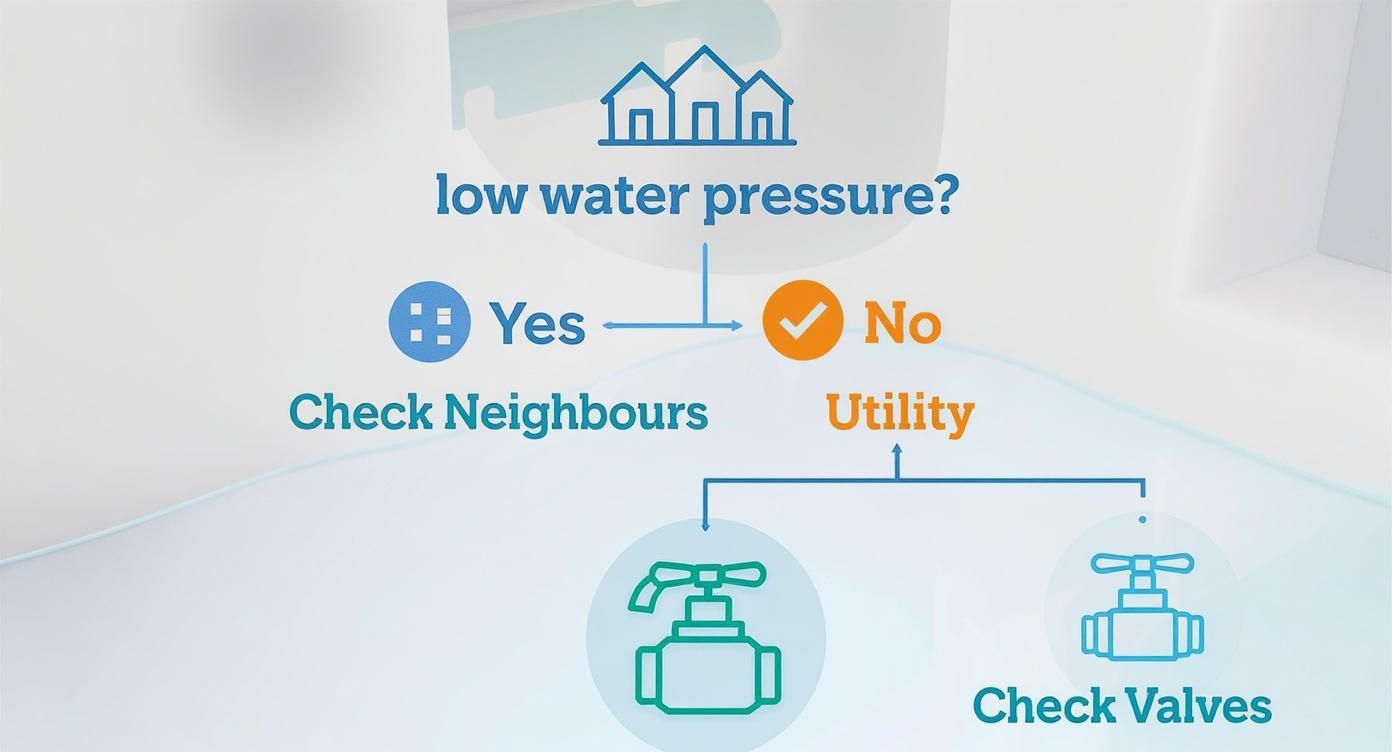
As you can see, the first thing is always to check with your neighbours. This tells you whether you should be looking at your own plumbing or contacting the water company.
Inspect Your Main Water Shut-Off Valves
Every home has at least two key valves that control the water coming in. If either of these has been partially closed, it'll choke the flow to your entire house.
- The Meter Valve: This one is at your water meter, usually near the footpath at the edge of your property. Sometimes only the water company can access it, but you can usually see if the handle is in the 'on' position (it should be parallel with the pipe).
- The House Shut-Off Valve: You'll typically find this on an outside wall where the main water line enters your home, but it can also be in a laundry or utility room. It's easy for this valve to get knocked or not fully reopened after a repair.
Gently try turning the handle anti-clockwise to make sure it's all the way open. If it feels stuck or is tough to move, don't force it—you could end up causing more damage.
Quick Diagnostic Checklist for No Water Pressure
To make things even easier, here's a quick checklist you can run through to see if it's a simple fix or something that needs a professional eye.
| Check Point | What to Look For | Potential Cause |
|---|---|---|
| Neighbours | Normal water pressure next door? | Your problem is isolated to your property. |
| Water Meter Valve | Is the handle parallel to the pipe? | If not, it's partially closed, restricting flow. |
| House Shut-Off Valve | Is the handle fully anti-clockwise? | A partially closed valve will reduce pressure. |
| Specific Taps | Is the issue at only one tap? | Likely a blocked aerator or showerhead. |
This checklist covers the most common and easily fixable causes. If you've gone through these and are still stumped, it might be time to call in the pros.
Check Individual Fixtures for Blockages
What if the pressure is fine everywhere except, say, the kitchen sink or the shower? In that case, the problem is almost definitely localised to that one fixture. Over time, little bits of sediment and mineral deposits can build up and clog the aerator or showerhead.
An aerator is that little screened cap on the end of your tap that mixes air into the water. It’s one of the most common causes of pressure problems in a single fixture and, luckily, it's incredibly easy to clean.
Try unscrewing the aerator or showerhead by hand. If it's on tight, use a pair of pliers with a cloth wrapped around them to avoid scratching the finish. Look at the little screen inside for any gunk or white, crusty buildup.
A quick soak in a bowl of vinegar for an hour or so will usually dissolve any mineral deposits. While fixture blockages are different from wastewater pipes getting clogged, understanding how buildups happen is always useful. You can learn more about bigger pipe issues in our guide on how to clear blocked drains. Once it's clean, screw the part back on and see how the water flows. More often than not, this simple trick gets the pressure right back to normal.
When the Problem Runs Deeper Than You Think
So, you’ve checked all the usual suspects and your water pressure is still weak. This usually means the problem isn’t a quick fix – it’s lurking somewhere deeper in your home's plumbing system. These are the kinds of hidden issues that need a professional eye to properly diagnose and sort out, often requiring expert gasfitting in Melbourne or specialised plumbing services.
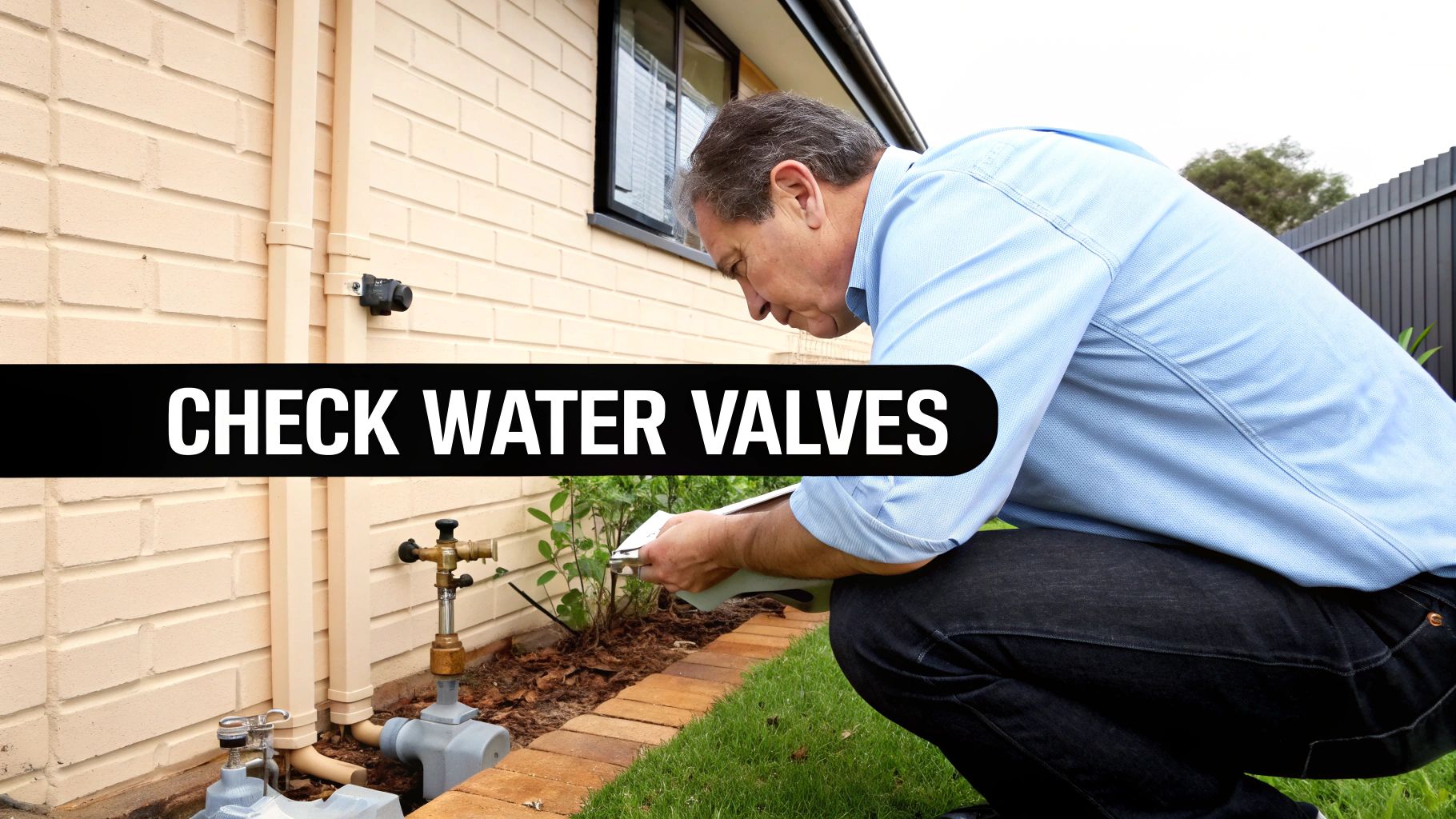
Let's dig into some of the more serious culprits we see out in the field. Knowing what you might be up against will help you spot the signs and have a more productive chat with your plumber when they arrive.
Hidden Water Leaks are Pressure Thieves
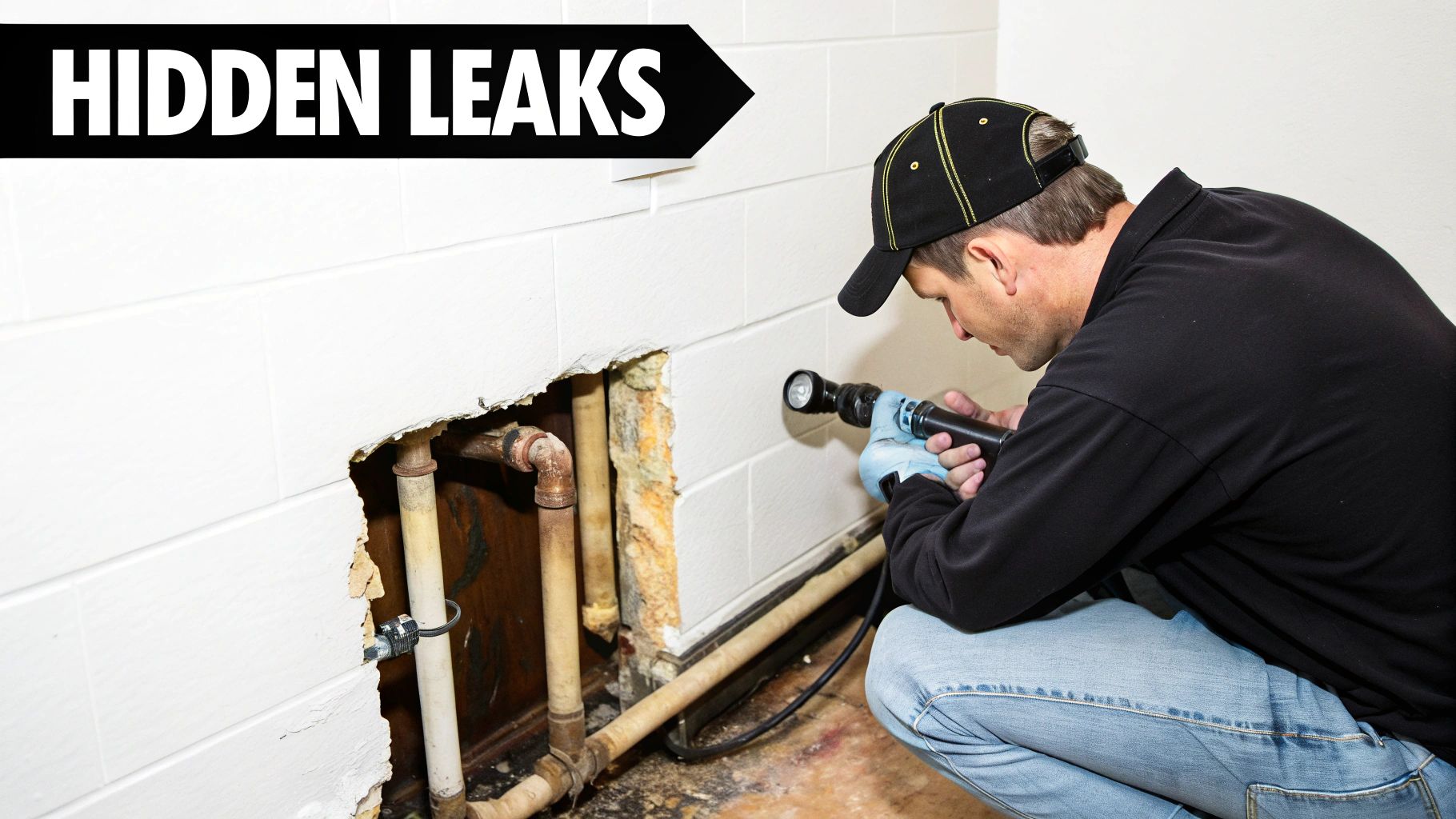
One of the most common reasons we find for a sudden drop in water pressure is a leak you can't see. We're not talking about a dripping tap here. This is a compromised pipe hidden in a wall cavity, under your floorboards, or even buried somewhere in the garden. Even a tiny pinhole leak can divert a shocking amount of water away from your taps.
It's a huge problem for our infrastructure. In the 2023-24 financial year alone, Australian urban water networks lost a staggering 269 billion litres of treated water to leaks before it even reached anyone’s home. That’s enough to supply over 1.5 million households for a full year. You can read more about the challenges at H2OGlobalNews.com.
If the leak is on your property, you might notice other clues:
- Your water bill is suddenly much higher than usual.
- You can hear water running when everything is turned off.
- There are damp spots appearing on walls, ceilings, or floors.
- A persistent musty smell is hanging around.
A hidden leak is essentially a burst pipe, no matter how small. It needs urgent attention. If you suspect this is happening, our guide on dealing with burst water pipes has some crucial next steps.
Could a Faulty Pressure Reducing Valve be the Culprit?
Many Melbourne homes are fitted with a Pressure Reducing Valve, or PRV. It’s a bell-shaped device, usually found near your main water meter, and its job is to tame the high-pressure water coming in from the street to a safe level for your home's plumbing.
But like any mechanical part, PRVs can wear out and fail. When they do, the symptoms are often quite specific.
A failing PRV is a classic cause of inconsistent water pressure. You might get a decent flow one minute, then a frustrating trickle the next. Another tell-tale sign is a loud shuddering or hammering noise in your pipes right after you turn off a tap.
If your pressure is all over the place or you're hearing strange noises, the PRV is a prime suspect. While some can be adjusted, they usually need to be replaced by a licensed plumber. Getting it wrong can cause even more damage.
The Slow Choke of Old, Clogged Pipes
Another big one, especially in older homes you see around suburbs like Kew or Camberwell, is the state of the pipes themselves. Houses built before the 1970s often used galvanised steel pipes, which are notorious for corroding from the inside out.
Over decades, rust and mineral scale build up on the inner walls, slowly shrinking the diameter of the pipe. It’s like a clogged artery for your plumbing – the pathway for water gets narrower and narrower, strangling the flow and killing the pressure by the time it reaches your shower.
This happens so gradually that you might not notice it day-to-day. You just slowly realise your shower isn't what it used to be. If you've got both low pressure and slightly discoloured water, corroded pipes are almost certainly the problem.
Diagnosing these deeper issues takes experience and the right tools. If you’ve tried the simple fixes with no luck, it’s time to call in a pro. An experienced plumber in Melbourne can pinpoint the true cause and give you a clear path forward.
Don't put up with a weak trickle. The team at Amari Plumbing and Gasfitting is ready to help. Contact us today for a proper diagnosis and a fixed-price quote to get your water pressure back where it should be.
Melbourne's Unique Water Pressure Challenges
That frustratingly weak trickle from your tap isn't always a sign of a major plumbing disaster brewing in your walls. Sometimes, it's just a quirk of where you live in Melbourne. Understanding the local water pressure landscape is the first step in figuring out if you've got a genuine problem or just a neighbourhood norm.
It’s all about knowing what's normal for your home. This helps you tell the difference between a sudden, alarming drop that could mean a burst pipe, and the consistently gentle flow that’s just part of living in your particular spot.
What's "Normal" for Aussie Water Pressure?
Believe it or not, there's a regulated standard for water pressure in Australian homes. It's designed to protect your pipes and appliances from damage while still giving you a decent flow.
The magic number for residential homes is somewhere between 300 and 500 kilopascals (kPa). That’s roughly 43-72 psi, for those who think in the old terms. This range is the sweet spot that keeps everything running smoothly without putting too much strain on your plumbing. You can get more details on average water flow rates in Australia on completehomefiltration.com.au.
However, where you live can really change what you experience at the tap. If your home is perched on a hill or is one of the last houses on the water main line, you're naturally going to see pressure on the lower end of that scale.
How Your Suburb Affects Your Shower
Your specific address in Melbourne can have a massive impact on your daily water pressure. It really comes down to a couple of key geographical factors.
- Elevation is Everything: Live in a higher-elevation suburb like parts of Templestowe or Balwyn North? Your water is literally fighting gravity to get to you. Pushing water uphill from the main supply naturally reduces the pressure by the time it reaches your showerhead.
- Distance from the Main: Think of it like a long garden hose. The further water has to travel, the more pressure it loses. If your house is at the end of a long street or cul-de-sac, you'll likely have lower pressure than the homes closer to where the main pipe connects.
These are infrastructure issues, not plumbing faults. But knowing about them is crucial.
Here’s the key takeaway: if you've always had a gentle shower because you live on a hill, that's your baseline. But if that once-powerful spray suddenly becomes a dribble, it’s a red flag. That points to a new issue like a hidden leak or a blockage that needs a plumber’s attention.
The Neighbourhood "Rush Hour"
Ever notice your shower feels a bit weaker right when everyone's getting ready for work? Or when the whole street is watering their gardens on a hot evening? You're not imagining it.
When everyone in the neighbourhood uses water at the same time, it puts a huge demand on the local supply. This collective drain on the system causes a temporary, but very real, drop in pressure for everyone.
Usually, things go back to normal once the peak demand passes. It's a common thing and not something to worry about. But if your pressure stays low long after rush hour is over, it’s a sign that something else is going on. For these persistent issues, a local team that knows the ins and outs of areas from Balwyn to Kew can pinpoint the real problem. Sometimes, the only real fix for location-based low pressure is installing a pressure booster pump.
Tired of living with weak water flow? Let our experts get to the bottom of it. Contact Amari Plumbing and Gasfitting today for an honest diagnosis and a fixed-price solution.
Modern Solutions for Chronic Low Water Pressure
When the simple fixes just aren't cutting it and you're still dealing with a frustrating trickle, it’s time to look at the bigger picture. Persistent low water pressure often points to a deeper issue within your plumbing system itself, like old, corroded pipes or hidden leaks. These issues can range from needing standard fixes to more complex commercial plumbing solutions.
Thankfully, modern plumbing offers some incredibly effective, long-term solutions. These are more than just quick repairs; they're strategic investments into the health of your home's plumbing that solve the problem for good.
Pipe Relining: The Trenchless Revolution
One of the smartest solutions for ageing, leaking, or internally corroded pipes is sewer relining or water pipe relining. You can think of it as giving your old pipes a brand-new inner life—literally creating a new, seamless pipe right inside the old, damaged one.
What makes it a game-changer is that it’s "trenchless." Forget digging up your beautiful garden, driveway, or floorboards. Instead, a plumber accesses the pipe from a small entry point, inserts a flexible liner coated in a special epoxy resin, and inflates it. Once the resin cures, it forms a rock-solid, smooth new pipe.
The benefits are pretty clear:
- Minimal Disruption: Your property stays intact. No major excavation required.
- Improved Flow: The new inner surface is incredibly smooth, often boosting water flow beyond what the original pipe could handle.
- Stops Leaks: It seals all those pesky cracks, pinhole leaks, and weak joints for good.
- Built to Last: Relined pipes are extremely durable and stand up to future corrosion and tree root intrusion.
Pipe relining in Melbourne is the perfect fix when the main structure of your pipes is okay, but they're suffering from internal decay or leaks. It's a clean, efficient way to get things flowing properly again, which is why it's such a popular choice for homeowners across Melbourne.
When Is a Full Pipe Replacement Necessary?
While relining works wonders in many situations, some pipes are just too far gone. If your plumbing system is severely corroded, has collapsed sections, or is made from old materials that are failing everywhere, a full pipe replacement might be the only sensible way forward.
This is a much bigger job, no doubt. It involves removing all the old pipes and installing new ones. We often see this in older homes where the original galvanised steel plumbing has simply reached the end of its life. It's a significant project, but the result is a completely new, reliable plumbing system that will serve you well for decades.
Boosting Pressure at the Source
But what if your pipes are actually in good nick and the problem is your home's location? If you live in an elevated area or are at the end of the council's water main, low pressure might just be a fact of life that no amount of pipe repair can fix.
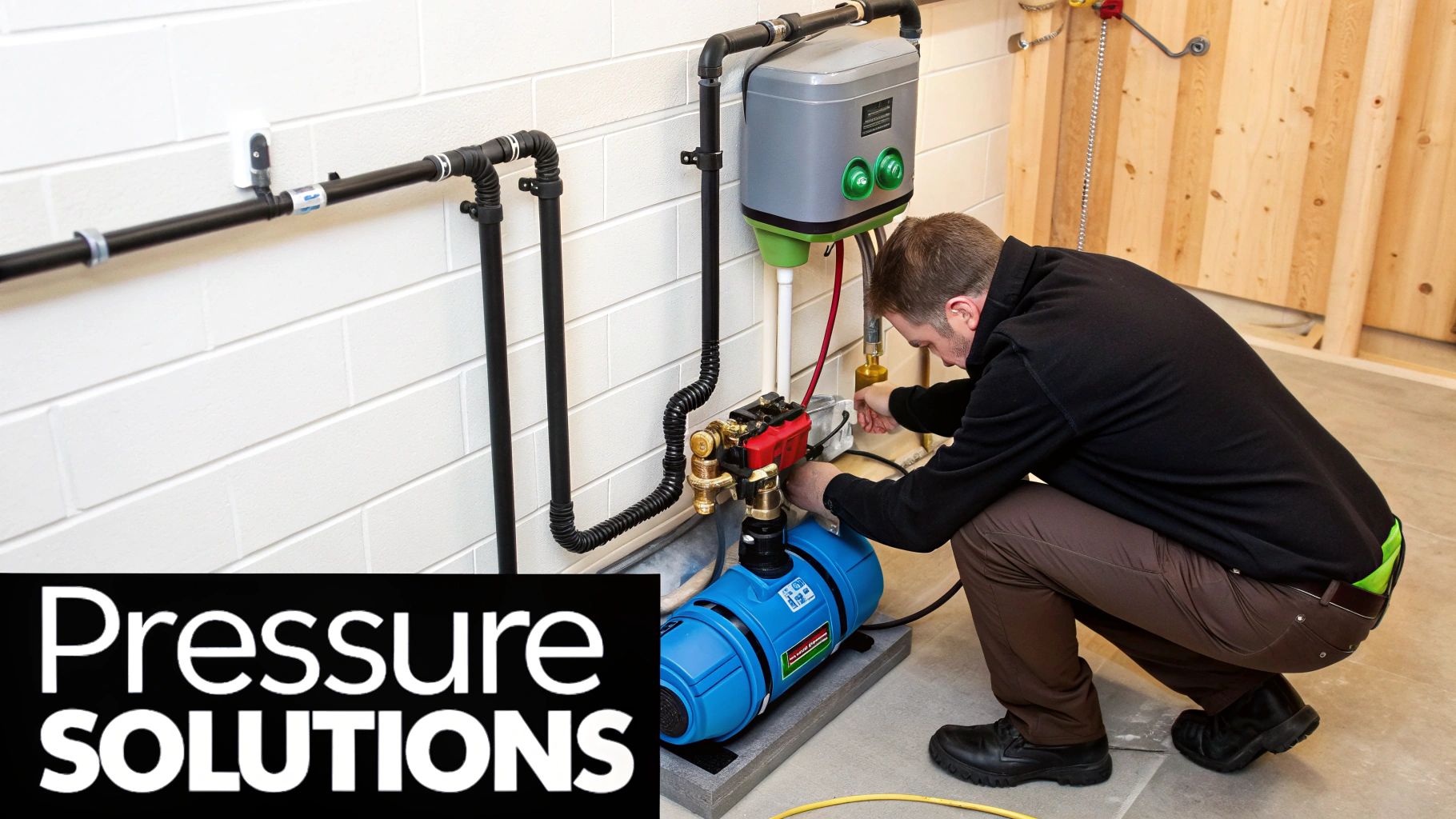
In these cases, a water pressure booster pump is the answer. This clever device gets installed right where the water line enters your house. It takes that weak incoming pressure and gives it a serious boost before sending it through your home. A modern booster pump can turn a pathetic dribble into a powerful, satisfying flow at every single tap.
Comparing Solutions for Chronic Low Water Pressure
Feeling a bit overwhelmed by the options? We get it. This table breaks down these advanced plumbing solutions to help you understand which one might be the best fit for your home's specific pressure problem.
| Solution | Best For | Key Benefit | Consideration |
|---|---|---|---|
| Pipe Relining | Pipes with internal corrosion, pinhole leaks, or root intrusion but are structurally intact. | No digging required, preserves your landscaping and property. A fast, clean fix. | The existing pipe must not be collapsed or severely damaged. |
| Full Pipe Replacement | Severely collapsed, corroded, or outdated plumbing systems (e.g., old galvanised pipes). | A brand-new system with a very long lifespan. Solves widespread issues. | Involves significant excavation and disruption. It's a major project. |
| Pressure Booster Pump | Homes with good pipes but low incoming pressure from the municipal supply (e.g., hilly areas). | Instantly increases pressure throughout the entire house. | Doesn't fix underlying pipe problems like leaks or blockages. |
Choosing the right path forward really needs a professional eye. Understanding the true cause of your low pressure is key, and that's where we come in.
For those dealing with issues stemming from ageing infrastructure, exploring the benefits of our specialised pipe relining in Melbourne can give you a clearer picture of this modern solution.
A qualified plumber can properly inspect your system and recommend the most durable and cost-effective fix. Don't put up with chronic low pressure disrupting your daily life. Contact Amari Plumbing and Gasfitting today for an expert evaluation and a fixed-price quote.
Why a Local Melbourne Plumber Is Your Best Bet
When you’re staring at a tap that’s only producing a trickle, the last thing you want is to wait around for a generic service that doesn’t know your area. The problem needs a fast, reliable expert who understands the local plumbing landscape inside and out. Trust me, choosing a dedicated local Melbourne plumber makes all the difference in getting your water pressure back to normal, quickly and properly.
Our team’s deep familiarity with the infrastructure across Melbourne's Eastern Suburbs, from Balwyn to Doncaster, gives us a massive head start. We’re not just showing up to a postcode; we know the common plumbing setups, the types of pipes used in different eras of homes, and the specific pressure challenges that pop up in these neighbourhoods.
The Advantage of Local Expertise
Think about it. A plumber who works in Hawthorn or Camberwell every day knows to look for the old, galvanised pipes that are notorious for corroding from the inside out. Likewise, an expert familiar with the hilly streets around Templestowe will immediately consider how elevation might be affecting your home’s water pressure.
This local knowledge isn't just a nice-to-have—it speeds up the diagnosis tenfold. Instead of working through a generic checklist, we can narrow down the likely causes based on issues we’ve seen and fixed in your neighbourhood time and time again.
It also means we’re familiar with the local water authority's network. We can often tell pretty quickly if the issue is on your property or if it’s a wider municipal problem affecting the whole street. Our team of Melbourne plumbers are experts in these local nuances.
Navigating Australia's Broader Water Pressure Challenges
Water pressure problems aren't unique to Melbourne; they’re a persistent issue for Aussie households, often linked to ageing infrastructure and geography. Utilities like Sydney Water have strict standards, but official data shows that pressure failures still regularly hit areas known for having low pressure in the first place.
These issues are often driven by things like your property's height relative to the local water reservoir, the capacity of the network, and even daily fluctuations in demand. If you're curious about the bigger picture, you can find some great insights into local water service statistics online. A good local plumber brings this high-level understanding right down to your specific home.
Transparent Pricing and Rapid Response
Dealing with a sudden loss of water pressure is stressful enough without the added worry of a surprise bill. That's why we’re committed to transparent, fixed pricing.
When you call us, our goal is to give you a clear quote right from the start, so you know exactly what to expect before we pick up a single tool. We charge by the job, not by the hour. Simple as that.
When you have no water pressure, time is critical. Our 24/7 emergency service means we are always ready to respond when you need us most, often arriving on-site in as little as 90 minutes.
This rapid response is something we pride ourselves on for residents across Melbourne's eastern suburbs. Whether you're a homeowner in Balwyn or run a business in Doncaster, our local presence means we can get to you fast, find the problem, and get your water flowing again.
When you're faced with a sudden pressure drop or a persistent trickle, Amari Plumbing and Gasfitting is the trusted local choice.
Don't let low water pressure disrupt your life. For a fast, reliable, and transparent solution from a team that knows your area, contact us today.
Your Water Pressure Questions, Answered
When you’re staring at a trickle of water where a torrent should be, you’ve got questions. As plumbers working across Melbourne's eastern suburbs, we've heard them all. Here are the straight-up answers to the most common ones we get.
Is It My Problem, or the Council’s?
This is always the first question, and for good reason. The quickest way to get an answer is to do a bit of neighbourhood detective work.
Just ask your next-door neighbours if they're having the same problem. If everyone's pressure has dropped, it's almost definitely an issue with the local water main. That's a job for the water authority, not a plumber.
But if it's just your house? The problem is somewhere on your property, between the water meter at the street and your taps. A good starting point is to walk your front garden and look for any unusually soggy or green patches of lawn—a classic sign of a leak in your main service line.
Can a Blocked Drain Wreck My Water Pressure?
It's a common mix-up, but the short answer is no. A blocked drain is completely separate from your water pressure. Your home’s plumbing is really two systems working side-by-side.
- Supply Lines: These are the pressurised pipes bringing clean water into your house.
- Drainage Lines: These use gravity to get wastewater out of your house.
A clog in a drain pipe stops water from leaving, but it can't affect the fresh water coming in. However, the supply pipes themselves can get blocked. Over decades, rust and mineral scale can build up inside, narrowing the pipe and slowly choking your water flow. We see this all the time in older homes around suburbs like Hawthorn and Camberwell.
The key thing to remember is that water pressure is an inbound problem. A backed-up sink is a headache, for sure, but it’s a totally different issue from the force of the water coming out of the tap.
What’s It Going to Cost to Fix Low Water Pressure?
This is a classic "how long is a piece of string?" question. The cost to fix no water pressure in a house depends entirely on what’s causing it.
Sometimes, the fix is incredibly simple. Cleaning out a single tap aerator that's clogged with grit will cost you nothing more than a few minutes and a bit of elbow grease.
More often, though, it’s a professional job. The real costs come in when you’re dealing with bigger issues, such as:
- Replacing a faulty Pressure Reducing Valve (PRV).
- Hunting down and repairing a hidden leak inside a wall.
- Carrying out pipe relining in Melbourne because a section of old pipe has corroded.
At Amari Plumbing, we don't do guesswork. After we find the source of the problem, we give you a clear, fixed-price quote so you know exactly what you’re in for before we pick up a tool. No surprises, no hidden extras.
Why Is My Shower Pressure Awful but Everywhere Else Is Fine?
If you’ve got one rogue tap that’s letting the team down, the problem is almost always right there at that specific fixture.
Nine times out of ten, a weak shower is caused by a showerhead clogged up with limescale (mineral deposits). You can often sort this out yourself. Just unscrew the showerhead, pop it in a bowl of white vinegar for a few hours, and give it a good rinse. The vinegar does a great job of dissolving all that gunk.
If that doesn't work, the next suspect is the mixing valve inside the shower tap. This is the part that blends the hot and cold water, and it can wear out. Replacing the valve cartridge is a job for a licensed plumber, as it's a bit more complex.
If you’ve gone through these checks and your water pressure is still a mystery, it's time to call in the pros. The team at Amari Plumbing and Gasfitting has the diagnostic tools and local experience to pinpoint the problem and get it fixed, fast. For a reliable plumber in Melbourne with clear, fixed-price quotes, contact us today.