

That unmistakable "rotten egg" smell is your first and most urgent warning sign. Natural gas itself is odourless, so this sulfuric scent is added specifically to alert you to a leak. If you smell it, don't ignore it—a gas leak is a serious emergency that puts your health and property at immediate risk.
Your absolute first priority is to get everyone to safety, then call in the professionals.
Your Immediate Gas Emergency Checklist
When you suspect a gas leak, your actions in the next few minutes are critical. It’s easy to panic, but having a clear plan helps you stay in control and keep everyone safe. The main goal here is simple: prevent any kind of spark that could ignite the gas.
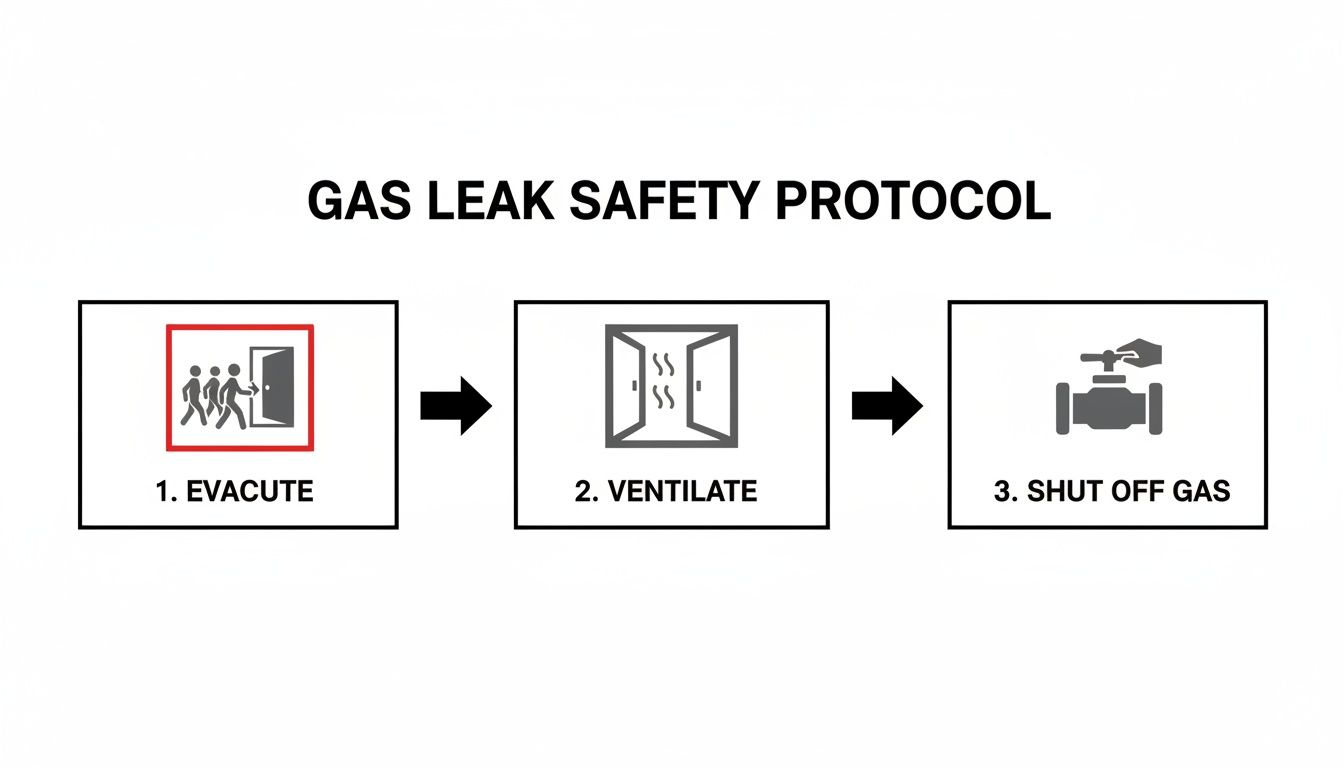
This sequence—getting out, airing it out, and shutting it off—is the standard safety protocol for a reason. It works.
Get Everyone Out—Now
The second you smell gas, your only job is to get everyone out of the house. This includes pets. Don't waste a single moment looking for the source of the smell or grabbing personal items. Just get out.
Don't Touch Anything That Could Spark
This is the golden rule. Natural gas is incredibly flammable, and the smallest spark can trigger a disaster.
- Don't flick any light switches on or off.
- Don't unplug any appliances or use your landline.
- Don't use a mobile phone until you are safely outside and far away.
- Don't light a match, a candle, or a cigarette.
- Don't start a car parked in an attached garage.
Even the tiny static spark from a light switch is enough to ignite gas. Leave everything exactly as it is.
If You Can, Ventilate as You Leave
On your way out, throw open any doors and windows you pass. This helps the gas disperse and lowers the concentration in the air, reducing the immediate danger. But don't go out of your way or spend extra time on this—getting outside is what matters most.
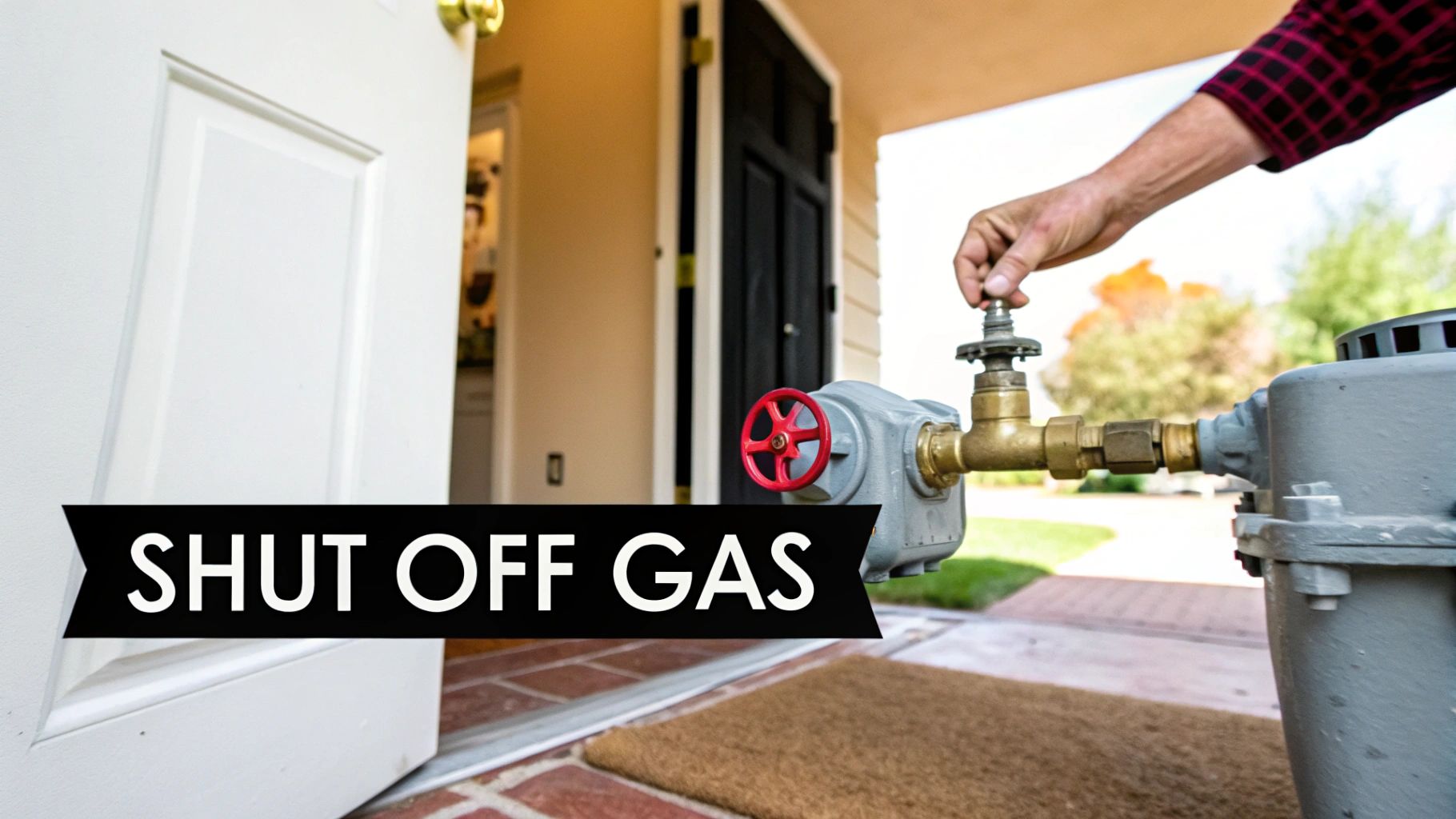
Shut Off the Gas at the Meter
If you know where your gas meter is and can get to it quickly and safely, turn off the main supply. You’re looking for the main shut-off valve, which is usually on the pipe coming out of the ground just before the meter.
To shut it off, you'll likely need a wrench. Turn the valve handle a quarter-turn so it sits across the pipe (perpendicular), not parallel to it. If you're not 100% sure how to do this or can't do it in a few seconds, leave it. The professionals will handle it when they arrive.
To give you a quick, at-a-glance guide, here’s what you need to do versus what you absolutely must not do.
Gas Leak Safety Action Plan
| What You Must Do (DO) | What You Must Avoid (DO NOT) |
|---|---|
| Evacuate everyone from the property immediately. | Touch any electrical switches (on or off). |
| Open doors and windows on your way out. | Use your mobile or landline phone inside. |
| Turn off the gas at the meter, if you can do it safely. | Light any matches, lighters, or open flames. |
| Move at least 100 metres away from your home. | Start your car if it's in an attached garage. |
| Call an emergency gas plumber from a safe location. | Attempt to find the source of the leak yourself. |
Memorising these simple actions can make all the difference in an emergency.
Once you are a safe distance away from your property (at least 100 metres), use your mobile to call a licensed emergency gas plumber. Handling a situation like this requires years of training and the right equipment. If you want to understand the full process, you can read our guide on what to expect from a professional gas leak plumber. Calling an expert is the final, most important step to resolving this dangerous situation safely.
How to Find a Qualified Emergency Gas Plumber in Melbourne
Once everyone is safely outside and you've shut off the gas, the immediate crisis is under control. Now, your next job is to find the right professional to fix the problem for good. In the heat of the moment, it’s tempting to just Google "plumber near me" and call the first number that pops up.
But taking a few extra minutes here can save you a world of headaches. You need to find someone who can handle the job safely, legally, and to Victorian standards.
This isn’t just about getting someone to your door quickly; it's about getting a qualified, licensed, and reliable expert who actually services your part of Melbourne.
Confirm Their Licence and Qualifications
This is the absolute non-negotiable. The person you hire must be a licensed gasfitter. Here in Victoria, all gasfitting work has to be done by a professional registered or licensed with the Victorian Building Authority (VBA). This isn't just bureaucratic red tape—it's a critical safety measure.
Hiring someone unlicensed doesn't just put your home and family at risk; it can also void your insurance and lead to even bigger, more dangerous problems down the track. Don't be afraid to ask for their VBA licence number over the phone or even look them up on the VBA's public register yourself.
Key Takeaway: A licensed gasfitter has specialised training for gas lines, appliances, and meters. A general plumber without this specific ticket isn't legally allowed to touch your gas system, so always, always confirm this credential first.
Key Questions to Ask During Your First Call
When you’re on the phone with potential emergency plumbers in Melbourne, you need clear, straight answers. That first conversation will tell you everything you need to know about whether they're the right team for the job.
Keep these questions handy:
- "What's your realistic arrival time?" A vague "we'll get there when we can" isn't good enough for a gas emergency. A professional service should be able to give you a clear window, like "within 90 minutes."
- "Do you service my suburb?" Make sure they actually cover your area. There’s no point getting a quote if they don't come out to Kew, Balwyn North, or wherever you are in the eastern suburbs.
- "What are your emergency call-out fees and hourly rates?" Transparency is crucial. Ask directly about any after-hours or emergency surcharges so there are no nasty surprises on the bill.
- "Do you offer fixed pricing?" I always prefer services that charge by the job, not the hour. It gives you peace of mind knowing the total cost before the work even starts.
- "Just to confirm, are you a VBA licensed gasfitter?" Never assume. Get them to say "yes" directly.
These questions will help you quickly filter out the time-wasters and find a true professional.
Check Reviews and Local Reputation
A quick search for recent customer reviews can reveal a lot. Look for feedback that mentions how they handled an emergency—were they punctual, professional, and transparent with their pricing? Seeing positive comments from homeowners in nearby suburbs like Hawthorn or Camberwell is a great sign they have a solid local reputation.
It's no secret that skilled tradies are in high demand, especially for after-hours emergencies. Recent industry data shows Victoria is home to about 32.1% of Australia's plumbers, yet finding an available, qualified expert when you need one most can still be a challenge. As the trends shaping Australia's plumbing industry show, this strain can push up rates, making it even more important to find a reliable local plumber you can trust.
Finding a trustworthy emergency gas plumber in Melbourne is much easier when you know what to look for. By verifying their licence, asking the right questions, and checking their local reputation, you can get a qualified professional on the way to safely sort out your home.
If you're dealing with a gas emergency right now and need immediate help, contact Amari Plumbing and Gasfitting now for a fast, licensed, and reliable response.
What to Expect from Your Emergency Service Call
When you’ve got a gas emergency and a plumber is on their way, it’s natural to feel a bit on edge. Knowing what happens next can make the whole situation a lot less stressful. A licensed gasfitter doesn’t just show up and start tinkering; they follow a strict, methodical process designed to get your Melbourne home safe and secure as quickly as possible. This is about more than just patching a pipe—it's a full safety procedure from the moment they arrive.

The very first thing our plumber will do is double-check that the gas supply is shut off at the meter. If you haven't managed to do it yourself, they'll handle it immediately. Securing the scene is always priority number one.
Pinpointing the Source with Precision
Guesswork and gas leaks don’t mix. A qualified emergency plumber won’t just rely on their sense of smell to find the problem. We use specialised equipment, typically a digital gas detector—often called a "sniffer." This bit of kit is incredibly sensitive and can pick up even the tiniest traces of gas in the air, allowing us to pinpoint the exact location of the leak with surgical accuracy.
This technology is a lifesaver, because the source isn't always where you'd expect. From my experience, a leak could be coming from a few common culprits:
- A worn-out seal on an appliance connection.
- A tiny crack or loose fitting on a pipe hidden inside a wall.
- A dodgy valve on your hot water system or gas heater.
- Simple corrosion on an old piece of pipework.
Using a detector means we can trace the gas right back to its source without tearing your walls apart unnecessarily. It’s a targeted approach that saves a lot of time, money, and mess.
Common Repair Techniques for Gas Leaks
Once we know exactly where the leak is coming from, we can get to work on the repair. The method depends entirely on the problem, but the end goal is always the same: a permanent, safe seal that meets all Australian standards. Whether it's a gas leak or you need assistance with sewer relining, our team has the expertise.
For instance, if it’s a leak at a threaded joint, we might need to disconnect the pipe, clean everything up, and reapply a specialised gas-rated sealant before tightening it properly. If a valve has failed, it’s a straight swap for a new, compliant part. For a damaged section of pipe, we’ll cut out the bad piece and install a new section, making sure every new joint is perfectly sealed and tested.
A Note on Professionalism: A true professional never, ever takes shortcuts with gas. It's all about using the correct, gas-rated fittings and materials and sticking to the book. This obsessive attention to detail is what separates a safe, lasting repair from a dangerous, temporary fix.
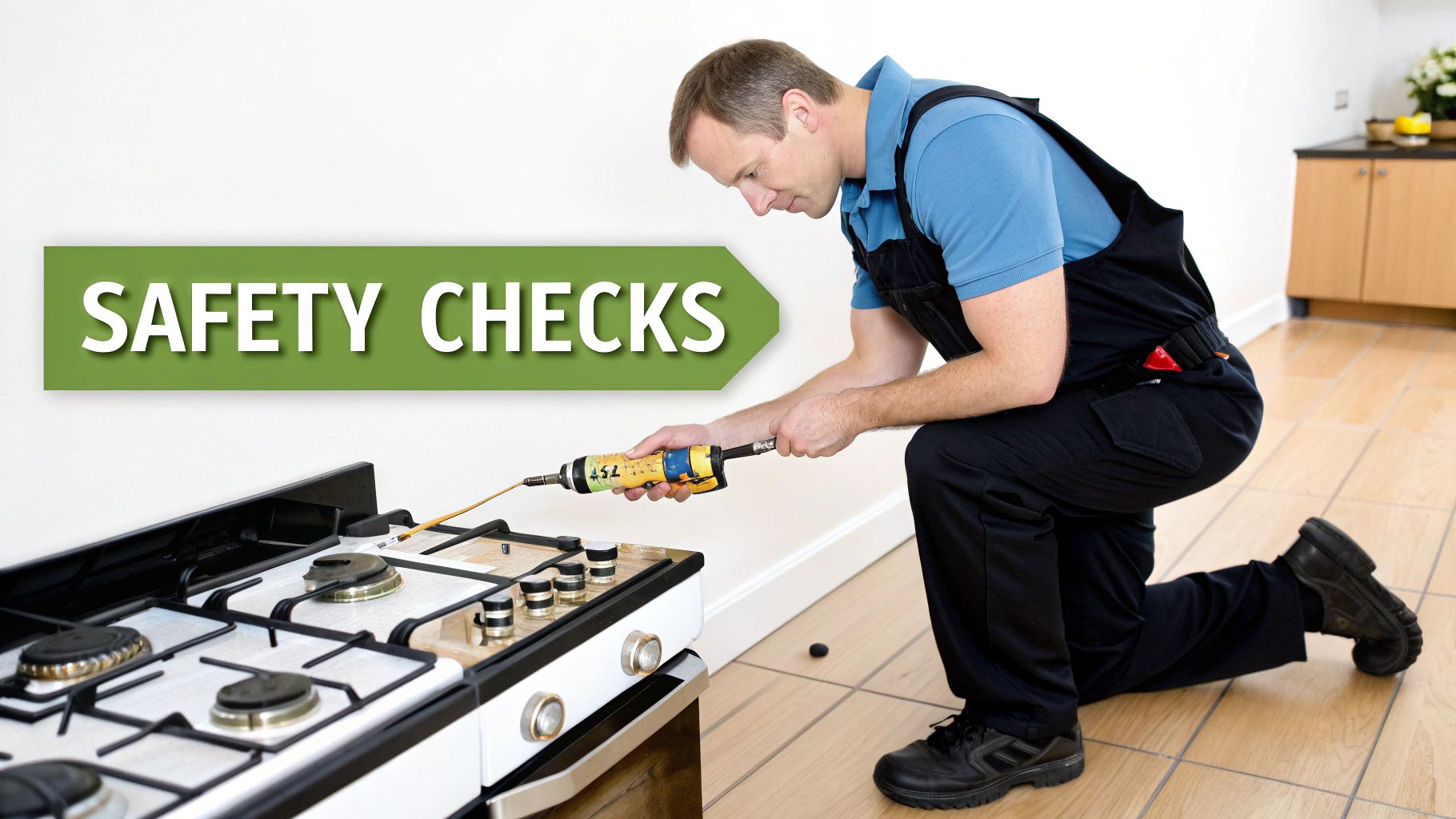
The Critical Final Safety Checks
Fixing the leak is just part of the job. The most important step actually comes after the repair. Before we even think about turning your gas back on, we have to conduct a thorough, system-wide safety check.
We’ll perform a pressure test on your entire gas line. This involves sealing the system and pressurising it with air to see if the pressure holds steady. If that pressure drops, even slightly, it tells us there's another leak somewhere that needs to be found.
Only when the system is proven to be 100% airtight will we turn the main supply back on and start relighting the pilot lights on your appliances. We’ll also give each appliance a quick check to make sure it's firing up and running correctly. Many homeowners are surprised to learn about the full range of professional gasfitting and plumbing solutions available beyond just fixing leaks. Our services extend to commercial plumbing, blocked drains, and hot water systems.
Lastly, and this is crucial, any new gas work requires a Victorian Certificate of Compliance. This document is your legal guarantee that the job was done by a licensed pro and meets all safety standards. It’s a vital piece of paper for your insurance and, more importantly, for your peace of mind.
What Does an Emergency Gas Plumber Cost in Melbourne?
When you smell gas or suspect a leak, the last thing you want to be doing is crunching numbers. But the fear of a massive, unexpected bill can be almost as stressful as the emergency itself. It’s a common worry – that calling for urgent help means signing a blank cheque.
Let's clear the air. Understanding how emergency gas plumbing is priced in Melbourne can give you back a sense of control. It’s about knowing what questions to ask and what a fair deal looks like, even when you're under pressure.
Here's a straightforward breakdown of what goes into an emergency call-out fee, so you know exactly what you’re paying for.
The Typical Fee Structure
Most emergency call-outs involve a few standard charges. Knowing these helps you figure out what's what when you get a quote over the phone.
- The Call-Out Fee: This is the base charge to get a licensed gasfitter on the road and to your front door, especially after hours. Think of it as covering their immediate dispatch, fuel, and the initial diagnosis once they arrive.
- The Hourly Rate: This is where things can get tricky. Emergency work, especially on a Sunday night, carries a premium. The hourly rate will be higher than a standard 9-to-5 job to compensate the plumber for being on-call and ready to go at a moment's notice.
- Parts and Materials: If the fix needs new parts—a fresh valve for your hot water system, a length of pipe, or specific fittings—those items will be added to the final bill.
A good, honest plumber will be upfront about these costs from the moment you call. No surprises.
Why You Should Insist on Fixed, Upfront Pricing
The biggest source of anxiety for most people is watching the clock, knowing that every minute is adding to the bill. This is why you should always look for an emergency gas plumber who offers a fixed price before starting any work.
With this model, the plumber arrives, assesses the situation properly, and gives you a single, all-inclusive price for the complete job. That price is locked in. It doesn't matter if it takes them one hour or three—you pay what you were quoted. This simple promise removes all the guesswork and gives you total peace of mind.
At Amari Plumbing, we're big believers in this. We charge by the job, not the hour. You'll know the full cost right from the start, so you can focus on getting the problem solved, not on the clock.
What Factors Can Affect the Final Price?
Even with a fixed-price guarantee, the initial quote will naturally vary depending on the job. The complexity of the work is what really drives the cost.
Here are a few things that can influence the quote:
- Accessibility: Is the leak from an easy-to-reach connection behind your gas cooktop? Or is it buried deep inside a brick wall or under your floorboards? A leak that’s hard to get to simply requires more labour to access and repair safely.
- Complexity of the Fix: There's a big difference between tightening a loose fitting and having to cut out and replace a whole section of corroded pipe. The nature of the fault itself is the biggest factor. This is also true for complex jobs like pipe relining in Melbourne, where access can greatly influence the cost.
- Materials Needed: The cost of the specific parts required, whether it's standard copper fittings or specialised components for an older installation, will be included in the total price.
It's also worth noting that the availability of qualified gasfitters can play a role. There's a well-documented skills shortage across Australia, which puts a premium on specialist trades, especially for urgent, after-hours jobs. This is particularly true in the outer suburbs of Melbourne, where there are fewer licensed gasfitters covering a much larger area. If you're curious, you can read more about how talent shortages are affecting the plumbing industry. This is just the economic reality of the situation, and it reinforces why finding a local, reputable plumber with transparent pricing is so important.
At the end of the day, while cost matters, your safety is the absolute priority. Your best bet is always to choose a licensed, insured, and reputable emergency gas plumber who gives you a clear, fixed price from the get-go. It’s the smart way to protect your home and your wallet.
Need a clear, fixed price for an urgent gas problem? Contact our team now and we can give you an immediate quote over the phone.
Proactive Steps to Prevent Future Gas Emergencies
The old saying "prevention is better than a cure" has never been more true than when we're talking about gas. The best way to deal with a gas emergency is to make sure it never happens in the first place. While you can't eliminate every single risk, being proactive with your gas system maintenance is hands-down the most effective way to keep your home safe for the long haul.
It’s all about a simple mindset shift: stop reacting to a crisis and start actively preventing one. Think of your gas appliances—the hot water system, the ducted heater, the cooktop—in the same way you think about your car. They're complex pieces of machinery that need regular, professional attention to run safely and efficiently.
Schedule Regular Professional Servicing
Energy Safe Victoria isn't just making a friendly suggestion when they recommend servicing all gas appliances at least once every two years. This is a critical safety measure. When a licensed gasfitter services your system, they're not just giving it a quick once-over; they're performing a comprehensive health check.
Here’s a glimpse of what a proper service involves:
- Cleaning burners and pilot lights to ensure you get that clean, efficient blue flame.
- Checking for any signs of corrosion or wear and tear on pipes and connections.
- Testing for carbon monoxide spillage—an absolute must, as CO is a silent and deadly risk.
- Making sure all safety features and valves are working exactly as they should.
Regular servicing doesn't just catch small problems before they escalate into dangerous emergencies. It also keeps your appliances running efficiently, which can genuinely save you money on your gas bills.
Learn to Recognise the Warning Signs
Long before a full-blown emergency, your gas appliances will often give you little hints that something’s not quite right. Learning to spot these clues means you can call in an emergency gas plumber before a minor hiccup turns into a major hazard.
Keep an eye out for these red flags:
- A Yellow or Orange Flame: The flame on your gas stove or in your heater should always be a crisp, clear blue. If you see a lazy, yellow, or orange flame, it’s a sign of incomplete combustion, which can produce carbon monoxide.
- Soot Stains: Seeing black marks or soot building up around an appliance is a dead giveaway that it's not burning gas correctly.
- Unusual Smells: Beyond the distinct "rotten egg" smell of a gas leak, any stuffy or strange odour while an appliance is running should be investigated immediately.
- Pilot Light Frequently Goes Out: If your pilot light just won’t stay lit, it often points to an issue with the thermocouple or gas supply that needs professional attention.
Catching these things early is crucial. A faulty connection on a gas cooktop, for example, is a common but entirely preventable problem. You can get a better sense of the safety standards involved by reading our guide on professionally installing a gas cooktop.
A proactive check is always better than a reactive emergency call. Spending a little on maintenance can save you from a much larger, more dangerous, and far more expensive repair down the track.
Install Carbon Monoxide Alarms
Think of carbon monoxide (CO) alarms as an essential backup for your own senses. CO is an insidious gas—it's odourless and colourless, produced when natural gas doesn't burn completely, making it impossible for a person to detect.
Installing audible CO alarms near your sleeping areas and on each level of your home provides a vital layer of protection. It's a simple step that can alert your family to a danger you simply cannot see or smell.
Staying on top of your home's maintenance is just part of being a responsible homeowner. If you've noticed any of these warning signs or simply want the peace of mind that comes with a routine safety check, contact Amari Plumbing and Gasfitting to ensure your home is safe.
Your Gas Emergency Questions, Answered
When you think you have a gas emergency on your hands, your mind naturally starts racing. In moments like these, you need clear, straightforward answers. We’ve put together some of the most common questions we get from homeowners across Melbourne to give you the information you need, fast.
What Does a Gas Leak Actually Smell Like?
This is probably the most critical question, and the answer might surprise you: natural gas itself has no smell at all. It's completely invisible and odourless in its natural state.
For safety, gas suppliers add a potent-smelling chemical called mercaptan. This is what gives gas that unmistakable "rotten egg" or sulphur-like odour. If you catch a whiff of that, it's a built-in alarm system telling you there’s a leak. That’s your signal to follow the safety checklist immediately: get out, open doors on your way if you can, and call a professional emergency gas plumber from a safe distance.
Is It Ever Okay to Stay Inside if I Smell Gas?
In a word: no. There is no safe level of exposure to a gas leak within your home. The danger isn’t just about the gas itself, which can displace oxygen and make you unwell, but the serious risk of a spark causing an explosion.
Even if the smell is faint, get everyone out of the house straight away. Don't second-guess it or try to find the source yourself. The number one priority is getting everyone at least 100 metres away from the property before you even think about making a phone call.
How Often Should My Gas Appliances Be Checked?
The best way to handle an emergency is to prevent it from happening in the first place. Energy Safe Victoria is very clear on this: they recommend having all your gas appliances serviced by a licensed gasfitter at least once every two years. This includes your hot water heater, gas ducted heating, oven, and cooktop.
Think of it as a tune-up for your home. A proper service involves much more than a quick look-over. A qualified gasfitter will:
- Clean out burners and fans to ensure they’re running efficiently.
- Test for any gas leaks or dangerous carbon monoxide spillage.
- Check all the connections, seals, and valves for any signs of wear and tear.
This is genuinely the best thing you can do to keep your appliances running safely and reduce the risk of a middle-of-the-night emergency.
What’s a Gas Certificate of Compliance and Why Is It So Important?
A Certificate of Compliance is a legally required document that a licensed gasfitter must give you after completing any gas work at your home. This applies to everything from installing a new cooktop to repairing a gas line or fitting a new hot water system.
Key Point: This certificate is your official proof that the job was done correctly and meets all the strict Victorian safety standards. It verifies that the system has been properly tested and is safe for you and your family to use.
Never let a tradie finish a gas job without one. It’s not just red tape; it's a crucial document for your home insurance and, more importantly, your peace of mind. Any reputable emergency gas plumber will issue one as standard practice—it's a non-negotiable part of a professional job.
Knowing the answers to these questions helps you act decisively when it matters most. Whether you’re in Balwyn, Doncaster, or Templestowe, understanding the risks and knowing who to call is your best defence.
If you’re worried you might have a gas leak or have any safety concerns, don't wait. For a fast, professional response from a licensed and insured emergency gas plumber, call Amari Plumbing and Gasfitting. We offer upfront, fixed pricing and immediate assistance when you need it most. Get in touch with us right away.