

When you're trying to choose between gas and electric hot water, it really boils down to a pretty simple trade-off for most Melbourne homeowners. Gas systems often have a reputation for lower running costs because the fuel is traditionally cheaper, but they also come with a whole host of stricter installation rules. On the flip side, modern electric systems, especially the new heat pumps, are incredibly energy efficient and way better for the environment, which lines up nicely with Victoria's big push towards electrifying our homes.
A Quick Comparison For Melbourne Homeowners
Deciding on a new hot water system is a big deal. It’s a major investment that directly impacts your daily comfort and how much you're forking out on bills long-term. With energy costs going through the roof and a growing focus on being a bit greener, the whole "gas vs electric hot water" debate is more relevant than ever for everyone from Balwyn to Camberwell. This decision is about more than just the upfront price tag; it's about setting your home up for the future, protecting it against unpredictable energy markets and changing environmental standards. As your local plumber in Balwyn, we see this choice facing residents every day.
For decades, gas has been the default choice for countless Melbourne households. It's a huge slice of home energy use, and in a city like ours where 76% of households are on gas hot water, the habit is deeply ingrained. You can get a better picture of these hot water usage trends across Australia. But things are changing, and they're changing fast.
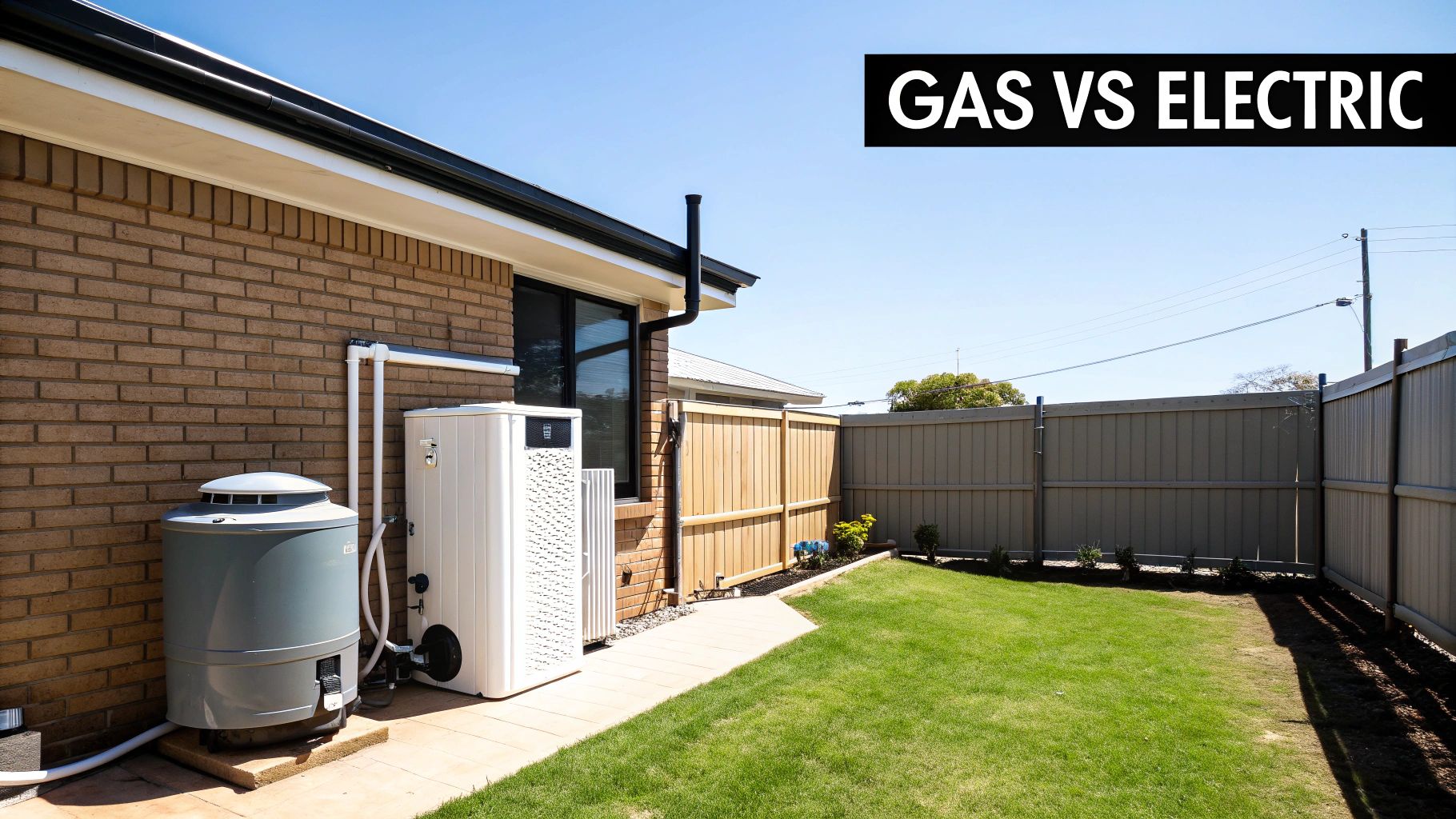
These days, modern electric systems, particularly heat pumps, are a seriously compelling alternative. Think of them like a fridge working in reverse—they pull heat from the surrounding air to warm your water. It sounds complex, but this process makes them up to 3-4 times more efficient than the old-school electric storage tanks. Even better, if you pair one with solar panels, you could practically wipe out your water heating bills altogether.
For Melbourne homeowners, the real decision is between the familiar, reliable performance of gas and the forward-thinking efficiency of these advanced electric systems. Your choice will really depend on your budget, what infrastructure you already have at home, and your long-term goals for energy use.
To make things a bit clearer, here’s a straightforward look at how gas and electric systems stack up.
Gas Vs Electric Hot Water At A Glance
To help you see the differences side-by-side, we've put together this quick comparison table. It covers the key factors you'll need to consider for your Melbourne home.
| Factor | Gas Hot Water Systems | Electric Hot Water Systems |
|---|---|---|
| Upfront Cost | Generally higher, especially for continuous flow units or if you need a new gas line installed. | Varies widely. Traditional tanks are cheap to buy, while heat pumps are a bigger initial investment. |
| Running Costs | Traditionally lower due to cheaper fuel, but natural gas prices are getting much more volatile. | Higher for standard tanks, but extremely low for heat pumps, especially if you have solar PV. |
| Energy Efficiency | Good, with high star ratings on modern units, but at the end of the day, it's still burning a fossil fuel. | Excellent for heat pumps (300%+ efficiency). Poor for old-style resistive element tanks. |
| Installation | Needs a licensed gasfitter and specific ventilation (flueing). The rules are strict and can be complex. | Simpler for standard tanks. Heat pumps might need some minor plumbing and electrical work. |
| Environmental Impact | Produces greenhouse gas emissions directly at your property. | Zero direct emissions. Its real impact depends on your electricity source (grid vs. renewables). |
Ultimately, getting your head around these core differences is the first step. Whether you're in a pinch with a broken unit or you're planning a home upgrade, getting proper advice from an expert is crucial.
The licensed plumbers and gasfitters here at Amari Plumbing and Gasfitting can come out, assess your specific situation, and recommend the most suitable and cost-effective solution for you. We are the emergency plumbers Melbourne residents trust for fast and reliable service.
Ready to find the perfect hot water system for your Melbourne home? Contact us for a personalised consultation and quote today.
Upfront Costs and Installation: What's the Real Price?
The first thing most people look at is the price tag, but the real cost of a new hot water system goes far beyond the unit itself. You have to factor in the labour, materials, and any changes needed to your home's existing plumbing or wiring. This total upfront investment can swing wildly depending on the system you choose and even where you live in Melbourne, from Balwyn to Hawthorn. Hiring an experienced plumber in Hawthorn ensures the job is done right.
On paper, a basic electric storage tank often looks like the cheapest option. It’s simple, familiar technology. But then you have the more advanced electric heat pumps, which can cost two to three times more to buy. That higher sticker price is often softened by government rebates and leads to massive savings on your power bills down the track.

What Goes into a Gas System Installation?
Putting in a gas hot water system isn't a DIY job—it requires a licensed gasfitter. The complexity, and therefore the cost, really depends on what's already at your property. Our team specialising in gasfitting in Melbourne can handle any installation.
Here are the main cost drivers for a gas installation:
- Running New Gas Lines: If you’re switching to gas for the first time or moving your unit, a new gas line has to be run from the meter. This job alone can add hundreds, sometimes thousands, to the final bill.
- Venting and Flueing: Gas heaters create exhaust that needs to be vented safely outside. This means installing a flue, and there are strict rules about where it can go to prevent dangerous carbon monoxide from building up inside.
- Compliance and Safety Checks: Using a licensed professional isn't optional. They have to sign off that the installation meets all Australian safety standards. This adds to the labour cost but is crucial for your family's safety.
Even if the gas unit itself seems reasonably priced, the total installed cost is often higher than a simple electric tank swap because of the specialist gasfitting work involved.
What About an Electric System Installation?
Generally, installing an electric hot water system is more straightforward, but don't assume it's always simple. A like-for-like replacement of an old electric tank is usually a quick and easy job for a plumber.
Things get more complicated when you upgrade to a modern, high-efficiency heat pump:
- Potential Electrical Work: A powerful heat pump might need its own dedicated circuit. In some older Melbourne homes, this can mean a full switchboard upgrade is necessary to handle the extra electrical load, which is a significant extra cost.
- Location, Location, Location: Heat pumps need plenty of fresh air to work efficiently, so they have to be installed outside or in a space with great ventilation. If your old unit was tucked away in a cupboard, this could mean rerouting a fair bit of plumbing.
You really need to understand the full scope of the job to budget properly. For a more detailed look, you can read about the hot water system installation cost factors that influence the final price.
At the end of the day, the cheapest unit on the shelf rarely ends up being the cheapest option once you add up all the installation costs. The only way to get a clear picture is to have an experienced Melbourne plumber assess your specific situation.
Taking a Look at Long-Term Running Costs in Melbourne
The sticker price is just the first page in the long story of your hot water system's total cost. The real story unfolds over the next decade, one utility bill at a time. When it comes to gas versus electric hot water in Melbourne, the whole game is changing, and what used to be the cheapest option could now end up costing you a lot more.
For years, gas hot water was the obvious choice for keeping running costs down. Natural gas was cheap. But with prices becoming more and more unpredictable, banking on gas for long-term savings is a gamble.
On the other hand, modern electric systems, especially the new heat pumps, are proving to be far more predictable. In many cases, they’re a whole lot cheaper to run, too, once you get your head around how they work.
Getting a Handle on Efficiency Ratings
To really compare running costs, you have to look past what fuels the system and see how efficiently it actually uses that energy.
- Gas Star Ratings: Gas units have a simple Star Rating. More stars mean it's more efficient and uses less gas to heat the same amount of water. A 6-star continuous flow system is pretty much the standard for good efficiency these days.
- Electric Coefficient of Performance (COP): Heat pumps are different. They use a number called the Coefficient of Performance, or COP. A COP of 4 means for every 1 kilowatt (kW) of electricity it pulls from the grid, it creates 4 kW of heat by pulling warmth out of the air around it. This makes them a staggering 300-400% more efficient than those old, power-hungry electric tanks.
This incredible efficiency is exactly why a heat pump can slash your water heating bills by up to 70% compared to a standard electric storage unit.
A high-star gas system is great at burning gas efficiently, but a heat pump doesn't burn anything to create heat—it just moves it. That’s the fundamental difference, and it’s why its running costs can be so much lower, even when electricity prices are high.
The Solar Advantage and What's Coming Next
The biggest game-changer for running costs is solar power. If you’ve got solar panels on your roof in a suburb like Doncaster, or you're planning to install them, you can run an electric hot water system for next to nothing during the day. It's a massive advantage that gas systems just can't compete with.
And let's be honest, the tide is turning against gas. Right now, over 40% of Australian homes rely on gas for hot water, but all the projections show this is changing fast. By 2030, experts predict that gas hot water will become the most expensive way to heat your water. You can read more about this big shift in this report on the future of electric hot water.
Choosing a system with low, predictable running costs is one of the smartest financial moves you can make for your home. If you're weighing it all up and want a clear cost breakdown for your situation, our experts can walk you through it.
Ready to lower your bills? Contact Amari Plumbing and Gasfitting to talk about the most cost-effective solution for you.
Environmental Impact And Future-Proofing Your Home
When you're weighing up gas vs. electric hot water, you’re making a choice that has a genuine, long-term impact on the environment. It’s not just about what comes out of your bank account; it’s also about your home’s carbon footprint. A traditional gas heater literally burns a fossil fuel at your property, pumping greenhouse gases into the atmosphere every time you turn on the hot tap.
Sure, gas systems are good at what they do, but they're fundamentally locked into a carbon-emitting fuel. This is where modern electric systems really pull ahead.

Victoria's Shift To An All-Electric Future
Here in Victoria, the ground is shifting. The state government is making a real push for households to move away from gas as part of a bigger plan to decarbonise our energy supply. A clear signal of this was the recent decision to phase out mandatory gas connections for all new homes being built.
For those of us with existing homes, this is a pretty big clue about where things are headed. As more renewable energy feeds into the grid, the green credentials of an efficient electric system just get better and better. Think about it: an electric heat pump running off your own solar panels or green grid power has zero direct emissions.
By choosing an efficient electric system like a heat pump, you’re not just making a green choice for today. You are future-proofing your home against upcoming regulations, potential carbon pricing, and the inevitable winding down of the residential gas network.
Aligning Your Home With Modern Solutions
This forward-thinking mindset fits perfectly with other smart, sustainable home maintenance practices. For example, just as a heat pump is the modern answer to old-school water heaters, advanced techniques like trenchless pipe relining in Melbourne offer a far less disruptive and more durable fix for failing underground pipes compared to digging up the whole yard. Both are about investing in smarter, more resilient tech for the long haul.
Choosing a high-efficiency electric hot water system is a practical step towards a home that's more sustainable and economically secure. It's a decision that cuts your environmental impact and gets your property ready for the next wave of energy standards.
Need some help navigating Victoria's move to electrification and figuring out the right future-proof hot water solution for you? Contact Amari Plumbing and Gasfitting today for expert advice.
Maintenance Needs And System Lifespan
When you buy a new hot water system, you're not just buying a piece of equipment; you're making a long-term investment. How that system performs over the next decade or so comes down to one thing: proper maintenance. While both gas and electric systems need a bit of TLC to run safely and efficiently, what that looks like—and how long you can expect them to last—is quite different.
Gas hot water systems, because they rely on combustion, need a more specialised hand. We recommend getting a licensed gasfitter to check the burner, thermocouple, and ventilation flue at least every two years. This isn’t just about performance; it’s a crucial safety check to prevent nasty issues like carbon monoxide leaks. Given how many Australian households use gas for their hot water, these routine checks are an absolute must. You can find out more about how households use gas across the country in this report.
Electric systems, on the other hand, are a bit more straightforward. For storage tank models, the single most important job is checking and replacing the sacrificial anode every three to five years. Seriously, this little metal rod is the unsung hero that stops your tank from rusting from the inside out. Forgetting about it is the quickest way to kill your unit.
Comparing Average Lifespans
So, how long should your system actually last? It really depends on the type, the quality of the unit, and of course, how well you look after it.
- Gas Storage Tanks: These guys are workhorses, but all that heat and combustion means they typically last around 10-12 years.
- Electric Storage Tanks: With fewer moving parts and no open flame, these often have a slight edge, lasting 10-15 years.
- Continuous Flow & Heat Pumps: The more modern units, whether gas or electric, are built for the long haul. With proper, consistent servicing, they can easily push 20 years or more.
No matter what system you have, there are some clear warning signs you should never ignore. Is the water temperature all over the place? Hearing weird rumbling or popping sounds? Pilot light keeps flicking off? Or worse, do you see water pooling around the unit? These are all cries for help. Ignoring them almost guarantees a complete system failure, usually on the coldest morning of the year. For a deeper dive, check out our guide on how long hot water systems last.
If you spot any of these red flags, don't put it off. What seems like a small problem today can quickly spiral into a major, expensive emergency. A regular service from the team at Amari Plumbing and Gasfitting not only squeezes every last year out of your system but also keeps it running efficiently, saving you money and giving you peace of mind. Our team are the Melbourne plumbers you can count on.
Need a safety check or a service for your hot water system? Contact us to schedule an appointment with our licensed plumbers and gasfitters.
Which Hot Water System Is Right For You
After weighing up all the costs, environmental impacts, and what it takes to keep them running, the choice between gas and electric hot water really comes down to your specific situation. There's no single "best" answer, just the right one for your Melbourne home, your budget, and what you’re planning long-term.
It’s all about matching the system’s strengths to your household's needs.
For example, a large family in an older home in Kew with a good gas connection already in place would probably find a high-efficiency continuous flow gas system a no-brainer. It can handle multiple showers and the washing machine all at once without breaking a sweat. If you need a reliable plumber in Kew, we're here to help.
But for a brand-new build, or a household wanting to get the most out of their solar panels, it's a completely different story.
Making a Decision Based on Your Scenario
Think about these common Melbourne situations to help point you in the right direction:
- For the Large, Busy Family: If you've got multiple bathrooms and the hot water is always in demand, a continuous flow gas system is a very strong contender. Because it heats water instantly, you literally never run out. Perfect for that morning rush hour.
- For the Energy-Conscious Homeowner with Solar: Got solar panels on the roof? A heat pump electric system is the clear winner here. You can set it to run during the day and heat your water for free, slashing your power bills and making the most of your investment in renewable energy.
- For the Budget-Focused Renovation: If the upfront cost is your biggest worry and you’re just replacing an old electric tank, a modern electric storage tank is the cheapest way to get up and running. The running costs are higher, but you avoid the expense of installing new gas lines or doing major electrical work.
If you're having trouble with your current system, this quick decision tree can help you figure out what's going on and when it's time to call in a professional.

As the chart shows, whether you’re hearing strange noises or spotting a leak, getting a professional diagnosis quickly is key to stopping a small problem from turning into a big, expensive one. If you're dealing with blocked drains or other plumbing issues, don't hesitate to find a plumber.
Ultimately, the best way to figure out the perfect system is to get an expert to take a look. Our experienced team at Amari Plumbing and Gasfitting can come to your property, chat about your needs, and give you a straight-up recommendation that balances performance, efficiency, and cost.
Don't leave such an important part of your home to guesswork. Contact us today for a personalised consultation and let's find the ideal hot water solution for you.
Got Questions? We've Got Answers
Even after weighing up the pros and cons, Melbourne homeowners often have a few specific questions about gas versus electric hot water. Let's tackle some of the most common ones head-on.
Are Instant Gas Hot Water Systems Cheaper To Run Than Storage Tanks?
Yes, they usually are. A continuous flow gas system only fires up when you turn on the hot tap, which completely sidesteps the "standby losses" you get with a storage tank. A tank has to constantly burn a little gas or use electricity just to keep its water hot, ready for you to use.
While the initial purchase price for an instantaneous unit can be a bit higher, the savings on your energy bills really add up, making it a seriously economical choice over the long run.
Can I Switch From Gas To Electric In An Older Melbourne Home?
Absolutely. We see this all the time. Switching out an old gas unit for a modern electric system is a smart move for many older homes.
The job involves a licensed professional who will safely disconnect your old heater and cap off the gas line properly. Then, we install the new electric unit. If you're going for a high-powered heat pump, you might need an electrician to upgrade your switchboard, but that’s something our team can organise for you.
Switching isn't just a possibility—it’s a great way to future-proof your home against rising gas prices and get in line with Victoria's big push towards electrification.
What Government Rebates Are Available For Hot Water Systems In Victoria?
The Victorian government is offering some fantastic rebates to encourage people to upgrade to energy-efficient hot water systems. This is all handled through the Victorian Energy Upgrades (VEU) program.
These incentives are heavily geared towards high-efficiency electric models like heat pumps and can often slash a huge chunk off the supply and installation cost. If your old unit is on the blink, you can learn what to do when your hot water system is not working while you look into your upgrade options.
Just keep in mind that rebates and offers can change, so it's always best to chat with an accredited provider to get the latest, most accurate information.
Navigating the world of rebates, installation rules, and making that final call between gas and electric can feel a bit overwhelming. For expert advice that’s actually tailored to your Melbourne home and budget, trust the team at Amari Plumbing and Gasfitting. Contact us today for a free, no-obligation quote!