

It’s a universally bad start to the day: you turn on the shower, and it never gets hot. That unwelcome blast of cold water doesn’t always mean a huge plumbing catastrophe, though.
Often, the fix for a non-working hot water system is surprisingly simple. Before you start searching for an emergency plumbers melbourne, spend a few minutes running through some basic checks yourself. You might just save yourself the cost and hassle of a call-out.
Here's a quick visual guide to help you pinpoint the likely culprit based on the type of system you have.
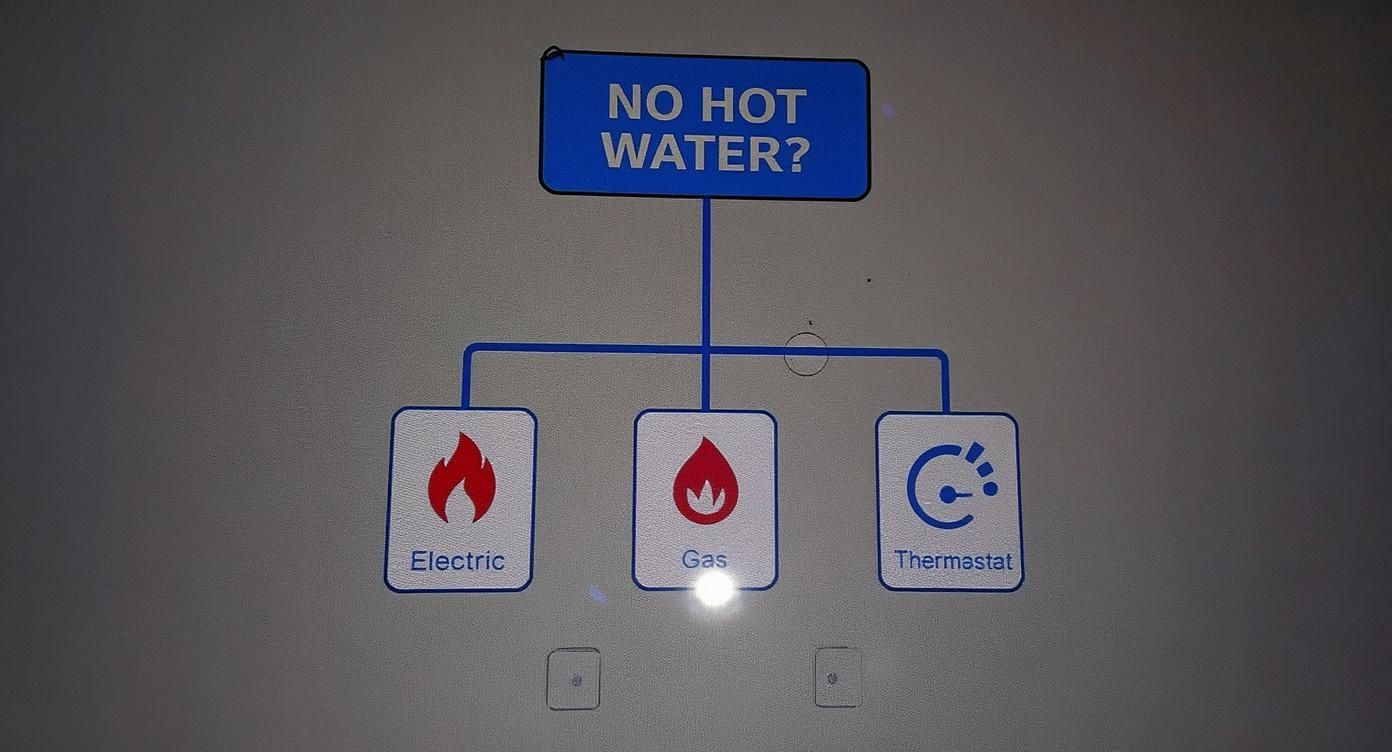
This flowchart simplifies the process by pointing you toward the most common issues—power, gas supply, or thermostat settings—depending on your unit.
Quick Troubleshooting Checklist
Run through these initial checks before picking up the phone. It's amazing how often one of these simple things is the root of the problem.
| Symptom | Possible Cause | Quick Check |
|---|---|---|
| No hot water at all (Electric) | Tripped circuit breaker | Go to your switchboard. Look for a switch labelled "Hot Water" or "HWS." Is it off? Try flipping it back on. |
| No hot water at all (Gas) | Pilot light is out | Check the small flame on your unit. If it's extinguished, follow the manufacturer's instructions to relight it safely. |
| No hot water at all (Gas) | No gas supply | Test another gas appliance, like your cooktop. If it's not working either, the problem is with your main gas line. |
| Water is lukewarm, not hot | Thermostat setting is too low | Find the temperature dial on your unit. Make sure it hasn't been accidentally knocked down. 60°C is standard. |
| Hot water pressure is weak | Isolation valve is partially closed | Check the valve on the pipe leading into the heater. The handle should be parallel with the pipe, meaning it's fully open. |
These checks cover the most frequent and easily solved issues we see in the field. If you've gone through them and still have no luck, it's time to look a bit closer.
Check Your Power and Gas Supply
This is always the first place to look. It sounds obvious, but you’d be surprised how often the system simply isn’t getting the fuel it needs.
- For Electric Systems: Find your home's switchboard. There should be a switch clearly labelled "Hot Water" or "HWS." If it's in the "OFF" position, flick it back on. If it trips off again straight away, don't touch it again. That points to a more serious electrical fault that needs a professional.
- For Gas Systems: The easiest test is to check your other gas appliances. Does your gas stove light up? If not, you’ve likely got an issue with your main gas supply. If the stove works fine, the problem is isolated to the hot water unit. For older gas storage tanks, the culprit is often an extinguished pilot light – a tiny, continuous flame. Follow the instructions on the unit to relight it.
Inspect Thermostats and Valves
Sometimes, the "fix" is as simple as adjusting a dial that’s been bumped or nudged accidentally.
We often find that a thermostat has been turned right down or a water isolation valve has been partially closed. These are easy things to check and adjust yourself, and they're usually located right on the unit or the pipes connected to it.
Find the temperature dial on your tank. It should be set to around 60°C for a storage unit to prevent bacterial growth. Next, look for the water isolation valve on the pipe going into your heater. The handle should be parallel with the pipe, indicating it's fully open.
If you’ve tried these simple checks and the water is still cold, it’s a sign of a more complex problem. At this point, it’s best not to attempt any further DIY repairs, as it can be dangerous. For safe, reliable service from Balwyn North to Camberwell, our team of affordable eastern suburbs plumbers is ready to help.
If you need a fast diagnosis and repair, contact Amari Plumbing and Gasfitting for immediate assistance.
Figuring Out What's Wrong With Your Type of Hot Water System
Not all hot water heaters are built the same, and when your hot water system decides to take a holiday, the type of unit you have is your biggest clue to what’s gone wrong. A glitch in a classic gas storage tank is a totally different beast to an issue with a modern continuous flow system.
Knowing the basics for your model helps you get a handle on what you're dealing with.
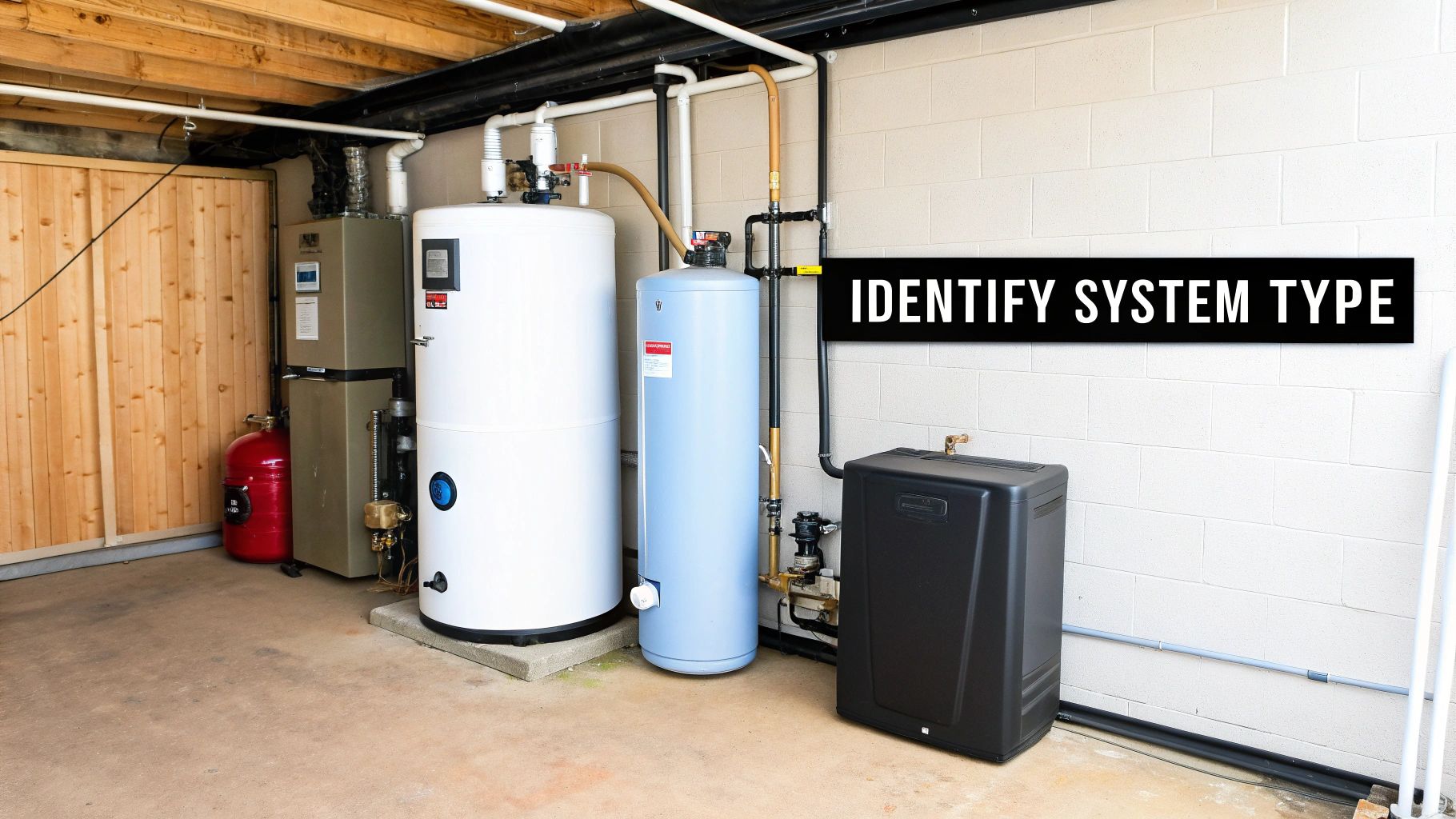
Being able to pinpoint the type of system also means you'll have a much clearer conversation when you call a professional plumber in Melbourne. Let's break down the usual suspects for the different models we see across suburbs like Hawthorn and Kew.
Electric Storage Hot Water Systems
These are the workhorses found in most Australian homes – essentially a big, insulated tank that keeps a ready supply of hot water on standby.
When one of these plays up, the problem usually comes down to one of two parts:
- The Heating Element: This is a bit like the element in your kettle, submerged in the water. If it burns out, the water just won’t heat up. Sometimes you might even hear a sizzling or popping sound, which is a dead giveaway that sediment has built up on the element, causing it to fail.
- The Thermostat: This little device is the brains of the operation, telling the element when to turn on and off. A dodgy thermostat can either fail to switch the element on (leaving you with cold showers) or forget to switch it off, which leads to dangerously hot water and a shocking power bill.
If you've already checked your circuit breaker and it hasn't tripped, but the water is still stone cold, a faulty element or thermostat is almost certainly the culprit. This is not a DIY job – messing with high-pressure water and electricity is a job strictly for a licensed plumber, like the experts at Amari Plumbing and Gasfitting.
Gas Storage Hot Water Systems
Gas storage units work much like their electric cousins but use a gas burner underneath the tank to do the heating. We've already talked about the pilot light going out, but there are other specific issues to watch for.
The most common point of failure here is the thermocouple. Think of it as a safety sensor. It feels the heat from the pilot light and keeps the gas valve open. If the pilot flame goes out, the thermocouple cools down and shuts off the gas. But if the thermocouple itself fails, it will shut the gas off even when the pilot is lit, meaning the main burner never fires up.
Anytime you're dealing with a gas hot water heater, it's absolutely critical to get a licensed expert in gasfitting Melbourne to handle it. Problems with gas lines and appliances demand specialised skills, just like the expertise needed for safely installing a new gas cooktop.
Continuous Flow or Instantaneous Systems
These modern, tankless units are clever bits of kit, heating water on demand as it flows through. They're also more complex, which means they have their own unique set of potential problems.
- Ignition Failure: You turn on the hot tap, hear a frantic clicking sound from the unit, but… nothing. No whoosh of the flame. This often points to a blocked gas jet, a faulty electronic igniter, or an issue with the main control unit.
- Blocked Flow Sensor: These units need to know when you've turned a tap on. A small sensor detects the water flow and tells the system to fire up. If this sensor gets clogged with mineral scale or tiny bits of debris, it won't sense the flow, and the heater will just sit there doing nothing.
If you suspect any of these more technical faults, it's time to put the tools down and call in the experts. Trying to fix these yourself can easily turn a small problem into a very expensive one.
When a Repair Isn't the Right Answer
Look, while we can fix most hot water problems, sometimes a breakdown isn't just a simple fault—it's the final warning sign. There comes a point where sinking more money into an old, failing unit just doesn't make sense. Knowing when to pull the pin on repairs and switch to a new system can save you a whole lot of headaches and money on emergency call-outs down the track.
The most clear-cut sign your system is done for is a leaking or rusted-out tank. If you see water pooling around the base of your heater or rusty streaks running down the side, the internal tank has failed. That’s not a crack you can just patch up; it's a terminal diagnosis.
The Financial Tipping Point
Often, the decision to repair or replace just comes down to simple maths. A small job on a newer system, like swapping out a thermostat or a faulty valve, might only set you back a few hundred dollars. But when you’re facing your second or third call-out in a year for a major part failure on an older unit, those costs really start to sting.
If your hot water system is creeping over ten years old and you're looking at a big repair bill, it's almost always more economical to put that money towards a new, more energy-efficient model. The savings on your power or gas bills, plus the peace of mind, will quickly make up for the initial cost.
Think about it this way: simple fixes on a system under eight years old are usually worthwhile. But if you’re repeatedly forking out AUD 300 to AUD 800 a pop for repairs on a decade-old heater, it's time to face facts. A new system is the smarter financial move. And if the tank itself is leaking? That's game over; a repair is almost never a real option. If you want to dive deeper into the numbers, you can learn more about hot water system replacement factors.
Clear Signs It's Time for a New System
Beyond a major leak, there are other red flags that tell you your hot water heater is on its last legs. Keep an eye out for these, and you can plan for a replacement before you're stuck with a catastrophic failure and a freezing cold shower.
- Age: Most storage tank systems have a good run for about 8-12 years. If yours is in that ballpark or older, it’s living on borrowed time.
- Rusty Water: Turn on the hot tap and get brownish, rusty water? That’s a massive sign the inside of your tank is corroding away.
- Weird Noises: Any rumbling, popping, or banging sounds usually mean there’s a heavy sediment build-up inside the tank. This gunk hardens, forcing the unit to work way harder to heat the water and causing serious stress on the components.
- You Know Your Plumber's Name: Are we on a first-name basis? If you're calling a plumber more than once a year for the same system, it’s clearly failing.
A leaking tank can go from a minor nuisance to a major disaster in a hurry, causing serious water damage to your floors, walls, and belongings. It could escalate into bigger problems, just like the ones we see with burst water pipes in your home.
If you’re nodding along to these points, it’s time to stop thinking about another band-aid fix and start looking at your replacement options. For an honest assessment and a straight-up quote on a new system from a trusted plumber Hawthorn locals rely on, contact Amari Plumbing and Gasfitting today.
What About My Modern Hot Water Heat Pump?
Hot water heat pumps are brilliant, energy-sipping machines, and they’ve become incredibly popular across Melbourne. But with that popularity has come a few headaches. When one of these units stops working, it’s not always a straightforward fix. Often, the real problem is the unit itself or how it was put in.
These systems are a different beast altogether compared to your old storage tank. They work a bit like your fridge in reverse, grabbing heat from the air around them to warm up your water. It’s an incredibly clever and efficient process, but it also means they are very sensitive to their surroundings.
Location, Location, Location
One of the most common issues we come across is a heat pump installed in a place it just shouldn't be. A heat pump absolutely must have a steady stream of fresh air to do its job. Shove it in a tight cupboard, a living room, or a sealed-up laundry, and you're crippling it from day one.
When a heat pump is boxed in, it just ends up breathing in the same cold air it just pushed out. This makes the unit work way harder and for much longer, which hammers its efficiency and can lead to an early death for crucial parts like the compressor.
We've seen it all—units crammed into pantries, even ones sitting in lounge rooms. This isn't just inefficient; it's the calling card of a shoddy installation. If your heat pump is indoors without a heap of ventilation, there's a good chance its failure is because of where it is, not what it is. It's a bit like our work with pipe relining Melbourne; getting the fundamentals of placement and installation right is everything for long-term reliability.
Spotting a Dud Unit or a Dodgy Job
The boom in heat pump installations across Australia has, unfortunately, opened the floodgates for complaints about both the quality of the units and some really questionable installation work. We’re talking about units dying within months or being installed by unqualified people in bizarre spots like toilets. If you want a sense of the scale of the problem, you can discover more insights on heat pump installation problems.
So, how can you tell if your problem is a lemon of a unit or just a rushed job? Keep an eye out for these red flags:
- Died Too Young: A good quality heat pump should give you years of service. If yours has packed it in within the first year or two, that’s a massive sign of either a manufacturing fault or a serious installation mistake.
- Making a Racket: A heat pump isn't silent, but it shouldn't sound like it's about to take off. Any grinding, clanking, or loud vibrating could mean the compressor is on its way out or something wasn't secured properly.
- Constant Error Codes: A properly installed system should just… work. If you're constantly resetting the unit or staring at error codes on the display, something is fundamentally wrong.
If you reckon your "hot water system not working" nightmare is because of a poor installation or a faulty unit, remember you have rights. Document everything, get in touch with the installer, and if you get nowhere, lodge a complaint with Consumer Affairs Victoria.
When you’re dealing with a tricky heat pump, from a plumber Doncaster to a plumber Balwyn, it pays to get a professional opinion. Contact Amari Plumbing and Gasfitting and we'll give you an expert assessment.
Why Hot Water Repairs Demand a Licensed Plumber
Running through a few quick checks yourself is a smart first step, but the moment you need to actually open up the hot water unit, the game changes. A hot water system is a serious bit of kit where high-pressure water, electricity, and sometimes gas all come together. That combination makes any DIY repair attempt not just risky, but genuinely dangerous.
Trying to fix a "hot water system not working" issue on your own can quickly spiral into a whole mess of problems. You could accidentally cause serious water damage to your property, create an electrical hazard, or worse, mess with a gas line. If you even slightly suspect an issue with your gas unit, it's critical to know the risks. We've got a guide on what to do if you think you're detecting a gas leak.
Beyond the immediate danger to you and your home, there’s your investment to think about. Most manufacturers' warranties become completely void the second an unlicensed person cracks open the unit. A simple mistake could end up costing you the entire value of your system.
The Hidden Dangers of Poor Workmanship
Professional melbourne plumbers don't just swap out parts; we understand how the whole system works together and can spot the subtle signs of a bigger problem brewing. Far too often, we see the consequences of a dodgy installation or an amateur repair, which can plague a system for its entire lifespan.
A detailed report on hot water systems actually highlighted how common failures are due to poor workmanship. Think missing washers in fittings, controller covers that aren't weatherproof, and improperly connected sensor cables. These small mistakes lead to huge problems like premature compressor breakdowns and rusty tanks, dramatically shortening the unit's life and racking up maintenance costs. You can read the full research about these system failures.
A licensed plumber is trained to spot and fix these exact issues. We make sure every connection is secure, every part is calibrated correctly, and the whole system runs safely and efficiently according to Australian standards.
The Value of Professional Expertise
When you call a licensed professional from a trusted local company like Amari Plumbing, you're not just paying for a quick fix. You’re investing in peace of mind.
Here’s what you really get:
- Safety: We’re trained to handle the risky mix of water, electricity, and gas without putting you or your property in harm's way.
- Compliance: All our work is done to meet strict Australian Standards and local building codes. No shortcuts.
- Warranty Protection: Our professional work protects your manufacturer's warranty, so you're covered for future component failures.
- Long-Term Reliability: We sort out the immediate problem and also make sure the system is set up for efficient, long-term operation.
Don’t risk your safety or a costly mistake just to save a few bucks. For reliable hot water repairs from a plumber Kew to a plumber Hawthorn, it's always smarter to trust the experts.
If your hot water is out and you’ve done all the simple checks, contact Amari Plumbing and Gasfitting for safe, professional service.
Got Questions About Your Hot Water System?
When the hot water suddenly gives out, your mind starts racing with questions. It's completely normal. We get calls from all over Melbourne about this stuff, so we've put together answers to some of the most common queries we hear.
How Long Should My Hot Water System Actually Last?
This is usually the first question on everyone's lips, especially when they're staring down the barrel of a big repair bill. A standard gas or electric storage tank, if it's been looked after, should give you a good 8 to 12 years of service. The continuous flow or instantaneous models can sometimes push that out to 20 years.
But a lot depends on your local water quality, how much hot water your family uses, and whether it’s had a regular service. If your unit is creeping up on that 10-year mark and starting to play up, swapping it for a new one often makes more sense than paying for yet another repair.
Why Has My Hot Water Pressure Dropped Off a Cliff?
If it's only the hot water pressure that's taken a dive, the problem is almost certainly linked to the heater itself. The simplest cause? An isolation valve on the unit that's been accidentally knocked and is now half-closed.
A more serious culprit could be a massive build-up of sediment inside the tank, which is literally clogging up the works and restricting flow. This can be a sign you have blocked drains. In some tricky cases, a hidden leak somewhere in the hot water line can cause the pressure to drop before you even spot a single drop of water.
Is Lukewarm Water a Big Deal?
Lukewarm water is the classic sign of a system that's on the ropes. In an electric storage unit, it usually points to one of the two heating elements having failed. For a gas system, you might be looking at a faulty thermostat or a burner that just isn't heating things up properly anymore.
While it's not a five-alarm emergency, lukewarm water is a massive red flag. It means your system is working way too hard and burning through energy. Think of it as a final warning that a key part is about to fail completely.
Can I Just Fix This Thing Myself?
Look, it's a great idea to do the basic checks – have a squiz at your switchboard, make sure the gas is on, see if the pilot light is out. But that's where it should stop. You should never, ever try to open up the unit or fiddle with any of the electrical or gas components.
You're dealing with a dangerous mix of high-pressure water, electricity, and gas. DIY repairs almost always make the problem worse, will instantly void your warranty, and create a massive safety risk. For anything beyond those simple first checks, getting a licensed pro like a melbourne plumber is the only smart and safe move.
What’s This Going to Cost Me? Repair vs. Replace
The cost can be all over the shop, depending on what's gone wrong and what type of unit you have. A straightforward repair, like swapping out a thermocouple or a thermostat, might only set you back a few hundred dollars. But if something major has failed, like the tank itself, you’re looking at a full replacement.
A brand new hot water system installation in Melbourne can range from around $1,500 to over $4,000, depending on the model, brand, and size you choose. The good news is, for most common jobs, we can give you a fixed, upfront price right over the phone, so you know exactly where you stand before we even turn up.
If you're stuck with no hot water anywhere from a plumber Balwyn to a plumber Hawthorn, don't put up with it. The expert team at Amari Plumbing and Gasfitting is on standby to figure out what's wrong and get your hot water cranking again, fast.