

That sinking feeling when you realise the water is pooling around your ankles instead of disappearing down the drain is a universal frustration. The good news? The fix for how to unblock a shower drain pipe is often surprisingly simple and starts with a few basic moves: popping off the drain cover, pulling out any gunk you can see, and giving it a good flush with hot water. Honestly, most of the time, this is all it takes to get things flowing again.
So, Why Is Your Shower Drain Blocked Anyway?
Before you start pulling things apart, it helps to know what you’re up against. A slow-draining shower is more than just annoying; it’s your plumbing’s way of telling you something is getting in the way. If you ignore it, you could be setting yourself up for a much bigger, wetter headache down the line. A reliable plumber in Melbourne can diagnose these issues quickly.
Most shower clogs don't happen overnight. They're the result of a slow, steady buildup of everything that goes down that drain day after day. This gunk creates a sticky net, catching more and more debris until the pipe is effectively sealed shut.
The Usual Suspects
In most Melbourne homes we visit, a blocked shower drain boils down to a few common culprits. Getting familiar with them is half the battle, helping you clear the current mess and stop it from happening again.
- Hair: This is, without a doubt, the number one offender. Long or short, it doesn't matter. It twists together with soap and conditioner to form incredibly stubborn clumps that act like a plug in your pipe.
- Soap Scum: That chalky residue you see on your shower screen? It’s also building up inside your pipes. The fats and oils in many soaps and body washes react with minerals in our water, creating a hard, waxy coating that gradually narrows the drain.
- Dirt and Grime: All the sand, dirt, and general grit you wash off after a day out has to go somewhere. Mixed with hair and soap scum, it creates a thick sludge that can bring your drainage to a standstill.
These clogs aren't just a minor inconvenience. It might surprise you to learn that blocked shower drains are a major cause of residential water damage in Australia, contributing to roughly 13.4% of all water-related insurance claims. What starts as a simple clog can eventually lead to leaks and serious structural problems if you let it fester.
What’s Going On Underneath? The P-Trap
Just below your shower drain, there’s a U-shaped bend in the pipe called a P-trap. Its main job is to hold a little bit of water, which creates a seal to stop nasty sewer gases from coming up into your bathroom.
Because of its shape, however, it’s also the perfect place for hair and other debris to get snagged. When you're dealing with a blockage, the P-trap is ground zero. Knowing this helps you focus your efforts where they’ll have the most impact.
If you’ve tried the basics and the water is still backing up, don’t panic. There are plenty of other tricks up our sleeve, which you can read about in our detailed guide on 11 ways to clear your blocked drain.
Quick Triage for Your Blocked Shower Drain
Not sure where to start? This quick table can help you match what you're seeing with the most likely cause and the best first step to take.
| Symptom | Most Likely Cause | First Action to Take |
|---|---|---|
| Water drains slowly | Minor buildup of hair and soap scum | Pour a full kettle of boiling water down the drain |
| Standing water in the shower | A significant clump of hair and debris | Remove the drain cover and manually clear visible gunk |
| Foul odour from the drain | Decomposing gunk stuck in the P-trap | Use a baking soda and vinegar solution to break it down |
| Gurgling sounds | Trapped air trying to get past a deeper blockage | Grab a plunger and try to dislodge it with pressure |
Think of this as your first-aid chart for a blocked drain. It points you in the right direction before you need to break out the heavy-duty tools.
Tackling Tougher Blockages: What to Do When Simple Fixes Fail
So, you’ve tried the boiling water and cleared the surface gunk, but the water is still pooling around your feet. It’s frustrating, I know. This usually means the real problem is a bit further down the pipe, where hair, soap scum, and grime have teamed up to form a stubborn blockage.
Don't reach for the phone just yet. Before calling in the professionals, there are a couple of classic, effective techniques you can try yourself. These methods require a bit more effort, but they are often all you need to get things flowing freely again.
The Old-School Bicarb and Vinegar Trick
Before you get your hands dirty with any tools, it’s worth trying this tried-and-true home remedy. The chemical reaction between baking soda and white vinegar creates a powerful fizz that’s fantastic at eating through the greasy, soapy buildup that glues clogs together. It’s a much safer, eco-friendly alternative to harsh chemicals.
This method is best for organic gunk, not so much for solid objects that might have fallen down the drain. Here’s how you do it:
- First up, pour a full kettle of boiling water straight down the drain to soften things up.
- Next, tip about half a cup of bicarb soda directly into the drain. Give it a few minutes to settle.
- Now for the fun part: pour in one cup of white vinegar. You’ll hear it start to fizz and bubble straight away.
- Quickly cover the drain with a plug or a damp cloth. This traps the reaction inside the pipe, forcing it to work on the blockage instead of escaping up into your shower.
- Let it sit for at least an hour. If you suspect a really nasty clog, leaving it for a few hours or even overnight is even better.
- Finally, flush it all out with another kettle of boiling water.
This is a great first-line defence for deeper blockages and works wonders as a regular maintenance clean to keep your pipes in good shape. For a more in-depth look, check out our dedicated guide on how to clear blocked drains.
Bring Out the Big Guns: The Plumber's Snake
If the bicarb and vinegar didn't shift it, you’re probably dealing with a dense, physical blockage—most likely a big, compacted clump of hair. This is where a plumber’s snake (also called a drain auger) is your best mate. It’s basically a long, flexible metal coil that can snake its way around the bends in your pipes to physically break up or pull out the clog.
This infographic gives you a quick visual on the essential first steps you should have already taken.
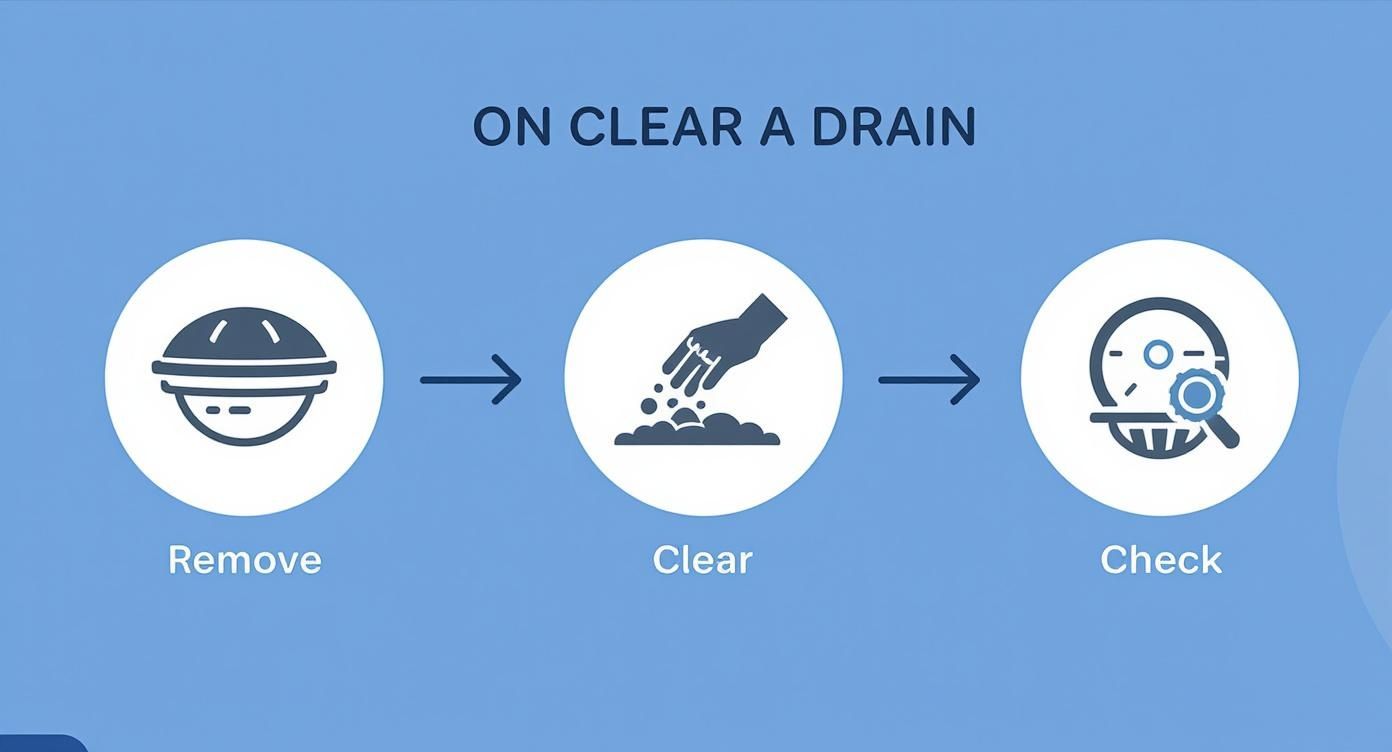
You need to have the drain cover off and the P-trap clear before sending a snake down, otherwise, you're just working blind.
To use the drain snake, carefully feed the end into the drain. Keep pushing it in gently until you feel it stop—that’s the clog. Now, start turning the handle. This motion will either drill into the blockage and break it apart, or the corkscrew end will snag onto it.
If you feel it hook onto something solid, stop turning and slowly pull the snake back out. Be prepared; you’ll likely pull the whole messy clump out with it. You might need to do this a few times to get everything.
Once you’ve pulled out the main culprit, give the drain a good flush with hot water to wash away any leftover bits. This hands-on approach is often the most reliable way to sort out those really stubborn shower blockages for good.
Why You Should Step Away from Chemical Drain Cleaners
When your shower starts turning into a shallow bath, reaching for a bottle of chemical drain cleaner feels like the quickest fix. They promise to blast through clogs with zero effort. But what the flashy label doesn't tell you is the serious risk these harsh chemicals pose to your pipes, your health, and the environment.
These products are packed with powerful, caustic chemicals like sodium hydroxide or sulfuric acid. Their job is to create a fierce chemical reaction to dissolve hair and soap scum. While they might clear a small blockage, it’s a scorched-earth approach that often causes more problems down the line.
The Hidden Damage Brewing in Your Pipes
That same corrosive power that attacks the clog can also eat away at your pipes. Many older homes across Melbourne, especially in suburbs like Kew or Camberwell, feature a mix of plumbing materials, and some are more vulnerable than others.
- PVC Pipes: You might think plastic is safe, but the intense heat from the chemical reaction can cause PVC to soften, warp, or even crack over time.
- Older Metal Pipes: If you have galvanised steel or cast iron pipes in a period home, they are extremely susceptible to corrosion. Chemical cleaners put this process into overdrive, thinning the pipe walls and leading to pinhole leaks or even a burst pipe.
The risk is even greater if the cleaner doesn't fully clear the blockage. That corrosive liquid just sits there, trapped against the clog, slowly eating a hole in one spot of your pipe. What started as a simple blocked drain can quickly spiral into a costly pipe relining in Melbourne job to fix the damage.
Serious Safety and Environmental Red Flags
Beyond wrecking your plumbing, these chemicals are genuinely hazardous. The fumes they kick up are toxic, and breathing them in a small, unventilated bathroom can cause serious respiratory irritation.
Pouring these chemicals down a drain is a gamble. You're introducing a highly reactive substance into a system you can't see, hoping it only dissolves the clog and not your plumbing.
If any of it splashes on your skin, you could be dealing with a nasty chemical burn. And never, ever try to use a plunger after using a chemical cleaner—you risk splashing that corrosive cocktail right back into your face.
From an environmental standpoint, it’s just as bad. These chemicals get washed into the water system, and treatment plants aren't always set up to fully neutralise them. This means they can end up in our rivers and oceans, causing real harm to aquatic ecosystems.
When Chemicals Just Make Things Worse
Here’s the thing: liquid cleaners are often useless against a solid, compacted mass of hair and gunk. At best, the chemical might burn a small tunnel through the clog, letting water drain slowly for a day or two. This gives you a false sense of victory, but the core of the problem is still there.
Before you know it, the clog is back, and it's usually worse. And if you've already poured chemicals down the drain and it's still blocked, you’ve created a dangerous situation for any plumber you call. That standing water is no longer just water; it's a hazardous chemical mess.
For a safer and far more effective fix for a blocked drain in Balwyn, physical methods like using a drain snake are always the better choice. If DIY isn't cutting it, it's time to bring in a professional. Don't risk your pipes or your health—contact us for a safe, permanent solution.
Smart Habits to Prevent Future Blockages
Let’s be honest, dealing with a blocked shower drain is a pain. Once you’ve gone to the trouble of clearing a clog, the last thing you want is a repeat performance in a few weeks' time. The best defence is a good offence—stopping the problem before it even gets started.
It all comes down to a simple but consistent maintenance routine. These small, regular actions stop the slow, sneaky build-up of hair, soap scum, and grime that eventually brings your plumbing to a grinding halt. Trust me, spending five minutes a week on prevention beats spending hours wrestling with a stubborn blockage.
Creating a Simple Maintenance Checklist
A little preventative care really does go a long way. You don’t need a complicated schedule; just a few key habits can make all the difference. Think of it as housekeeping for your pipes.
Here’s a practical checklist you can easily adopt to keep your shower drain flowing freely, tailored for the demands of a busy Melbourne household.
- Weekly Hot Water Flush: At least once a week, pour a full kettle of boiling water straight down the drain. This simple trick helps melt and wash away greasy soap and conditioner residue before it can solidify on the pipe walls.
- Monthly Bicarb and Vinegar Cleanse: Give your drain a deeper clean once a month. Use the same natural method you'd use for a minor clog—pour half a cup of bicarb soda down, follow it with a cup of white vinegar, let it fizz for an hour, and then flush with hot water. This will break down any gunk that’s starting to form.
- Clean the Drain Cover Regularly: Make it a habit to lift the drain cover every week or two and clear away any visible hair and gunk. It takes less than a minute and is the single most effective thing you can do to prevent hair-related clogs.
These simple steps stop clogs from forming in the first place, ensuring that debris is regularly flushed out of the system instead of getting stuck in the P-trap.
The Power of a Drain Hair Catcher
If there's one tool that can single-handedly prevent most shower blockages, it's a drain hair catcher. These are cheap, simple mesh or silicone devices that sit over or just inside your drain opening.
Their job is straightforward: they let water pass through but physically trap hair and other gunk before it ever enters your plumbing. All you need to do is empty it regularly. It’s a small, visible mess to clean up, which saves you from the much larger, invisible mess lurking in your pipes. For households with long-haired family members, this isn't just a suggestion—it's pretty much essential.
A drain catcher is the cheapest plumbing insurance you can buy. It's a small investment that prevents the number one cause of shower drain clogs, saving you time, frustration, and money on potential plumbing bills.
When to Consider Professional Maintenance
While your DIY habits are crucial, a professional drain clean offers a level of thoroughness that home methods simply can't match. In fact, Australian plumbing industry guidelines often recommend a professional drain clean at least once a year.
Research shows that clogged drains are responsible for about 13.4% of plumbing-related incidents that cause water damage. Regular professional servicing is a smart way to protect your property, especially in areas with older plumbing infrastructure like many parts of Melbourne. The frequency can vary; a large household in Doncaster might need a clean every six months, whereas a smaller household could go longer. You can read more on the topic in these professional drain cleaning insights.
If you’re unsure about the health of your drains or just want to get ahead with a preventative maintenance schedule, our team can help. We provide expert advice and services across Melbourne to keep your home's plumbing in top shape. For a professional assessment and a clog-free future, contact us today.
When to Call in a Professional Plumber
Look, I'm all for a bit of DIY. Tackling a minor shower clog yourself can be really satisfying. But after years in the trade, I can tell you that some blockages are just the tip of the iceberg—symptoms of a much bigger, nastier problem lurking deeper in your pipes. Knowing when to put the tools down and call a pro can be the difference between a simple fix and a full-blown plumbing disaster.
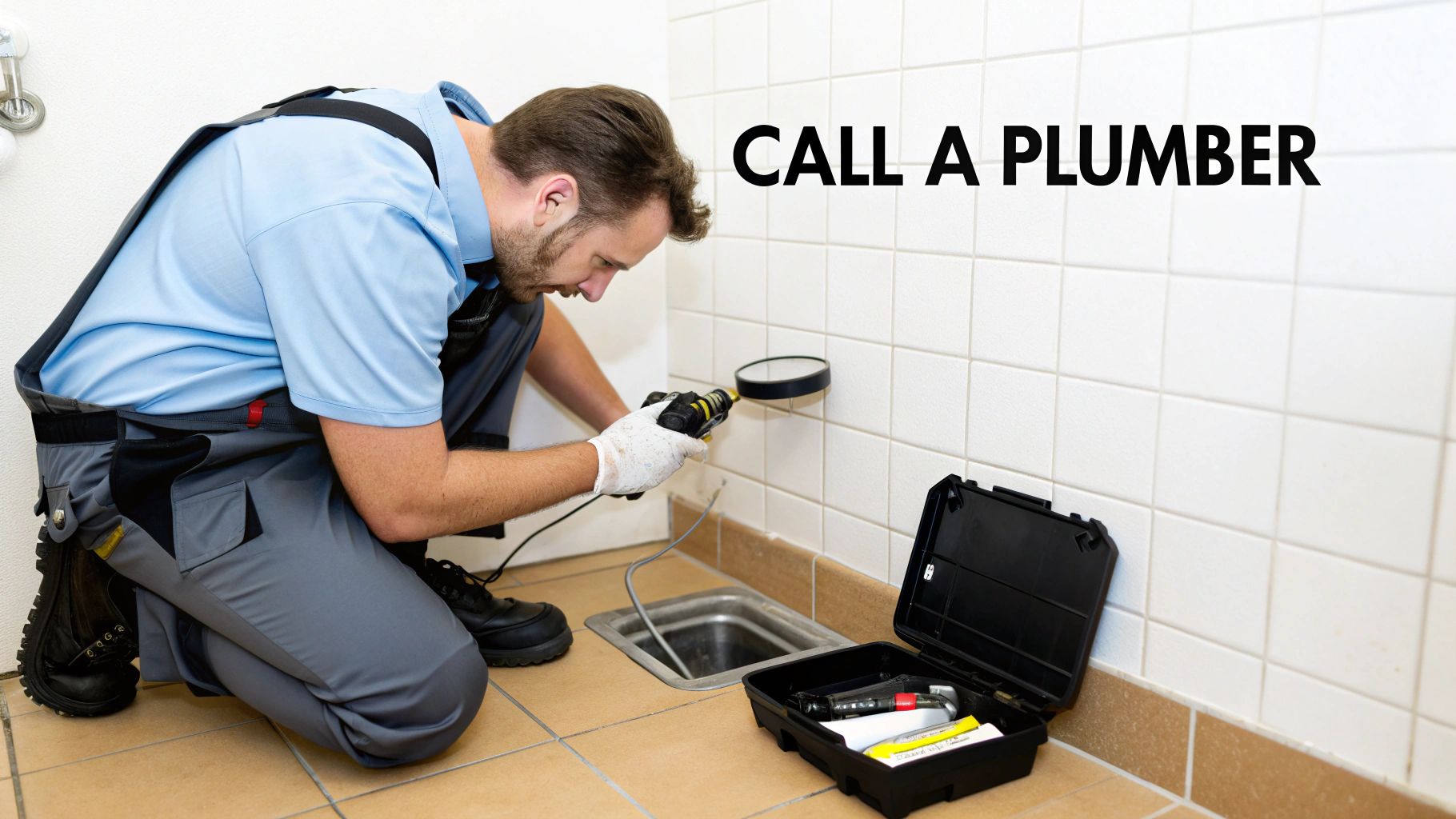
Sometimes, that slow-draining shower is a warning sign of a blockage in your main sewer line. Ignoring it won't make it go away; it just gives it time to get a whole lot worse. When you need a plumber near me for an urgent fix, it's best to act fast.
The Blockage That Keeps Coming Back
Have you cleared the drain, only to find yourself standing in a puddle again a week later? If you’re fighting the same blockage over and over, it’s a dead giveaway that you’re only clearing the immediate gunk, not the real source of the problem.
A professional plumber has the gear, like a CCTV drain camera, to get a proper look inside your pipes. We can pinpoint if the real culprit is an invasive tree root or a partially collapsed pipe further down the line—something no amount of plunging is ever going to solve.
That Foul Smell Just Won't Go Away
A lingering sewage smell coming from your shower drain is a massive red flag. Sure, a bit of a pong can come from rotting hair in the P-trap, but a strong, persistent odour often points to serious trouble with your main sewer line or plumbing vent system.
Those smells mean sewer gases are backing up into your home instead of being vented safely outside. It’s not just unpleasant; it's a potential health hazard. This isn’t something to mess with—it needs an expert diagnosis, fast.
Gurgling Noises and Multiple Clogged Drains
Start paying attention to your other drains. If flushing the toilet makes your shower gurgle, or if the sink and shower are backing up at the same time, the problem is almost certainly in your main sewer line.
What’s happening is that the main blockage is stopping all wastewater from leaving your property, forcing it back up through the lowest points—like your shower drain. Keep using water in this situation, and you’re asking for a messy, unhygienic overflow.
A single blocked drain is an inconvenience. Multiple blocked drains are a plumbing emergency. It’s a clear sign the issue is system-wide and needs professional attention before you end up with raw sewage in your home.
Knowing the Limits of DIY
While it's great to know how to unblock a shower drain pipe, knowing when to stop is even more crucial. If you’ve tried a drain snake and hit a solid wall, don't force it. You could easily damage the pipe, especially in older Melbourne homes where plumbing can be more fragile. You can get a better sense of the professional approach on our blocked drain in Melbourne service page.
Don’t just take my word for it. Statistics show that issues with blocked drains contribute to 13.4% of water-related damages in Australian homes. It’s a sobering reminder of how a small clog can escalate.
If any of these signs sound a bit too familiar, don't wait for it to get worse. For a fast, accurate diagnosis and a fix that actually lasts, contact the experts at Amari Plumbing and Gasfitting.
Common Questions About Blocked Shower Drains
Even after you've successfully cleared a clog, you might still have a few questions. That's completely normal. Every home's plumbing has its own quirks, so we’ve gathered some of the most common queries our Melbourne plumbers get asked on the job.
How Do I Know if the Problem Is My Main Sewer Line?
This is the big one. Figuring this out tells you whether you're dealing with a simple clog or a full-blown plumbing emergency.
A single blocked shower is one thing, but a clogged main sewer line brings your whole house to a standstill. The biggest giveaway is seeing multiple fixtures acting up at once. If flushing the toilet makes water gurgle up in the shower drain, or your bathroom sink is backing up at the same time as the shower, the problem is almost certainly deeper in the main line.
All your home’s wastewater is trying to get out through one big pipe. When that pipe is blocked, the wastewater has nowhere to go but back up through the lowest points—usually your shower or floor drains.
A foul sewage smell coming from several drains is another dead giveaway. If you suspect a main sewer issue, stop using your water immediately and call a professional. This isn't a DIY job; it requires serious gear, sometimes even the equipment used for sewer relining, to fix properly.
Are ‘Flushable’ Wipes Causing My Shower to Block?
Probably not directly, since you're not putting them down the shower drain. But they are a notorious culprit for the main sewer line blockages that cause your shower to back up.
Here’s the thing: despite what the packaging promises, those wipes don't break down like toilet paper. They snag, clump together with grease and other gunk, and create massive, stubborn blockages that plumbers call "fatbergs."
The rule of thumb is simple: only human waste and toilet paper go down the toilet. Anything else, and you’re just asking for a major blockage that will affect every single drain in your house.
How Often Should I Get My Drains Professionally Cleaned?
A bit of preventative maintenance is always cheaper and less stressful than an emergency call-out. For a typical Melbourne household, we suggest a professional drain clean every 12 to 18 months. This is usually enough to clear out the stubborn build-up that DIY methods just can't touch.
Of course, some homes might need more frequent attention:
- Large Families: More people means more showers, which equals a lot more hair and soap scum heading down the pipes.
- Older Homes: We see it all the time in established suburbs like Balwyn or Doncaster. Older plumbing is often narrower and more prone to catching debris.
- Long Hair: If someone in your house has long hair, a yearly professional clean is a smart move to avoid a seriously tangled-up clog down the line.
A professional clean isn't just about clearing gunk. It’s our chance to run a camera down your pipes and spot small issues like tiny cracks or tree root intrusion before they turn into expensive disasters.
Think of it as a regular health check-up for your home's plumbing. It keeps everything flowing the way it should and gives you some well-deserved peace of mind.
If you're wrestling with a blockage that won't budge or want to get ahead of future problems with a professional clean, Amari Plumbing and Gasfitting is here to help. Our experienced team offers fast, reliable service right across Melbourne. Don’t let a blocked drain ruin your day—contact us for a free quote and expert advice.