

Waking up to a stone-cold shower is one of life’s less pleasant surprises. It’s usually the first, very unwelcome sign that your hot water system has packed it in. If you're standing there shivering, your first thought is probably, "How much is this going to cost me?"
Figuring out the hot water system replacement cost is your first step to getting back to warm, comfortable mornings. And it’s not just the price of the unit on the box; it’s the total cost of the system plus the professional work to get it installed safely and correctly. As leading plumbers in the eastern suburbs, we provide clear, upfront pricing to help you budget effectively.
Decoding Your Hot Water System Replacement Cost
In Melbourne, you can expect the total cost to replace a hot water system to land somewhere between $1,200 and $4,500. This ballpark figure covers the new unit and the essential labour from a licensed plumber in Melbourne to ensure everything is up to code and running efficiently.
While the national average sits around $2,800 for a full replacement, Melbourne's prices can vary. This is a pretty standard range across Australia.
For homeowners in Melbourne’s eastern suburbs, from a plumber in Balwyn out to a plumber in Hawthorn, knowing the local costs is even more important. At Amari Plumbing and Gasfitting, we believe in being upfront. We give you a fixed price from the get-go, so there are no nasty surprises, especially when you're already stressed about having no hot water.
A Quick Glance at Melbourne Prices
To help you get a clearer idea of what to budget for, here’s a quick look at the typical costs for different types of hot water systems in Melbourne.
Estimated Hot Water System Replacement Costs in Melbourne
This table gives you a snapshot of what you can expect to pay for a full replacement, including the unit and installation. A simple electric storage heater will be much friendlier on the wallet upfront compared to a super-efficient solar system, but running costs are another story.
| System Type | Estimated Total Cost Range (AUD) |
|---|---|
| Electric Storage System | $1,200 – $2,500 |
| Gas Storage System | $1,500 – $2,800 |
| Gas Continuous Flow | $1,800 – $3,500 |
| Heat Pump System | $3,500 – $6,000+ |
| Solar Hot Water System | $4,500 – $8,000+ |
This guide will dive deeper into what makes up these numbers. We’ll break down why each system has its price tag and look at the other sneaky factors that can affect your final quote.
Whether you're after a straightforward swap or a more complicated upgrade, the first step is always a clear, honest quote. If your unit is on its last legs or you're just planning ahead, don't leave it to chance.
Contact Amari Plumbing and Gasfitting for a free, no-obligation quote and get some straight answers from a trusted Melbourne plumber.
Breaking Down the Costs of Different Hot Water Systems
Let's be honest, not all hot water systems are created equal, and their price tags are the first clue. Choosing the right one for your home isn't just about the initial cost; it’s a balancing act between that, long-term running expenses, and how much hot water your family actually uses. Getting your head around the main options is the first step to making a smart call for your budget and lifestyle, whether you need a plumber in Doncaster or anywhere else in the eastern suburbs.
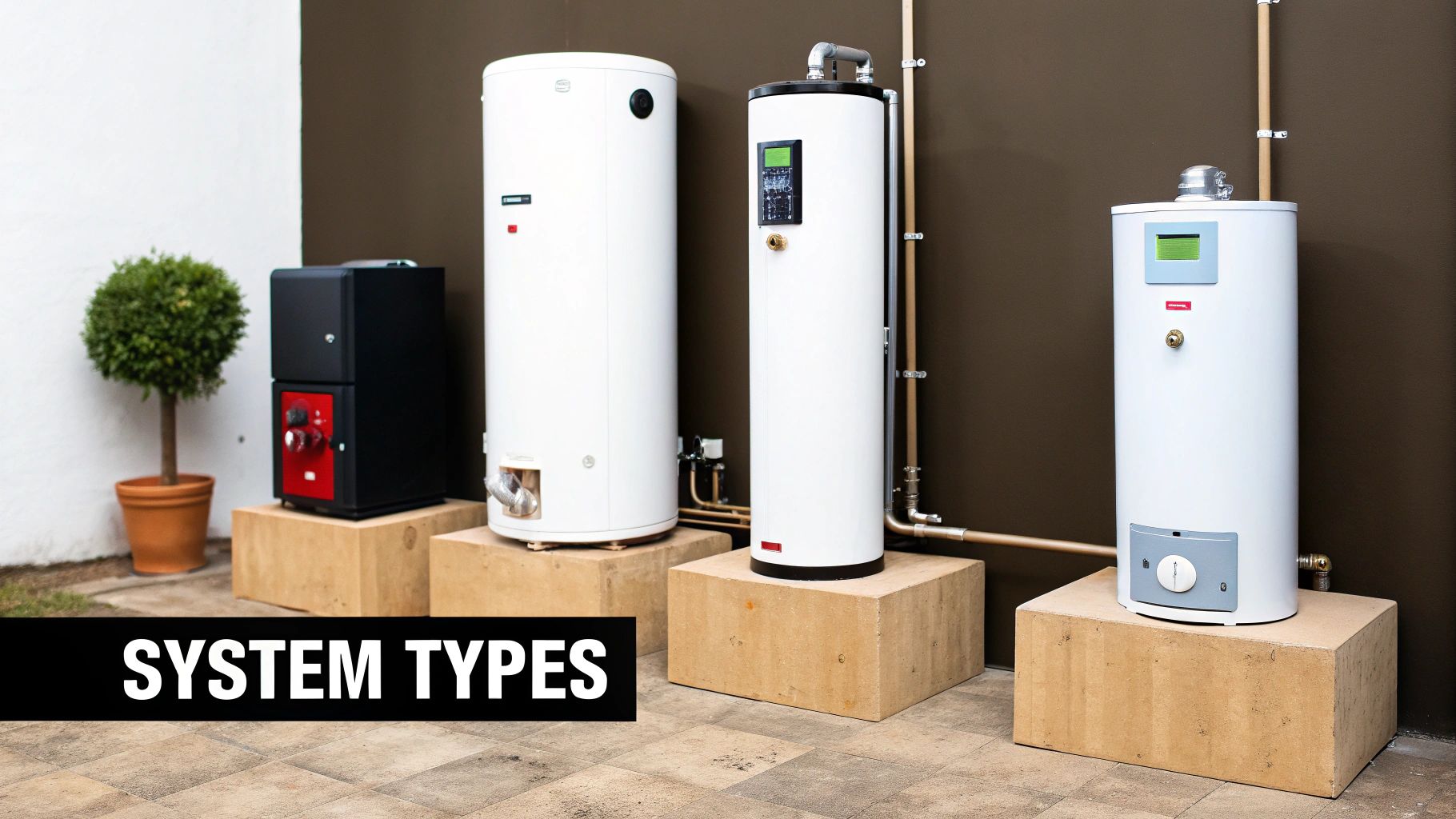
Here, we'll walk through the go-to choices for Melbourne homeowners, from the old faithful tanks to the newer, high-efficiency models. We'll cut through the jargon, look at the pros and cons of each, and give you a clear idea of what to expect for both the unit and the installation. This should make it crystal clear why a standard electric unit has a lower ticket price than a newfangled solar setup.
Electric Storage Hot Water Systems
Think of electric storage systems as the workhorses of the hot water world. They're basically a big kettle, using an electric element to heat water in a tank—anywhere from 25 to 400 litres—and keeping it ready for you. Their biggest selling point? The low upfront hot water system replacement cost.
But that simplicity can have a sting in its tail. They're often the most expensive to run, especially if they're heating water during peak electricity times. Still, because they’re affordable and simple to install, they're a popular pick for smaller households or places without gas access.
Gas Hot Water Systems
Gas systems are a very popular and efficient alternative, and they come in two main flavours: storage tanks and continuous flow (or "instantaneous") units. Getting one installed safely means calling a professional for gasfitting Melbourne locals trust to handle the connection properly.
- Gas Storage Tanks: Just like their electric cousins, these units heat and store water in an insulated tank. The big difference is they tend to heat water faster and are cheaper to run, thanks to the lower cost of natural gas.
- Gas Continuous Flow Units: These are the modern, compact option. They heat water on the fly, as you need it. The upshot? You never run out of hot water, they save a heap of space, and they're super energy-efficient because they aren't wasting energy keeping a big tank hot 24/7. It's why so many homeowners in suburbs like Kew and Camberwell are making the switch.
Heat Pump Hot Water Systems
A heat pump is a seriously clever type of electric system. Instead of using a brute-force heating element, it works like a reverse-cycle air conditioner. It pulls warmth out of the surrounding air and uses it to heat the water in the tank.
While they do cost more to buy initially, heat pumps can slash your hot water energy use by up to 75%. That makes them a fantastic long-term investment, with the savings on your power bills really adding up over the years.
Their efficiency makes them a great choice for anyone looking to reduce their carbon footprint without giving up a good, hot shower.
Solar Hot Water Systems
When it comes to green tech, solar hot water systems are the top of the pyramid. They use collector panels on your roof to capture the sun's energy and heat your water. Most also have a gas or electric booster, so you're never caught out on cloudy days or when you have extra houseguests.
The upfront investment for a solar system is the highest of the lot. But in return, they have the lowest running costs, potentially cutting your water heating bills by an incredible up to 90%. For homeowners planning to stay put for the long haul, they're an amazing way to achieve energy independence and big savings.
As you can see, the price differences can be pretty dramatic. For example:
- A basic electric storage system can be installed for AUD $600 to AUD $2,200.
- Gas systems, whether storage or instantaneous, typically land between AUD $1,200 and AUD $3,500.
- High-efficiency heat pumps will set you back AUD $3,000 to AUD $6,500 before any rebates.
- A top-tier solar hot water system has a significant initial cost, usually AUD $4,000 to AUD $8,000.
You can find more detailed price info and expert insights on these costs from industry resources.
Making the right choice really comes down to your home and your needs, but knowing the landscape is half the battle. For advice tailored to your situation, contact Amari Plumbing and Gasfitting today.
Hidden Factors That Can Bump Up Your Final Quote
Ever gotten a quote that looked great on paper, only to find the final bill has a few extra surprises? It happens. When it comes to the hot water system replacement cost, what you're first told doesn’t always tell the whole story. The final price tag isn’t just about the new unit and the basic labour; a few other things can sneak in and influence what you end up paying.
Getting your head around these variables is key. It helps explain why a seemingly simple swap in one house can be a much bigger job in another. It’s also why a proper, on-site look from a professional plumber is the only way to get a quote you can actually rely on.
System Size and Brand Reputation
The first thing to consider is the system itself – specifically, how big it is and which brand you go for. A small 80-litre electric unit, perfect for a couple in a Doncaster apartment, is naturally going to have a much friendlier price tag than a big 315-litre tank needed for a family of five in Balwyn.
It’s a pretty simple rule of thumb: the bigger the tank, the higher the cost of the unit. Think of it like buying a car—a little hatchback is always going to be cheaper than a family-sized SUV because they’re built for completely different loads.
Brand reputation plays a big part, too. The well-known names with a long track record for being reliable and offering solid warranties often cost a bit more upfront. But that initial investment can really pay off down the track with better performance, fewer headaches, and decent customer support if something goes wrong.
Installation Complexity and Accessibility
Where your hot water system lives in your house can make a huge difference to the labour costs. A simple, straightforward replacement in an easy-to-get-to laundry or garage? That’s the dream scenario. But things get trickier—and more expensive—when the unit is tucked away in a tight roof cavity, a cramped cupboard, or perched on a platform.
Here are a few common challenges that can add to the final bill:
- Difficult Locations: Trying to wrestle a heavy, bulky tank through narrow hallways or up a few flights of stairs is tough work and takes more time.
- Roof Cavity Installations: These jobs often need two plumbers to handle them safely and can involve carefully navigating around insulation and timber beams.
- External Installations: If the new unit is going outside, the plumber might need to pour a new concrete slab to make sure it’s sitting level and secure for years to come.
Each of these situations adds extra hours to the job, and that will naturally be reflected in your final quote.
The Need for Additional Upgrades
Sometimes, pulling out an old hot water system uncovers other things that need attention to bring your home’s plumbing or electricals up to current Australian standards. These aren't just optional extras; they’re often required by law for safety and compliance. This is where our expertise in services like pipe relining in Melbourne becomes invaluable.
Here’s some of the common extra work that might pop up:
- Electrical Upgrades: If you're switching to a modern heat pump or a bigger electric system, you’ll likely need a new dedicated electrical circuit, which has to be installed by a licensed electrician.
- Gas Line Modifications: Moving from electric to a gas system means a licensed gasfitter has to run new gas lines. Even if you're just replacing an old gas unit, the existing pipes might need to be upgraded or rerouted to fit the new model. This is a critical safety job – you don't want to mess around with gas. Our guide on what to do if you suspect a gas leak explains just how important professional gasfitting is.
- Plumbing Adjustments: New systems often have their connection points in slightly different spots, which means your existing hot and cold water pipes will need to be modified to line up correctly.
- Valves and Fixtures: Today's regulations might demand new tempering valves or pressure limiting valves be installed to keep things safe and protect your new unit. These probably weren't required when your old system was put in decades ago.
These necessary extras are exactly why a quick, cheap quote over the phone can be so misleading. A true professional will come out, assess all these factors on-site, and give you a comprehensive, accurate price so there are no nasty shocks when the final invoice lands.
Understanding Your Installation Labour and Service Fees
So, you’ve picked out your shiny new hot water unit. But what about the cost to actually get it installed? It’s a pretty common blind spot, but the installation and service fees are a huge chunk of the final price. Knowing what goes into that cost helps you see the value in getting it done right and avoid any nasty surprises on the final bill.
This isn’t just a simple plug-and-play job. A standard replacement is a detailed process that ensures your new system runs safely, efficiently, and meets all of Victoria’s strict plumbing codes.
A straightforward swap-out usually takes our licensed plumbers anywhere from 2 to 6 hours. That time covers the whole works, from getting the old beast out to making sure the new one is running perfectly.
What Your Standard Installation Covers
When you get a quote from us, the labour cost isn't just a number plucked from thin air. It covers all the essential steps for a safe and correct installation.
- Disconnecting and Draining: First things first, we have to safely shut off the water, gas, or power to your old unit and drain it completely. No shortcuts here.
- Removal of the Old System: Those old tanks can be seriously heavy and awkward. We’ll carefully haul it out to make way for the new system.
- Fitting the New Unit: We then get your new heater into position, make sure it’s secure, and connect all the plumbing and energy lines properly.
- Testing and Commissioning: This is the final, crucial step. We'll fill the system, fire it up, check for any leaks, test all the safety valves, and make sure it’s heating water exactly as it should before we pack up.
It’s this methodical approach that guarantees your new system works flawlessly from the moment we leave.
Potential Additional Service Fees
Beyond the standard labour for the swap, a couple of other charges might pop up as separate items on your invoice. These aren't "hidden" fees; they're just part of doing the job properly and legally.
A transparent quote will always itemise these costs, so you know exactly where your money is going. This is the difference between a rough estimate and a fixed, professional price that protects you from unexpected expenses.
For instance, you can’t just leave an old water tank on the nature strip. Getting rid of it responsibly is part of the service.
Below is a quick breakdown of some of these common additional costs you might see on a quote.
Breakdown of Additional Installation Fees
| Additional Service/Fee | Typical Cost Range (AUD) | Description |
|---|---|---|
| Disposal of Old Unit | $50 – $100 | Fee for the environmentally sound disposal of your old system at a proper recycling or waste facility. |
| Certificate of Compliance | $30 – $60 | A legal requirement in Victoria for all major plumbing works, proving the installation meets Australian Standards. |
| Tempering Valve | $150 – $300 | A mandatory safety device that mixes hot and cold water to prevent scalding at the tap (required by law). |
| Pressure Limiting Valve | $100 – $250 | Protects your new unit from high water pressure, which can void its warranty if not installed. |
| Pipework Modifications | Varies ($100+) | Required if the new unit has a different size or configuration to the old one, needing new pipes to be run. |
| Electrical or Gas Upgrades | Varies ($200+) | If you're switching system types (e.g., electric to gas), new wiring or gas lines will be needed by a licensed pro. |
These items highlight why it’s so important to hire a professional who gives you a detailed, all-inclusive quote from the start.
To see the full range of work a licensed plumber can handle, you can explore the various plumbing and gasfitting services that ensure every part of your system is in safe hands.
Upfront Investment vs. Long-Term Running Costs
It's tempting to grab the cheapest hot water system off the shelf, but that's rarely the most cost-effective choice over the next decade. When you're looking at the true hot water system replacement cost, you have to look past the initial price tag and think about the total cost of ownership. This is where the real savings hide.
Thinking long-term turns this purchase from a necessary expense into a smart investment for your home. With energy prices always on the move in Melbourne, a system that sips power instead of guzzling it will make a huge difference to your household budget, year after year.
Let’s dig into how a pricier heat pump or solar system can actually save you a bundle on energy bills, eventually paying for itself and then some.
The Total Cost of Ownership Explained
The total cost of ownership is a simple but powerful idea. It’s the purchase price plus all the running costs over the system's entire life. A cheap electric storage unit might only cost $1,500 to install, but its high energy use could easily add thousands to your power bills over ten years.
On the flip side, a high-efficiency heat pump might set you back $4,500 upfront, but its tiny running costs could save you hundreds of dollars every single year. Over its life, it could end up being the far cheaper option. It's this long-game perspective that helps homeowners in suburbs like a plumber in Hawthorn and a plumber in Balwyn make the smartest financial decision.
The key takeaway is that paying a bit more now for efficiency often leads to serious long-term savings. It's about balancing the initial hit to your wallet against a decade of lower energy bills.
Let's look at the hard numbers. The average annual energy cost for a standard electric system can be as high as $925. In contrast, a heat pump's yearly running cost can be as low as $190, and a solar system can be even less. These figures show a massive difference in long-term expenses, and you can explore more detailed cost comparisons to see the full picture.
Government Rebates Can Sweeten the Deal
One of the best ways to make these high-efficiency systems more affordable is by grabbing the government rebates on offer. Both the Victorian and federal governments provide incentives to encourage homeowners to switch to greener options like heat pumps and solar hot water.
These rebates can slash thousands of dollars off the initial purchase price, putting a top-of-the-line, energy-efficient upgrade well within reach. At Amari Plumbing, we're always across the latest offers and can guide you towards eligible systems, making sure you max out your savings from day one.
The graphic below breaks down some of the key fees that come with any professional installation, like disposal, testing, and certification—all part of the total investment.
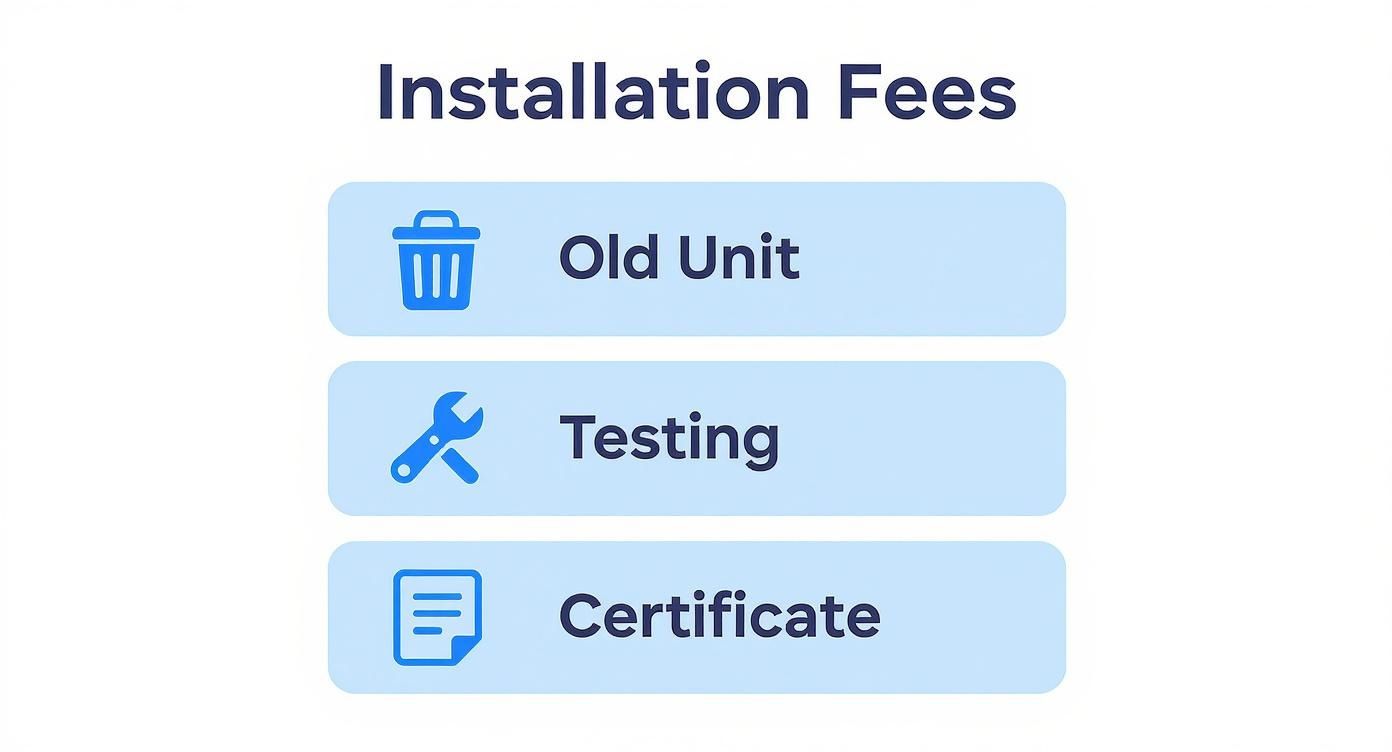
As you can see, a proper installation involves more than just slotting in the new unit; it includes the safe removal of your old system, thorough testing, and issuing a compliance certificate. When you weigh these factors alongside long-term running costs, you get a complete picture of your investment. For expert advice on the most cost-effective solution for your home, contact Amari Plumbing and Gasfitting for a free quote.
Why a Licensed Plumber Is Essential for Your Installation
When you're looking at the final hot water system replacement cost, it can be tempting to shave a few dollars off by trying a DIY job or hiring a cheap, unlicensed installer. It’s a common thought, but trust me, this is one area where cutting corners can cost you dearly. Hiring a professional isn't a luxury; it's a non-negotiable for your safety and peace of mind.
Trying to install a hot water system without the right qualifications is playing with fire—and water. One wrong connection and you could be looking at catastrophic water damage through your home. If it’s a gas system, a poorly handled gas line isn't just a problem, it's a life-threatening hazard.
On top of that, manufacturers will almost always void their warranties if the unit isn't installed by a licensed and insured pro. Imagine your brand-new system fails, and you're left footing the entire bill for repairs or a second replacement. It’s just not worth the risk.
The Amari Plumbing and Gasfitting Guarantee
Choosing a licensed expert like the team at Amari Plumbing and Gasfitting takes all that risk off the table. Our plumbers and gasfitters are fully licensed and insured, and we bring years of hands-on experience with all the major brands and system types. We make sure your installation is done right, from start to finish.
We live and breathe Australian safety standards and plumbing codes. It’s not just a promise we make; we prove it by issuing a Certificate of Compliance for every single job. This is your official, documented proof that the work is safe, correct, and completely legal.
When you hire a licensed professional, you are not just paying for labour. You are investing in expertise, safety, and accountability, ensuring your new hot water system performs efficiently and safely for its entire lifespan.
Your Trusted Local Melbourne Plumber
For homeowners across Melbourne’s eastern suburbs, from a plumber in Balwyn and Kew to a plumber in Camberwell, we’ve built our reputation on reliable, transparent service. We know a new hot water system is a big household expense, which is why our fixed, upfront pricing means no nasty surprises on the final bill. We are the emergency plumbers Melbourne trusts.
Our expertise also covers other gas appliances, and you can see our commitment to safety in our guide on installing a gas cooktop.
Don’t gamble with your family’s comfort and safety. Let our experts handle your hot water installation with the care and professionalism it deserves.
Your Hot Water System Questions Answered
When the hot water cuts out mid-shower, a million questions race through your mind – mostly about cost and how quickly you can get it fixed. We get it. Here are the straight answers to the questions we hear most from homeowners around Melbourne.
How Long Will a Replacement Take?
For a straightforward, like-for-like swap, we can usually have you back up and running in 2 to 6 hours. Our licensed plumbers are pros at getting in, getting the job done right, and getting out of your hair with minimal fuss.
Of course, some jobs are trickier than others. If we need to reroute pipes, upgrade your switchboard for a new heat pump, or wrestle the old unit out of a tight roof space, it’s naturally going to take a bit longer.
Are There Any Government Rebates I Can Get?
Absolutely. The state and federal governments are often keen to help you go green. You’ll find some great incentives for installing high-efficiency systems like solar hot water or modern heat pumps. These rebates can take a serious chunk out of the initial hot water system replacement cost.
The rules and amounts can change, so it's always smart to check what's currently on offer. Our team stays on top of it, and we can point you towards the best rebates and help you pick a system that qualifies.
Should I Bother Repairing My Old System, or Just Replace It?
This is the big one – balancing a quick fix against a long-term solution. Here’s our rule of thumb:
- Time to Replace: If your system is over 10 years old, leaking from the tank itself, or you’re on a first-name basis with the repair technician, it's time for a new one. A replacement is easily the smarter financial move.
- Worth a Repair: If the unit is still fairly young (say, under 8 years) and it’s just a minor part that’s failed, a repair often makes perfect sense.
Pouring good money into an old, inefficient heater just doesn't add up. The cost of constant patch-ups and sky-high energy bills could be put towards a reliable new unit with a full warranty and lower running costs.
Ready to get clear answers and a fixed, up-front price for your hot water system replacement? The team at Amari Plumbing and Gasfitting offers expert advice and fast, reliable service across Melbourne's eastern suburbs. For a free, no-obligation quote over the phone, contact us today.