

When the hot water gives out, the first thing on everyone's mind is, "What's this going to set me back?" Let's get straight to it: in Melbourne, a new hot water system installation can cost anywhere from $600 for a simple electric swap-out to over $4,000 for a top-of-the-line solar setup. The final figure really comes down to the type of system you go for and how tricky the installation job is.
Your Guide to Melbourne Hot Water Installation Costs
Trying to figure out the costs of a new hot water system can feel like a maze, especially when you're in a hurry to get the hot water back on. The price isn't just the unit itself. You're also paying for a licensed plumber's time and expertise, plus any tweaks needed to get the new system to fit and work properly. Knowing the ballpark figures from the get-go helps you pick a system that fits your budget now and saves you money down the track.
This is a big decision for homeowners right across Melbourne's eastern suburbs. A family in a Balwyn home has different needs to someone in a modern Hawthorn apartment, and the best system—be it electric, gas, heat pump, or solar—will depend on that. Each one has its own installation price tag and ongoing running costs. Our team of Melbourne plumbers are here to help you make the right choice.
Comparing Upfront Installation Costs
To make that first decision a bit easier, it helps to see the upfront costs side-by-side. Electric systems are generally the cheapest to buy and install, which is why they're a go-to for a quick, budget-friendly replacement. Gas systems are a solid middle-ground option, balancing a reasonable installation cost with good efficiency. And while solar and heat pump systems cost more to get started, they're designed to slash your energy bills over the long run.
This chart gives you a quick visual on the typical starting installation costs for the three main types of systems.
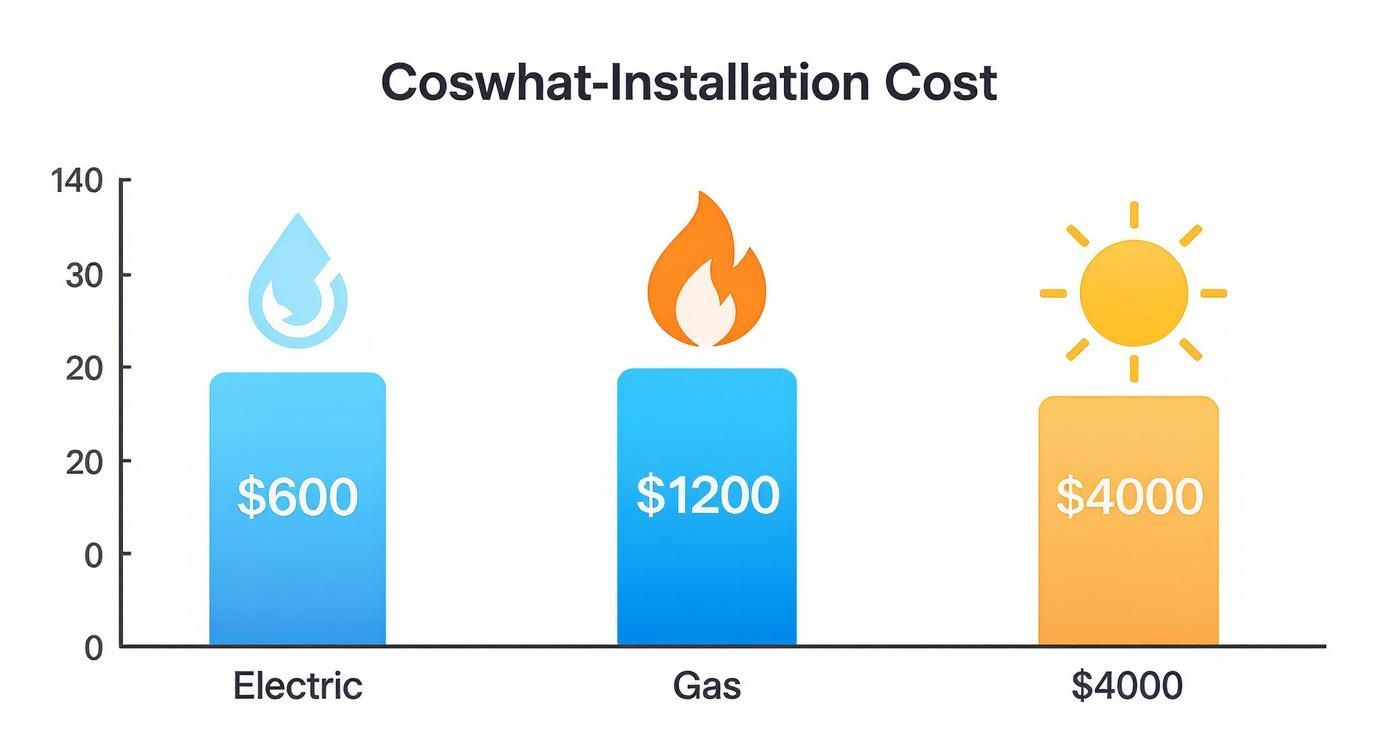
As you can see, there's a pretty big jump in the initial investment for each type, with solar requiring the biggest outlay from the start.
A Closer Look at Price Ranges
Here’s a quick snapshot of what you can expect to pay for the unit and the installation combined, along with a rough idea of what they cost to run each year.
Estimated Hot Water System Installation Costs in Melbourne (Unit + Labour)
| System Type | Estimated Installation Cost (AUD) | Average Annual Running Cost (AUD) |
|---|---|---|
| Electric Storage | $600 – $2,200 | $800 – $1,300 |
| Gas (Storage or Instant) | $1,200 – $3,500 | $300 – $750 |
| Heat Pump | $3,000 – $6,500 | $250 – $600 |
| Solar | $4,000 – $8,000+ | $50 – $150 |
These numbers line up with what we see across the country. Remember, these are just estimates—the final price depends on the specific model, the complexity of the job, and any government rebates you might be eligible for, especially with heat pump and solar systems. When you need to find a plumber, it's essential to get a detailed quote.
At Amari Plumbing and Gasfitting, we're all about transparency. We give our customers across Melbourne's eastern suburbs, from Camberwell to Bulleen, a fixed price right over the phone. You'll know the exact cost before we even start. No hidden charges, no ticking clock on hourly rates—just an honest price, plain and simple.
This way, you avoid the stress and guesswork that often comes with emergency plumbing jobs. By understanding the full scope of our professional plumbing services, you can trust you're getting a fair price for a quality installation that meets all the standards. Our main goal is to get your hot water flowing again, fast and affordably, with no nasty surprises on the final bill.
What Factors Change Your Final Price?

That initial price tag on a hot water unit? It's really just the starting point. A few key things can seriously shift the final hot water system installation cost, turning what looks like a simple job into something a lot more involved. Getting your head around these variables helps you understand exactly what you’re paying for when you look at a quote from a plumber in Melbourne.
The system's type, size, and brand are the obvious first layer. You’d expect a bigger, premium-brand gas continuous flow unit to cost more upfront than a basic electric storage tank. But often, the real cost drivers pop up when we look beyond the unit itself.
System Type and Necessary Upgrades
Switching from one type of system to another is probably the biggest game-changer for the final bill. It’s almost never a simple like-for-like swap.
Let's say you’re moving from an old electric tank to a new, efficient gas system. This isn’t just a plumbing job anymore. You’ll need a licensed gasfitter to run a new gas line, which is a specialist task with non-negotiable safety rules. Our team handles these complex gasfitting Melbourne jobs all over the city, making sure everything is 100% safe and compliant.
Likewise, upgrading to a modern heat pump might mean you need new electrical circuits to handle the power draw. That brings an electrician’s time and materials into the mix. These upgrades are vital for safety and performance, but they definitely add to the final price.
It's so important to understand the full scope of the job. A quote that seems suspiciously cheap might be glossing over essential work like new valves, pipe changes, or electrical upgrades. That’s how you get hit with surprise costs down the track.
With Australian households spending a big chunk of their energy budget just on heating water, your choice of system really matters for your long-term bills. Installation costs can also vary between states because of different labour rates and local regulations. A gas hot water installation, for example, gets a lot more expensive if your property doesn’t even have a gas connection, which shows how your home’s existing setup can shape both the upfront and ongoing costs. You can learn more about the factors that affect hot water installation costs in Australia.
Site Complexity and Accessibility
Where the new unit is going to live plays a massive part in the labour cost. A straightforward replacement in an easy-to-reach spot outdoors is quick, which means it’s cheaper.
But things get tricky—and more expensive—when we’re dealing with tight spaces. Think about these common situations:
- Difficult Access: Shoving a unit into a cramped roof space, a tiny cupboard, or mounting it on a second-storey wall takes more time, care, and sometimes special equipment.
- Structural Changes: The new system might be a different size or shape, so the old platform, wall mounts, or pipes might need to be modified to make it fit.
- Moving the Unit: Shifting a hot water system from inside to outside is a big job. It means running a lot of new plumbing and possibly new gas or electrical lines, which seriously expands the project.
Any good Melbourne plumber will assess the site properly to spot these challenges before they start.
The Condition of Your Plumbing and Pipes
The state of your existing pipes is another huge variable. Old, rusty pipes might not cope with the pressure or connections of a brand-new system. During the install, your plumber might find pipes that have to be replaced to make sure the new unit works safely and won’t spring a leak.
If we find that the underground pipes are damaged or just not up to scratch, our modern pipe relining services can be a lifesaver. It’s a way of repairing pipes from the inside out, meaning we don’t have to dig up your whole garden or driveway. This trenchless method gives you a durable, long-lasting fix without all the mess and disruption, making us leaders in pipe relining Melbourne.
By keeping these factors in mind, you can go into your installation with a much clearer picture of the true hot water system installation cost.
Breaking Down Your Installation Quote Item by Item

A good quote isn't just a number scribbled at the bottom of a page. It should be a clear, transparent breakdown of the entire job, showing you exactly what you’re paying for. Getting familiar with these individual items is the best way to understand the real value behind a safe, compliant hot water system installation cost.
This kind of detail is a good sign you're dealing with a professional plumber. It shows they've thought through every step of the project, from the big-ticket items right down to the smallest fittings. It’s all about giving you peace of mind and protecting you from surprise costs down the track, whether you're in Balwyn North or any other Melbourne suburb.
The Hot Water Unit Itself
This will almost always be the biggest single item on the list. The price of the unit itself varies widely based on its type (gas storage, continuous flow, electric, heat pump), the brand’s reputation, its size, and, importantly, its energy efficiency rating. For example, a high-tech heat pump will cost more upfront than a basic electric storage tank, but that initial investment pays off over time with lower energy bills.
Labour Charges for Licensed Professionals
This part of the quote covers the hands-on time and expertise of a licensed Melbourne plumber and gasfitter. It's crucial to remember that any work touching your gas lines legally must be done by a qualified gasfitter to ensure everything is safe and up to code. The total labour cost will reflect how complex the job is—a straightforward swap-out will take less time than a tricky installation requiring new pipework.
Essential Materials and Fittings
You need more than just the hot water tank to get the job done right. To meet strict Australian Standards, a whole host of new components must be installed to guarantee safety and ensure the system lasts for years to come.
Your quote should clearly list materials like:
- New Valves: This includes critical safety gear like tempering valves (to stop the water from getting dangerously hot), pressure relief valves, and isolation valves.
- Pipes and Fittings: All the copper piping, connectors, and lagging (insulation) required to hook the new unit into your home’s existing plumbing.
- Mounting Base: A solid concrete slab or a sturdy platform that the unit needs to sit on securely.
These aren't optional extras; they're non-negotiable parts of a professional installation that you can rely on.
Costs You Might Not Expect
A few other critical tasks contribute to the final hot water system installation cost, and a thorough quote will always factor them in so there are no surprises.
Transparency is key to a fair quote. A detailed breakdown shows the value behind the work and reinforces why a comprehensive, fixed-price quote from a team that serves areas like Doncaster protects you from hidden charges.
When a professional installs a new gas system, there's a detailed safety process called 'commissioning'. It’s far more than just turning on the gas; it involves precise checks and tests to ensure everything is working perfectly and safely, much like the detailed work needed when installing a new gas cooktop. This is a specialised skill that should be itemised.
Other potential costs can include:
- Electrical Work: If you’re switching to a heat pump or a hardwired electric system, you'll likely need a licensed electrician to install a new dedicated circuit.
- Council Permits: Some jobs, especially if you’re moving the unit to a new location, might require a permit from your local council.
- Old Unit Disposal: Getting rid of your old, heavy hot water unit properly isn't always simple. This covers the cost of safely removing and recycling it.
Seeing these items laid out clearly on a quote is your assurance that you're getting a complete, compliant, and safe installation from start to finish. To give you a clearer picture, here’s an example of what a breakdown for a common gas storage system replacement looks like.
Itemised Cost Breakdown for a Typical Gas Storage System Installation
| Cost Component | Estimated Cost Range (AUD) | Description |
|---|---|---|
| New Hot Water Unit | $900 – $1,600 | Cost of a standard 135L-170L 4 or 5-star rated gas storage tank from a reputable brand. |
| Labour | $350 – $600 | Covers the time for a licensed plumber and gasfitter (2-4 hours) for a like-for-like replacement. |
| Valves & Fittings | $250 – $450 | Includes mandatory new tempering valve, pressure relief valve, isolation valves, and all copper fittings. |
| Pipework & Consumables | $100 – $200 | Copper pipe, insulation/lagging, gas sealant tape, and other essential materials. |
| Compliance & Safety | $150 – $250 | Gas line pressure testing, system commissioning, and issuing of a Victorian Compliance Certificate. |
| Disposal of Old Unit | $80 – $120 | Cost to safely remove the old hot water system from your property and transport it for recycling. |
This table shows how quickly the "small" but essential items add up. It highlights why a simple "unit cost + labour" estimate can be misleading and why a fully itemised, fixed-price quote is always the smarter choice.
Understanding the Real Cost of a New Hot Water System
When your hot water system gives up the ghost, the first thing on your mind is the price tag on a new one. It's completely understandable. But here’s a piece of advice from someone who’s seen it all: the cheapest system to buy today is almost never the cheapest one to own over the next decade.
To make a smart decision for your home and your wallet, you have to look beyond the initial receipt. The true hot water system installation cost is a combination of that upfront price and what it's going to cost you to run, year in and year out. That’s the real number that matters.
Thinking Long-Term: Upfront Price vs. Lifetime Value
Let’s get practical for a moment. A standard electric storage tank might look like a great deal at first glance. It’s got a low purchase price, and you can get it installed quickly. But the catch is its appetite for electricity, which means you'll be paying for it over and over again on your power bills.
Now, compare that to a solar hot water system. Yes, the initial installation is a much bigger investment. But once it's on your roof, its running costs are practically zero. Over a 10-year period, the thousands you save on energy bills mean the solar system doesn't just pay for itself—it ends up being far cheaper than the "bargain" electric model. For anyone in suburbs like Templestowe, making that smarter long-term choice can make a huge difference to the household budget.
What Do Those Energy Efficiency Stars Really Mean?
Every new hot water system sold in Australia has an energy efficiency rating sticker. Don't ignore it! That sticker is your best guide to how much the unit will cost you to run. A system with a higher star rating might be a little more expensive to buy, but it uses less gas or electricity to do the exact same job.
Think of the efficiency rating as a sneak peek at your future energy bills. Paying a bit more for a higher-rated system is like locking in a discount on your power bills for the next 10 to 15 years. It’s a strategic move that saves you money month after month.
Choosing a 5-star system over a 3-star one might add a few hundred dollars to the initial hot water system installation cost, but you'll quickly earn that back—and then some—through lower monthly bills.
Don't Forget Government Rebates and Incentives
To help homeowners make greener choices, there are some fantastic government schemes that can knock a serious chunk off the price of high-efficiency systems. These rebates are specifically designed to make modern options like heat pumps and solar hot water more affordable for everyone.
For example, government incentives can often reduce the upfront cost by hundreds of dollars, making it much easier to choose a better system. When you consider that a heat pump can run for as little as $190 a year, and a solar system for a measly $65, the financial case is rock-solid. You can discover more insights about these cost comparisons and incentives to see the numbers for yourself.
How Long Will It Last? Factoring in Lifespan
The final piece of the puzzle is how long you can expect the system to last. After all, a unit you have to replace every few years isn't good value, no matter how cheap it was to buy.
- Electric/Gas Storage: You can typically expect 8-12 years from these.
- Continuous Flow: A well-maintained unit can last up to 20 years.
- Heat Pump: These generally have a lifespan of 10-15 years.
- Solar: The panels can last 20+ years, though the storage tank might need replacing sooner.
That slightly more expensive continuous flow unit suddenly looks like a great deal when you realise it could last almost twice as long as a basic storage tank. By weighing up the complete picture—the purchase price, running costs, rebates, and lifespan—you can pick a hot water system that’s not just a quick fix, but a sound financial investment for years to come.
Why Professional Installation Is a Non-Negotiable
When you’re looking at the hot water system installation cost, it’s natural to want to find the best deal. You might even be tempted by a mate’s DIY offer or a super-low quote from a handyman. But trust me, this is one area where cutting corners can come back to bite you, hard.
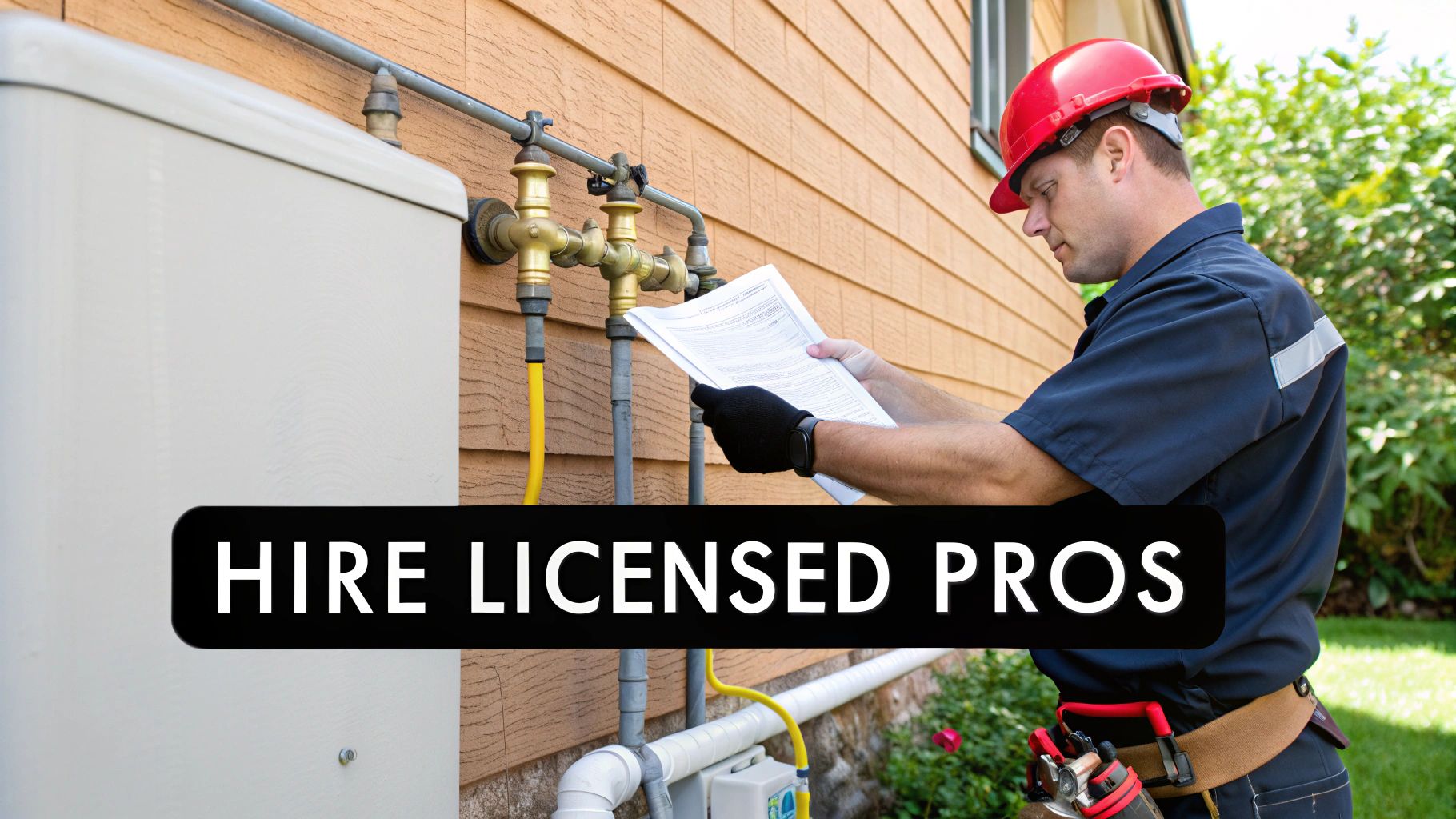
Here in Victoria, the rules are black and white: only a licensed and insured plumber and gasfitter is legally allowed to install any kind of hot water system. This isn’t just needless bureaucracy. It’s a vital safeguard to protect your home and family from some pretty serious dangers. When you're searching for a "plumber near me", always check for their license.
The Real Cost of Cutting Corners
Trying to install a hot water system without the right tickets is a gamble with your home's safety. The potential savings just aren't worth the immense risks.
An amateur job can unleash a whole host of problems:
- Major Water Damage: Imagine a pipe that isn't connected just right. Under pressure, it can burst, flooding your home and causing thousands in damage to floors, walls, and belongings.
- Useless Warranties: Hot water unit manufacturers will immediately void your warranty if the system wasn't installed by a licensed professional. If it fails a year later, you’re footing the entire bill for a replacement.
- Insurance Claim Denials: If that faulty installation leads to a flood or, even worse, a fire, your home insurance provider will almost certainly refuse to pay out, leaving you to cover the devastating costs.
These financial headaches alone are enough to make professional installation the smart choice. But the most important risks are the ones that threaten your family's safety.
Safety and Compliance: The Bottom Line
When it comes to gas hot water systems, the stakes get even higher. This is where a licensed gasfitter's specialised training is absolutely critical. They know how to handle gas lines, check for leaks, and commission the system so it runs safely.
A tiny, undetected gas leak from a poorly installed connection is a ticking time bomb. Professional installation is your number one defence against the risk of fire, explosion, or deadly carbon monoxide poisoning.
At Amari Plumbing, our entire team is fully licensed and insured, giving you complete peace of mind. Every single installation we do, whether it's in Kew, Hawthorn, or across Melbourne's eastern suburbs, is done by the book and complies with all Australian Standards. This guarantees your system is safe, efficient, and legal. Handling a potential gas leak is serious business, and you can see how our expert gas plumbers tackle these emergencies.
Ultimately, hiring a pro is about so much more than just connecting a few pipes. It's about protecting your home, your investment, and your family. The real value in the hot water system installation cost is the assurance that the job is done right, built to last, and above all, safe.
Don't gamble with your home's safety. Make sure your new hot water system is installed correctly by the experts. Contact Amari Plumbing's licensed team for a transparent, fixed-price quote today!
Your Top Questions About Hot Water Installation Answered
Sorting through the details of a new hot water system can feel a bit overwhelming, and it’s natural to have questions. To help clear things up, we've put together some straightforward answers to the questions we hear most often from homeowners around Melbourne about the hot water system installation cost and what the job involves.
How Long Will the Installation Actually Take?
For a simple, like-for-like swap—where we’re replacing an old unit with a new one of the same type in the same spot—you can expect our licensed plumbers to be in and out in about 2 to 4 hours. We work efficiently to get your hot water running again with as little disruption to your day as possible.
Of course, some jobs are more involved. If you're upgrading from an old electric storage tank to a modern gas continuous flow system, that’s a bigger project. It might mean running new gas lines or re-configuring the pipework. In those situations, the installation could take a full day to make sure everything is perfect and up to Australian Standards. We’ll always give you a realistic time estimate upfront, so there are no surprises on the day.
Can I Get Government Rebates Here in Victoria?
Yes, you can, and they’re well worth looking into! The Victorian Energy Upgrades (VEU) program offers some pretty generous rebates when you install a high-efficiency hot water system. These incentives are designed to help you cover the initial cost of switching to a greener unit.
The systems that usually attract the biggest rebates are:
- Heat pump hot water systems: These are incredibly efficient and can slash your energy usage dramatically.
- Solar hot water systems: By harnessing the sun, these systems offer some of the lowest running costs you can get over the long haul.
The team at Amari Plumbing keeps on top of all the latest government programs. We can walk you through which systems are eligible and help you find one that not only cuts your power bills but also takes a chunk out of the initial hot water system installation cost.
What’s the Difference Between a Plumber and a Gasfitter?
This is a really important one, and it all comes down to safety and legal compliance. While it's common for a tradesperson to be qualified in both, plumbing and gasfitting are two distinct licenses. A licensed plumber handles all the water connections, but any work that involves a gas appliance—whether it's installing, repairing, or even just disconnecting a gas hot water system—must be done by a licensed gasfitter.
This isn't just about ticking a box. It's a critical safety measure to prevent gas leaks, which can be incredibly dangerous. Trying to do any gas work yourself or hiring someone without the right ticket is illegal and a massive risk.
At Amari Plumbing, our professionals are dual-licensed in both plumbing and gasfitting. That means you get the right expert for the entire job, every time. It ensures your installation is seamless, safe, and fully compliant, all from one team you can trust, whether we’re working in Bulleen or down in Malvern East.
What’s Included in Your Fixed-Price Quote?
We’re big believers in being upfront and honest. That’s why our fixed-price quotes are genuinely all-inclusive—no nasty surprises or hidden fees later on. When we give you a price, it covers the lot:
- The new hot water unit itself.
- All labour from our fully licensed and insured team.
- Every necessary part, like new safety valves, pipes, and fittings.
- The proper removal and ethical recycling of your old unit.
- A Certificate of Compliance, which is your formal guarantee that all work meets Victorian standards.
Simply put, the price we quote is the price you pay. Our goal is to take the stress out of the process so you can just look forward to having reliable hot water again.
Ready for a straightforward hot water solution with no hidden costs? The team at Amari Plumbing and Gasfitting offers transparent, fixed-price quotes right over the phone for homeowners across Melbourne's eastern suburbs. We are your trusted emergency plumbers in Melbourne.