

That massive water bill that just landed in your inbox isn't just a shock to the budget—it’s the loudest and clearest sign you might have an underground water leak.
These leaks are sneaky. They can waste thousands of litres and cause some serious damage long before you spot a single drop of water. They don't exactly announce themselves, but they do leave a trail of clues for the observant homeowner.
The real challenge? These signs often masquerade as other, more common problems. You might blame a soggy patch on the lawn on poor drainage or shrug off a drop in water pressure as a neighbourhood issue. But when these little annoyances start to add up, they often point to a broken pipe hiding just out of sight. A qualified plumber in Melbourne can quickly diagnose the issue.
The Hidden Signs of a Leak Under Your Property
A patch of lawn that's suspiciously green and healthy when everything else is dry is a dead giveaway. But many of the other signs are far more subtle. Learning to spot these small changes around your property can help you catch a leak early, saving you a fortune in water bills and repair costs.
Keep an eye (and an ear) out for some of these less-obvious clues:
- A faint, constant sound of running water. When the house is silent, listen up. If you can hear a faint hissing, humming, or whooshing sound from your walls or pipes when every tap is off, that's a tell-tale sign water is escaping somewhere it shouldn't be.
- A sudden drop in water pressure. Are your showers feeling a bit weak? Taps not running with their usual force? It could mean a significant amount of water is being lost from a break in the main line before it even gets to your house.
- New cracks in your foundation or paving. Water seeping into the ground can wash away the soil supporting your home's foundation, driveway, or footpaths. If you spot new or widening cracks, it can be a serious symptom of a persistent underground leak destabilising the ground.
- Damp spots or musty smells. Notice areas around the outside of your home that never seem to dry out? Or a lingering musty, mouldy smell near the foundation? This is often caused by a leaking pipe completely saturating the ground.
In many Melbourne suburbs like Balwyn or Kew, we deal with highly reactive clay soil. This type of soil swells up when it gets wet and shrinks dramatically when it dries. An underground leak creates a pocket of constant saturation, causing huge soil movement that puts immense pressure on pipes and can even shift your home’s foundation.
Why You Need to Act Fast
Ignoring the early signs of a leak is a recipe for disaster. What starts as a small drip can quickly become a major problem, leading to massive water loss, structural damage to your home, and an ideal environment for mould to take hold. If you suspect an issue, searching for a "plumber near me" is the first crucial step.
The cost isn't just about the water bill, either. The expense of repairing a sunken driveway or a cracked foundation is exponentially higher than the cost of fixing the original leak.
Worse still, a break in your main water line can compromise your family's health by allowing contaminants from the soil to get into your drinking water. Acting quickly doesn't just protect your property and your wallet; it keeps your water supply safe. If you've spotted any of these signs, it’s time to confirm your suspicions before things get worse. For a professional diagnosis, it's always best to contact an expert plumber.
Your Practical DIY Leak Detection Checklist
Before you pick up the phone to call a plumber, there are a few straightforward checks you can do yourself. Think of it as gathering evidence. These non-invasive steps can help confirm your suspicions and give a professional a huge head start, which saves you time and money down the track.
This simple decision tree can help you visualise the connection between common signs of a leak.
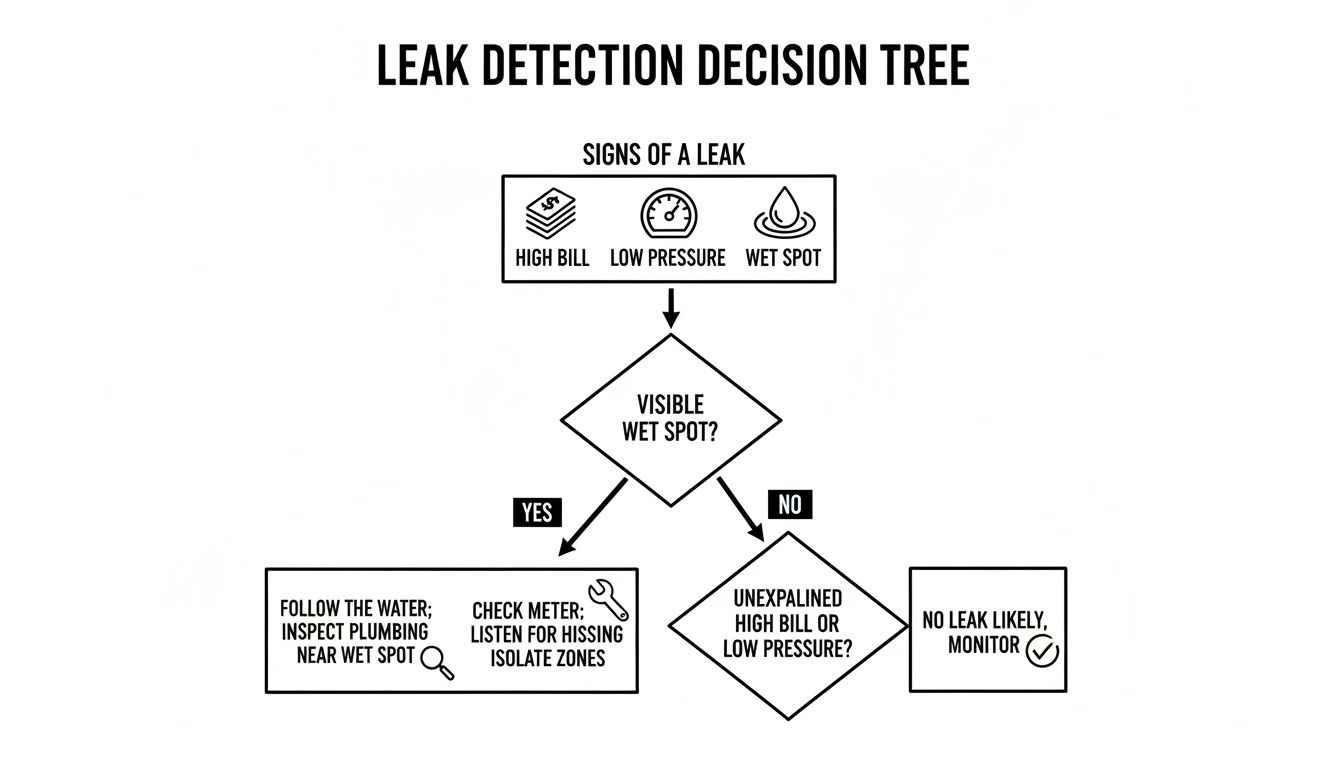
As you can see, things like a surprisingly high water bill, a sudden drop in pressure, or a mysterious damp patch in the yard are all classic clues pointing to an underground leak.
The Definitive Water Meter Test
Your water meter is the single most reliable tool for confirming a leak somewhere on your property. This test is dead simple but incredibly effective.
First, make sure every single tap, appliance, and water-using device is turned off. I mean everything – taps, showers, the dishwasher, the washing machine, even the garden hose.
Once you’re sure nothing is running, find your water meter. It's usually out the front of your property under a plastic or metal lid. Pop it open and take a clear photo of the reading, getting a good shot of all the numbers and dials.
Now, wait. Give it at least an hour, but two is even better. Don't use any water during this time. Then, head back out and compare the meter to the photo you took. If the numbers have moved at all, even a tiny bit, it's a sure sign water is escaping somewhere.
A constantly spinning meter when all taps are off is the smoking gun of leak detection. It confirms you're losing water and justifies taking the next step.
To help you stay organised, here's a quick checklist you can run through.
DIY Leak Detection Checklist
| Check | Method | What to Look For |
|---|---|---|
| Water Meter Test | Turn off all water. Record the meter reading, wait 1-2 hours, and check again. | Any change in the numbers or a spinning dial confirms a leak. |
| Toilet Dye Test | Add food colouring to the toilet cistern (tank). Wait 15-20 mins without flushing. | Colour appearing in the toilet bowl indicates a faulty flapper. |
| Visual Garden Scan | Walk around your property, paying close attention to the lawn and soil. | Unusually green patches, soggy ground, or sinkholes. |
| Auditory Check | Listen carefully near your main water shut-off valve when the house is quiet. | A faint but persistent hissing or humming sound. |
Following these steps will give you a clear picture of what's happening before you even think about digging.
Ruling Out Common Household Culprits
Before you start worrying about a major underground pipe burst, it pays to check for the usual suspects inside the house. Toilets are notorious for "silent leaks" that can waste thousands of litres of water a month without you even noticing.
The dye test is your best friend here. Just add a few drops of food colouring into the toilet cistern – that’s the tank at the back, not the bowl. Don't flush, and just wait for 15-20 minutes. If you see any of that colour seeping into the bowl, you've found a leaky flapper. It's a cheap and easy fix.
Doing this little check first can save you from a massive investigation into a problem that takes five minutes to solve. For a more detailed guide, have a look at our post on how to detect water leaks all around your home.
Using Your Senses for a Visual and Auditory Sweep
Don't underestimate your own eyes and ears. They are surprisingly powerful tools for this initial investigation. Take a slow walk around your property with a specific mission in mind.
Here’s what you’re looking for:
- Lush Green Patches: Is one spot in your lawn looking incredibly green and healthy compared to the rest? That’s a classic sign of a constant underground water source.
- Shifting Ground: Keep an eye out for any soil erosion, soft or squishy spots underfoot, or even small sinkholes developing in your garden or under pavers.
- Phantom Puddles: If you find damp areas or puddles that just won't dry up, even on a warm, sunny Melbourne day, you've likely found ground saturated by a leak.
Next, it's time to listen. Head inside and turn off any background noise like the TV or radio. Go to your home's main water shut-off valve and listen closely. You might hear a very faint hissing or humming noise. That’s the sound of water being forced through a crack in a pressurised pipe. It can be subtle, so doing this when the house is quiet is key.
These simple, practical steps will help you build a clear case. Once you've confirmed a leak with the meter test and ruled out the obvious culprits indoors, you'll have the evidence you need to call in the professionals with confidence.
The Tech We Use to Find Leaks Underground
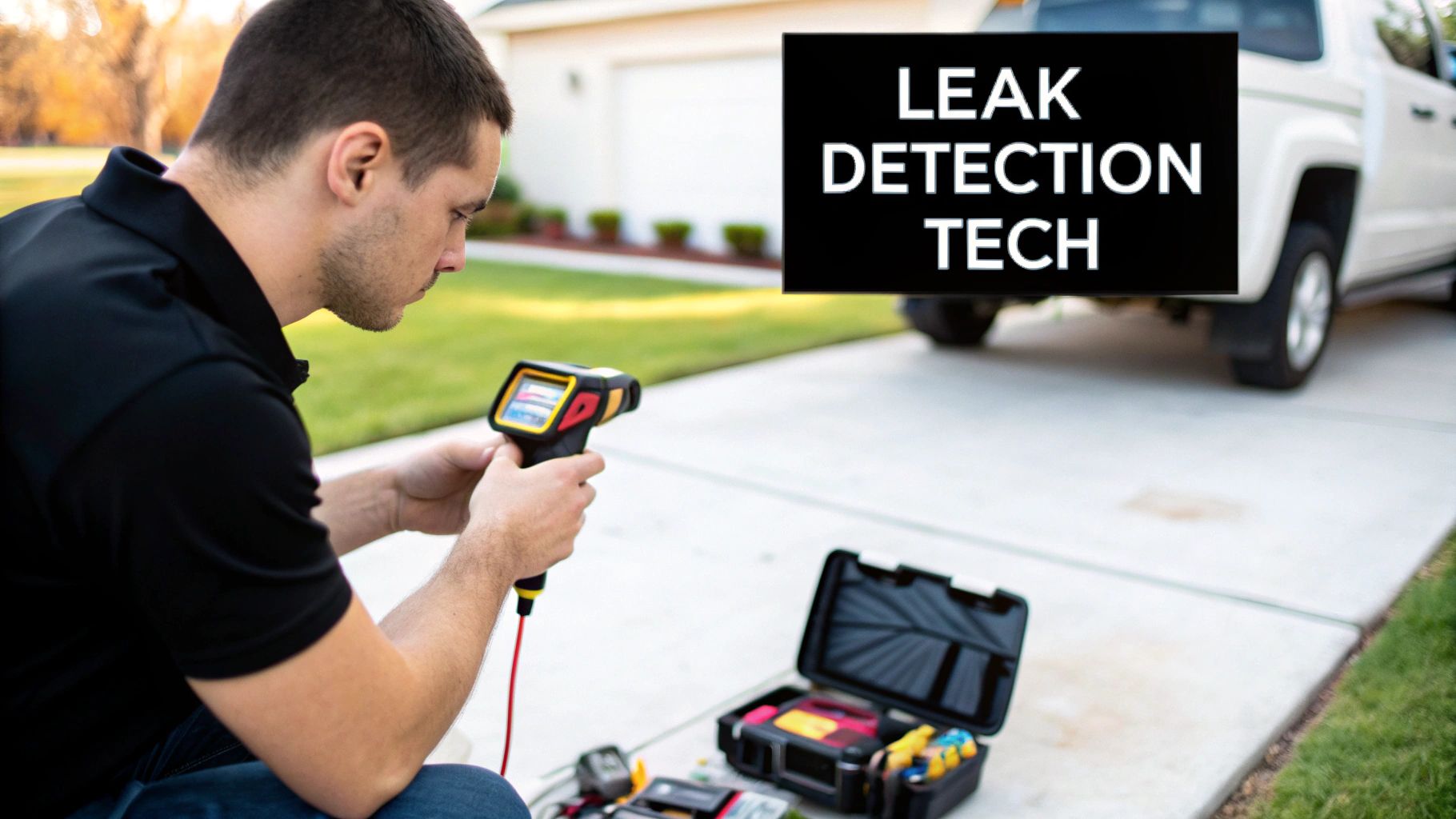
So, your own checks have confirmed there’s a problem, but the source is still playing hide-and-seek. This is the point where guesswork gets expensive and it’s time to call in the specialists.
Pinpointing a buried leak without digging up your entire garden requires some seriously clever equipment and a trained ear. This is where professional technology makes all the difference, turning an invisible nightmare into a solvable puzzle. The expertise of Melbourne plumbers is invaluable here.
Expert plumbers don't just show up with a shovel. We use a combination of advanced, non-destructive tools to diagnose the issue with incredible accuracy. It’s all about saving you from the unnecessary cost and mess of exploratory digging. At Amari Plumbing, we invest in this gear because it gets the job done faster and more precisely for our clients.
Listening for Leaks with Acoustic Technology
One of the most reliable ways to find a pressurised water leak is to listen for it. When water escapes a pipe, it creates a very specific sound—a low-frequency hiss or a 'whoosh' that you’d never hear yourself. But to our sensitive acoustic equipment, it’s as clear as a bell.
Our technicians use electro-acoustic listening devices, which are basically high-tech stethoscopes for the ground. By placing a ground microphone on surfaces like concrete, soil, or paving, we can amplify these tiny leak sounds.
Here’s how it works in practice:
- A sensor is placed on the ground, tracing the suspected path of the pipe.
- The device cleverly filters out background noise like traffic or wind, honing in on the exact frequency of escaping water.
- The sound is loudest right above the break, letting us narrow down the dig zone to a very small area.
This method is so precise it can often locate a leak to within a metre or less. It’s the key to knowing exactly where to dig, turning a potential disaster into a minor, targeted repair. Understanding this process is a core part of our comprehensive water leak detection in Melbourne.
Seeing Temperature Differences with Thermal Imaging
Another powerful tool in our kit is the thermal imaging camera. These devices don't actually see water; they detect tiny differences in surface temperature. When a leak saturates the ground, that wet soil will have a different temperature signature than the dry ground around it.
On a warm day, the waterlogged area will usually show up as a cooler patch. On a cool night, the same spot might retain heat and appear warmer. Thermal imaging is a lifesaver for finding leaks under large, solid surfaces like concrete slabs or driveways where other methods can’t get a clear read. It gives us a visual map of where moisture is gathering below the surface.
This technology is all about interpreting patterns. It’s not just about finding a cold spot; it's about understanding how water is behaving underground. It helps us confirm what the acoustic gear is telling us, building a complete picture of the problem.
Finding the Smallest Leaks with Tracer Gas
Sometimes, a leak is too small or the pipe is buried too deep for sound to travel well. For these really tricky situations, we bring out the tracer gas detection equipment. This process involves draining the problematic water line and filling it with a completely safe, inert gas mix (usually a blend of hydrogen and nitrogen).
This gas is much lighter than water and can escape through the tiniest pinhole crack. As it rises to the surface, we use a highly sensitive gas detector—or "sniffer"—to scan the ground. The moment the detector beeps, we've found the gas's exit point and the precise location of the leak.
This technique is invaluable for catching those elusive leaks that might otherwise go unnoticed for months, slowly causing damage and racking up your water bill. Whether you need a plumber in Hawthorn or Bulleen, this technology is a game-changer.
Underground water leaks are a massive issue across the country. National estimates suggest that around 10–19% of all water in Australian networks is lost to leaks, which is why accurate detection is so important.
By using these advanced technologies, we can find a water leak underground without the destructive guesswork. It’s a methodical, scientific approach that ensures we fix the problem efficiently and with minimal impact on your property. If your own checks point to a leak, don’t wait for the damage to get worse.
The Rise of Smart Leak Detection Systems
The old way of dealing with plumbing was all about reacting to disasters. You’d find a soggy patch in the lawn or get a shocking water bill, and then you'd call for help. But things are changing. Technology is now letting us get ahead of the game, offering Melbourne homeowners a way to prevent leaks before they cause any real headaches.
We're seeing a huge shift towards smart water meters, Internet of Things (IoT) sensors, and even AI-powered systems that keep an eye on your plumbing 24/7. These clever bits of tech actually learn your home's unique water usage patterns. The moment something's off—like a subtle pressure drop or an unusual flow rate that hints at a hidden leak—it flags it.
And this isn't just for big commercial buildings anymore. It's becoming genuinely affordable and accessible for everyday homes. For homeowners in suburbs like Balwyn or Hawthorn, it's about peace of mind. It’s about knowing you can stop a tiny drip from becoming a catastrophic pipe burst.
How Smart Systems Protect Your Home
These intelligent systems are like a constant watchdog for your plumbing, working quietly in the background. They don’t just tell you there's a problem; many can step in and take action immediately.
Here’s how they add a powerful layer of protection:
- Real-Time Alerts: If the system spots abnormal water flow, you get an instant alert on your smartphone. It doesn’t matter if you're at work, on holiday, or just down at the shops – you’ll know.
- Automatic Shut-Off: This is a big one. Many advanced systems come with an automatic shut-off valve. If a major leak or pipe burst is detected, it can shut off your home's main water supply in seconds, preventing devastating water damage.
- Data-Driven Insights: You can literally track your water consumption by the day or even by the hour. This data is brilliant for understanding your usage, spotting ways to save water, and even confirming that a small leak has been properly fixed.
Basically, we're moving away from waiting for the tell-tale signs of damage. Instead, we can pinpoint and fix problems with surgical precision, often before you even realise anything was wrong. A qualified Melbourne plumber can advise on the best smart systems for your home.
The Growing Investment in Leak Detection Tech
This move towards smart plumbing isn't just a fleeting trend. It's a serious shift in the industry, backed by major investment and some incredible new technology. Here in Australia, the market for water pipeline leak detection is booming, largely driven by our ageing infrastructure and the growing need to conserve water. The market was valued at about USD 52.0 million and is on track to hit USD 87.9 million by 2033. This growth is a direct response to the challenge of finding leaks in dense urban areas like Melbourne. If you're curious, you can learn more about AI's role in Australian water utilities.
The speed of this new technology is genuinely impressive. Some AI models being developed for Australian utilities can now detect a pipeline breach in just 0.25 seconds with 99.9% accuracy from sensor data alone. This is paving the way for almost real-time leak alerts, which will be a game-changer for preventing water loss.
As a forward-thinking plumbing company, we make it our business to stay on top of these advancements. It means we can give our clients the best possible solutions. While not every home needs a full-blown AI system just yet, understanding what’s out there helps us recommend the right approach for your property.
Whether it’s using our advanced acoustic equipment or advising on a smart home integration, our goal is to offer effective, modern solutions. If you’re worried about a potential leak and want to explore your options, don't hesitate to contact us for some expert advice.
Modern Repairs That Avoid Destroying Your Garden
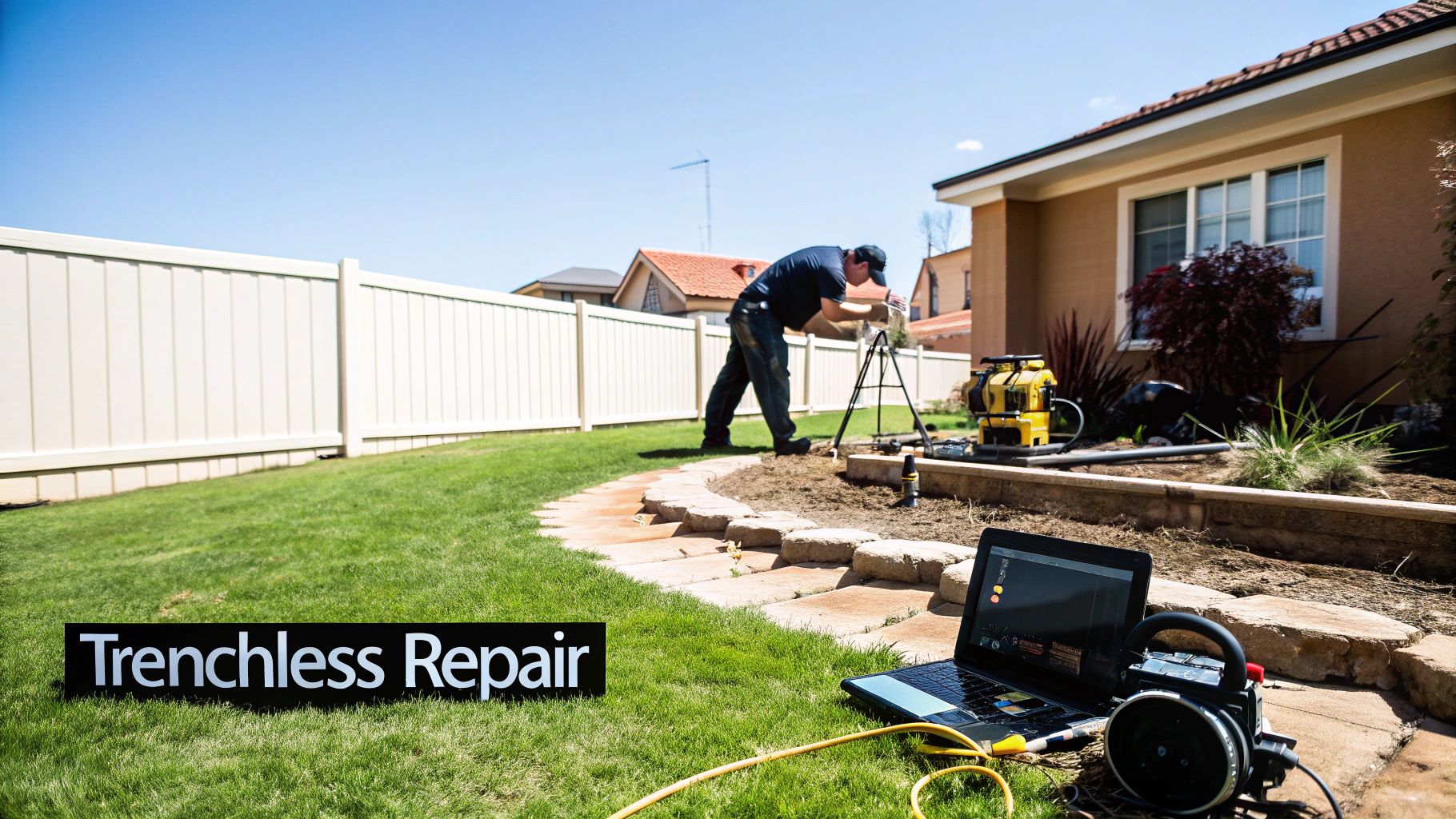
Okay, you've found the leak. The initial relief is great, but it's often followed by a sinking feeling as you picture your beautiful garden or paved driveway being dug up. The classic image of plumbers excavating long, destructive trenches is enough to give any homeowner nightmares.
But here’s the good news: plumbing technology has moved on. A lot. We can now fix pipes from the inside, which means no more large-scale, disruptive digging. It's a cleaner, faster, and often more affordable approach.
For homeowners in well-established suburbs, this is a genuine game-changer. It means we can solve the problem without creating an even bigger mess. Our commercial plumbing services also utilize these modern techniques.
Introducing Trenchless Pipe Relining
The leading modern solution is called trenchless pipe relining. Instead of digging up and replacing the entire damaged pipe section, this method creates a brand-new, structural pipe directly inside the old one. Think of it as giving your plumbing a new lease on life from the inside out.
The process is incredibly efficient and precise. It usually requires just one or two small access points, not a huge trench running the length of the pipe.
Here’s a quick rundown of how it works:
- Cleaning the Pipe: First, we use high-pressure water jets to blast the inside of the damaged pipe clean, clearing out any tree roots, gunk, or blockages. This is a common solution for blocked drains.
- Camera Inspection: We then send a CCTV drain camera through to get a clear look at the pipe’s condition and pinpoint the exact location and scale of the damage.
- Inserting the Liner: A flexible, felt-like liner saturated with a special epoxy resin is inserted into the pipe. We then push an inflatable bladder inside, which presses the liner firmly against the walls of the original pipe.
- Curing the Resin: The resin is left to cure and harden. This process creates a seamless, joint-free, and incredibly durable new pipe within the old one. In many cases, it’s even stronger than the original PVC.
This method completely seals all cracks, holes, and weak joints, which stops future leaks and blocks tree roots from getting in for good. To get into the nitty-gritty, you can learn more about our specialised pipe relining in Melbourne and all its benefits.
By creating a brand-new pipe inside the old one, we effectively solve the problem at its source. This isn't just a patch; it's a long-term structural repair that adds decades to the life of your plumbing system, all while your garden remains untouched.
Precision Mapping with Ground-Penetrating Radar
To make sure any work is perfectly targeted, modern plumbers often turn to Ground-Penetrating Radar (GPR). This advanced bit of kit sends radar pulses into the ground to create a detailed map of everything happening below the surface. It can pinpoint the exact location of pipes, detect voids or cavities caused by water erosion, and even map out tree roots.
Using GPR lets us plan the repair with surgical precision, confirming the best access points and ensuring we don’t accidentally hit any other underground utilities. In Australia, tools like GPR are becoming vital for finding underground water leaks, especially in tricky spots like under concrete or near busy roads. Each year, Australian cities lose millions of litres of water to underground pipe failures, making non-invasive detection a top priority.
By combining advanced diagnostic tools with trenchless repair techniques, we can fix your underground leak with the absolute minimum of fuss and mess. If you're dealing with a leak and are worried about the repair process, get in touch to discuss a modern solution.
Your Underground Leak Questions Answered
When you’re staring at a soggy patch of lawn or a water bill that’s gone through the roof, it’s natural to have a million questions. We get calls from worried homeowners across Melbourne every day, so we’ve put together some straight answers to the things people ask us most.
How Much Does It Cost to Find and Fix an Underground Water Leak in Melbourne?
This is always the first question, and the honest answer is: it really depends.
The final cost comes down to a few key things: where the leak is, how deep it’s buried, and what kind of tech we need to pinpoint it. Finding a simple leak under the lawn in Balwyn is a very different job to locating one hidden deep beneath a concrete driveway in Hawthorn. From simple leaking taps to major underground repairs, costs vary.
At Amari Plumbing, we’re all about upfront, transparent pricing. No nasty surprises. The best way to get a firm cost is for us to come out and have a proper look at your specific situation.
Can Tree Roots Really Cause Underground Pipes to Leak?
Absolutely. In fact, it's one of the biggest culprits we see, especially in Melbourne's beautiful, leafy eastern suburbs. Trees are clever, and their roots will hunt for any source of water and nutrients – which makes your pipes a prime target.
All it takes is a tiny, pre-existing crack or a weak joint for a root to sneak in. Once inside, it grows, expands, and exerts an incredible amount of pressure until the pipe gives way. Before you know it, you've got a major leak and a serious blockage on your hands.
Pro Tip: If you have large, established trees on your property, a preventative camera inspection is a smart move. Our modern sewer and pipe relining service can also create a seamless, root-proof sleeve inside your old pipes, stopping this problem before it even starts.
Will My Home Insurance Cover Repairing an Underground Water Leak?
Insurance policies can be a bit of a maze. Generally speaking, most policies will cover the 'access costs' – that’s the expense of digging up your garden or cutting through concrete to get to the broken pipe. They also usually cover any resulting water damage to your home or property.
What they often don't cover is the actual repair of the pipe itself, as this is sometimes viewed as general maintenance.
You really need to dig out your policy documents and read the fine print. We can provide a detailed, itemised report of our findings and all the work we do to help make your insurance claim as smooth as possible.
How Quickly Can You Respond to an Emergency Underground Leak?
A burst underground pipe isn't just a nuisance; it's a full-blown plumbing emergency. Water can cause a huge amount of damage very quickly, so speed is critical. Our emergency plumbers in Melbourne are on standby to help.
We run a 24/7 emergency plumbing service across Melbourne's eastern suburbs, and these urgent calls always get top priority. Our goal is to get to you fast, shut off the mains to stop the damage, and then get straight into finding and fixing the problem. If you think you've got an emergency, don't hesitate for a second.
If you’re dealing with a suspected leak or just want some expert advice, the team at Amari Plumbing and Gasfitting is ready to help. For a professional assessment and a clear plan to get it sorted, contact us today.