

Think of a backflow prevention valve as the ultimate gatekeeper for your water supply. It's a clever device installed in your pipes with one simple but crucial job: making sure water only ever flows in a single direction. It’s a one-way street, preventing any contaminated water from reversing its path and getting back into the clean water you drink and use every day.
Why Your Water Supply Needs a Guardian
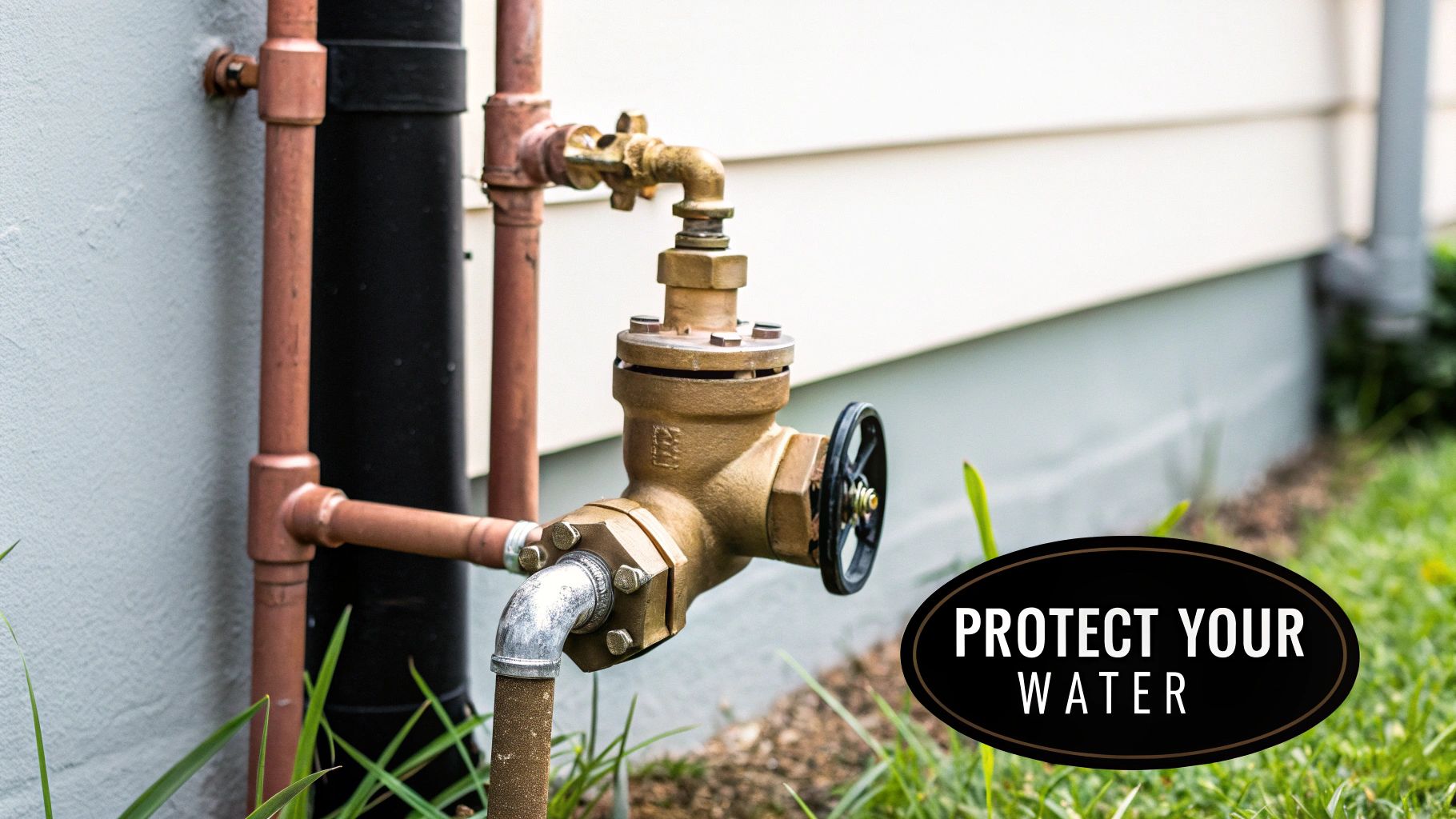
Picture your plumbing system like a highway, designed to bring fresh, clean water into your home or business, and used water safely out. Backflow is what happens when that highway traffic suddenly goes the wrong way. It's a dangerous situation, usually triggered by an unexpected drop in water pressure, which can allow all sorts of nasty stuff to mix with your potable water.
Understanding the Risks of Backflow
So, what causes this reversal? A sudden pressure drop in the main water line—maybe from a burst water main down the street or even a fire hydrant being used nearby—can create a powerful vacuum effect. This is called back-siphonage. When it happens, water from other sources can literally be sucked backwards into the clean water system.
This isn't just a minor issue; it's a serious health hazard. The public water supply can get contaminated with things like:
- Fertilisers and pesticides from a garden irrigation system
- Soaps and cleaning chemicals from dishwashers or laundry sinks
- Human waste from the sewer lines
- Chlorine and other pool chemicals
A properly installed and maintained backflow prevention valve is your property’s essential traffic controller. It’s the unsung hero that guarantees water keeps moving in the right direction, protecting your family, customers, and the entire community from drinking dangerous pollutants.
The Importance of Water Pressure
The effectiveness of these valves is all tied to stable water pressure. Those sudden drops are what can trigger a backflow event, which is why keeping an eye on your system's pressure is so important.
If you're curious about your own system's stability, our guide on how to test water pressure at home is a great place to start. For property owners across Melbourne, especially in areas like Balwyn and Hawthorn, getting to know this device is the first step towards ensuring your water is safe and pure. It’s not just a recommendation; it’s a non-negotiable part of a safe, compliant plumbing system.
Getting to Grips with Australia’s Backflow Prevention Laws
If you own a property in Melbourne, you might be surprised to learn that installing a backflow prevention valve isn't just a smart move—it's a legal requirement. These regulations aren't just red tape; they're in place to protect our community's drinking water from potentially disastrous contamination. A single backflow incident on one property could genuinely compromise the water safety of an entire neighbourhood. A professional plumber in Balwyn can ensure your property is fully compliant.
The legal side of things is laid out in Australian standards, specifically AS/NZS 3500.1. At the heart of this legislation is a non-negotiable requirement for property owners with a testable device: it must be tested every year.
The Annual Testing Mandate: What You Need to Know
The law is black and white on this one. Every testable backflow prevention device has to be inspected, tested, and certified by a licensed, endorsed plumber once every 12 months. This isn't just a quick look-over. It’s a proper technical assessment to make sure the internal seals, springs, and checks are working exactly as they should, guaranteeing your property isn't a weak link in the public water supply chain.
Think of it like getting a roadworthy certificate for your car. It's an official check to confirm your plumbing’s most important safety feature is up to the job.
Our strict national backflow prevention framework didn't come out of nowhere. It was established after several serious water contamination incidents. Key legislation, like the Water Act of 1989, was a turning point that led to the high safety standards we have today.
This history really drives home why compliance is taken so seriously. The National Plumbing and Drainage Code (AS/NZS 3500.1) now mandates these devices, and the annual test is the key to keeping our water network safe for everyone. If you're keen to learn more about how these laws came to be, you can explore the history of Australian backflow legislation.
What Happens if You Don't Comply?
Letting your annual test slide can lead to some pretty serious headaches. Water authorities have the power to enforce these rules, and failing to meet your obligations can result in:
- Hefty Fines: Property owners who skip their testing duties can be hit with significant financial penalties.
- Water Supply Disconnection: In more serious cases, the authorities can legally shut off your property’s water until the device is tested and certified.
These measures are there for a good reason—to protect the integrity of the water we all share. For property owners in suburbs like Kew or anyone needing a reliable plumber in Doncaster, working with a certified plumber is non-negotiable.
The team at Amari Plumbing and Gasfitting can help you manage these legal duties, making sure your property stays compliant and you avoid any fines or disruptions. Don't risk it—contact us today to get your legally required annual backflow test scheduled.
Choosing The Right Backflow Prevention Valve
When it comes to backflow prevention valves, one size definitely does not fit all. Picking the right one is absolutely essential for keeping your water safe and staying on the right side of the law.
The easiest way to figure this out isn't by diving into complex plumbing specs, but by understanding your property's "hazard level"—is it low, medium, or high? Every property in Melbourne gets assessed on the risk it could pose to the main water supply, and that rating dictates the exact device you need.
For most homeowners, the news is good. A typical suburban house is considered a low-hazard site. In fact, Australian standards mean many homes are already protected by a simple dual check valve that’s built right into the main water meter. It’s usually enough to handle common household backflow risks.
Matching The Device To The Hazard Level
As the potential for contamination goes up, so does the level of protection you need. This is where the more serious, testable devices come into play.
-
Medium Hazard: Think of places like apartment buildings, restaurants (without harsh chemical use), or buildings fitted with a fire sprinkler system. These properties require a Double Check Valve (DCV), which offers a much beefier level of protection than what you'd find at a standard home.
-
High Hazard: This is the top tier of risk. We're talking about commercial kitchens using chemical additives, medical clinics, or industrial workshops. These sites demand the strongest defence available, which is almost always a Reduced Pressure Zone Device (RPZD). An RPZD is smartly engineered with a special relief valve that dumps water if it even sniffs a backflow risk, creating a virtually foolproof barrier.
This chart quickly sums up your legal obligations as a property owner. It’s a handy reference to see where you stand.
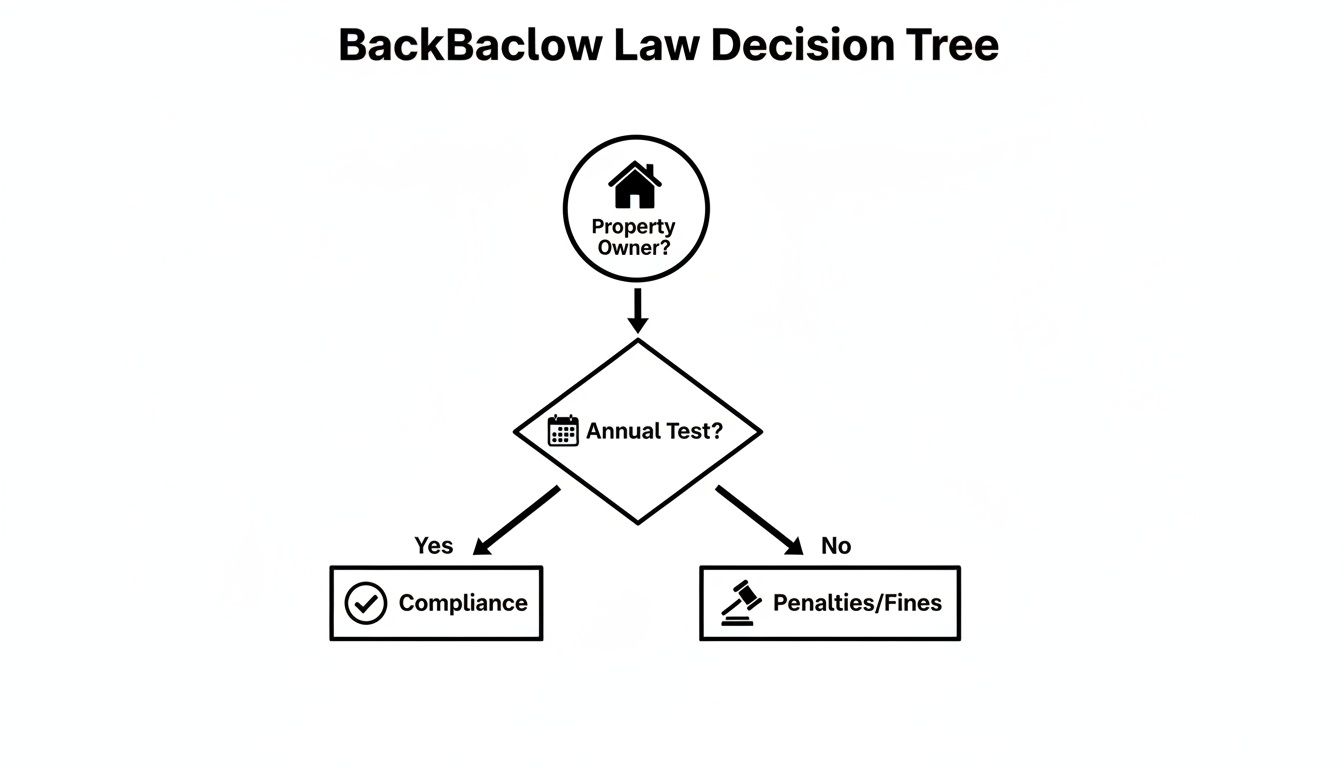
As you can see, skipping that mandatory annual test can lead straight to penalties. It really drives home how seriously the authorities take compliance.
Backflow Prevention Device Hazard Guide
To make it even clearer, this table breaks down which device is generally needed for different types of properties. It’s a simplified guide to help you get a feel for where your property might fit.
| Hazard Level | Common Property Types | Required Device Type |
|---|---|---|
| Low | Standard residential homes, small offices without onsite hazards. | Non-Testable Dual Check Valve (often in meter) |
| Medium | Apartment blocks, larger office buildings, restaurants, properties with fire sprinklers. | Testable Double Check Valve (DCV) |
| High | Hospitals, laboratories, industrial sites, car washes, commercial kitchens. | Reduced Pressure Zone Device (RPZD) |
Ultimately, a qualified plumber needs to make the final assessment, but this gives you a solid starting point for understanding the requirements.
How Hazard Ratings Work In Practice
The Australian system is pretty clear-cut. For example, a standard domestic house (Class 1a) only needs a minimum low-hazard device, which, as we mentioned, is often covered by the valve in the water meter your local water authority provides.
But once you move into medium-hazard territory, a testable Double Check Valve is mandatory. For high-hazard sites, it’s non-negotiable: you must have an RPZD, a registered break tank, or an air gap. Knowing your property's official rating is the first step, and you can read more about the specific hazard classifications and rules here.
Choosing the right backflow prevention valve isn't something you can guess. It takes a proper assessment from a licensed plumber who knows exactly how to identify your property's hazard level.
Whether you have a home in Camberwell or a commercial property that needs specialised work like pipe relining in Melbourne, the team at Amari Plumbing has you covered. We'll make sure you have the correct, fully compliant device installed. Get in touch today and let our experts take care of it.
Why Annual Backflow Testing Is Not Optional
Think of your backflow prevention valve a bit like the brakes on your car. You don’t really think about them day-to-day, but you absolutely trust they’ll work perfectly in an emergency. You wouldn't skip your annual brake check, would you? The same logic applies here. Annual backflow testing isn't just a friendly suggestion; it's a critical process for both your safety and your legal compliance.
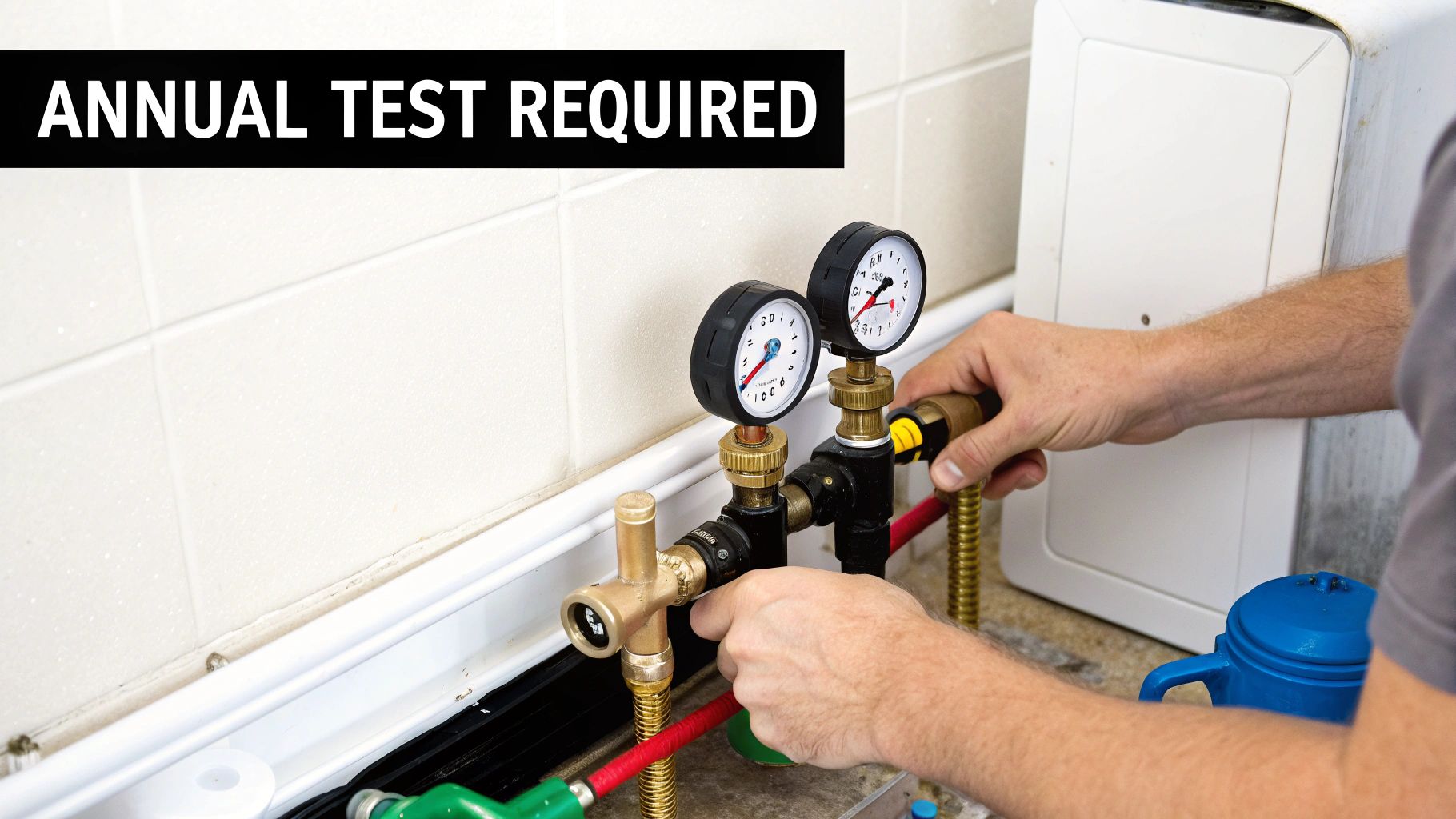
These devices are genuine workhorses, full of mechanical parts. Inside, they have a whole system of springs, rubber seals, and moving gates that can wear out, go stiff, or get clogged with tiny bits of grit and sediment over time. A valve that looks perfectly fine on the outside could actually be failing on the inside, leaving your property completely unprotected.
The Mechanics of a Professional Test
A proper, professional test is a lot more than just a quick look-over. It's a precise diagnostic check where a licensed and specially endorsed plumber uses specialised pressure gauges to actually simulate backflow conditions. This process confirms that the internal valves are creating a perfect, watertight seal under pressure, proving your first line of defence against contamination is ready for action.
This isn’t just about ticking a box for the local council. It’s a vital safety check that protects not only your property but the entire community’s drinking water supply. The scale of this responsibility is huge; thousands of these devices are installed all over Melbourne, and every single one has to work correctly.
The sheer number of these devices in just one municipality really drives home why mandatory testing is so essential for public health. For instance, by the end of 2021, the City of Moreton Bay Council in Queensland had over 11,000 registered backflow devices, and that number just keeps on growing.
This data really underscores why a structured compliance program is so important. Regulations, like the Queensland Plumbing and Drainage Regulation 2019, require local governments to maintain detailed registers and enforce annual testing by endorsed plumbers. You can learn more about the scale of these extensive backflow prevention programs.
Your Compliance Partner
Keeping on top of these annual requirements can feel like just another task on an already long to-do list, but it’s a responsibility you can't afford to ignore. Amari Plumbing and Gasfitting offers a full range of professional plumbing services, including certified backflow testing to keep your property safe and compliant. We handle both the technical work and the paperwork, so you can have complete peace of mind.
To schedule your mandatory annual test, contact us today.
Warning Signs Your Backflow Valve Is Failing
A faulty backflow prevention valve doesn't always fail in a spectacular, gushing fashion. More often than not, it gives off subtle little clues that something is wrong. Catching these early signs is the key to preventing a much bigger, and potentially hazardous, problem with your water supply.
So, what should you be on the lookout for?
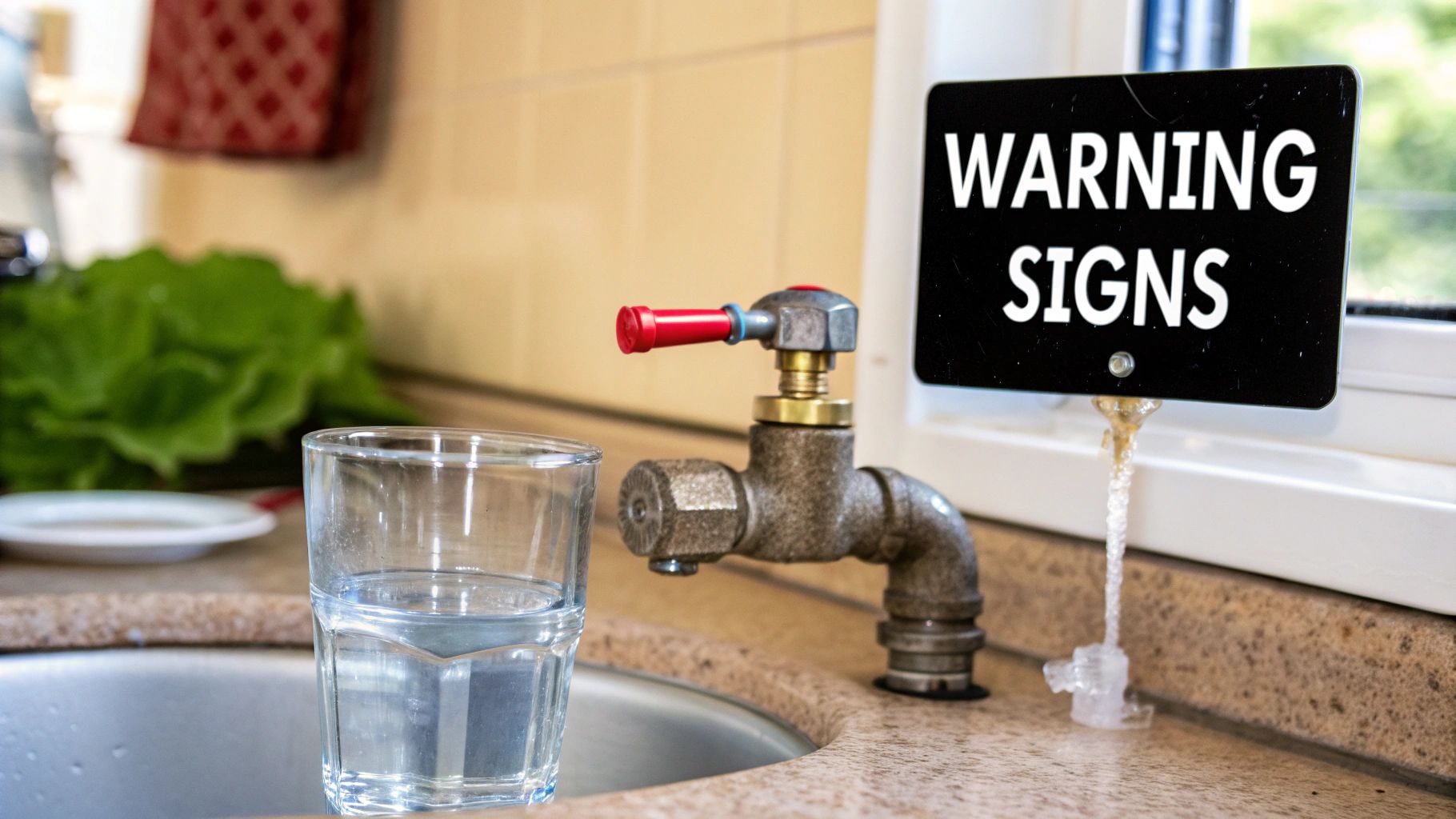
The most obvious red flag is a sudden change in your water quality. If your tap water looks cloudy, has a weird brownish or yellow tint, or tastes and smells 'off'—especially with a sulphurous or sewage-like odour—it's a massive warning sign. This could mean contaminated water is getting back into your clean pipes.
Other Physical Clues to Watch For
Beyond what’s coming out of the tap, the device itself and your wider plumbing system can also tell you a story. You'll want to keep an eye out for these tell-tale symptoms:
- Visible Leaks or Drips: Your backflow valve should be bone dry. If you see it constantly dripping or letting out a steady stream of water, it’s a clear sign that an internal seal or component has given up.
- Sudden Pressure Drops: While lots of things can cause low water pressure, a malfunctioning backflow device is definitely on the list of culprits. If the pressure has suddenly tanked, our guide on no water pressure in your house might offer some clues.
- Slow or Gurgling Drains: This one can be sneaky. We usually blame a standard clog for slow drains, but strange gurgling sounds or sluggish draining can also point to pressure imbalances caused by a failing backflow preventer.
Troubleshooting Backflow Valve Issues
To make things a bit clearer, here’s a quick reference table to help you connect the dots between what you're seeing and what it might mean.
| Symptom | Potential Cause | Action to Take |
|---|---|---|
| Water is cloudy, discoloured, or smelly | Backflow is occurring; contaminants are in the water supply. | Stop using the water immediately. Call a licensed plumber. |
| Valve is constantly dripping or leaking | An internal seal or check valve has failed. | This requires professional repair. Call a plumber. |
| A sudden drop in water pressure | The valve may be stuck or partially closed internally. | Isolate the issue and call a plumber for diagnosis. |
| Drains are slow, gurgling, or noisy | Pressure issues related to a faulty valve. | While it could be a simple clog, get it checked if other signs are present. |
Remember, this is just a guide. A proper diagnosis can only be done by an expert.
It's critical to remember that diagnosing and repairing a backflow prevention valve is not a DIY job. Due to the serious health risks and strict legal compliance requirements in Melbourne, any suspected issue must be addressed immediately by a licensed and endorsed plumber.
Trying to tackle this yourself isn't just risky; it can lead to more damage, potential fines, and—most importantly—compromise the safety of the water you and your family drink.
If you spot any of these signs, from discoloured water to a dripping valve, it's time to call in the professionals. For an expert diagnosis and repair in Melbourne's eastern suburbs, including Balwyn and Kew, don't put it off. The health of your household or your customers is on the line.
Your Partner for Backflow Compliance in Melbourne
When it comes to your property's backflow prevention valve, you're not just looking for a quick fix from any old plumber. You need a reliable partner—someone who can manage your safety and keep you legally compliant, year in and year out. For property owners and managers across Melbourne's eastern suburbs, Amari Plumbing and Gasfitting is that partner.
What sets us apart is our dedicated expertise. Every single one of our plumbers handling backflow work is fully licensed and holds the specific endorsements needed for installation, testing, and repairs. We don't just patch up problems; we deliver certified, compliant solutions that safeguard your water supply and give you genuine peace of mind. That level of specialisation is essential for getting things right with local water authorities.
Serving Melbourne's Eastern Suburbs
We're proud to bring our specialist services to a wide range of local areas. So, whether you've got an emergency and need a plumber in Balwyn, are planning a new installation in Doncaster, or it's time for your routine compliance testing in Kew, our team is on the road and ready to help. We get the different needs of both homes and businesses, which is why we offer upfront, fixed pricing—no nasty surprises, ever.
Our services are built for everyone, from a homeowner just getting their head around their first backflow assessment to a property manager juggling annual testing schedules for an entire portfolio. We’re here to make compliance simple and stress-free.
Trust is built on reliability and expertise. When it comes to something as critical as water safety, partnering with a plumber who specialises in backflow prevention isn't just a good idea—it's essential for protecting your property and meeting your legal obligations.
If you’re a property manager in Melbourne looking for a team you can truly depend on, our deep experience in commercial plumbing means we have the skills and systems to handle the scale and complexity your portfolio demands.
Don’t leave your water safety to chance. For expert advice, compliant testing, or a professional installation of a backflow prevention valve, the Amari team is ready to help. Contact us today to get your service scheduled and make sure your property is fully protected.
Your Backflow Prevention Questions Answered
When it comes to backflow prevention, it’s completely normal to have a few questions. The rules can seem a bit complicated, so we've pulled together some straightforward answers to the questions we hear most often from Melbourne property owners.
What's the Cost for Backflow Testing in Melbourne?
The price for your annual backflow test can shift a bit depending on a few things – the type and size of your valve, how easy it is for our plumbers to get to, and where you're located.
But here’s our promise: transparency is everything. At Amari Plumbing, we give you a clear, upfront quote before we even start. That way, you know exactly what to expect, with no nasty surprises on the bill.
Can I Just Test or Install a Backflow Device Myself?
That’s a hard no. In Australia, the law is crystal clear: any work on a testable backflow prevention valve has to be done by a licensed plumber who also holds a special backflow prevention ticket.
This isn't a weekend DIY project. It’s a seriously regulated job designed to protect the public water supply from contamination. Trying to do this yourself isn't just illegal—it can land you with hefty fines and create a genuine health hazard.
A properly licensed and endorsed plumber has gone through specific training to get this right. They use specially calibrated equipment to test your device, guaranteeing the results are spot on and that all the official compliance paperwork sent to the water authority is valid.
What Happens if My Backflow Valve Fails the Test?
Don't panic! A failed test just means the device isn't doing its job properly and needs a bit of attention. When this happens, our licensed plumber will get straight to work figuring out exactly what's gone wrong.
From there, it’s usually one of two paths:
- A Simple Fix: More often than not, the problem is something minor. A good clean of the internal parts and replacing some worn-out seals or springs is usually all it takes.
- A Full Replacement: If the valve is getting old, has started to corrode, or is just too damaged to repair reliably, a full replacement is the best way forward to keep you safe and compliant.
Whatever the issue, our team will give you a detailed quote for any repairs or a replacement. Once the job's done, we'll re-test the device and handle all the paperwork with your local water authority, so the whole process is completely seamless for you.
How Do I Know Which Backflow Device My Property Needs?
Figuring out the right backflow device isn't a guessing game—it all comes down to a professional "hazard assessment." One of our experienced plumbers will come out and properly evaluate your property’s specific risks to the main water supply.
Things like irrigation systems, swimming pools, commercial kitchen gear, or fire sprinkler systems all have a big say in whether you need a low, medium, or high-hazard device. This professional assessment is the only way to be certain you’re installing the right backflow prevention valve that meets legal standards and truly protects your water.
For genuine expert advice or to get your annual backflow test scheduled, trust the endorsed professionals at Amari Plumbing and Gasfitting. We make sure your property is safe, compliant, and fully protected. Contact us today for a transparent quote and service you can rely on.