

Hot water maintenance isn't just a chore; it's the secret to keeping your system running efficiently, safely, and for much longer. We're talking about simple tasks like checking the pressure relief valve, flushing out sediment from the tank, and inspecting the anode rod for rust. These jobs are critical for preventing costly breakdowns and eye-watering energy bills. When you need a reliable plumber in Melbourne, a professional check-up can save you thousands in the long run.
The Real Cost of Forgetting Your Hot Water System
It’s all too easy to ignore your hot water system. Tucked away in a cupboard or humming along outside, it just works—until it doesn't. But that reliable workhorse is one of your home’s biggest energy hogs, and forgetting about it comes with a price tag that’s a lot worse than a cold shower. A quick search for a "plumber near me" is often the first step when things go wrong, but preventative care is far cheaper.
When you skip proactive maintenance, your system’s efficiency slowly dies. Sediment builds up inside, parts wear out, and what starts as a tiny issue quietly snowballs into a major failure. This leads directly to higher energy bills and can slash years off your unit's life, forcing you to pay for a replacement much sooner than you should have to. This is a common issue for homeowners from Balwyn to Bulleen.
Want to know how long your system should last with the right care? Check out our detailed guide on hot water system lifespans.
To help you stay on top of things, here’s a quick checklist of the essential maintenance tasks every Melbourne homeowner should know about.
Your Annual Hot Water Maintenance Checklist
This table gives you a clear snapshot of the key jobs that keep your system healthy and your bills down.
| Maintenance Task | Recommended Frequency | Primary Benefit |
|---|---|---|
| Tank Flushing | Annually | Removes sediment buildup, improving efficiency and preventing corrosion. |
| Pressure Valve Check | Every 6 months | Ensures the safety valve functions correctly, preventing dangerous pressure buildup. |
| Anode Rod Inspection | Annually | Checks the "sacrificial" rod that protects your tank from rusting from the inside out. |
| Temperature Check | Annually | Confirms water is heated safely and efficiently, preventing scalding and wasted energy. |
Following a simple schedule like this is the best way to avoid those nasty surprise breakdowns and keep your system in top shape for years.
Why Different Systems Need Different Care
Not all hot water systems are created equal, and their maintenance needs can vary. The TLC a gas storage unit in Balwyn needs is quite different from what an electric heat pump in Camberwell requires.
- Gas Systems: These need a close eye on the burner and pilot light. Keeping them clean and properly adjusted is key to safe, efficient heating. For expert gasfitting in Melbourne, always call a licensed professional.
- Electric Systems: The heating elements are the weak spot here. They’re prone to damage from sediment buildup, which is why a regular flush is absolutely essential.
- Solar & Heat Pump Units: These are the most complex of the bunch. They rely on pumps, sensors, and sometimes refrigerant, all of which need professional checks to maintain peak performance.
No matter what type you have, consistent, professional care is what guarantees a long and happy life for your unit.
How Proactive Care Saves You Real Money
Honestly, investing in a yearly maintenance check is one of the smartest things a Melbourne homeowner can do for their wallet.
Hot water systems chew through 15% to 27% of your household's total energy. Here in Melbourne, where we use an average of 50 to 70 litres of hot water per person every day, an inefficient unit can send your utility bills through the roof.
An unmaintained system has to work much harder and burn more gas or electricity to heat the same amount of water. A few simple checks each year ensure it runs like a dream, keeping those costs as low as possible. Don't wait for it to break down. A little attention now delivers serious long-term savings and, more importantly, peace of mind. As trusted Melbourne plumbers, we see the expensive consequences of neglect every day.
If you think your system is due for a check-up, get in touch with the Amari Plumbing team today. We'll give you an honest, professional assessment.
Essential DIY Checks You Can Perform Safely
While a licensed plumber should handle the heavy lifting, you don't need a toolbox and a trade certificate to keep an eye on your hot water system. A few simple, safe checks can help you spot trouble long before it leads to a cold-shower catastrophe on a chilly Melbourne morning.
Think of it as a quick health check-up for your heater. Even just a quick look around the unit can tell you a lot. Are there any damp spots at the base? What about rust stains on the tank itself, or any corrosion building up on the pipes and fittings? These are often the first red flags. If you want to get better at spotting the sneaky ones, we've got more tips on how to detect subtle water leaks before they become a real headache.
The takeaway here is simple: a few minutes of your time every few months can make a huge difference to your system's lifespan and your power bills.
Checking the TPR Valve
One of the most important jobs you can do is test the Temperature and Pressure Relief (TPR) valve. This little valve is a critical safety feature. If the pressure or temperature inside your tank gets dangerously high, it automatically lets water out to prevent a disaster.
It's easy to test. Just grab a bucket and place it under the discharge pipe. Gently lift the little lever on the valve and hold it for about five seconds. You should hear a gurgling sound as a burst of hot water flows out. Let the lever go, and the water should stop completely.
Heads Up: If no water comes out, or if it keeps dripping after you've closed the lever, that valve is likely faulty. A busted TPR valve is a serious safety risk and needs to be replaced by a licensed plumber straight away.
A Quick Sediment Check
Sediment is the silent killer of hot water tanks, especially in areas with hard water. While a full tank flush is a job for the pros, you can do a quick check to see what’s going on inside.
Find the drain valve at the bottom of the tank and attach a regular garden hose. Run the other end outside to a spot where it can drain safely. Leave the cold water supply on and carefully open the drain valve for just a few seconds. Catch some of the water in a bucket. If it looks cloudy, rusty, or has sandy bits floating in it, you've got a sediment problem that needs a professional to sort out. This simple check can prevent future issues with blocked drains.
Visual Inspection of Gas and Electric Units
Depending on what type of system you have, there are other simple things to look out for.
- For gas heaters: If your unit has a viewing window, take a peek at the pilot flame. You want to see a steady, strong blue flame, maybe with a little yellow at the very tip. If it's mostly yellow or orange, that’s a sign of a problem that could be producing dangerous carbon monoxide.
- For electric heaters: Just listen. Any strange hissing or popping noises often mean the heating element is caked in sediment and is working way too hard.
These checks only take a few minutes every six months, but they give you a fantastic insight into the health of your system. Catching these little things early is the key to avoiding a big, expensive emergency. If you spot any of these warning signs, don't wait—give the team at Amari Plumbing and Gasfitting a call.
Protecting Your Tank With Professional Anode Rod Servicing
While those DIY checks are a fantastic first line of defence, the real secret to getting a long, trouble-free life out of your hot water system comes down to professional servicing. This is where a qualified plumber from Kew or your local area steps in to handle the nitty-gritty technical tasks that truly protect your investment.
Without a doubt, the most critical of these is looking after the unsung hero of your tank: the sacrificial anode rod.
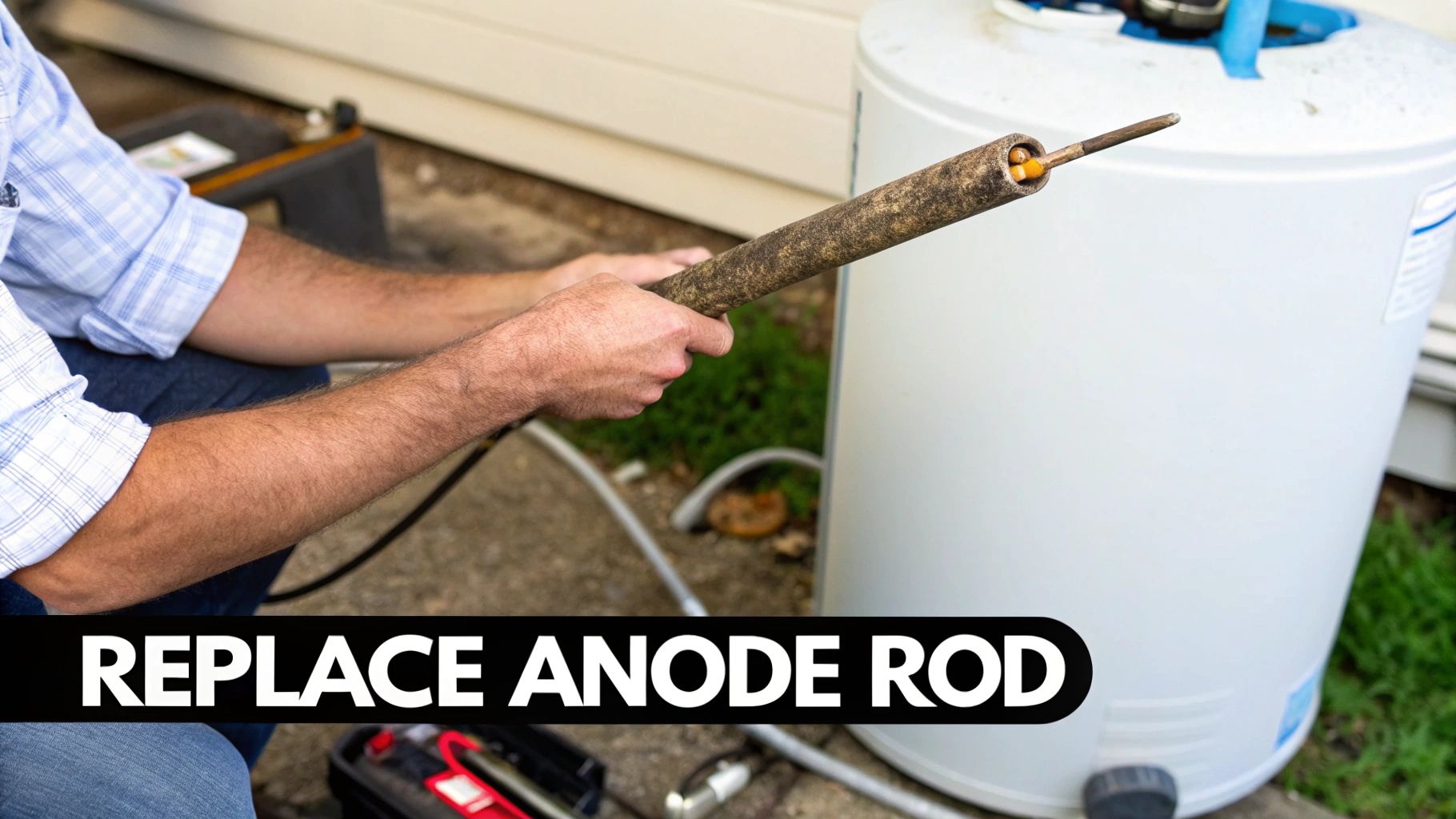
Think of the anode rod as a bodyguard for your water tank. It's a simple metal rod, usually magnesium or aluminium, that hangs inside your steel tank. Through a process called electrolysis, it deliberately attracts all the corrosive minerals and elements in the water. It essentially sacrifices itself over time to stop the tank itself from rusting out from the inside.
Once that anode rod is gone, your tank’s steel walls are next on the menu for corrosion. That’s a fast track to leaks and a complete, costly system failure. It's a small part that does a massive job.
Why Anode Rod Replacement Is Not A DIY Job
I get it, the temptation to save a few bucks is strong. But inspecting and replacing an anode rod is one of those jobs best left to the pros for a few very good reasons.
For starters, just getting to it can be a mission. They’re often sealed in incredibly tight, and after years of corrosion, you’ll likely need a high-impact wrench just to break the seal.
More importantly, getting it wrong can cause serious, irreversible damage. If you strip the threads on the tank or fail to seal the new rod properly, you’ve just created a leak that can ruin the entire unit. A licensed plumber has the right tools, the experience, and the touch to get it done safely and correctly the first time.
A scheduled service is also the perfect chance for a professional to give your whole system a proper health check. This comprehensive approach—checking gas pressures, testing electrical components, and assessing overall performance—is a key part of holistic plumbing care. It's much like how our specialised pipe relining in Melbourne protects your home’s hidden drainage network.
Squeezing More Life Out Of Your System
Regular professional maintenance can dramatically extend the life of your hot water system, which is crucial in Melbourne's variable climate. On average, you can expect 8-15 years from a system here—gas units often last 10-15 years, while electric units are closer to 8-12 years. Our experience as a leading plumber in Hawthorn confirms these figures.
Plumbing experts agree that replacing the anode rod during scheduled checks is one of the most effective ways to hold off tank rust and add years to your system's life. This is especially true in areas with poor water quality, which can really chew through a tank. For a deeper dive, check out this great resource on hot water system longevity from Paul's Plumbing.
Ultimately, professional hot water maintenance, particularly anode rod servicing, is a small investment that pays you back in spades. It keeps your system running efficiently, prevents those awful unexpected breakdowns, and helps you get every last drop of value from your unit.
If it’s been over a year since your last professional check-up, don't wait for a cold shower to be your reminder. Contact Amari Plumbing and Gasfitting to schedule a service and keep your hot water flowing for years to come.
Why Flushing Your Hot Water System Can Save You a Fortune
The tap water flowing into our Melbourne homes isn't just pure H₂O. It's carrying tiny mineral particles, mostly calcium and magnesium, that settle at the bottom of your hot water tank over time. Bit by bit, they form a thick, sludgy layer of sediment.
This buildup is the silent killer of hot water systems. It’s slowly choking your unit's efficiency and lining it up for a premature, and very expensive, failure. Many people don't think to find a plumber until it's too late.
Think of that sediment layer as an insulating blanket wrapped around your system’s heating element or burner. Your heater is forced to work overtime, burning through more gas or electricity just to get the water up to temperature. The immediate result? Higher utility bills for less efficient heating.
How Sediment Buildup Does the Real Damage
For an electric unit, that sediment can be catastrophic. It buries the heating element, causing it to overheat and eventually burn out completely. If you have a gas system, the sediment creates intense hot spots on the bottom of the tank. This weakens the steel over time, leading to cracks, leaks, and total tank failure.
We’re not talking about a minor inconvenience here. This is the number one reason hot water tanks fail. The constant stress of overheating will slash the lifespan of your unit, turning what should be a 10-15 year investment into an unexpected emergency replacement.
This is exactly why a professional flush is a non-negotiable part of your hot water maintenance routine. It’s not just about draining a bit of water; it’s a full-scale clean-out to remove the damaging gunk that a simple DIY drain just can’t touch.
DIY Drain vs. a Professional Flush: What’s the Difference?
It’s tempting to just hook up a hose and drain the tank yourself, and look, it’s better than nothing. You’ll get some of the loose sediment out. But the real villain—the stubborn, caked-on scale that does the most damage—will be left behind.
A professional flush is a different beast altogether. A licensed plumber uses specific techniques and pressures to actually stir up and blast out all that hardened sediment. This single process restores your system's efficiency, takes the strain off its parts, and can add years to its life. For anyone in the eastern suburbs, a local plumber in Doncaster has the right gear and know-how to get this done properly.
The numbers don't lie. Flushing your system annually is a proven way to stop corrosive buildup and keep energy costs from creeping up. In areas with particularly hard water, we even recommend doing it every six months.
Ignore it, and you could be looking at a $1,200-$3,500 gas system replacement or an $800-$2,500 electric one, plus the pain of an emergency call-out fee. You can see a great breakdown of these costs over at Red Dog Plumbing’s guide to system flushing.
If you’re already hearing popping or rumbling noises coming from your tank, that’s your system screaming for help. That's the sound of water boiling around super-heated sediment. Don't wait for it to spring a leak in the middle of the night. It's time to book a professional flush with Amari Plumbing and Gasfitting today.
Warning Signs That Demand An Emergency Plumber
Even a hot water system that's been looked after perfectly can hit a snag. While regular maintenance prevents most dramas, you need to know the difference between a minor hiccup and a genuine emergency that needs a professional, and fast.
Ignoring these big red flags can lead to serious water damage, eye-watering repair bills, and even put your family at risk. When you need urgent help, you need reliable emergency plumbers in Melbourne.
When you spot serious trouble, you need a reliable team on your side. Whether you're looking for a plumber Balwyn locals trust or need a hand anywhere in Melbourne's eastern suburbs, acting quickly is everything.
Major Leaks or Pooling Water
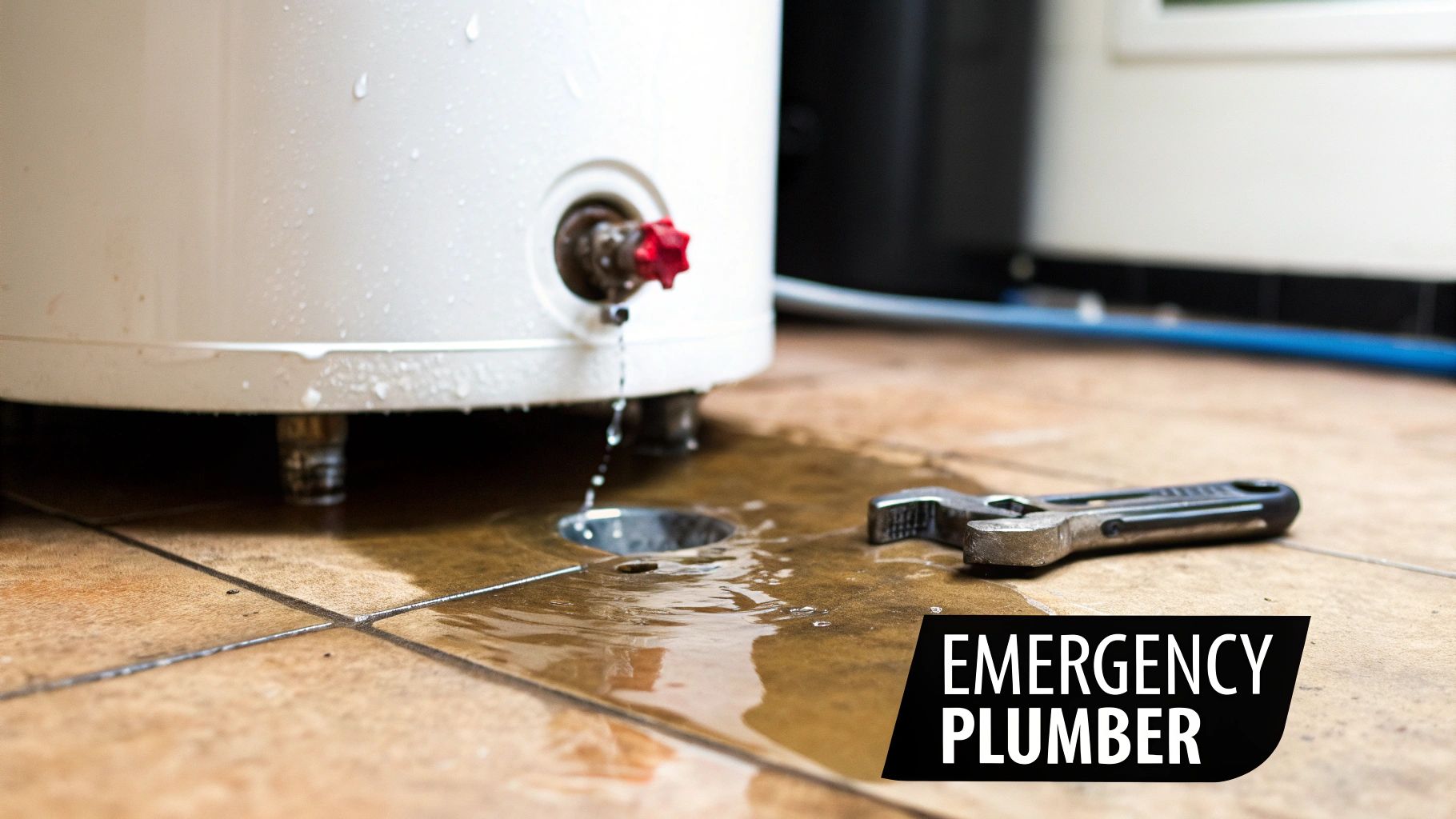
This one’s the most obvious and urgent sign of trouble. A tiny drip from a valve might not seem like a big deal, but if you find a significant pool of water around the base of your hot water tank, you’ve got a serious problem on your hands.
It could be something like a failed pressure relief valve, or worse, it could mean the internal tank has rusted through completely.
Water damage gets out of hand fast, wrecking floors, walls, and cabinetry. If you see a major leak, turn off the water supply to the unit straight away and call an emergency plumber. Don’t wait – what’s a puddle now could be a flood in a few hours.
No Hot Water At All
Jumping into an ice-cold shower is a pretty clear signal that something’s wrong. The cause could be simple, like a tripped circuit breaker or a pilot light that’s gone out.
But it could also be a completely failed heating element or thermostat. While some issues are an easy fix, a total loss of hot water often points to a component failure that needs a pro to diagnose and sort out. If you've tried the basic checks and you're still left in the cold, our guide on what to do when your hot water system is not working can offer a few more pointers while you wait for us to arrive.
Strange Noises and Discoloured Water
Your hot water system should be pretty quiet. If you suddenly start hearing loud banging, popping, or rumbling sounds, it’s basically crying for help. These noises are usually caused by steam bubbles fighting to get out from under a thick layer of sediment that’s built up at the bottom of the tank.
This isn't just an annoying noise; it's a symptom of extreme stress on the tank itself, which can lead to cracks and major leaks. When you hear this and see rusty or discoloured water coming from your taps, it's a huge red flag for internal corrosion and potential tank failure.
If you spot any of these alarming signs, it’s definitely not the time to "wait and see". These are symptoms of big problems that can get worse in a hurry. Protect your home and your family by calling a 24/7 professional for an immediate assessment.
For urgent help with your hot water system, contact the Amari Plumbing and Gasfitting emergency team right away.
Your Hot Water System Questions, Answered
Alright, let's wrap things up by tackling some of the questions we hear all the time from homeowners around Melbourne. Getting a straight answer can make all the difference in looking after your system and knowing when it's time to call in the pros.
How Often Should I Get My Hot Water System Serviced In Melbourne?
For most systems, getting a professional service once a year is the gold standard. Think of it as a regular check-up to make sure everything's running safely and efficiently, which helps keep those power bills from creeping up. A trusted Melbourne plumber can provide this service.
Now, if you're in an area known for hard water, you might want to get it looked at every six months. That extra professional flush can be a real lifesaver, stopping damaging mineral scale from building up too quickly.
Is A Dripping Pressure Relief Valve An Emergency?
It's actually pretty normal to see the odd drip from your temperature and pressure relief (TPR) valve. That's just the valve doing its job – letting off a bit of steam (well, water) to keep the tank from over-pressurising.
The worry is when that drip turns into a constant trickle or a steady flow. That's a red flag that the valve has failed. While it might not be a "wake you up at 3 am" emergency, it definitely needs a plumber to look at it sooner rather than later to stop a bigger failure down the line.
This little valve is a massive safety feature. It's what prevents a storage hot water tank from turning into a dangerous pressure vessel, as you can read about in technical guides like Wikipedia's entry on storage water heaters.
Can I Replace The Anode Rod Myself?
Look, while it's technically possible if you're a seasoned DIY pro, we really recommend leaving this one to a licensed plumber. Those rods can get seriously seized in place and often need specialised gear like a high-impact wrench just to get them out.
You also run a big risk of cross-threading the new one on the way in or not sealing it properly. One wrong move and you could cause permanent damage to your tank. Since the anode rod is your tank's main defence against rust, getting it installed professionally is a small price for total peace of mind.
Why Is My Hot Water Tank Making A Rumbling Noise?
That rumbling, popping, or kettle-on-the-boil sound? Nine times out of ten, that's a thick layer of sediment that's cooked itself onto the bottom of your tank. What you're hearing are steam bubbles literally fighting their way through that caked-on gunk.
It’s more than just an annoying sound; it’s a sign your system is working way too hard. This is a clear signal your tank is overdue for a professional flush to get it working properly again and prevent lasting damage.
If we didn't answer your question here or you're dealing with something more complicated, the expert team at Amari Plumbing and Gasfitting is always ready to help. For honest advice and reliable plumbing service across Melbourne, get in touch with us today.