

That frustrating trickle of warm water instead of a proper gush? It's a classic Melbourne plumbing headache, one we see all the time in suburbs with a mix of older character homes and newer builds. From Balwyn to Camberwell, homeowners often face this issue.
More often than not, this isn't a problem with the water supply to your house. Instead, the culprit is usually lurking somewhere inside your hot water system. Things like sediment buildup in the tank or a faulty valve are common suspects. The very first step is simple: check if it's only the hot taps giving you grief. That's your biggest clue. As the go-to plumber in Melbourne, we can help diagnose the issue quickly.
Why Is Your Hot Water Pressure Suddenly Low
So, the cold water is blasting out just fine, but the hot water is barely there. This is a dead giveaway that the problem is isolated to your hot water unit or the pipes leading from it. We get calls about this from plumber Balwyn to plumber Hawthorn, where plumbing systems can be a real mixed bag of old and new.
Getting your head around the potential causes helps you figure out if this is a quick weekend fix or something you need a professional for. For complex issues like blocked drains, it's always best to call the experts.
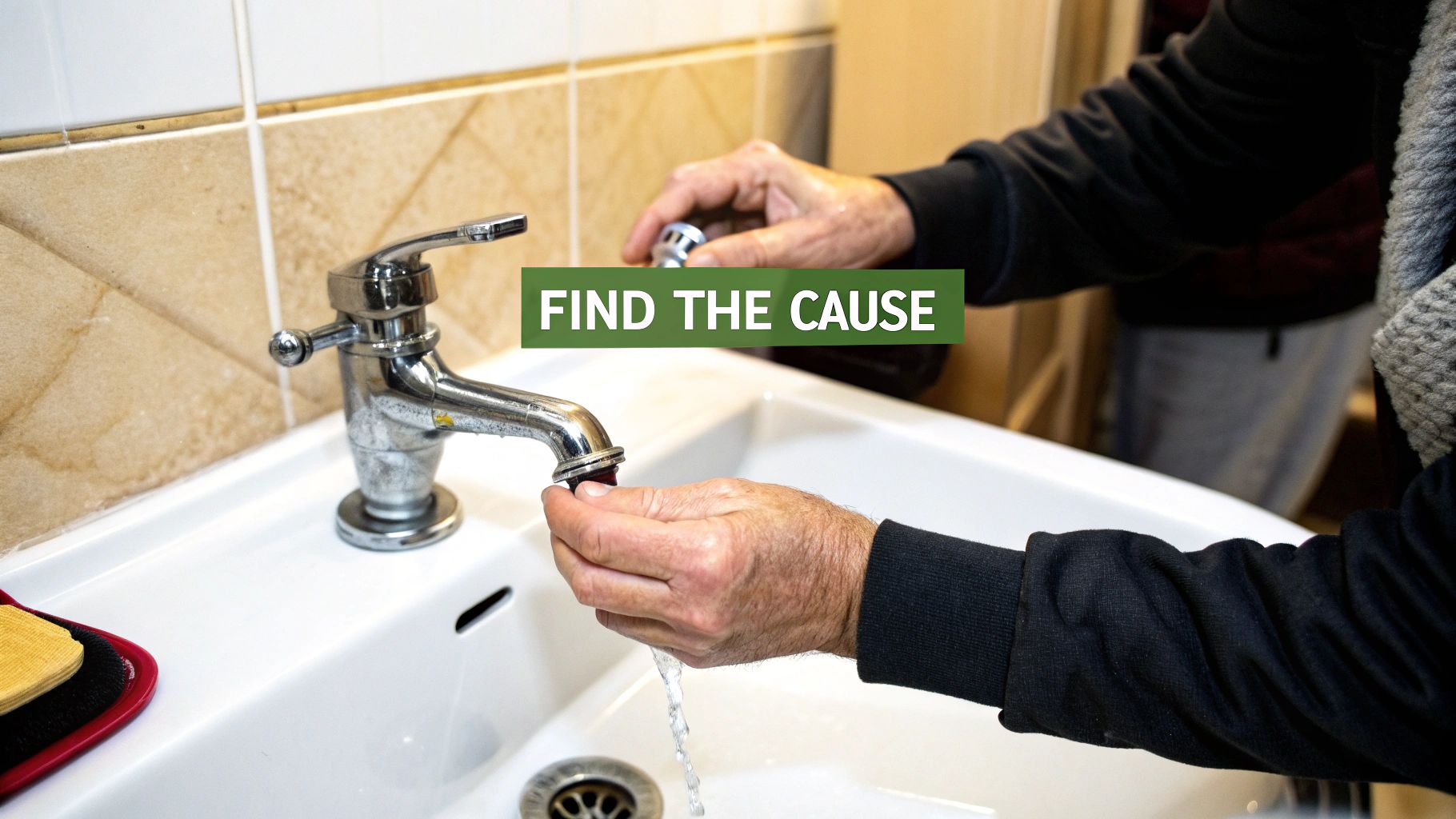
Isolating the Source of the Problem
Before you do anything else, go on a tour of your house. Check every single tap. Turn on the cold full-blast, then the hot. If you've got strong cold pressure everywhere but a weak, sad flow from all the hot taps, you've successfully cornered the problem. It’s definitely in the hot water circuit.
This is actually good news. It means you can rule out bigger issues like the mains supply from the street or the main water line coming into your property. The problem is almost certainly one of these:
- Your hot water unit: Mineral scale and sediment can build up over time, especially with Melbourne's water, and literally clog the outlet pipe from the inside.
- A crucial valve: Your system has a few key valves—like the main shut-off valve or a pressure limiting valve—that can get stuck or fail.
- The pipes themselves: Older galvanised pipes are notorious for rusting from the inside out, slowly choking off the water flow. This can sometimes require advanced solutions like sewer relining.
- An individual tap or showerhead: Sometimes the blockage is right at the very end, with grit and scale caught in the aerator or shower rose.
To help you quickly diagnose what might be going on, here’s a table matching common symptoms to their likely causes.
Quick Guide to Common Hot Water Pressure Problems
| Symptom | Likely Cause | Potential DIY Fix | Professional Help Needed |
|---|---|---|---|
| Low hot water at all taps | Sediment in the hot water unit or a faulty main valve | Flushing the hot water tank (if you're experienced) | Yes, this usually requires a plumber to inspect and replace parts. |
| Low hot water at one tap | Blocked aerator or faulty tap washer | Unscrew and clean the aerator; replace the washer. | Only if the fixture itself is broken or the issue persists. |
| Pressure drops after a few seconds | Failing pressure limiting valve (PLV) or tempering valve | No, these valves are critical and should not be tampered with. | Definitely. A licensed plumber must test and replace these. |
| No hot water flow at all | Shut-off valve is closed or the unit has completely failed | Check the shut-off valve on the unit to ensure it's open. | Yes, if the valve is open but there's still no water. |
This table is just a starting point, but it can steer you in the right direction and help you know when it's time to pick up the phone and call a Melbourne plumber.
Understanding Water Pressure Standards in Melbourne
It also helps to know a bit about how water pressure is managed in Australian homes. We have strict plumbing standards for a good reason—to stop high pressure from wrecking your pipes and appliances.
According to Australian regulations (AS/NZS 3500.1), the maximum water pressure at any tap inside your home shouldn't go over 500 kPa. To make sure of this, plumbers install a special part called a pressure limiting valve (PLV), which keeps things in a safe zone, usually between 300 to 500 kPa. If your pressure drops below that 300 kPa mark, you’ll really start to feel that weak flow in the shower.
This is exactly why a sudden drop in hot water pressure points to a specific fault. A failing valve can cause the pressure to plummet, even when the mains pressure coming into your house is perfect. For a better idea of where you stand, check out our guide on how to test water pressure at home.
Before you ring a plumber, doing these simple checks can save everyone time and you money. The more information you can give a pro, the faster they can get to the root of the problem, whether you're in plumber Camberwell or plumber Kew.
Starting Your Own Detective Work: A Few Simple Checks
Before you reach for your phone to find a plumber in Melbourne, there are a handful of simple, safe checks you can do yourself. Often, these first steps can solve the mystery of your weak hot water flow without costing you a cent.
Even if they don't fix it, you'll have gathered some really useful clues for a professional plumber. It helps them get to the root of the problem much faster when they arrive at your place, whether you're in plumber Balwyn or plumber Bulleen.
Is It Just One Tap, or Is the Whole House on Strike?
First things first, let's figure out the scale of the problem. Is it a single rogue tap or a house-wide hot water rebellion?
Go to the tap where you first noticed the issue. Turn on the hot water and check the flow. Now, switch it off and turn on the cold water at that same tap.
If the cold water is blasting out like normal, you know the problem is definitely with your hot water lines. Now, do the same test on every other tap in your house – bathrooms, laundry, the lot.
- Problem at just one tap? This is good news. It almost certainly means the issue is localised to that specific fixture, which is often an easy fix.
- Low hot water pressure everywhere? This points to a more central issue, likely with your hot water unit itself or the main pipes coming from it.
This simple test instantly narrows the field of suspects and points you in the right direction.
Check the Shut-Off Valve on Your Hot Water Unit
Every hot water system has a main shut-off valve. It's essential for any maintenance work, but sometimes it can get knocked or not fully opened after a previous job, restricting the water flow.
You'll usually find this valve on the cold water pipe going into your hot water tank. It might be a lever-style handle (a ball valve) or a classic round knob (a gate valve).
A Quick Tip: If you have a lever, it should be sitting parallel with the pipe to be fully open. If it's at a right angle (perpendicular), it's closed. For a round knob, turn it anti-clockwise all the way until it stops to make sure it's completely open.
Gently check the valve. If it’s not fully open, turn it and then go test your taps again. You might be pleasantly surprised to find that this simple tweak solves everything. If the valve feels old and stuck, don't force it – you could end up creating a leak, requiring one of our emergency plumbers Melbourne.
Get Your Hands Dirty: Clean Tap Aerators and Showerheads
This is one of the most common culprits, and luckily, it's also one of the easiest to fix. Over time, little bits of sediment, rust, and mineral scale (especially common in areas with hard water) get trapped in the mesh screens inside your tap aerators and showerheads. This gunk builds up and acts like a dam, strangling the water flow.
Cleaning them out is a simple job that doesn't require any fancy tools.
- Unscrew the aerator or showerhead. Most tap aerators at the very tip of the spout can be unscrewed by hand. If it's a bit stubborn, wrap a cloth around it and use a pair of pliers to avoid scratching the finish. Showerheads typically just twist off the shower arm.
- Inspect and clear out the gunk. Take the aerator apart, laying the little pieces out on a towel so you don't lose them. You'll probably see a gritty mess on the aesh screen. An old toothbrush or a pin works wonders for poking the debris out. For a really deep clean, soak all the parts in a bowl of white vinegar for an hour to dissolve any stubborn mineral buildup.
- Rinse and reassemble. Give all the parts a good rinse under water and put them back together. Screw the clean aerator or showerhead back on.
Now, turn on the hot water. More often than not, you'll notice a massive improvement. For more detailed advice, especially for stubborn showers, check out our guide on how to increase water pressure in the shower.
If cleaning these doesn't do the trick, or if the low pressure is affecting your whole house, the problem likely lies deeper in your plumbing system. At that point, getting a reliable plumber in Melbourne to take a look is the best next step.
Uncovering the Hidden Causes of Pressure Loss
So, you’ve cleaned the aerators and checked the taps, but your hot water is still just a trickle. When the simple fixes don’t work, it’s a sure sign the problem is hiding deeper in your plumbing system. These issues are usually a bit more complex than a quick weekend DIY job and often need a professional eye.
Knowing what could be going on behind the scenes helps you spot the symptoms early and understand when it’s time to call in the cavalry. This is especially true for homeowners in older Melbourne suburbs like plumber Kew and plumber Hawthorn, where original plumbing can be the main culprit.
The Problem with Old Pipes
One of the most common—and invisible—causes of weak hot water flow is the piping itself. A lot of older Melbourne homes were built with galvanised steel pipes, which seemed like a good idea at the time. The catch? After decades, they start to corrode from the inside out.
This internal rust creates a rough, narrowed passage that slows everything down. It also flakes off, sending tiny bits of rust and scale through your system. This debris inevitably clogs up valves and can even block the inlet on your hot water unit, leading to a pressure problem that just keeps getting worse. In some cases, a plumber might suggest a targeted fix like sewer relining for a damaged section, which is a fantastic way to avoid digging up your whole garden.
Critical Valves That Can Fail
Your hot water system isn't just a tank; it relies on a few key valves to work properly and safely. If one of them gives up, your hot water pressure takes a direct hit. Our gasfitting Melbourne team can inspect and repair these.
- Pressure Limiting Valve (PLV): This is a mandatory valve that protects your pipes and appliances from the high pressure coming in from the street. With age, its internal parts can get clogged or just wear out, causing it to restrict the flow far too much.
- Tempering Valve: Its job is to mix hot and cold water to a safe 50°C before it reaches your taps, preventing nasty scalds. A faulty valve can get stuck, meaning it won’t open enough to let a decent amount of hot water through.
- Isolation Valve: This is the main shut-off on the cold water line going into your heater. The handle might look fully open, but the gate mechanism inside can break or get jammed with gunk, effectively strangling the water supply before it even gets heated.
You’ll often notice these valve issues as a sudden drop in pressure, or maybe the flow starts strong for a second before fading to a dribble.
A professional plumber has the right gear to test the pressure at different points in your plumbing. This lets them zero in on exactly which valve has packed it in. Trying to replace these yourself can get messy fast—it involves shutting off the mains and can easily lead to leaks if you don't get it perfect.
Sediment Buildup The Silent Killer
Over the years, your hot water tank is basically a giant kettle that’s always on. And just like a kettle, it collects mineral scale and sediment at the bottom. This sludgy gunk causes two big problems.
First, it coats the heating element, making it work much harder to heat the water and wasting energy. More importantly for pressure, this sediment can get stirred up and block the hot water outlet pipe. It’s a bit like trying to drink a thickshake through a tiny straw—the flow slows to a crawl.
This flow chart gives you a simple path to follow when you're trying to figure out what’s going on.
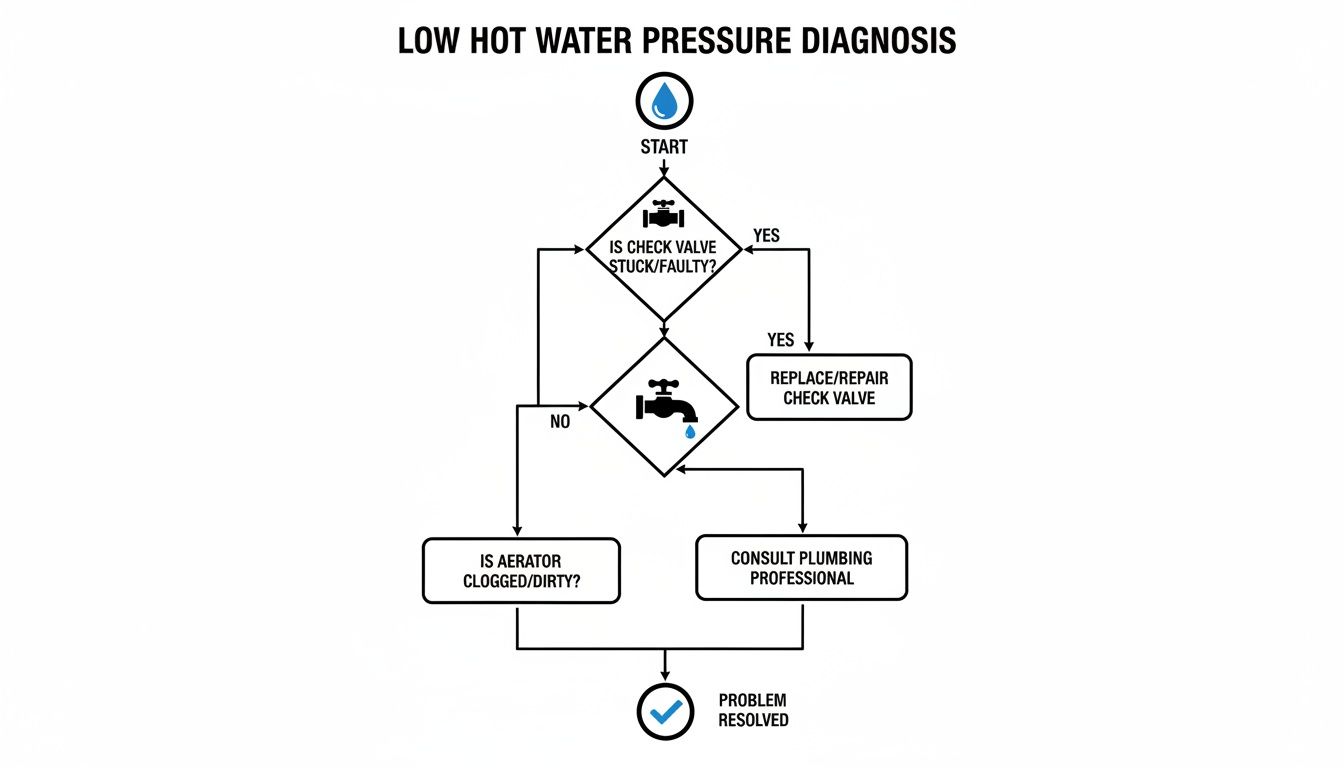
As you can see, once you’ve ruled out the easy stuff like aerators and valves, the next step is to consider these deeper system issues.
The Impact of Ageing Hot Water Systems
The age and type of your hot water system also matter a lot. Since about 2000, we’ve seen a big shift away from traditional electric storage heaters in Victoria, as outlined in this report on residential energy use. This means many homes, particularly in suburbs from plumber Balwyn to plumber Doncaster, are still running on older units paired with those old-school galvanised pipes that are prone to choking up.
If you’ve checked all the simple things and are still stuck with a weak hot shower, it’s probably time to look at these hidden causes. Don’t wait for a trickle to become a total failure. Contact Amari Plumbing and Gasfitting for a proper diagnosis and a solution that lasts. We also offer commercial plumbing services.
Knowing When to Call in a Professional Plumber
Look, there's a certain satisfaction in sorting out a little DIY job around the house. I get it. But when it comes to plumbing—and especially your hot water system—you’ve got to know where to draw the line. Getting it wrong can quickly turn a small hassle into a very expensive, water-logged disaster.
Attempting a complex plumbing fix without the right gear and training can lead to bigger leaks, damage your hot water unit, or even create a serious safety risk. For anyone living around Melbourne, whether you're in plumber Doncaster or plumber Balwyn, getting a licensed plumber in for a quick, expert assessment is always the smartest play. You don't want to search for "emergency plumbers Melbourne" at midnight.
Red Flags You Just Can't Ignore
If you see any of these signs, it's time to put the tools down. These are clear signals that the problem is bigger than a simple fix and needs a professional eye.
- Sudden, Major Pressure Drop: Did the hot water pressure just completely tank overnight? If there's no obvious reason, you could be looking at a burst pipe inside a wall or a major valve failure.
- Visible Leaks Around the Unit: Any water pooling around the base of your hot water system is a serious warning sign. It might be a leaking valve, but it could also mean the tank itself has rusted through and is about to give way entirely.
- Weird Noises: Don't just ignore strange sounds coming from your hot water heater. Any banging, whistling, or rumbling often points to a massive sediment build-up or a failing heating element, both of which can cause dangerous pressure issues.
- Rusty or Discoloured Water: If your hot water is running brown or has a metallic smell, that's a classic sign of internal corrosion in the tank or your pipes. This problem only gets worse and will eventually lead to leaks.
These symptoms are way beyond a simple blocked tap aerator. They point to deeper issues that need a proper diagnosis and repair.
A hot water system is a lot more complex than most people realise. Jobs like replacing a pressure limiting valve or a tempering valve are absolutely not for the DIYer. They need specialised tools, a solid understanding of Australian plumbing codes, and have to be installed perfectly to prevent leaks and make sure your water is delivered at a safe temperature.
Jobs Best Left to a Licensed Plumber
Some tasks involved in fixing low hot water pressure are strictly for the pros. A licensed Melbourne plumber has the training to handle these jobs safely and properly, making sure everything is up to Australian standards.
Flushing the Hot Water Tank
It might sound simple enough, but flushing a tank to get rid of sediment can be risky if you don't know what you're doing. Handling the valves incorrectly can lead to scalding hot water burns or even damage the unit. A professional knows how to do it safely and get the flow back without creating new headaches.
Replacing Critical Valves
Like I mentioned, the pressure limiting valve (PLV) and the tempering valve are vital safety components. They have to be installed and calibrated just right. Any work that touches the gas or main water supply lines to your heater requires a licensed gasfitter or plumber. Our guide on hot water repairs in Melbourne goes into a bit more detail on what can go wrong with these systems.
Finding Hidden Leaks
If you suspect the pressure loss is coming from a leak in a pipe you can't see, don't just start knocking holes in the wall. A plumber uses specialised gear like pressure testers and acoustic detectors to pinpoint the exact spot without unnecessary destruction.
When you're dealing with a tricky low hot water pressure issue, don't guess. Getting an expert in from a reliable team like Amari Plumbing means the problem gets fixed right, the first time. Contact us today for a clear diagnosis and an upfront quote.
Keeping Your Hot Water Pressure Strong and Consistent
Let’s be honest, the best way to fix low hot water pressure is to make sure it never becomes a problem in the first place. A bit of proactive maintenance is a whole lot less stressful (and cheaper) than dealing with an emergency call-out on a cold Melbourne morning.
Think of it like getting your car serviced. You don't wait for it to break down on the Monash Freeway before you get the oil changed, right? The same logic applies to your hot water heater. A simple maintenance plan will keep the pressure strong, help you avoid that awful shock of a cold shower, and actually extend the life of your system. A quick call to a plumber near me for maintenance can save a fortune.
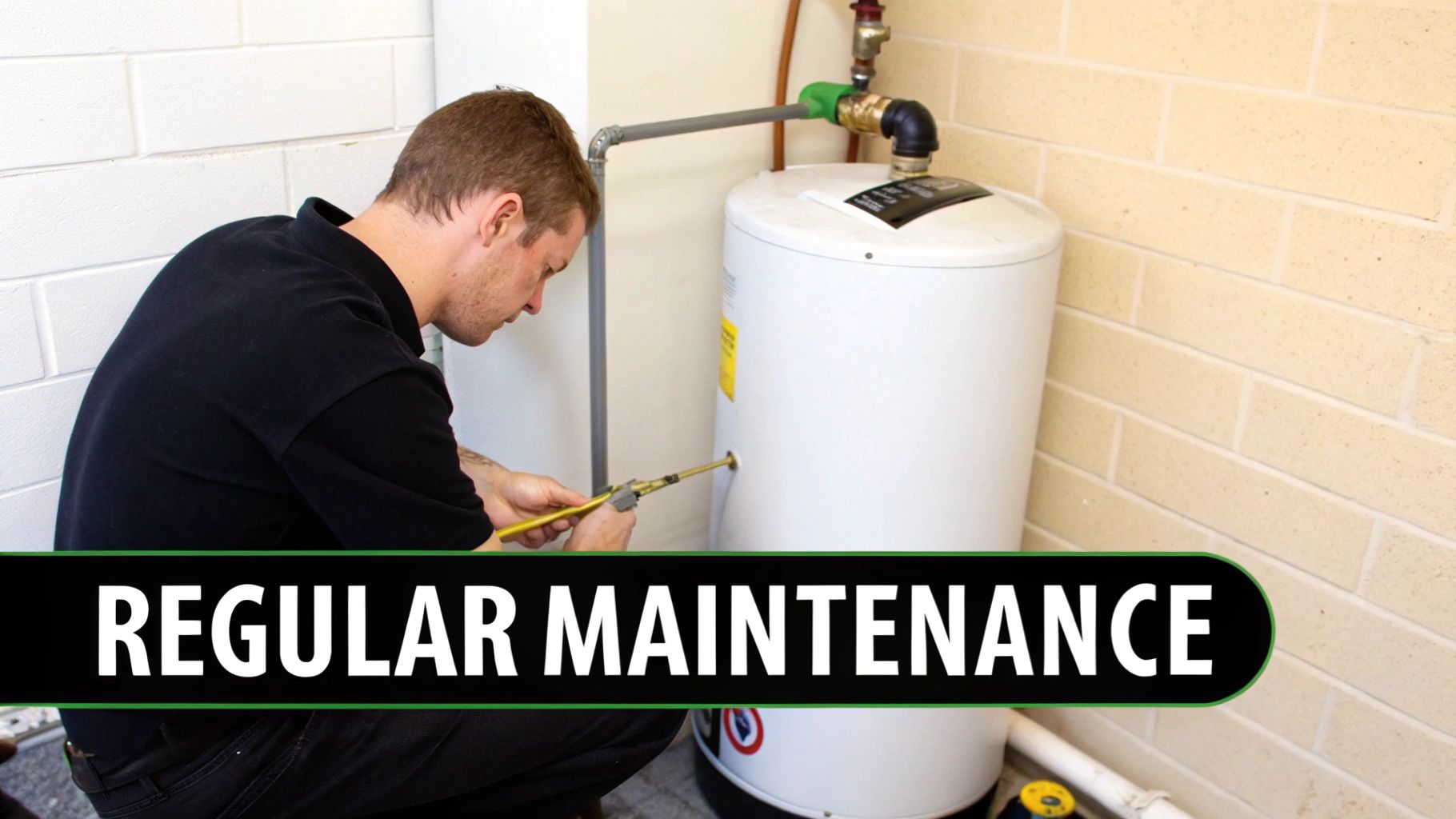
Why Regular System Flushing is a Game-Changer
Over time, your hot water tank collects all sorts of gunk—sediment, mineral scale, and even rust particles settle at the bottom. This sludge basically acts like insulation, forcing your system to work harder and longer to heat the water. More importantly for pressure, this muck can get sucked into the hot water outlet pipe, creating a blockage that literally strangles your water flow.
Getting it professionally flushed is the best way to clear it out. It's a critical bit of upkeep for a few key reasons:
- Brings Back the Pressure: Clearing out the sediment blocking the outlet pipe can give you an immediate boost in hot water flow.
- Improves Efficiency: A clean tank heats water much faster, which you’ll notice on your energy bills.
- Stops Serious Damage: That sediment buildup can cause the tank to overheat and corrode from the inside, leading to expensive leaks and a total system failure.
For most homes around Melbourne, we recommend getting your hot water system professionally flushed every 12 to 18 months. It’s genuinely one of the smartest investments you can make for your plumbing’s health.
Don't Forget the Sacrificial Anode
Tucked away inside your steel hot water tank is a clever little component called a sacrificial anode rod. It's usually a rod made of magnesium or aluminium, and its one job is to corrode so your tank doesn't have to. Water naturally eats away at metal, and this rod sacrifices itself to protect the expensive steel tank from rusting out.
Simple, but brilliant.
The catch is, once the anode rod is completely gone, the water starts attacking the tank itself. That’s when you get leaks and eventually, a dead hot water system. Checking it is a vital part of good maintenance.
A licensed plumber can easily inspect the anode rod during a routine service. If it's worn down to about half its original thickness, it’s time for a new one. This is a quick and affordable job that can literally add years to the life of your hot water system.
This is especially important if you have a newer system. Recent research highlighted that about one-third of Australian households with modern hot water heaters (like heat pumps) ran into early maintenance issues. Many of these problems, like leaks and poor performance, were linked back to shoddy installation or forgotten maintenance. You can read more in the RACE for 2030 initiative report.
A Simple Checklist to Stay on Top of Things
Keeping up with maintenance doesn't need to be a huge chore. Here’s a practical schedule you can actually stick to:
- Every 3-4 Months: Give the temperature and pressure relief (TPR) valve a quick test. Just a brief lift of the lever is all it takes to make sure it isn't seized up.
- Every 12 Months: Book in a professional service. This is when you get the tank flushed and the sacrificial anode inspected. A good plumber will also check all the valves and connections for any signs of wear and tear.
- Keep an Eye Out: Be mindful of any changes. Is the water looking a bit discoloured? Are there strange rumbling noises or small drips? Catching these things early saves a lot of hassle.
By turning these small actions into a habit, you can stop big problems before they start. After all, a well-maintained system is a reliable one. If it’s been a while since your unit had a bit of TLC, get in touch with Amari Plumbing and Gasfitting to book a health check.
Your Questions, Answered
Over the years, we've heard just about every question there is when it comes to low hot water pressure. Here are a few of the most common ones we get from homeowners around Melbourne, with some quick, straight-to-the-point answers.
"Why Is It Only the Hot Water Pressure That's Low?"
This is a classic. When you've got a decent flow from the cold tap but the hot tap is just dribbling out, it’s a massive clue that the problem isn't your home's main water supply. Instead, all signs point directly to your hot water system.
Nine times out of ten, we find it’s either sediment build-up clogging the tank's outlet or a specific valve that’s decided to give up the ghost. Components like tempering valves or pressure limiting valves can get blocked or simply wear out, strangling the flow of hot water. A licensed plumber, like the ones on our team serving areas from plumber Balwyn North to plumber Kew East, can quickly pinpoint which one it is and get it sorted.
"Can I Try to Fix Low Hot Water Pressure Myself?"
Absolutely, there are a few things you can safely check yourself first. Giving the aerators on your taps and the showerhead a good clean is a fantastic starting point. You'd be surprised how often that alone fixes the issue. Also, take a quick look at the shut-off valve on your hot water unit and make sure it's fully open.
However, once you're talking about opening up the system, replacing valves, or messing with the tank itself, it's time to put the tools down. These jobs need specific equipment and, more importantly, the know-how to avoid causing a flood, serious water damage, or even injuring yourself.
A quick heads-up: trying to do complex plumbing repairs without a licence can be a fast way to void your home insurance if things go sideways. It’s always safer and cheaper in the long run to get a professional in for anything beyond a basic clean.
"What's the Average Cost to Fix This in Melbourne?"
This is the big question, and the honest answer is: it really depends on what’s causing the problem.
If cleaning a tap aerator is all it takes, the cost is just a few minutes of your time. If a specific valve needs replacing, you're usually looking at the cost of the part plus a plumber's labour, which might be a few hundred dollars.
For bigger jobs, like replacing old, corroded pipes, the cost will obviously be higher. When it comes to services like pipe relining in Melbourne, we always provide clear, upfront quotes. We charge by the job, not by the hour, so you’ll know the final cost before we even pick up a wrench. No surprises.
"What Are the Signs My Hot Water System Is on Its Last Legs?"
If you’ve tried the simple fixes and the pressure is still low, it could be a sign your system is heading for retirement. Other tell-tale signs to watch out for are rusty-looking water, strange rumbling or banging noises coming from the tank, or any visible leaks and corrosion on the unit itself.
A big one is if your water just struggles to get properly hot anymore. Storage hot water systems typically have a lifespan of 8-12 years. If your unit is in that age bracket and showing these symptoms, putting money into repairs can be a false economy. We can give your system a proper assessment and give you an honest opinion on whether a repair or a full replacement is the smarter move for your home, whether you're in plumber Doncaster or plumber Balwyn.
For an honest assessment and a fast, affordable solution to your low hot water pressure problems, trust the experts at Amari Plumbing and Gasfitting. We offer upfront pricing and reliable service across Melbourne's eastern suburbs. Contact us today for a free phone estimate.