

It’s one of those moments every homeowner dreads: the water in the sink just isn't going down. A slow-draining or completely blocked sink is a massive pain, but before you start thinking about expensive call-outs, take a breath. More often than not, you can get things moving again with a couple of things you’ve already got in the kitchen.
For everyday clogs, especially the fresh ones caused by grease and food scraps, there are a couple of go-to tricks we always recommend trying first. A skilled plumber in Hawthorn would suggest these simple steps before escalating the issue.
Your Immediate Action Plan For A Blocked Sink
When you first notice the water backing up, don't panic. The problem is usually right there in the trap under the sink and is often pretty simple to solve. Before you even think about reaching for harsh, store-bought chemicals (which we aren't big fans of), these simple, effective DIY methods can often get things flowing freely again. Think of this as your quick-start guide to handling common blockages safely and without fuss.
This simple chart breaks down the first two methods every Melbourne homeowner should have up their sleeve.
As you can see, starting with the simplest solution—just a kettle of boiling water—is often all it takes to melt away minor, greasy clogs. It's the plumbing equivalent of turning it off and on again.
Before diving in, here's a quick rundown of these initial DIY approaches.
Quick DIY Sink Unblocking Methods
This table summarises the first-line methods you should try. They're quick, easy, and use common household items, making them a great starting point for any clog.
| Method | Best For | How It Works | Safety Note |
|---|---|---|---|
| Boiling Water | Fresh grease, oil, and fat blockages in kitchen sinks. | The intense heat liquefies congealed fats, allowing them to be flushed down the drain. | Be careful with PVC pipes; repeated exposure to boiling water can soften joints. Use hot, not boiling, water as a precaution. |
| Baking Soda & Vinegar | Minor food particle buildups, soap scum, and grime. | The chemical reaction creates a fizzing action that physically breaks down and dislodges soft gunk. | The reaction is safe, but cover the plughole to direct the foaming action down into the pipe. |
These two tricks are your best bet for a quick fix. If they don't work, it might be time to try a more hands-on approach or call in a professional plumber in Kew.
Starting With Boiling Water
The easiest and fastest first step is to grab the kettle. Boil it full and then pour the water slowly and directly down the plughole.
This trick is a lifesaver for blockages caused by fat, oil, and grease (FOG). The high temperature is fantastic at melting the solidified gunk that’s clinging to the inside of your pipes, allowing it to be washed away.
A word of caution, though: if you have older PVC pipes, be a bit careful. Extremely hot water can sometimes soften the plastic or the seals at the joints. For most modern kitchen sinks here in Melbourne, it’s a perfectly safe initial step. If the water drains away after this, you're all sorted.
The Baking Soda And Vinegar Method
If the boiling water trick didn't quite cut it, it's time for a classic home remedy that really works. The combination of baking soda and white vinegar creates a fizzy reaction that can dislodge more stubborn buildups.
It’s dead simple:
- Pour the baking soda: Tip about half a cup of baking soda directly into the drain. Don't worry about being too precise.
- Add the vinegar: Follow it up with half a cup of white vinegar. You’ll hear it start fizzing and bubbling straight away—that's the reaction you want.
- Let it do its thing: Pop the plug in or cover the drain with a cloth. Leave the mixture to work its magic for at least 20-30 minutes. This gives the foaming action time to get into the clog and break down food bits, soap scum, and general grime.
- Flush it out: To finish, pour another kettle of boiling water down the drain to flush away all the debris you've just loosened.
Not only is this method great for clearing minor clogs, but it’s also a brilliant way to deodorise your sink. Doing this once a month can help keep your pipes clean and prevent future issues. For a deeper dive into keeping your plumbing in top shape, check out our guide on how to clear blocked drains for more insights.
A blocked sink is more than just an inconvenience; it can be a symptom of gunk that’s been building up for months. Getting on top of it early with these simple methods can prevent a small hassle from turning into a major plumbing emergency that needs a plumber in Melbourne.
Understanding What Causes Stubborn Sink Blockages
When your sink backs up, it’s never just a random bit of bad luck. That blockage is the end result of everything that’s been washed down the plughole over weeks, months, or even longer. Getting to the bottom of what's causing the clog is the first real step to fixing it for good. A reliable plumber in Bulleen can quickly diagnose persistent issues.
Most of the stubborn blockages we see in Melbourne homes come down to a handful of repeat offenders. Once you understand how they build up, it’s easy to see why a quick splash of hot water often isn’t enough to shift them.
The Main Culprits Behind Clogged Drains
In the kitchen, the undisputed public enemy number one is fat, oil, and grease (FOG). You pour warm cooking grease down the drain and it looks fine, flowing away easily. The problem starts further down the line. As it cools, it turns solid and sticks to the inside of your pipes, creating a sticky trap that catches every other bit of food that follows. Before you know it, you've got a dense, waxy clog that water just can't get through.
Over in the bathroom, it’s usually a tag team of hair and soap scum. Long hairs twist together, creating a kind of net that catches soap residue, conditioner, and toothpaste. This builds into a solid, gunky mass that slowly but surely strangles the water flow. It’s a gradual process, which is why a bathroom sink often drains slowly for a while before it gives up completely.
Of course, there are other troublemakers to watch out for:
- Food Scraps: Things like coffee grounds, rice, and pasta are a nightmare for pipes. They absorb water, expand, and can quickly form a thick, sludgy blockage.
- Foreign Objects: You'd be surprised what we find down drains. Bottle caps, fruit stickers, or even a small toy can fall in by accident and create an instant dam.
Tackling a blocked drain isn't just about clearing the current problem; it's about breaking a cycle. Understanding that grease hardens and hair clumps together is key to preventing future plumbing headaches in your Kew or Balwyn home. Our team of emergency plumbers in Melbourne is always ready for these situations.
From what we see out in the field, simple preventative habits make a huge difference. The vast majority of blocked sinks in Australian homes are caused by FOG, hair, and food bits. Using a sink strainer and never, ever pouring cooking oil down the drain can lower your risk of a blockage by an estimated 30–50%. This is a huge reason behind the growing need for skilled plumbers – these common issues keep us busy!
When these materials have already formed a serious clog, the basic home remedies might not cut it, and you'll need to take more direct action. But if you've tried and the clog just won't budge, it might be time to call in a professional. For those truly persistent blocked drains, a quick phone call can save you a world of hassle. If you need a hand, you can always contact our team.
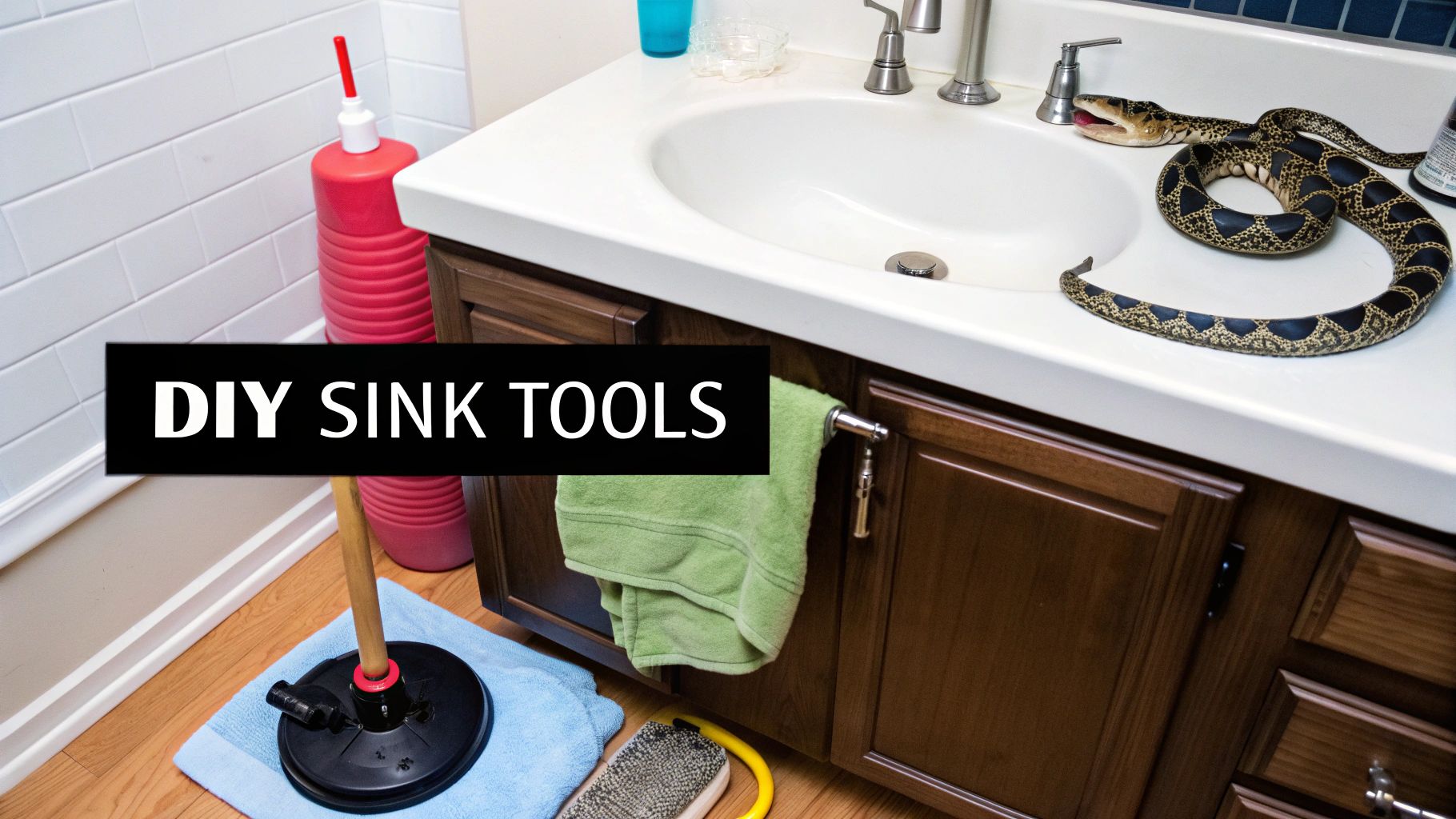
Right, so the boiling water and bicarb trick didn't cut it. When you're dealing with a really stubborn clog, it's time to roll up your sleeves and get a bit more hands-on with some basic plumbing tools.
These methods take a little more elbow grease, but they're often what’s needed for those more serious blockages. Before you dive in, I'd suggest grabbing some rubber gloves and laying down an old towel or a bucket. Trust me, things can get a bit splashy.
Your first port of call is usually the good old-fashioned plunger. The trick is to get a really solid, airtight seal. If you’ve got a double kitchen sink, you’ll need to block the drain on the other side with a wet cloth. For a bathroom sink, do the same for the overflow hole. Add enough water to the sink to cover the plunger's cup, then give it a few firm, sharp pumps to send a blast of pressure down the pipe and hopefully dislodge whatever's stuck.
Tackling the P-Trap
If the plunger doesn’t shift it, the blockage is probably lurking in the U-shaped pipe right under your sink. We call this the P-trap. Its main job is to hold a bit of water to stop nasty sewer smells from coming up into your house, but that bend is also the perfect place for gunk and debris to build up.
Clearing it out is pretty straightforward. First, stick a bucket directly underneath to catch the water and whatever else comes out. Then, using your hands or a pipe wrench, carefully loosen the two nuts holding the trap in place and gently remove it. Chances are, you'll be looking right at the source of your problem.
Give the P-trap a good clean out in another sink or with a hose outside. Once it's clear, just pop it back on, making sure you do the connectors up hand-tight to prevent any leaks. You’d be surprised how many sink blockages this one simple step solves. The process is quite similar for other drains around the house; we cover this in more detail in our guide on how to unblock a shower drain pipe.
Using a Plumber's Snake for Deeper Clogs
What if the clog is deeper down the line, past the P-trap? This is where a plumber's snake (or drain auger) comes in. It’s a flexible, coiled tool designed specifically to navigate the twists and turns of your pipes to reach those really deep-seated clogs.
With the P-trap off, you can feed the end of the snake into the pipe that goes into the wall. Push it in gently until you feel it hit some resistance – that's your blockage.
Now, you just need to turn the handle on the auger. This works the tip into the clog, either breaking it up or hooking onto it so you can pull it out. You might need to work it back and forth a few times. Once you feel the blockage give way or you've pulled out the gunk, slowly retract the snake. Put your pipes back together, and give the drain a good flush with hot water to clear out any leftover bits.
Using a drain snake is one of the most reliable ways to clear a stubborn clog without resorting to harsh chemicals. It physically removes the obstruction, offering a more permanent solution than simply dissolving a small path through it.
For many homeowners in places like Doncaster and across Melbourne's eastern suburbs, these hands-on methods provide a solid, lasting fix. If you’ve tried all this and the water is still not draining, the problem might be much further down your plumbing system. At that point, it’s probably time to bring in a professional for services like sewer relining.
Knowing When to Call a Professional Plumber
While having a go at a minor clog yourself can be incredibly satisfying, it’s just as important to know when to put the tools down. You need to recognise the warning signs that a blocked sink isn't the real problem, but just a symptom of something bigger. Sometimes, that slow-draining water is your plumbing’s way of flagging a serious issue deep in the pipes, and ignoring it can turn a small headache into a costly disaster.
If you feel like you’re clearing the same sink every few weeks, that’s a massive red flag. A clog that keeps coming back means your efforts are only poking a temporary hole in a much bigger obstruction—one that just keeps filling in again. It's often time to find a plumber who can perform a proper diagnosis.
Telltale Signs of a Deeper Plumbing Problem
There are a few classic signs that tell you the blockage is well beyond the reach of a plunger or a basic drain snake. When you notice these, it’s time to stop what you’re doing and get an expert on the phone.
Keep an eye (and an ear) out for these warning signs:
- Multiple Slow Drains: If the kitchen sink, the bathroom basin, and the shower are all draining like molasses, the problem isn’t isolated. This almost always points to a blockage in your main sewer line.
- Persistent Foul Odours: A nasty smell that just won't go away, no matter how much you clean, suggests that waste is trapped and decaying somewhere in your pipes. It’s often a sign of a serious blockage or even a venting issue.
- Gurgling Sounds: Hearing strange gurgles from your drains when you flush a toilet or run a tap? That’s the classic sound of trapped air being forced around a blockage in the system.
These issues are a daily reality for us across Melbourne, making blocked sinks one of the most common reasons for a call-out. In fact, the Australian plumbing services industry is estimated to hit AUD 22.2 billion in revenue in 2025, which really shows the constant demand for reliable maintenance and emergency fixes. This national trend is exactly what our business at Amari Plumbing is built on—providing fast, honest, and effective solutions for these exact problems. You can explore more insights into the Australian plumbing services market to get the full picture.
Why Professional Tools Make All the Difference
For homeowners in suburbs like Hawthorn or Templestowe, trying to DIY a main sewer line clog is a huge risk. You can easily make things much worse, either by pushing the blockage further down the pipe or, worse, damaging the pipe itself.
Professional Melbourne plumbers come armed with specialised equipment you just can't get at the local hardware store. For instance, a skilled roof plumber in Melbourne uses specific tools for their trade, just as we use advanced gear for drains.
High-pressure water jetting, for example, is a game-changer. It doesn't just punch a hole through a blockage—it completely scours the inside of the pipe, blasting away years of built-up grease, scale, and gunk. It's like a factory reset for your pipes, restoring them to perfect flow.
For the really tricky jobs, we use CCTV drain cameras to get a live feed from inside your pipes. This tech lets us see exactly what we're dealing with—tree roots, a collapsed section of pipe, or a severe build-up—without any guesswork. This is why it’s always better to call an expert for after-hours plumbing emergencies instead of risking more damage.
If you’re up against a stubborn blockage that just won’t budge, don't keep fighting it. Save yourself the stress, time, and the risk of a much bigger repair bill. For a fast, upfront quote and expert service anywhere in Melbourne's eastern suburbs, contact us today.
Need a Hand? Your Go-To Plumber for Blocked Drains in Melbourne
So, you’ve tried the DIY route, but that stubborn sink is still giving you grief. When it's time to call in the experts, you need a plumber in Melbourne who’s not only fast and reliable but also completely upfront with you.
That's where we come in. At Amari Plumbing and Gasfitting, we’ve built our reputation on being the team Melbourne homeowners trust, especially when a plumbing headache strikes. A blocked drain doesn’t stick to a 9-to-5 schedule, which is why we offer a genuine 24/7 service right across the eastern suburbs.
Our promise is simple: when you call, we answer, and we show up. We can be on-site in as little as 90 minutes, so you aren’t left staring at a blocked sink, wondering what to do next. Whether it's a kitchen sink full of greasy water in Camberwell or a gurgling bathroom drain in Kew, our team arrives ready to get things flowing again. Our team also includes specialists in gasfitting in Melbourne.
No Guesswork: Upfront Pricing and Guaranteed Quality
We're big believers in honest, clear communication, especially when it comes to pricing. Forget about watching the clock and worrying about surprise costs. For most common jobs, we’ll give you a fixed price right over the phone, so you know exactly what the job will cost before we even pick up a tool.
It’s an approach that’s becoming more common in the industry because it builds trust and ensures you get great value. You can even explore plumbing services data from the ATO to see how this fits with industry benchmarks.
Our customers have left us over 120 five-star Google reviews, and the feedback is consistent: they appreciate our professionalism, honesty, and clear communication. We don’t just fix the problem; we give you total peace of mind.
Our commitment to quality goes well beyond just unblocking your drain. We bring the latest tech to every job, whether it's for advanced pipe relining in Melbourne or using diagnostic tools to figure out why a blockage keeps coming back.
Every job we do is backed by a three-month workmanship warranty. Plus, we guarantee to leave your home just as clean as we found it. No mess, no fuss—just a job well done so you can get on with your day.
Ready for a reliable solution from a trusted Melbourne plumber? Contact us today for a free, no-obligation quote.
Got a Few More Questions About Your Blocked Sink?
Even after you've had a go at fixing it yourself, it's natural to have a few lingering questions. We get calls about this stuff all the time, so here are some straight-up answers to the most common queries we hear from homeowners around Melbourne. If you are looking for a plumber near me, we service all of the eastern suburbs.
Are Those Chemical Drain Cleaners a Good Idea?
Look, we’ll be blunt: we’re not fans of harsh chemical drain cleaners, and we strongly advise against them.
They might promise a quick fix, but those corrosive liquids can do a real number on your pipes, especially if you're in an older home with metal plumbing. Even some types of PVC can be damaged. On top of that, they’re a health risk and terrible for the environment.
The worst-case scenario? The chemical doesn't even clear the blockage. Now you've got a sink full of toxic, hazardous gunk that's dangerous for you and any plumber who has to come in and deal with it. Stick to the gentler, enzyme-based cleaners or the DIY methods we've covered. For anything more stubborn, getting it mechanically cleared by a pro is always the safest bet.
How Can I Stop My Kitchen Sink from Blocking Up Again?
When it comes to plumbing, prevention is always better (and cheaper!) than a cure. The best thing you can do is be a bit more mindful of what’s going down your drain in the first place.
- Never, ever pour fats, oils, or grease down the sink. Let that stuff solidify in an old jar or container and chuck it straight in the bin.
- Always use a sink strainer. It’s a simple little thing that catches a surprising amount of food scraps and other gunk.
- Scrape plates properly before you rinse them. The less food heading for your pipes, the better.
A great habit to get into is running the hot tap for a minute after you've done the dishes. This helps flush out any fresh grease before it has a chance to stick. A monthly flush with some bicarb soda and vinegar can also work wonders to keep things flowing freely. For larger scale issues, consider our commercial plumbing services.
Why Are All the Drains in My House Suddenly Slow?
If it's not just one sink, but the shower, the basin, and maybe even the toilet are all draining slowly, that's a big red flag. This usually points to a blockage in your main sewer line, which is a much more serious issue that no amount of DIY can solve.
The problem could be anything from sneaky tree roots that have worked their way into the pipe to a section of the line that has collapsed underground.
When you see multiple fixtures acting up at once, it's a sign of a system-wide problem, not just a simple clog. Trying to fix a main line issue yourself can backfire badly, potentially causing serious damage or even a sewage backup into your home.
This is when you need to call a professional Melbourne plumber immediately. At Amari Plumbing, we’d use a CCTV drain camera to get a clear look inside the pipe and pinpoint the exact cause. From there, we can sort it out properly, whether that means using a high-pressure water jetter or looking at a trenchless fix like sewer relining.
If you're dealing with a blockage that just won’t budge or a more complex plumbing headache, don't hesitate to get in touch. The team at Amari Plumbing and Gasfitting is ready to provide fast, reliable, and upfront-priced solutions right across Melbourne. For expert help from a local plumber in Balwyn you can trust, contact us today.