

That moment you turn on the hot tap and get nothing but a pathetic trickle? It’s more than just annoying—it’s a tell-tale sign that something’s wrong somewhere in your plumbing system.
Often, a sudden drop in hot water pressure comes down to something simple, like a valve that’s been partially knocked closed, a bit of gunk dislodged and causing a blockage, or a component like a tempering valve starting to fail. Let's walk through what might be happening and how you can figure it out.
Understanding the Sudden Drop in Hot Water Pressure
When your hot water pressure vanishes overnight, it’s easy to jump to the worst conclusion. But more often than not, the cause is much less dramatic. The first thing to figure out is whether the pressure dropped off suddenly or if it’s been getting weaker for months. A slow, gradual decline usually points to a build-up of minerals or sediment over time. A sudden drop, on the other hand, almost always means a single, specific failure just happened.
For homeowners in Melbourne, especially in areas like Balwyn or Doncaster, knowing the likely culprits can save a lot of guesswork and stress. It could be a minor issue you can spot yourself or something that needs a professional eye from a plumber in Melbourne.
Common Causes for Abrupt Pressure Loss
When the pressure suddenly plummets, it’s usually tied to one specific event or part failure. Here are the usual suspects a plumber in Balwyn sees on the job:
- Partially Closed Valves: It sounds too simple, but you'd be surprised how often the main shut-off valve on your hot water unit gets accidentally bumped or isn't opened all the way after a bit of maintenance. This is the first and easiest thing to check.
- Sediment and Debris: Have they been working on the water mains in your street recently? Even something as minor as changing a tap washer can stir up sediment in the pipes. This grit travels along and can easily clog up tap aerators, showerheads, or the small filters inside your valves, leading to blocked drains.
- Faulty Tempering Valve: This is a big one. The tempering valve is a critical safety device that mixes hot and cold water to a safe temperature (usually 50°C) before it reaches your taps, preventing scalding. If this valve gets blocked or fails, it can choke the flow of hot water completely.
- Air in the Lines: If your water has been turned off for any reason, air can get trapped inside the pipes when it's turned back on. This leads to that sputtering, inconsistent flow and a noticeable drop in pressure.
Here’s a key diagnostic tip: Compare the hot and cold water pressure at the same tap. If your cold water is blasting out just fine but the hot is weak, you can be almost certain the problem lies with your hot water system or the pipes leading from it.
Knowing whether the problem is house-wide or isolated to a single tap is the first major clue. It helps you narrow down the possibilities and decide on the next step. A professional plumber in Hawthorn can quickly diagnose these issues.
To help you get started, here's a quick checklist to run through.
Quick Diagnostic Checklist for Low Hot Water Pressure
Use this table to quickly identify potential causes based on common symptoms you might be experiencing in your home.
| Symptom | Most Likely Cause | What to Check First |
|---|---|---|
| Low hot pressure at only one tap | Clogged aerator or fixture | Unscrew the aerator from the tap spout and check for debris. Clean or replace it. |
| Low hot pressure at all taps (cold is fine) | Issue with the hot water system itself | Check that the shut-off valve on the hot water unit's inlet is fully open. |
| Both hot and cold pressure are low everywhere | Problem with the main water supply | Check your main water meter valve to ensure it's fully open. Ask neighbours if they have issues. |
| Hot water is sputtering and pressure is erratic | Air trapped in the pipes | Open the highest tap in your house and let it run for a few minutes to bleed the air. |
| Hot water is only lukewarm and the pressure is low | Faulty or blocked tempering valve | This is a job for a plumber. The valve likely needs to be cleaned, repaired, or replaced. |
This table should give you a solid starting point for your investigation.
For anything more complex than a clogged aerator or a half-closed valve, it's always safest and more effective to call in a professional. An experienced Melbourne plumber can diagnose the issue in minutes, whether it's an internal blockage, a failing valve, or something more serious with older pipes that might need pipe relining in Melbourne. If you’re stuck with a sudden loss of hot water, don't hesitate to contact a professional for fast, expert help.
A Practical DIY Diagnostic Checklist
Before you start worrying and searching for an emergency plumber in Melbourne, there are a few simple and safe checks you can run through yourself. Think of it as a process of elimination—we need to figure out if the problem is hitting just one tap or your whole house. By narrowing down the symptoms, you can often pinpoint (and sometimes even fix) the issue in minutes.
Start by Playing Detective at Your Taps
First things first, let's do a methodical check of the water flow around your home. Go to every single hot water tap—kitchen, bathroom sinks, the laundry tub, and the shower—and test them one by one.
The big question is: is the hot water pressure low everywhere, or is it isolated to just one or two spots?
- Problem at a Single Tap: If you find the low pressure is just at one faucet, the culprit is almost certainly a blockage right there at the fixture. This is actually good news, as it’s usually a pretty straightforward fix.
- Problem at All Taps: If every hot tap is dribbling out while the cold water is still blasting, the problem is happening at or very close to your hot water system.
This simple test immediately tells you where to focus your energy next. It stops you from chasing phantom problems all over the house.
Check the Obvious Culprits First
Once you know the scope of the problem, you can start investigating the usual suspects. Always start with the easiest potential fixes.
For a single faulty tap:
More often than not, the issue is a clogged aerator. That’s the little screw-on filter at the very tip of your tap's spout. Over time, it gets gummed up with tiny bits of sediment and mineral scale, which chokes the water flow.
Just unscrew the aerator. You might need a pair of pliers wrapped in a cloth to avoid scratching the chrome finish. Take it apart and give the little mesh screen a proper rinse. You’ll probably be surprised by how much grit and gunk comes out.
For a weak shower:
It's the exact same principle for your showerhead. Those tiny nozzles are magnets for mineral deposits, which is a common headache in many Melbourne suburbs. Unscrew the showerhead and give it a good clean. A great trick is to soak it in a bowl of vinegar for an hour or so—it works wonders at dissolving stubborn calcium buildup. If the water pressure from the pipe is strong without the head on, you’ve found your problem. A plumber in Camberwell can also assist with these types of repairs.
A quick tip from the field: when a tap or shower is blocked, try giving the fixture a few gentle taps with the handle of a screwdriver while the water is running. Sometimes, that's all it takes to dislodge a small piece of debris and instantly get your pressure back.
Inspecting Your Hot Water Unit
If every hot tap in the house is struggling, it's time to go look at your hot water system. The very first thing to check is the main isolation valve on the cold water inlet pipe. This is the valve that lets cold water into your tank to get heated.
Make sure this valve is fully open. It's surprisingly common for it to get knocked and left partially closed, which effectively starves the entire system and kills your hot water pressure. For a ball valve, the handle should be parallel with the pipe. For a round, tap-style gate valve, it should be turned as far counter-clockwise as it can go.
Even if these DIY steps don't solve the problem, they give you crucial information. If you've tried all this and the pressure is still low, you now know the issue is likely inside the unit or somewhere in the pipework. Knowing exactly how to test water pressure at home can give you a baseline reading and helps you explain the situation clearly when you call a professional. For anything beyond these simple checks, it's time to call a licensed Melbourne plumber to diagnose the fault safely.
Diving Deeper: Common Issues Inside Your Hot Water System
So, you've checked all the taps and tinkered with the valves, but your hot water is still just a trickle? If you've run through the DIY list and come up empty, it's a strong sign the problem lies within the hot water system itself.
At this point, we're moving past simple fixes and into territory that really needs a licensed plumber. These internal faults are incredibly common, especially in older units, but knowing what might be going on can give you a clearer picture of the situation.
This simple flowchart can help you visualise the diagnostic process.
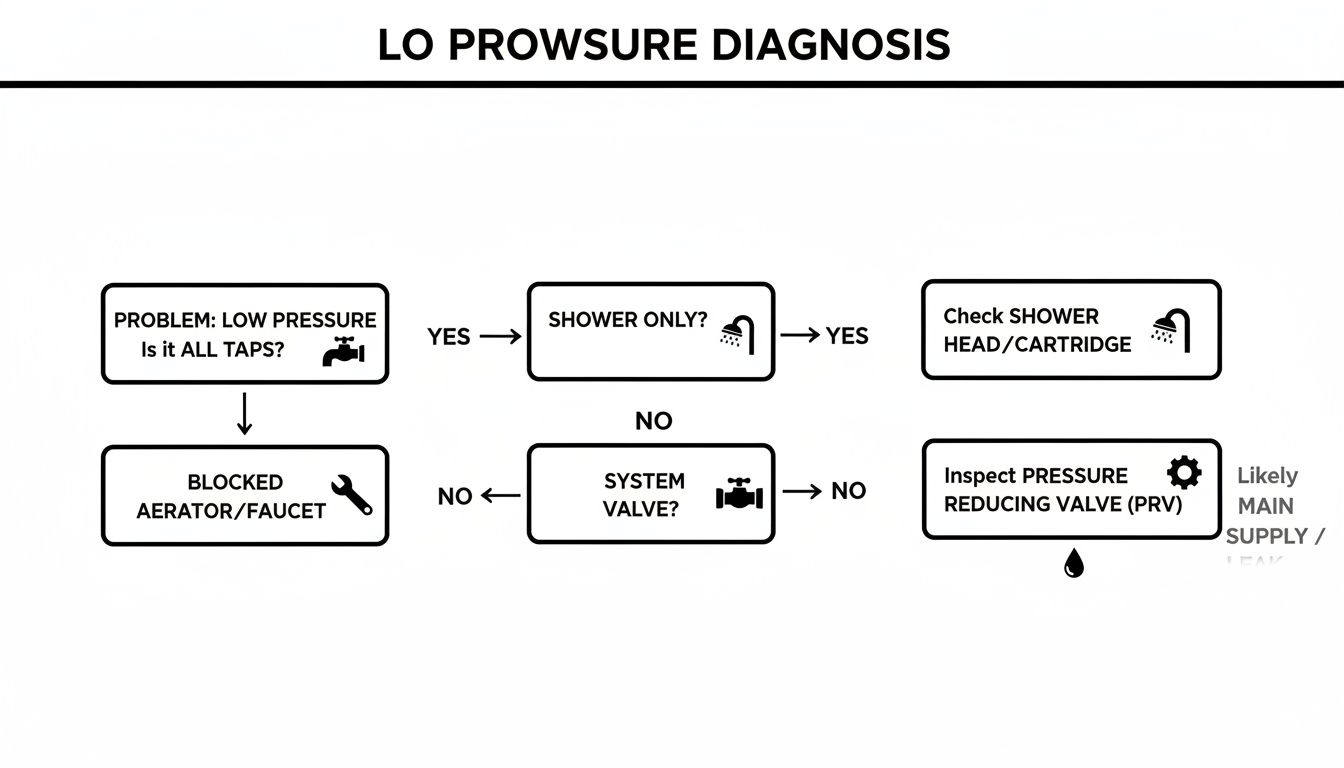
The main takeaway here is pretty clear: figuring out if the issue is at one tap or all of them is the most important first step you can take. If you need assistance, a plumber near me can help.
Mineral and Sediment Buildup
It's a bit of a grim thought, but over the years, your storage tank hot water system collects a surprising amount of gunk. We're talking a sludge made of sand, rust particles, and minerals like calcium and magnesium that are naturally found in Melbourne's water supply.
As this layer of sediment builds up, it can start to choke off the outlet pipe where hot water leaves the tank. It’s like a mini-dam forming right inside your heater, restricting the flow and leading to that weak, disappointing stream at your taps. A professional can flush the tank to clear this out, which not only boosts your pressure but can also add years to the unit's life.
Failing Tempering Valves
Your hot water system has a critical safety device called a tempering valve. Its job is to mix the scorching hot water from the tank with cold water to ensure what comes out of your taps is a safe and steady 50°C.
Like any mechanical part, these valves wear out. They can get stuck or clogged with scale and debris over time. When one fails, it often gets jammed in a partially closed position, effectively strangling the hot water supply to your entire home. Honestly, this is one of the most frequent reasons we get called out for low hot water pressure. It’s a job that absolutely requires a licensed pro to test and replace the valve.
Internal Corrosion and Pipe Blockages
Age is never kind to a hot water system. As units get older, internal corrosion can become a real problem. There are sacrificial anodes inside the tank designed to prevent this, but they have a finite lifespan and need to be replaced every few years.
Once corrosion takes hold, tiny flakes of rust can break off and get swept into your hot water lines, creating blockages in valves, showerheads, and taps. In really bad cases, the internal dip tube—which pushes cold water to the bottom of the tank for heating—can fall apart, messing with the whole heating cycle and your pressure. This can sometimes lead to the need for sewer relining.
If you suspect an internal fault, it’s vital to get a professional diagnosis. Trying to fix these issues yourself isn't just risky; it can cause even more damage. For a closer look at what could be going wrong, have a read of our guide on what to do when your hot water system is not working.
When It’s Time to Call an Emergency Plumber in Melbourne
While a slow, gradual drop in hot water pressure is a pain, some situations go from annoying to a full-blown emergency in the blink of an eye. Knowing what to look for is the key to protecting your home from serious water damage and keeping your family safe.
If you spot certain red flags, it’s time to put down the tools. This is no longer a DIY job – your first and only call should be to a professional.
A sudden, complete loss of hot water is a big one. If that happens and you also hear loud banging, rumbling, or whistling coming from the tank, you could be dealing with a critical internal failure. Those noises often point to overheating or a dangerous build-up of pressure.
Critical Signs Demanding Immediate Action
Strange noises are just the start. There are other tell-tale signs that you need a professional on the phone, stat. Don't waste a second if you notice any of these:
- Visible Leaks or Pooling Water: Any water coming from the tank, its valves, or the pipes connected to it is a serious problem. What looks like a small drip can quickly become a flood, causing thousands of dollars in damage to your floors, walls, and even your home’s foundation.
- The Smell of Gas: If you have a gas hot water system and get that distinct "rotten egg" smell anywhere near it, this is a top-tier emergency. If you feel confident doing so, shut off the gas supply at the meter immediately and call for help. A potential gas leak is a job for an expert gasfitting Melbourne specialist, no exceptions.
- Discoloured or Rusty Water: Has your hot water suddenly turned brown or rusty? That's a classic sign of advanced corrosion inside the tank. It means the structural integrity is shot, and the unit could be on the verge of a catastrophic failure.
Trying to fix a hot water system that's leaking, smelling of gas, or making loud noises is incredibly risky. These aren't just minor repairs; they're warning signs of a system under extreme stress. A licensed plumber in Melbourne has the proper tools and training to find the fault safely and prevent a disaster.
Why You Must Call a Professional
In these emergency situations, the potential for harm is massive. Water and electricity are a lethal mix, and the consequences of a gas leak can be devastating.
The team at Amari Plumbing provides a rapid response for exactly these kinds of urgent problems, because we know a burst tank or a gas fault simply can’t wait. We also offer services like commercial plumbing for businesses in need.
As emergency plumbers in Melbourne, we have the right gear and expertise to handle these critical failures safely and get things under control fast. If you’re seeing any of these warning signs, don’t hesitate. Protect your home and your family by getting expert help straight away. For urgent assistance, contact us 24/7.
How a Professional Installation Prevents Future Headaches
You’d think low hot water pressure is a problem reserved for old, clapped-out systems, right? Wrong. A brand-new unit can give you the same grief if it’s not installed properly from day one. Getting a professional on the job is your best defence against weak flow down the track.
A good plumber does a lot more than just connect a few pipes. They’ll actually size up your home's entire plumbing setup. They check if your existing pipes are wide enough to handle the new system's capacity and your family's daily needs. If the pipes are too narrow, it creates a bottleneck. It doesn’t matter how good your new heater is; the water just can't get through fast enough.
The Devil Is Always in the Details
It’s often the small, overlooked parts that cause the biggest dramas when they’re installed or set incorrectly. A licensed plumber knows these components are critical.
- Tempering Valves: These are non-negotiable. They have to be calibrated perfectly to mix hot and cold water to the legally mandated 50°C. If the valve is set wrong, or worse, a cheap and nasty one is used, it’ll choke the flow and kill your pressure instantly.
- Pressure Relief Lines: These are safety lines, plain and simple. But if they're installed with too many tight bends or in a clumsy way, they can accidentally lower the system's normal operating pressure.
- Shut-off Valves: It's a classic mistake. Using the wrong type of valve or just not opening it fully after the job is done can cause an immediate pressure drop. Sometimes debris gets caught in there during the install, too.
A proper installation by a Melbourne plumber who’s up-to-date with local rules ensures all these little things are spot on, setting you up for years of trouble-free hot water.
Why Compliant, Quality Work Matters So Much
Honestly, getting the installation right is so important. A huge number of problems we see with new systems come straight back to a shoddy install.
Research in Australia has pointed the finger directly at poor installation quality—things like incorrect pipework, missing insulation, and badly set valves—as a major reason for maintenance call-outs. One study even found that a whopping 33% of people with newer systems had problems, and a lot of them were traced back to how the unit was first put in.
This is why getting a licensed plumber who lives and breathes the Victorian standards like AS/NZS 3500 isn't just a recommendation; it's essential if you want reliable hot water.
Think of a professional installation as an investment in prevention. It costs way less to get it done right the first time than to pay for call-outs to fix problems that should never have happened in the first place.
Keeping the Pressure Up with Regular Maintenance
Once your system is installed correctly, a bit of routine maintenance is all it takes to keep that pressure strong. Over time, sediment and gunk will build up in the bottom of the tank—it’s just unavoidable.
Getting a plumber to flush the tank every year or two clears all that sludge out before it has a chance to clog the outlet pipes and restrict the flow.
This simple bit of upkeep stops that slow, gradual pressure drop that so many older units suffer from and can seriously extend the life of your system. To get a better idea of what a new, professionally installed system might set you back, take a look at our guide on hot water system installation costs.
If you want to avoid future headaches with hot water pressure low, the smartest thing you can do is start with a quality installation and stick to a simple maintenance schedule.
Answering Your Questions About Low Hot Water Pressure
Even after walking through the usual suspects, it's normal to have a few more questions. We get it. Here are the answers to the queries we hear most often from homeowners around Melbourne, giving you a clearer picture of what's going on and what to expect.
Why Is My Cold Water Pressure Fine but Hot Is Low?
Ah, the classic plumbing mystery. When this happens, it’s a massive clue that the problem is almost certainly located somewhere within your hot water system or the pipes leading from it.
Think of it like this: your cold water has a clear, direct path from the street to your tap. The hot water, however, has to take a detour through your heater. If it's hitting a bottleneck there, the cold water pressure will stay strong while your hot water turns into a trickle.
The usual culprits we find are:
- A mountain of sediment building up inside the tank, physically blocking the hot water outlet pipe.
- A faulty or completely clogged tempering valve that’s strangling the flow.
- Nasty corrosion or other blockages that have built up inside the hot water pipes over the years.
Can a Water-Saving Showerhead Cause Low Pressure?
It can certainly feel that way. Water-saving showerheads are designed to reduce the volume of water you use, but they don't actually lower the pressure pushing it.
So, if your pressure was great one day and terrible the next, the showerhead itself is probably the culprit—but not because it's faulty. It's likely just clogged. Mineral deposits and tiny bits of grit can easily block up those small nozzles.
Before you start worrying about a bigger issue, try unscrewing the showerhead and giving it a good clean. A long soak in a bowl of vinegar usually does the trick, dissolving the gunk and getting things flowing freely again.
How Much Does It Cost to Fix Low Water Pressure?
This is the big question, and the answer really depends on what’s causing the trouble. The cost to fix low hot water pressure in Melbourne can range from nothing at all to a significant investment. A simple DIY job like cleaning a clogged tap aerator will only cost you a few minutes.
But if you need a licensed plumber in Kew or a plumber in Hawthorn to come out, the costs change. Replacing a faulty valve might set you back a few hundred dollars. If the diagnosis is a completely failed hot water unit that needs replacing, you're obviously looking at a much higher cost.
Here at Amari Plumbing and Gasfitting, we don’t do guesswork. We believe in total transparency, which is why we provide upfront, fixed pricing for most jobs. You’ll know the full cost before we even pick up a tool. If you’re fed up with that frustrating trickle, get in touch with us for an honest assessment and a fast, professional fix.