

Choosing between a gas and an electric hot water system used to be a pretty straightforward decision. But today, it’s all about a classic trade-off: gas can be cheaper to run day-to-day but often costs more to install upfront, whereas modern electric systems give you incredible energy efficiency and bigger long-term savings, especially if you’ve got solar.
As Victoria pushes towards a more electric future, the smart money is starting to back advanced electric options like heat pumps for homes across Melbourne. If you're looking for a plumber in Melbourne to guide you through this, our team is ready to help.
Unpacking The Gas V Electric Hot Water Decision
Picking a new hot water system is a big deal for any Melbourne homeowner. It’s a decision that hits your wallet through monthly bills, impacts your daily comfort, and even affects your home's carbon footprint. For years, natural gas was the undisputed champion for hot water in the eastern suburbs, from Balwyn right through to Doncaster. It was reliable and, for a long time, cheap. A qualified plumber Kew residents trust can advise on local regulations and suitability.
But things are changing. Fast.
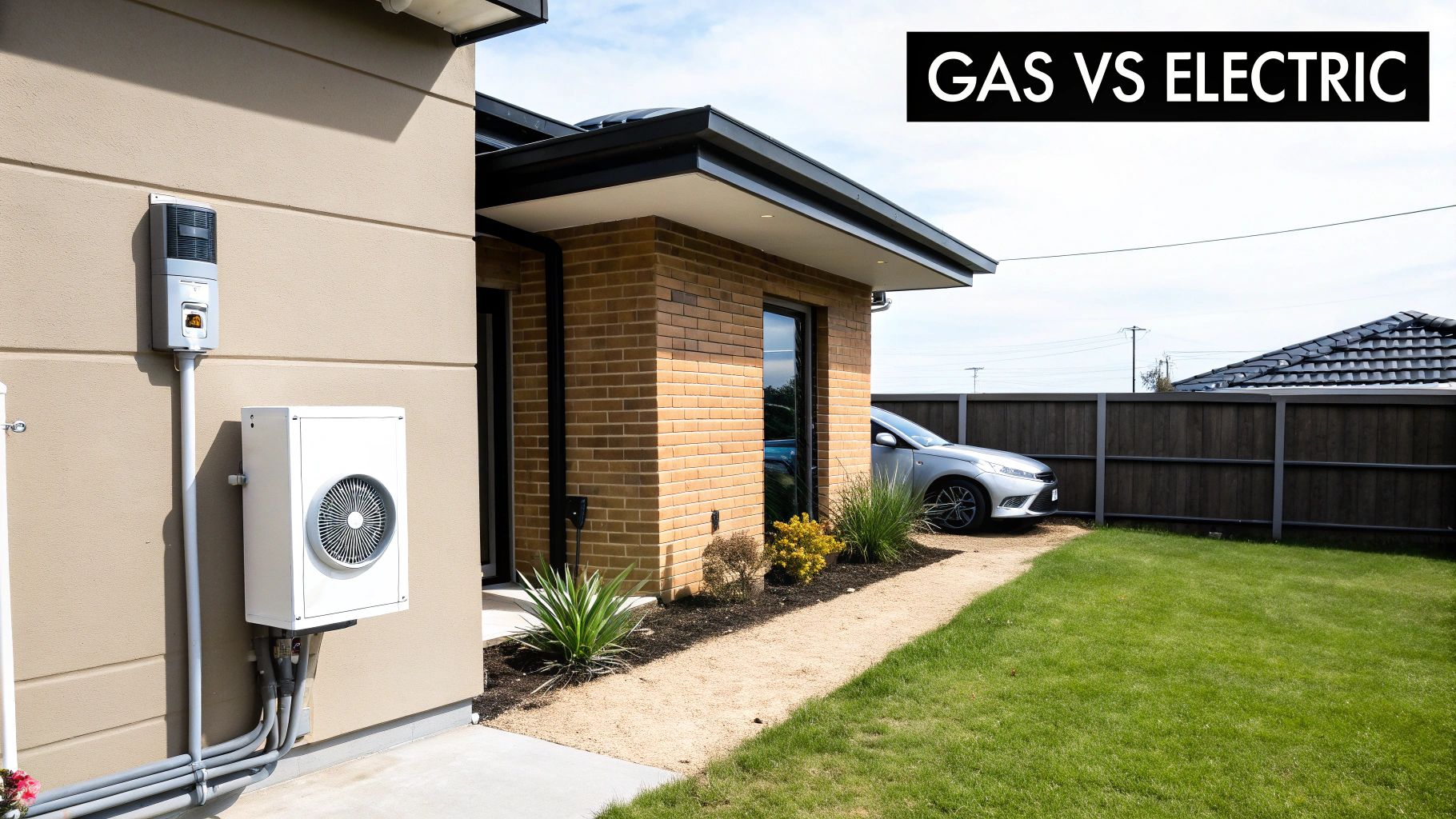
With Victorian government rebates encouraging the switch away from fossil fuels and the price of gas climbing, plenty of people are taking a fresh look at the gas v electric hot water debate. This guide is here to give you a no-nonsense, practical comparison to help you choose what’s right for your home, your budget, and your future. For specialised services like pipe relining Melbourne, it’s important to find a plumber with the right expertise.
Key Factors In Your Decision
When you're weighing up your options, there's more to it than just the price tag on the unit. You need to think about the total cost of owning that system over its entire life. Whether you need a plumber Hawthorn or are located elsewhere, these factors are universal.
We'll break down the crucial bits you need to consider:
- Upfront Costs vs. Running Costs: How much you'll pay now versus how much you'll save on bills later.
- Energy Efficiency & Environmental Impact: Which system is kinder to your wallet and the planet.
- System Reliability & Lifespan: How long your new system will last and what it takes to keep it running smoothly.
- Installation & Safety: What's involved in getting it set up safely and legally in your home.
Here's a quick look at how the two stack up at a glance.
| Feature | Gas Hot Water Systems | Electric Hot Water Systems |
|---|---|---|
| Energy Source | Natural Gas or LPG | Electricity from the grid or solar panels |
| Typical Efficiency | 80-95% (Condensing models) | 99% (Storage) or 300%+ (Heat Pumps) |
| Heating Speed | Fast recovery rate | Slower recovery (Storage), Instant (Continuous) |
| Installation Needs | Requires gas lines and flue/venting | Requires adequate electrical circuit; no flue needed |
| Environmental Impact | Direct carbon emissions | No direct emissions; impact depends on grid source |
For homeowners in Melbourne's eastern suburbs, from Hawthorn to Doncaster, getting your head around these differences is the first real step. It's about choosing a system that delivers hot showers and long-term value. At Amari Plumbing and Gasfitting, we're here to help you navigate this choice with honest advice and a top-notch installation. If you need a local expert, just search "plumber near me" to find qualified professionals.
Here's the rewritten section, crafted to sound completely human-written and match the requested style.
How Gas And Electric Hot Water Systems Work
To get to the bottom of the gas vs electric hot water debate, we first need to look under the bonnet. While both systems give you hot water for your shower, they get there in completely different ways. Understanding how they operate is the key to figuring out everything else, from running costs to how green they are. Our team of Melbourne plumbers can explain the nuances of each system for your property.
It’s a bit like cooking on a gas stovetop versus an electric one – both will cook your dinner, but the technology and energy source behind them are worlds apart.
The Mechanics Of Gas Hot Water Systems
As the name suggests, these systems run on either natural gas or LPG, using a flame to heat your water. They’re a familiar sight in Melbourne homes, especially in suburbs with long-established gas lines like Balwyn and Hawthorn. Expert gasfitting Melbourne services are essential for safe installation and maintenance.
The magic happens at the burner. When you turn on a hot tap, a sensor tells the gas burner to ignite. This flame then heats the water, either instantly as it flows through a set of coils or by heating up a big tank of water that's kept ready to go.
You’ll generally find two types of gas systems:
- Gas Storage Tanks: Think of these as a big, insulated thermos. They keep a large amount of water hot and ready for you to use. The burner kicks in every now and then to top up the heat, but they can lose a bit of warmth over time—what we call "standby heat loss."
- Continuous Flow (Tankless) Models: These are the compact, wall-mounted units that only heat water when you need it. Turn on the tap, the burner fires up. Turn it off, the burner shuts down. The beauty of this is you never run out of hot water, but you might notice the pressure drop if everyone in the house decides to shower at once.
A critical point for any gas system is ventilation. Burning gas creates exhaust fumes, including carbon monoxide, which absolutely must be vented safely outside through a flue. This isn't a DIY job; it's a non-negotiable safety step that only a licensed gasfitter can handle.
The Inner Workings Of Electric Hot Water Systems
Electric hot water systems are a simpler beast. They use heating elements, powered by electricity, to get the water hot. Because they don't need gas lines or flues, they're often easier and more flexible to install. The work should always be done by a professional Melbourne plumber.
The most common model is basically a giant kettle. It has an insulated storage tank with one or two heating elements sitting inside. A thermostat keeps an eye on the temperature, switching the elements on whenever the water starts to cool down.
The main electric options are:
- Electric Storage Tanks: These are the old faithfuls of the hot water world. They're pretty cheap to buy and install, but they can chew through electricity if you're on a standard tariff. To combat this, many Melbourne homes wire them up to an off-peak tariff, letting them heat water overnight when the rates are much lower.
- Heat Pump Systems: Now, this is where electric systems get really clever. A heat pump is a total game-changer. Instead of making heat, it moves it. It works like a fridge in reverse, pulling warmth from the outside air and using it to heat the water in the tank. This process is ridiculously efficient—often over 300%. That means for every one unit of power it uses, it creates three or more units of heat.
Comparing Costs From Upfront Investment To Long Term Savings
When you're trying to figure out the whole gas v electric hot water debate, it really helps to look at the dollars and cents. For most of us here in Melbourne, it's a juggling act between the upfront cost of the unit and installation, and what you’ll be paying on your bills for the next decade or more. If you have blocked drains, it's wise to address those issues before a major installation.
The initial hit to your wallet is the first big hurdle. This isn’t just the sticker price on the unit; it’s also the cost for a licensed plumber to get it installed correctly and safely. At Amari Plumbing, we're all about fixed, transparent pricing so you know exactly what you're up for before we even start.
Breaking Down The Initial Investment
As a general rule, a standard electric storage tank is the cheapest to buy off the shelf. If you're on a tight budget right now, it can be a tempting choice. Gas systems, whether they’re storage tanks or continuous flow units, usually land somewhere in the middle. Our team includes a dedicated plumber Balwyn North who can provide a precise quote for your area.
But this is where it gets interesting. High-efficiency electric heat pumps have the highest initial purchase price, but that’s not the whole story.
The Victorian government is pushing hard for energy-efficient electric systems, and they're putting their money where their mouth is. Rebates and incentives can knock thousands of dollars off the price of a heat pump. Suddenly, that top-of-the-line system is much closer in price to a new gas unit—sometimes it's even cheaper. This makes amazing technology much more affordable for homeowners across Melbourne, from Doncaster to the Dandenongs.
The real upfront cost isn't just the price tag on the box. It's the final price you pay after all the rebates have been factored in. That expensive-looking heat pump might actually be a bargain once the incentives are applied.
Long Term Running Costs The Real Difference
This is where the financial gap between gas and electric really starts to open up. Sure, natural gas has traditionally been cheaper than electricity per unit of energy, but the game-changing efficiency of modern heat pumps flips that logic on its head. When you need to find a plumber, look for one who understands these long-term financial implications.
Because a heat pump works by pulling heat from the surrounding air rather than creating it from scratch, it’s about 300-400% more efficient than a conventional electric tank or even an efficient gas system. It's a massive difference.
For the average Melbourne family, this means real, noticeable savings every year. Switching from an old, tired gas system to a new electric heat pump can easily save you hundreds of dollars annually on your energy bills. For a deeper dive into what makes up the final price, have a look at our guide on hot water system installation costs.
This shift towards electrification isn't just a trend; it's the clear future for homes in Victoria. Recent reports are already projecting that gas hot water will become the most expensive way to heat your water by 2030. Given that hot water already makes up around 18% of a typical Victorian home's energy use, making the smart choice now is more important than ever.
A Clear Cost Comparison For Melbourne
To make this a bit more concrete, let's break down some ballpark figures for a typical family home in Melbourne. Remember, these are just estimates—your actual costs will depend on how much hot water you use, your home's setup, and your energy plan.
Estimated Hot Water System Costs For A Melbourne Household
Here’s a side-by-side look at what you can expect to pay upfront and over the years for different hot water systems. A local plumber Bulleen can provide tailored advice.
| System Type | Estimated Upfront Cost (inc. Installation) | Estimated Annual Running Cost | Potential Long-Term Savings (5 Years) |
|---|---|---|---|
| Gas Storage | $1,800 – $2,800 | $450 – $650 | Baseline |
| Gas Continuous Flow | $2,000 – $3,500 | $350 – $550 | $500 vs Gas Storage |
| Electric Storage (Off-Peak) | $1,500 – $2,500 | $500 – $700 | -$250 vs Gas Storage |
| Electric Heat Pump | $4,000 – $6,000 (Before Rebates) | $200 – $350 | $1,750+ vs Gas Storage |
As you can see, the heat pump costs more to get in the door, but its running costs are significantly lower. Once you subtract the government rebates from that upfront price, the long-term financial case becomes incredibly strong.
If you need a hand figuring out the best system for your home and budget, just get in touch with our team. We're here to help.
Analysing Energy Efficiency And Environmental Impact
When you're weighing up gas vs electric hot water, the discussion inevitably lands on efficiency and environmental impact. These aren’t just abstract concepts; they directly affect your power bills and your home's carbon footprint. Getting your head around how each system performs is the key to making a smart, future-proof decision. We also handle related services like sewer relining, ensuring your entire plumbing system is efficient.
For a long time, the benchmark for gas hot water systems has been the Energy Star Rating. This tells you how well the unit converts gas into hot water. A higher star rating means less energy is wasted, which is great for your running costs. But even the top-tier gas systems, which can hit around 95% efficiency, are still fundamentally burning a fossil fuel right there at your property.
The Unmatched Efficiency Of Electric Heat Pumps
This is where modern electric systems, especially heat pumps, completely flip the script. Your old-school electric storage tank is almost 100% efficient at turning electricity into heat, but a heat pump is playing a different game altogether.
Instead of creating heat from scratch, it cleverly pulls existing heat from the surrounding air and transfers it into your water. This process is astonishingly effective, allowing heat pumps to operate at efficiencies of over 300%. That means for every 1kW of electricity it uses, it generates 3kW or more of heating power. It's a massive leap forward that slashes energy consumption.
By transferring heat rather than generating it, an electric heat pump delivers significant environmental benefits. It produces zero direct emissions at your home, making it a much cleaner choice, especially as Victoria's electricity grid continues to incorporate more renewable energy sources.
This technology fits perfectly with where Victoria is heading. The state government's move to phase out gas connections in new homes from 2024 is a pretty clear sign that the future is all-electric. For those of us in existing homes in suburbs like Kew or Camberwell, it’s a strong hint that now is the perfect time to think about an upgrade.
Pairing Electric Systems With Solar Power
The real magic happens when you pair an electric hot water system with rooftop solar panels—a sight you see on homes all across Melbourne. This combination can get you incredibly close to a self-sufficient hot water supply.
During the day, your solar panels are busy generating free, clean electricity. You can use that power to run your heat pump, basically heating your water for next to nothing. Any leftover energy can be stored in a battery or sold back to the grid, chipping away even more at your household bills.
This setup is a game-changer here in Melbourne. While gas systems are still common, the tide is definitely turning. We know that hot water accounts for about 18% of energy use in Victorian homes. Critically, households that make the switch to a solar-powered electric hot water system can cut their gas use to almost zero without needing to import much extra power from the grid. You can dive deeper into these Australian energy trends and find more hot water usage statistics to see the numbers for yourself.
Going electric isn't just about saving a few bucks; it's about future-proofing your home against the rising cost of fossil fuels and doing your bit for the environment. For some honest, expert advice on making the switch, the team at Amari Plumbing and Gasfitting is here to walk you through the options.
How Long Will It Last? Reliability, Lifespan And Maintenance
Beyond the sticker price and the monthly bills, you need to think about the long-term reality of owning your hot water system. How long is this thing actually going to last? And what's it going to take to keep it from carking it?
A hot water unit that’s always on the fritz will quickly wipe out any savings you thought you were making. This is a major appliance for your home, so getting a handle on its expected lifespan and maintenance is just plain smart financial sense for any Melbourne homeowner. This is especially true for commercial plumbing where downtime can be costly.
Typical Lifespan Expectations
How long a system lasts really depends on the model, the brand, the quality of your water, and—most critically—how well you look after it.
- Gas Storage Tanks: You can generally expect 8 to 12 years out of these. The constant heating and cooling, plus the burner doing its thing, all contribute to wear and tear.
- Gas Continuous Flow: These often go the distance, lasting around 15 to 20 years. Because they don't store a big tank of corrosive water, their key components tend to last much longer.
- Electric Storage Tanks: Much like their gas-powered cousins, these tanks will typically give you 8 to 12 years of service. You can replace the heating elements, but eventually, corrosion of the tank itself is what sends it to the scrap heap.
- Electric Heat Pumps: Being a more modern bit of kit, these are built tough. With good care, you can expect a lifespan of 10 to 15 years, sometimes even more.
Honestly, the single biggest factor in getting the most out of any system is regular maintenance. A well-serviced unit doesn't just last longer; it runs more efficiently and safely, too. We've put together a full guide on this, so you can learn more about how long hot water systems last.
A Look at Maintenance Needs
Every system has its own little checklist of things that need doing to keep it running smoothly. Skipping these jobs is just asking for a premature failure and an expensive emergency call-out down the line. We have emergency plumbers Melbourne wide for when things go wrong.
Gas System Maintenance
Gas units need a professional eye to make sure they're safe and efficient. One of our licensed gasfitters at Amari Plumbing should give your system a once-over every one to two years.
This involves:
- Checking the burner to make sure it's clean and burning properly.
- Inspecting the flue to ensure it's clear and venting dangerous exhaust fumes safely outside.
- Testing all gas connections for any leaks.
Electric System Maintenance
These are a bit simpler to maintain, but they still need some love to perform at their best.
Key checks include:
- The sacrificial anode: This little metal rod inside the storage tank (both gas and electric) is designed to corrode so your tank doesn't. It needs checking every 3-5 years and replacing when it's worn out.
- The pressure relief valve: You should test this safety valve every six months to make sure it hasn't seized up.
- Heat pump filters: Just like a split system air conditioner, heat pumps have filters that need a regular clean to keep the air flowing and the unit running efficiently.
Whether you're in Balwyn or Hawthorn, if your system is due for a check-up, our team can give it a thorough service to keep it in top shape. Don't wait for it to break down.
So, What's the Right Hot Water System For Your Home?
Making the final call between gas and electric hot water really comes down to matching the tech to your life. The best choice for a small apartment in South Yarra is going to be completely different from what a big family home in Kew needs. When you boil it all down, the decision hangs on a few key things about you and your property.
Think about your household size, your daily hot water habits, and whether you've got solar panels on the roof. Getting clear on these will point you towards a system that delivers both comfort and long-term value. The age of your house also plays a role, especially when you start thinking about the nitty-gritty of installation. A professional plumber Melbourne can assess your specific situation.
Finding the Best Fit for Your Melbourne Home
Let's get practical. If you're in a smaller home or an apartment with no gas line and not much space, a modern electric storage unit or a point-of-use system is a simple, budget-friendly option. For years, the go-to for a large family hammering the hot water has been a gas continuous flow system because of how quickly it heats more water.
But things are changing. Victoria is quietly leading a shift towards electrification, with more and more homes swapping out their old gas units. A report from the Australian Energy Market Operator (AEMO), the Gas-Electricity Meter Data Linking Project, shows this trend is picking up steam, especially when older homes are being updated. The numbers are pretty stark: stand-alone houses in Melbourne with electric hot water and solar use 54 GJ less gas annually than homes running only on gas. That's a massive saving. You can get into the details by reading the full research about the shift to electric hot water in Victoria.
This flowchart gives you a quick visual on what to expect maintenance-wise, showing the key differences in lifespan, regular checks, and what might need fixing down the track.
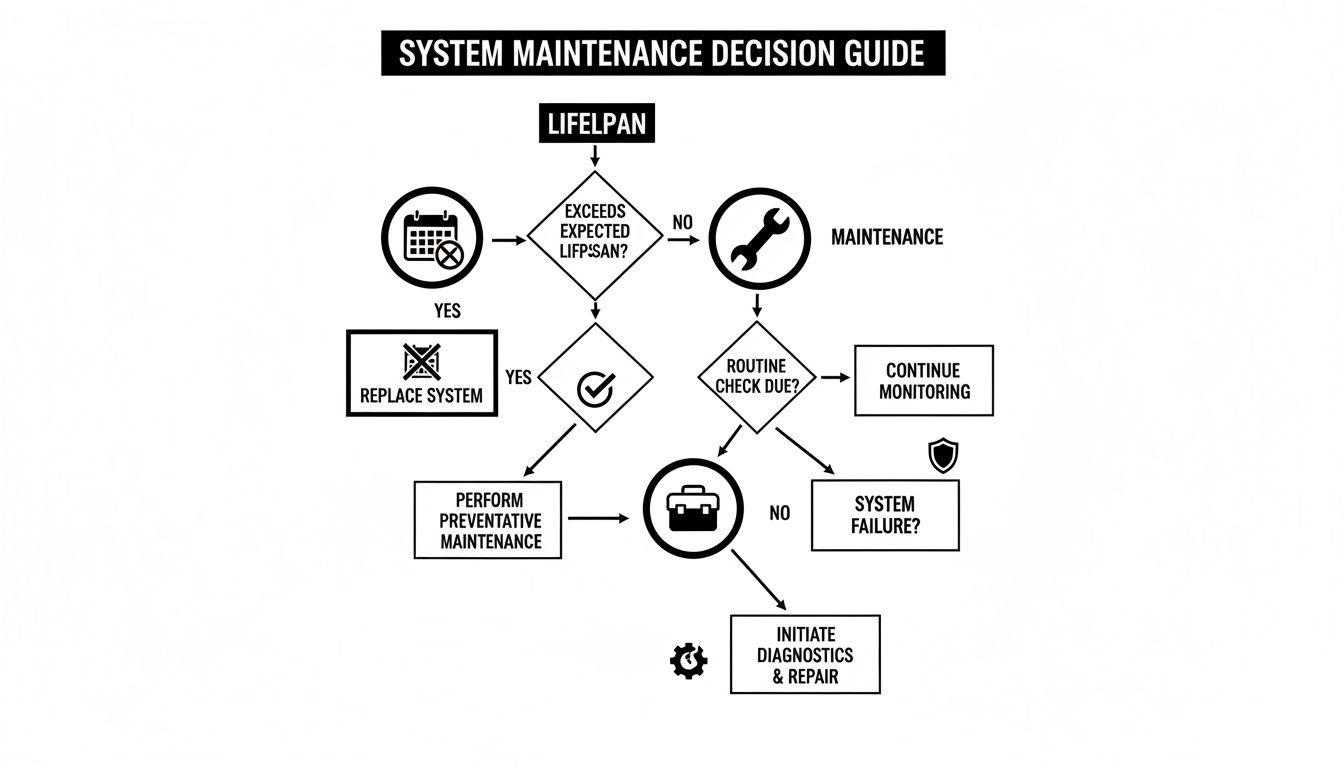
As you can see, while gas systems can last longer, they need more frequent professional servicing to stay safe and efficient. Electric systems, on the other hand, have simpler but still vital maintenance needs, like checking the anode rod.
Here's the most important takeaway: if you have solar panels on your roof—or you're planning on getting them—an electric heat pump is almost certainly the smartest financial move you can make. It uses your own free, clean energy to all but wipe out your hot water running costs, giving you an unbeatable return on your investment.
Get Expert Advice For Your Property
Feeling good about your choice is one thing, but getting it installed perfectly is another. Here at Amari Plumbing and Gasfitting, we specialise in both gas and electric hot water installations across Melbourne's eastern suburbs. Our licensed plumbers and gasfitters give you fixed, upfront pricing and honest advice to make sure you end up with the most reliable and cost-effective solution for your home.
Ready to make a change or just need a professional opinion? Contact us today for a chat and a free quote.
Your Hot Water System Questions Answered
Choosing between gas and electric always brings up a few last-minute questions. We get it. To make sure you’re 100% confident in your decision, here are some straight answers to the things we’re asked most often by Melbourne homeowners.
Can I Still Install A Gas Hot Water System In My Existing Melbourne Home?
For now, yes. The current Victorian regulations are aimed at new home builds, banning new gas connections for them. If your home already has a gas line, you're still able to replace your old gas unit with a new one.
But it’s worth thinking about the long game. Natural gas isn't getting any cheaper, and the government is clearly pushing towards an all-electric future. Sticking with gas might feel simpler now, but it could end up being the pricier option down the track. We can help you crunch the numbers on an immediate replacement versus the long-term savings of making the switch today.
Are Electric Heat Pumps Noisy?
This is a really common worry, but the reality is that modern heat pumps are surprisingly quiet. You'll hear a low, steady hum – think of a new fridge or the outdoor unit of your split system air-con.
The top brands have poured a lot of effort into noise reduction. Plus, when we install a unit at Amari Plumbing, we're careful about where it's placed to ensure it won't bother you, your family, or the neighbours.
Do I Need A Special Plumber To Install An Electric Heat Pump?
Absolutely. A proper, compliant heat pump installation isn’t a one-person job. It needs a licensed plumber for the pipework and a licensed electrician for the wiring. It's a team effort.
That's where a crew like Amari Plumbing and Gasfitting comes in. We manage the whole process for you. We’re experts in setting up the plumbing for peak performance and safety, and we bring in our trusted electricians to handle the electrical side. You get a seamless installation that's fully compliant and ready to go.
How Long Does It Take To Switch From Gas To Electric?
For most Melbourne homes, we can get the old gas system out and a new electric one in and running within a single day. Our whole process is designed to cause as little disruption to your day as possible.
Here's what it usually looks like:
- Safely disconnecting and hauling away the old gas unit.
- Getting the site prepped for the new electric system.
- Making all the necessary plumbing connections.
- Working with our electrician for the final wiring and to get the system fired up.
We handle it all from start to finish. If you’ve been having trouble with your current system, our guide on what to do when your hot water system is not working has some good tips to get you by while you plan the upgrade.
Ready to talk about the right hot water solution for your place? The team at Amari Plumbing and Gasfitting is here with expert advice, clear pricing, and a professional installation. For a chat and a free quote, contact us today.