

When your hot water system suddenly dies, the last thing you want is a nasty surprise on the bill. So, what’s the damage for a new gas hot water system in Melbourne? You’re typically looking at a range between $1,200 and $2,500. This ballpark figure usually covers the new unit, the expertise of a licensed plumber, and all the basic fittings for a straightforward replacement.
It’s a good starting point for your budget, but it’s important to know what goes into that final number.
Your Quick Guide To Gas Hot Water Installation Costs In Melbourne
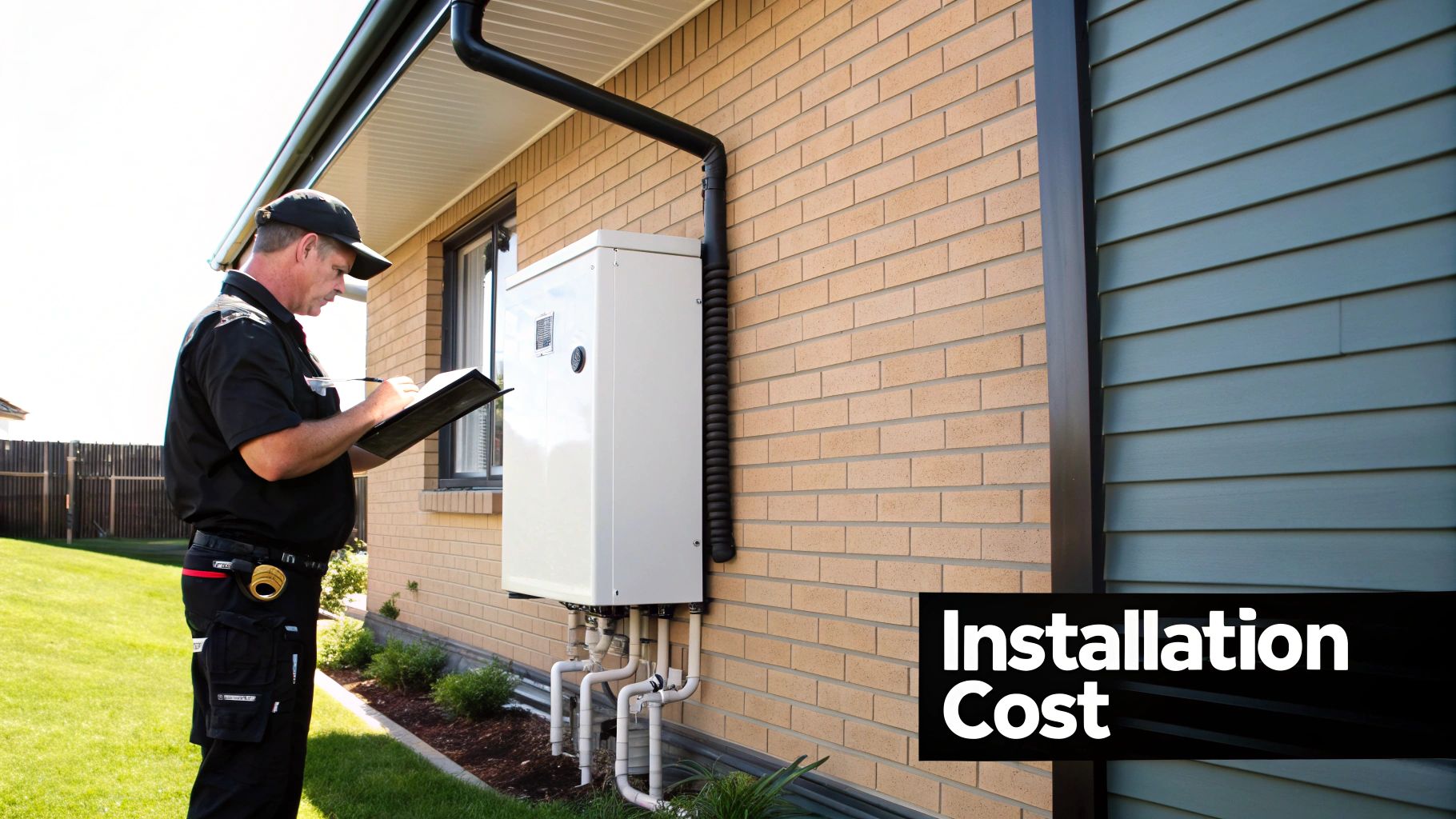
Getting your head around the costs is the first step. While that initial price range is a great guide, the total investment can shift depending on a few key things. After all, you’re not just buying a heater off the shelf; you’re paying for a complete, professional service from a Melbourne plumber that guarantees everything is safe, compliant, and working perfectly.
The final cost really comes down to two things: the price of the unit itself and how complex the job is. For example, if we're just swapping an old storage tank for a shiny new one in the same spot, you'll be on the lower end of the scale. But if you're making the switch from an old electric system to gas, or you want a continuous flow unit installed for the first time, that’s a bit more involved and will naturally affect the price.
To give you a clearer picture, here’s a quick breakdown of what you can expect to pay for different types of gas hot water systems.
Estimated Gas Hot Water Installation Cost At A Glance
| System Type | Average Unit Cost (AUD) | Average Installation Cost (AUD) | Total Estimated Cost (AUD) |
|---|---|---|---|
| Gas Storage Tank (Standard Efficiency) | $800 – $1,500 | $400 – $800 | $1,200 – $2,300 |
| Continuous Flow (Instantaneous) | $900 – $2,000 | $600 – $1,200 | $1,500 – $3,200 |
| High-Efficiency Condensing Unit | $2,000 – $3,500 | $800 – $1,500 | $2,800 – $5,000 |
Keep in mind, these are just averages. Your specific situation might be a little different, but this table gives you a solid idea of where your project might land.
Key Factors Influencing Your Quote
When a plumber gives you a quote, there are a few moving parts that make up that final figure. Knowing what they are helps you see exactly where your money is going and avoid any hidden surprises.
Here are the main cost drivers:
- The Type of System: A modern, high-efficiency continuous flow system will usually have a higher upfront cost than a traditional storage tank.
- Installation Complexity: A simple like-for-like replacement is always going to be cheaper. A brand-new installation that needs new gas lines run, plumbing rejigged, or the unit moved to a new spot will cost more.
- Labour and Expertise: You’re paying for a licensed gasfitting Melbourne expert. Their job is to make sure the installation is 100% safe, meets all Victorian regulations, and runs as efficiently as possible.
- Necessary Materials: This covers all the bits and pieces—pipes, valves, and fittings—plus the all-important compliance certificate that proves the work is up to Australian standards.
Across Australia, the average installed cost for a gas hot water system, whether it's a storage tank or an instantaneous one, falls somewhere between $1,200 to $3,500. This includes the unit, labour, and basic fittings, but doesn't account for complex jobs like major retrofits or extra gas line work. As you can see, getting a detailed, itemised quote is absolutely crucial. You can discover more insights about these national averages here.
At Amari Plumbing and Gasfitting, we don’t believe in surprises. We give clear, fixed-price quotes over the phone. Whether you’re in Balwyn, Doncaster, or Kew, our team makes sure you understand every part of the gas hot water installation cost before we pick up a single tool.
If your hot water has given up on you unexpectedly, don't panic. Call our emergency plumbers in Melbourne for a fast, reliable, and affordable fix. Get in touch with us today for a free estimate and get that hot water flowing again.
Decoding Your Quote: What Are You Actually Paying For?
Getting a quote for a new hot water system can sometimes feel like trying to read a foreign language. You see a list of parts and services, but what does it all mean for your total gas hot water installation cost? Getting your head around each line item is the key to budgeting properly and making sure you’re getting real value for your money.
A proper quote isn’t just about the price of the heater. It's a complete breakdown of a skilled, professional service. It covers the cost of quality parts, the hands-on expertise of a licensed technician, and the peace of mind that comes with a safe, compliant installation. Let's pull back the curtain and see what you’re really paying for.
The Hot Water Unit Itself
No surprises here – the biggest chunk of your quote is the hot water unit. The price tag can swing pretty wildly depending on the brand, the type (are we talking a storage tank or a continuous flow system?), its size, and its energy efficiency rating.
Well-known, reliable brands like Rheem, Rinnai, and Vulcan have a whole range of models to fit different households and budgets. A standard gas storage tank might be easier on the wallet upfront, but a high-efficiency continuous flow system, while costing more to begin with, can lead to some great long-term savings on your gas bills.
Labour: The Cost of Expertise
This is where the skill of a professional plumber in Melbourne really comes into play. The labour cost covers the time and expert knowledge it takes to safely disconnect and haul away your old system, position the new one perfectly, and hook up all the essential plumbing and gas lines.
Hiring a licensed professional isn't just a good idea; it's the law in Victoria. Gas work is seriously dangerous, and only a certified gasfitter has the proper training to handle it safely, preventing major risks like gas leaks or incorrect ventilation. You're paying for the confidence that the job is done right.
A critical piece of any professional installation is the Certificate of Compliance. This official document, issued by the Victorian Building Authority (VBA), is your legal guarantee that the work meets all Australian safety standards. It’s a non-negotiable part of the service from any reputable gasfitter.
Essential Parts and Fittings
It’s not just about the big unit. A solid installation needs a bunch of smaller, but absolutely vital, components. Your quote will itemise the costs for these necessary parts.
- Pipes and Valves: This covers things like new copper piping, tempering valves (a must-have to prevent scalding hot water at the tap), and isolation valves that make future maintenance a breeze.
- Fittings and Fixtures: All the little connectors, seals, and brackets needed to make sure the setup is secure and completely leak-free.
- Venting and Flue Components: For gas storage heaters, proper ventilation is crucial to safely get rid of combustion gases. This requires specific flue pipes and fittings.
These bits and pieces are vital for a system that’s both safe and built to last. At Amari Plumbing, whether we're working in Balwyn or out in Doncaster, we only use high-quality parts to head off any problems down the track.
Removal and Disposal of Your Old Unit
So, what happens to your old, dead water heater? A professional quote always includes the labour to safely disconnect and remove the old unit from your property. This service also takes care of responsibly disposing of the appliance, which saves you the headache of figuring out what to do with a huge, heavy lump of scrap metal.
The Final Tally: Your All-Inclusive Price
When you add it all up, your quote should reflect a complete, start-to-finish service. You're paying for a top-quality unit, the certified expertise of a licensed technician, all the materials needed for a safe job, and the hassle-free disposal of your old system. This transparent, all-in approach means no hidden fees or nasty surprises later on.
Ready for a clear, upfront quote that breaks it all down for you? Our team is here to help you understand every part of your new hot water installation. Contact Amari Plumbing and Gasfitting today for an honest, fixed-price estimate.
Storage Vs Continuous Flow: A Cost and Lifestyle Comparison
Picking a new gas hot water system is one of the biggest decisions you'll make for your home, and it’s about so much more than the initial price tag. The choice between a classic storage tank and a modern continuous flow system will shape your daily routine, your energy bills, and even how you use the space in your home.
Think of it as choosing between upfront savings versus long-term efficiency.
This isn't just about technical specs; it’s about how you live. A large family in Balwyn North with multiple people showering at the same time will see the endless hot water from a continuous flow system as a lifesaver. On the other hand, a smaller household in Kew might be perfectly happy with the lower upfront cost of a reliable storage tank. A skilled plumber Bulleen can assess your needs and recommend the best fit.
Let's break down the key differences to help you figure out the perfect fit for your Melbourne home.
Upfront Cost and Installation
The most obvious difference you'll see right away is the price.
Gas storage tanks usually have a lower purchase price. They're also often simpler to install, especially if you’re just swapping out an old tank for a new one. This makes them a great choice if your main goal is to keep the initial spend as low as possible.
Continuous flow systems—also known as instantaneous or tankless heaters—typically cost more for the unit itself. The installation can be a bit more involved, too. Sometimes we need to upgrade the gas pipe diameter to handle the unit's power, which can add to the labour cost. But this initial investment is just the beginning of a different financial story.
The flowchart below gives you a clear idea of how the different parts of the job come together to form your final quote.

As you can see, the final price is always a mix of the unit, the skilled plumber's time, and the necessary compliance certificates, no matter which system you go with.
Energy Efficiency and Running Costs
This is where continuous flow systems really pull ahead. Because they only heat water the moment you turn on the tap, no energy is wasted keeping a big tank of water hot around the clock. This incredible efficiency leads directly to lower gas bills over the years, often paying back that higher initial cost and then some.
Storage tank systems are always losing a little bit of heat through the cylinder walls, something we call 'standby heat loss'. It's like leaving the oven on low all day just in case you want to cook. Modern tanks are much better insulated than old ones, but they can't completely stop this energy trickle, which means slightly higher running costs.
Even with standby heat loss, storage tanks are still very cost-effective to run, particularly when you compare them to electric systems. You can get the full picture by checking out our detailed guide comparing gas vs electric hot water systems. It’s a deep dive into the operational costs and long-term savings for both.
Performance and Lifestyle Fit
How your family uses hot water every day is a huge part of the decision. Is there a morning rush hour with everyone trying to get ready at once?
- Continuous Flow: You get an endless supply of hot water, so no one ever has to suffer through a cold shower again. The only catch is that the flow rate can be limited, so running two hot showers at full pressure might feel a little weaker than you're used to.
- Storage Tank: These units deliver strong, consistent water pressure to multiple taps at the same time, which is fantastic. The downside? Once the tank is empty, it's empty. You'll have to wait for it to heat up a new tank, which can take anywhere from 30-60 minutes.
To make it even clearer, here's a side-by-side look at how the two systems stack up.
Storage Vs Continuous Flow Gas Hot Water Systems
| Feature | Gas Storage Tank System | Gas Continuous Flow System |
|---|---|---|
| Upfront Cost | Lower | Higher |
| Running Costs | Higher due to standby heat loss | Lower due to on-demand heating |
| Energy Efficiency | Good | Excellent (often 6-star rated or higher) |
| Hot Water Supply | Limited to tank capacity | Endless and on-demand |
| Water Pressure | Strong and consistent for multiple taps | Can be reduced if multiple hot taps are running |
| Physical Size | Large, bulky, requires floor space | Compact, wall-mounted, saves space |
| Typical Lifespan | 10-15 years | Up to 20+ years |
| Best For | Budget-conscious buyers, smaller households, replacing an existing tank | Larger families, energy-conscious homes, those wanting endless hot water |
Ultimately, both are fantastic options. The right choice just depends on your priorities: saving money now or saving money over the long haul.
Physical Footprint and Lifespan
In a city like Melbourne, space is often at a premium. Continuous flow units are small, wall-mounted boxes that can free up a surprising amount of room in your laundry or down the side of your house. Storage tanks are big, bulky cylinders that need a dedicated spot to sit.
When it comes to how long they'll last, both are built tough. A well-maintained gas storage tank will typically give you around 10-15 years of service. Continuous flow systems often go for longer, with many lasting 20 years or more because they have fewer parts sitting in corrosive water all day.
What About Add-Ons and Hidden Costs?
When you get a quote for a new gas hot water system, it’s usually for a simple, like-for-like swap. But let's be honest, plumbing jobs in the real world are rarely that straightforward. The reality is, your home's unique setup can throw a few curveballs, and that can bump up the final gas hot water installation cost.
Getting your head around these potential extras before work starts is the best way to dodge any nasty budget surprises. It means your quote is realistic and covers everything needed for a safe, compliant, and reliable installation that'll last for years.
Gas Line Upgrades and Modifications
One of the most common extras we see is when a homeowner is upgrading their system, especially when making the leap to a powerful continuous flow unit. These modern heaters are fantastic, but they’re often a lot thirstier for gas than the old storage tank they’re replacing.
This can mean your existing gas pipe is simply too small to keep up. A licensed gasfitting Melbourne expert will need to check this out. If it’s not up to scratch, the job might involve running a new, bigger pipe all the way from the gas meter to the heater, which adds to the bill for both materials and labour.
Essential Safety Valves and Components
Modern plumbing standards are there for one reason: to keep you and your property safe. This often means a new installation requires safety gear your old system never had.
- Tempering Valves: These are a non-negotiable, mandatory requirement for all new storage tank installs in Victoria. They cleverly mix a bit of cold water with the hot to make sure the water hitting your taps is capped at a safe 50°C to prevent serious burns.
- Pressure Limiting Valves: If your home's water pressure is roaring like a jet engine, it can wreck your new heater and even void the warranty. A pressure limiting valve is fitted to tame the flow and protect your investment.
- Isolation Valves: Simple but crucial. These taps allow the water and gas to be shut off right at the unit, making future servicing a breeze without having to turn everything off at the mains.
While they're absolutely essential for safety and compliance, they do represent an added cost if your old setup didn't have them.
Relocation and Tricky Access
Sometimes, the best spot for your new heater isn't where the old one was sitting. You might want to shift it to reclaim some backyard space or to meet new regulations about clearances and ventilation.
Moving a hot water unit is a much bigger job than a straight swap. It means extending both the water pipes and the gas line to the new spot, which can really add to the labour time and material costs. Getting to the heater can also be a challenge; working in a cramped roof space or mounting a unit on a second-storey wall will naturally impact the final price.
Complex Venting and Flue Requirements
Getting ventilation right is critical. Gas heaters produce combustion gases like carbon monoxide that have to be safely vented outside. A standard quote usually assumes a simple, straight flue path.
But if the heater is in an awkward position, the flue might need to bend and weave its way around obstacles. This means more elbows, extensions, and brackets, adding to the material cost and the time it takes to do the job properly and safely. We see this all the time with complex jobs like our expert pipe relining in Melbourne—what looks simple on the surface can be quite intricate underneath, and the same goes for flues.
Knowing about these potential extras helps you ask the right questions from the get-go. At Amari Plumbing, we're all about being upfront. We provide fixed-price quotes that take all these variables into account right from the start.
Need a clear, honest quote with no hidden surprises? Contact us today for a detailed estimate on your new hot water system.
How A Gas Hot Water System Saves You Money Long Term
It's easy to get caught up on the initial installation price, but that’s only one piece of the puzzle. The true financial benefit of a gas hot water system reveals itself over years of lower utility bills. This is where that slightly higher upfront cost starts to make a whole lot of sense.
The big reason? Energy efficiency. Put simply, gas is a cheaper fuel for heating water in Melbourne than electricity. That means for every dollar you spend, a gas heater gives you more hot water than a standard electric one. Over the life of the system, that difference really adds up.
Lower Running Costs Every Quarter
The most obvious win is seeing smaller numbers on your quarterly utility bills. Gas heaters, especially the modern continuous flow models, only fire up when you turn on the hot tap. They aren't constantly burning energy just to keep a big tank of water hot, which is a massive source of wasted money.
This on-demand heating changes the game for household budgets. The savings build up steadily, turning your hot water system from just another expense into a smart asset that pays you back. For any Melbourne homeowner trying to get a handle on rising living costs, it's a huge advantage.
As a real-world example, Aussie households with gas hot water generally see annual energy costs between $700–$1,000. That’s a stark contrast to the $1,400+ you often see with similar electric systems. Those savings make gas a savvy long-term choice.
A Faster Payback Period
The "payback period" is just a fancy way of asking: how long until the money I save on bills covers the cost of the new system? Because gas systems are so efficient, this happens faster than most people think. Every dollar you don't spend on your gas bill is another dollar paying off that initial investment.
Once the system has paid for itself, every saving after that is pure profit in your pocket. It’s a smart move for homeowners who can see beyond the price tag. Our team of expert Melbourne plumbers can even help you estimate the potential savings for your specific situation.
A Longer Lifespan Means Better Value
Here’s another crucial factor: durability. Gas hot water systems, particularly the tankless continuous flow units, tend to have a much longer working life than their electric cousins. A big reason for this is that they don't have major components sitting in corrosive, mineral-heavy water 24/7.
A system that lasts longer means you can put off the expense of a full replacement for many more years. When a well-maintained gas unit can last up to 20 years or more, the value becomes crystal clear. You can learn more in our guide on how long hot water systems last. This extended lifespan spreads out the installation cost, giving you a much lower total cost of ownership over time.
Why Choose A Professional For Your Melbourne Installation?
Deciding who installs your gas hot water system is a huge deal—just as important as picking the right unit itself. It might be tempting to look at a DIY job to save a few bucks, but gas work is one area you absolutely cannot cut corners on. If you need a trustworthy plumber in Balwyn, it's best to choose a professional.
For a very good reason, the law says only a licensed professional can touch it: safety. A dodgy installation can lead to catastrophic gas leaks or even silent-but-deadly carbon monoxide poisoning. It’s a risk that’s just not worth taking.
Peace of Mind with a Licensed Gasfitter
At Amari Plumbing and Gasfitting, we're not just your average plumbers. We are fully licensed gasfitting experts who know the ins and outs of Melbourne’s regulations, especially in the eastern suburbs we call home—from Balwyn and Kew to Hawthorn and Doncaster.
Every installation we do is safe, fully compliant, and backed by our rock-solid workmanship guarantee. That means you can rest easy knowing the job was done right the first time, with no dangerous shortcuts.
Upfront Pricing In A Fluctuating Market
Let's be honest, costs for pretty much everything have been climbing since 2020. Gas hot water installations are no exception, with prices jumping 15-22% thanks to labour hikes and supply chain headaches. This is why getting a clear, fixed-price quote is more crucial than ever to avoid a nasty surprise on your final bill.
You can read the full research on rising installation costs to get a better sense of the market trends. We tackle this head-on by giving you a clear, upfront quote. The price we say is the price you pay. Period.
More Than Just Hot Water Specialists
Our skills run much deeper than just hot water systems. We're the go-to plumber near me for Melbourne homeowners because we handle the full spectrum of plumbing issues. This broad expertise means we're ready for anything that might pop up during your installation.
Our comprehensive services include:
- Emergency Plumbing: Got a burst pipe or a sudden gas smell? Our rapid-response team is on call.
- Blocked Drains: We’ll find and clear any blockage that’s causing chaos in your home’s plumbing.
- Advanced Solutions: We’re specialists in modern no-dig fixes like sewer relining and other forms of trenchless pipe repair.
- Commercial Plumbing: Our team has the know-how and muscle to manage large-scale commercial projects.
This all-around capability means we can handle any curveball, whether it's finding a hidden leak or upgrading old pipework to support your new system. We make sure the entire process is smooth and completely hassle-free.
When you hire a professional, you're not just paying for a service; you're investing in safety, compliance, and quality workmanship. And if an unexpected problem ever arises, it’s a huge relief knowing you have a trusted emergency gas plumber ready to help. Our team is always on standby to keep your home safe and running smoothly.
Ready for a stress-free installation with a local team you can count on? Contact Amari Plumbing and Gasfitting today for an honest, fixed-price quote.
Got Questions? We’ve Got Answers
To wrap things up, let's go through a few of the questions we get asked all the time by Melbourne homeowners. Getting the right info upfront helps take the stress out of the process and ensures you're ready for your hot water upgrade.
How Long Does A Typical Gas Hot Water Installation Take?
For a straightforward swap—taking out an old unit and putting a new one in the exact same spot—our licensed plumbers are usually in and out in 2 to 4 hours. We aim to get your hot water back on with as little fuss as possible.
Of course, more complex jobs take a bit longer. If you’re moving from an old electric system to gas for the first time, or if we need to shift the unit to a new location or run bigger gas pipes, it might take up a full day. We’ll always give you a clear time estimate in our quote so there are no surprises.
Do I Need A Permit For A New Gas Hot Water System In Melbourne?
Yep, you sure do. In Victoria, any work involving gas appliances has to be done by a licensed gasfitter. This isn't just a guideline; it's the law, put in place to keep your home and family safe.
Once the installation is complete, your plumber is legally required to issue a Certificate of Compliance from the Victorian Building Authority (VBA). Think of this as your official guarantee that the job was done safely, meets all Aussie standards, and is fully insured. We handle all the paperwork for you.
Can I Install A Gas Hot Water System Myself To Save Money?
Please don't. The answer here is a hard and fast no. It’s not only illegal for an unlicensed person to do any gas work in Australia, but it's also incredibly dangerous. A small mistake can lead to gas leaks, explosions, or even fatal carbon monoxide poisoning.
Trying to DIY a gas installation will also instantly void the warranty on your brand-new system and can even void your home insurance. It's just not worth the risk. Always bring in a licensed, insured professional you can trust.
What Happens To My Old Hot Water System?
Don’t worry about it—we’ll take care of everything. Our installation service includes disconnecting your old, tired unit and hauling it away from your property.
We handle the proper, environmentally-friendly disposal of the old system, so you’re not left with a massive piece of scrap metal sitting on your nature strip. It’s all part of the complete, fixed-price service we provide to make things as easy as possible for you.
For a clear, fixed-price quote on your new hot water system, trust the experts at Amari Plumbing and Gasfitting. Our licensed team provides safe, compliant, and efficient installations across Melbourne. Contact us today for a free, no-obligation estimate!