

That moment of dread when you flush and the water starts rising instead of going down… we've all been there. Your first instinct is absolutely critical, and it has nothing to do with grabbing a plunger. The most important thing is to stop an overflow before it happens. Once you’ve contained the problem, you can take a breath and figure out the best way to clear the actual clog.
Your First Moves When the Toilet Won't Flush
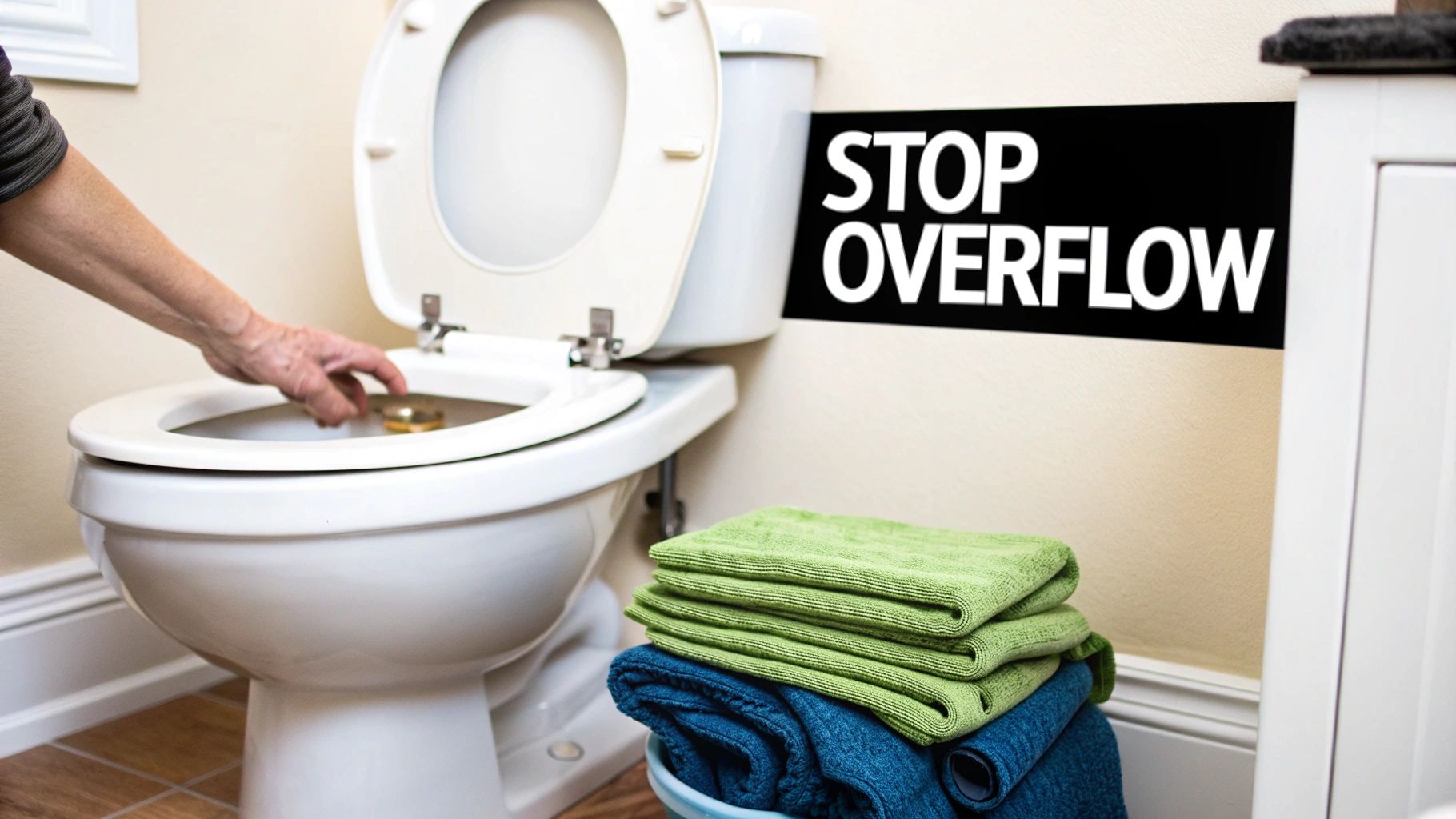
Panic is a natural reaction, but it’s your enemy here. A calm, step-by-step approach will keep a simple blocked loo from turning into a full-blown bathroom flood. Before you even think about tools, you need to get the situation under control. These first few actions are all about stopping things from getting worse, so you can think clearly about what to do next.
Stop the Water Flow Immediately
Your absolute first priority is to prevent the toilet from flushing again. Whatever you do, don't flush it a second time. That's pretty much a guarantee you’ll have water all over your floor.
To stop more water from rushing into the bowl, quickly take the lid off the cistern (the tank at the back). Inside, you’ll see the float mechanism. Just lift the float arm up – this stops the tank from refilling. For a more permanent fix while you work, look for the small tap on the wall behind or beside the toilet. This is the stopcock; give it a clockwise twist to shut the water supply off completely.
Prepare the Area for a Clean Fix
Once the immediate threat of an overflow is gone, it's time to prep your workspace. Let’s be honest, unblocking a toilet can get a bit messy.
- Lay down old towels or newspapers all around the base of the toilet. They’ll catch any drips or splashes.
- Get some air flowing. Open a window or switch on the exhaust fan to help with any unpleasant smells.
- Grab some protective gloves. A sturdy pair of rubber gloves is a must-have for obvious hygiene reasons.
Perform a Quick Visual Inspection
With the area prepped, have a good look into the bowl. Can you actually see what’s causing the drama? Sometimes the culprit—a kid's toy, a whole roll of toilet paper—is right there in plain sight.
This initial check is more important than you might think. Figuring out if you're dealing with a soft blockage versus a hard, foreign object will tell you which tools and methods are going to work.
Mastering the Plunger for Stubborn Clogs
Before you reach for anything else, your trusty plunger should be your first port of call. It's often the most powerful tool for sorting out a blocked toilet, but there's a real technique to it. Just grabbing any old plunger and hoping for the best usually ends in frustration and a wet floor.
The secret to a successful plunge starts with having the right gear. Most of us have that classic red cup plunger tucked away, but that’s actually designed for flat drains like your sink or shower. For a toilet, you need a flange plunger. It has a smaller, fold-out rubber lip at the bottom that’s specifically designed to create a tight seal in the S-bend of your loo.
Creating the Perfect Seal and Pressure
Got the right plunger? Great. Now it's all about creating an airtight seal. This is what generates the hydraulic force needed to actually shift the blockage.
- Get the water level right: Make sure there's enough water in the bowl to completely cover the rubber cup of the plunger. If it's a bit low, just add some from the sink. Pushing air won't do a thing; you need the water to do the heavy lifting.
- Get in position: Pop the plunger into the bowl, making sure that extra flange is snugly inside the drain opening. Your first push should be a gentle one. This is just to push out any trapped air from under the cup and stops water splashing everywhere.
- It’s all in the pull: The real magic happens on the upstroke, not the downstroke. After that initial gentle push, start plunging vigorously for about 20-30 seconds. This push-pull motion creates a powerful vacuum that helps jiggle the clog loose.
Once you’ve given it a good go, break the seal and listen. A satisfying "whoosh" and the sight of the water draining away means you've won. If it’s still blocked, don’t lose heart. Some stubborn blocked drains need a few rounds before they give up.
The key here is patience. A few minutes of proper, persistent plunging is often all it takes to fix the problem yourself.
If you've tried a few times and are getting nowhere, that's a sign the blockage is either too solid or too far down the pipe. At this point, it’s best to stop before you risk making things worse. For those really tricky situations, calling a reliable plumber in Balwyn will get the issue sorted quickly and safely.
Safe and Effective DIY Unblocking Solutions
Before you reach for those harsh chemical drain cleaners, let’s talk alternatives. While they might seem like a quick fix, they can do a real number on your pipes over time and aren't great to have around the house. A much gentler, and surprisingly effective, first port of call is a simple mix of hot water and dish soap.
You’ve already got everything you need, and it’s especially good for those common blockages caused by too much toilet paper or organic matter.
The Hot Water and Dish Soap Method
So, how does it work? It’s pretty clever, really. The dish soap acts as a lubricant, making everything a bit more slippery to help the clog slide on its way. At the same time, the hot water helps to break down and dissolve the waste.
One crucial tip: use hot water from your tap, not boiling water. Pouring boiling water straight into a cold porcelain toilet bowl is a recipe for disaster. The sudden temperature change—what we call thermal shock—can crack the ceramic, leaving you with a much bigger (and more expensive) problem.
Here’s the game plan:
- Start by squirting a good amount of dish soap into the toilet bowl. Think about half a cup.
- Give it 5-10 minutes to sink down and coat the blockage.
- Next, grab a bucket and fill it with hot water from the bath or shower tap.
- Pour the water into the bowl from about waist height. The extra force from the drop can help physically push the clog loose.
- Now, walk away. Let the mixture work its magic for 20-30 minutes before you even think about flushing.
This same principle of using hot water and a lubricant can work wonders on other drains too. It’s a handy trick to know if you’re also trying to figure out how to unblock a shower drain pipe.
If that doesn't quite do the trick, your next best friend is the good old plunger. The process below shows you it's not just about random plunging; there's a technique to it.
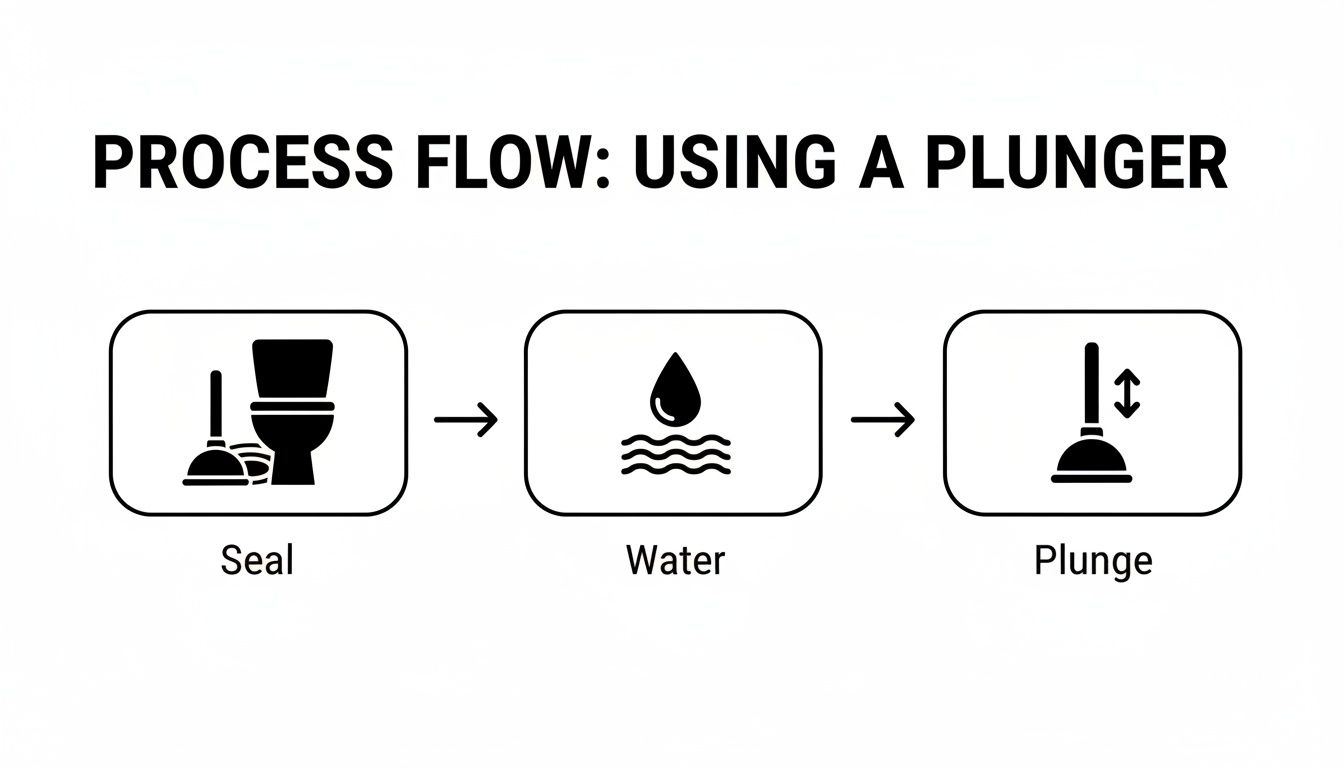
As you can see, getting a solid seal is the most important part. From there, it’s all about using the water to create pressure with a firm, consistent motion.
Why Do Toilets Get Blocked in the First Place?
Knowing what causes a blocked toilet is the best defence against having to deal with one. Let’s be honest, most clogs don't just happen out of the blue. They’re usually the result of flushing things that our plumbing just wasn't built to handle.
The crucial difference is that toilet paper is specifically made to dissolve almost instantly in water. Many other common household products? Not so much. They're designed for durability, which is the last thing you want inside a pipe.
The "Flushable" Myth and Other Common culprits
One of the worst offenders we see causing stubborn blockages is the so-called "flushable" wet wipe. Despite what the packaging says, these wipes simply don't break down properly. In fact, they’re a leading cause of major clogs and sewer backups right across Melbourne, binding with fats and oils to create solid, pipe-blocking masses.
But it’s not just wipes. Here are a few other troublemakers that should go in the bin, not the bowl:
- Sanitary Products: Tampons and pads are designed to absorb liquid and expand. That’s great for their intended use, but it’s a recipe for disaster in your pipes.
- Paper Towels & Tissues: Unlike toilet paper, these are engineered to stay strong when wet, so they bunch up and cause blockages instead of dissolving.
- Dental Floss: It seems harmless, right? But that tiny string acts like a net, catching other debris and slowly building a clog over time.
- Cotton Balls & Buds: Just like sanitary items, these are super absorbent and will quickly clump together inside your drains.
Protecting Your Pipes Is Cheaper Than Fixing Them
Flushing the wrong things regularly doesn't just risk a simple blocked loo; it can create much bigger headaches in your home's main sewer line. That’s a far more complex and expensive problem to fix, often requiring professional gear like CCTV drain cameras or even advanced sewer relining.
According to plumbing groups across Australia, over 60% of residential toilet blockages are caused by flushing non-flushable items. Things like wet wipes and sanitary products are the main culprits, driving emergency plumber call-outs, especially in homes with older plumbing. You can find more insights on common plumbing problems from resources like Wikipedia.
At the end of the day, the easiest way to clear a blocked toilet is to prevent it from happening. The rule is simple: only human waste and toilet paper go down the loo. Everything else belongs in the bin.
If you’re already dealing with a stubborn blockage that won’t budge, it might be time to call in the experts. For fast, reliable help, contact us today.
When It’s Time to Call an Emergency Plumber in Melbourne
While having a go yourself is great for small clogs, knowing when to put the tools down is crucial. Trust me, you don't want to be the person who turns a simple blockage into a full-blown plumbing disaster. There are some definite red flags that tell you the problem is bigger than a plunger can handle.
Ignoring these signs is a recipe for serious water damage or, even worse, a sewage backup. That’s a genuine health hazard you want to avoid at all costs. It's about recognising when you're just seeing the symptom of a much deeper issue lurking in your pipes.
Signs You Need an Expert on the Double
So, you've tried the plunger and the hot water trick, but that clog isn't budging. It’s time to stop. If a blockage can resist those basic methods, it’s likely too solid or too far down the line for your DIY tools to have any effect. This is especially true if you’ve noticed the same toilet blocking up over and over again in the last few weeks.
Recurring blockages are a classic sign of a bigger problem. It usually means the original clog was never properly cleared, or something more sinister is going on in your main sewer line.
Have a listen to your plumbing. Can you hear strange gurgling sounds coming from the shower or sink when you flush the loo? That’s a massive warning sign.
Gurgling noises mean air is trapped somewhere in your drain system and is being forced back up through other pipes. This almost always points to a blockage in the main drain line, not just the toilet.
When the Problem Is Bigger Than Just One Toilet
Another major red flag is seeing water backing up in your shower or bath after flushing the toilet. This is a dead giveaway that the blockage is further downstream in a shared sewer pipe, affecting multiple fixtures.
At this point, you're past trying to figure out how to clear a blocked toilet; you're dealing with a potential system-wide failure. These symptoms are often caused by serious issues that need professional gear:
- Tree Root Intrusion: It’s amazing how easily tree roots can find their way into pipes, crushing them and causing stubborn blockages.
- Collapsed Pipes: Older earthenware pipes, in particular, can break down and collapse over time, creating a complete obstruction.
- Foreign Objects: Something solid and un-flushable could be lodged deep in the main line, and you won’t get that out without specialised equipment.
For these urgent and complex jobs, you need professional emergency plumbers in Melbourne. If you're facing a plumbing emergency, knowing who to call for reliable after-hours plumbing can save you a lot of stress. For those stubborn blockages anywhere from Balwyn to Doncaster, calling a licensed Melbourne plumber is the smartest move. An expert has the proper tools, like CCTV drain cameras and high-pressure water jetters, to find the real cause and fix it properly.
Had Enough? When It’s Time to Call in the Experts
So, you’ve given it your best shot, but that stubborn blockage just won’t budge. Don’t worry, you’re not alone. When DIY methods fall short, it’s time to bring in the professionals. At Amari Plumbing and Gasfitting, we’re the ones people call to sort out the toughest clogs across Melbourne’s eastern suburbs.
Our approach isn't just about clearing the immediate problem; it's about figuring out why it happened in the first place. We use high-tech gear like high-pressure water jetters and CCTV drain cameras to get a clear look deep inside your pipes. This means we find the real culprit—whether it’s a simple build-up or a more serious issue hiding out of sight—and fix it for good.
Why a Professional Plumber Makes All the Difference
Getting an expert Melbourne plumber on the job is about more than just unblocking a pipe. It’s about the peace of mind that comes from knowing the work is done properly, saving you from future headaches and the nightmare of water damage.
- No More Guesswork: We use drain cameras to see exactly what’s going on in there. It’s the difference between guessing and knowing.
- Serious Firepower: Our high-pressure jetters are the real deal. They’ll slice through grease, tree roots, and other nasty debris that a simple plunger could never handle.
- Proper, Lasting Fixes: If we find a bigger problem like a cracked pipe, we offer advanced solutions like the pipe relining Melbourne homeowners rely on to avoid digging up their entire garden.
We believe in being upfront, so we give you a fixed price before we even start. No nasty surprises. Whether you're in Balwyn, Doncaster, or anywhere in between, our crew is ready to get your plumbing back to 100%. We’ve even got a detailed rundown on our professional methods for how to clear blocked drains if you’re curious about the tech we use.
A toilet that keeps blocking up is often a warning sign of a bigger issue in your main sewer line. If you ignore it, you’re risking a messy, unhygienic, and very expensive sewage backup.
Don't let a stubborn clog ruin your day. Our team has the know-how to tackle everything from a simple blocked sink to a major sewer line disaster.
For a clean, effective, and professional fix to your plumbing dramas, you can trust the team at Amari Plumbing and Gasfitting. Contact us today for a free chat over the phone and fast, reliable service.