

That sudden, shuddering bang you hear from inside your walls when you turn off a tap? It’s not your house settling or a ghost in the pipes. It's a very real plumbing problem called water hammer.
The main culprit is the abrupt stop of flowing water, which unleashes a high-pressure shockwave through your plumbing. It's become much more common with modern taps and appliances that have fast-closing valves.
What Exactly Is Water Hammer?
Think of the water flowing through your pipes like a freight train at full tilt. It's heavy and has a huge amount of forward momentum.
Now, imagine what happens when you flick off a modern quarter-turn tap or your dishwasher suddenly finishes a cycle. The valve slams shut in an instant.
That's like the freight train hitting a solid brick wall. All that forward energy has nowhere to go. The water compresses on itself, creating a powerful hydraulic shockwave. This wave of intense pressure—often many times higher than your normal water pressure—rockets back through the pipes, causing them to vibrate violently. A professional plumber in Melbourne can diagnose this issue with precision.
It's that violent shaking and rattling that you hear as a loud banging or knocking sound.
This quick visual breaks down the simple three-step process behind that startling noise.
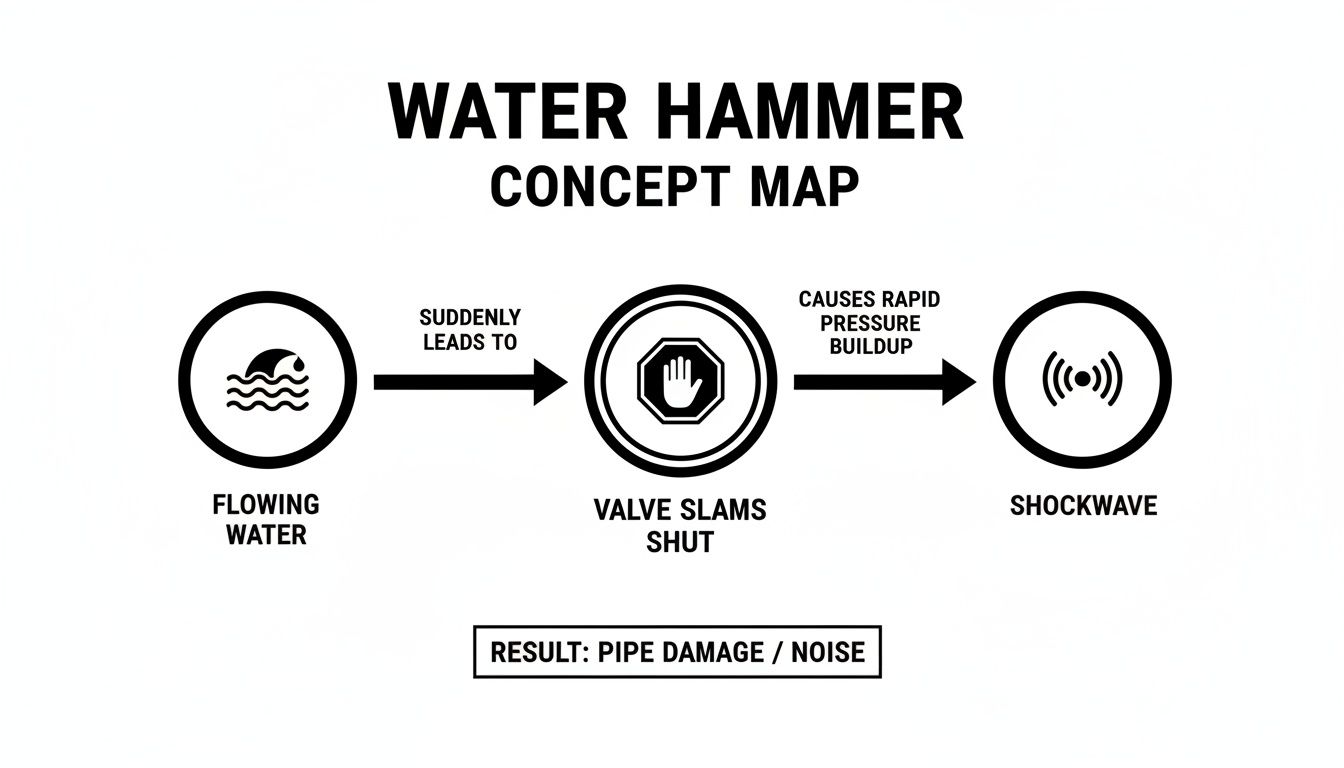
The diagram really shows how a simple, everyday action can trigger a potentially damaging force inside your plumbing. Getting your head around this is the first step to figuring out how to stop it.
The Anatomy of a Water Hammer Event
While the concept seems straightforward, a few different elements come together to create that final 'bang'. Each part of the process plays a role in turning harmless flowing water into a destructive force.
Here's a simplified look at the components and results of hydraulic shock in your pipes.
| Component | Description | Real-World Example |
|---|---|---|
| Water in Motion | Water moving through pipes has kinetic energy and momentum. The faster it flows, the more momentum it has. | Water rushing into your washing machine or running from a showerhead. |
| Sudden Valve Closure | A tap or an appliance valve closes in a fraction of a second, bringing the entire column of moving water to a dead stop. | A modern mixer tap being flicked off, or a dishwasher's solenoid valve snapping shut. |
| Hydraulic Shock | The water's momentum instantly converts into a high-pressure spike that echoes back through the plumbing system. | The loud 'thump' or banging sound you hear the moment the water stops. |
| Pipe Vibration | This pressure wave forces the pipes to physically flex and shake, often smacking against wall studs or floor joists. | A rattling noise that seems to travel through the walls of your home. |
It's a chain reaction, really. One simple action leads to a surprisingly powerful—and potentially damaging—result.
The 7 Culprits Behind Banging Pipes
Knowing that a hydraulic shockwave is the cause of water hammer is the first step. The real trick is figuring out what’s triggering that shockwave in your home so you can put a stop to it. More often than not, the culprits are the very modern conveniences we rely on every single day.
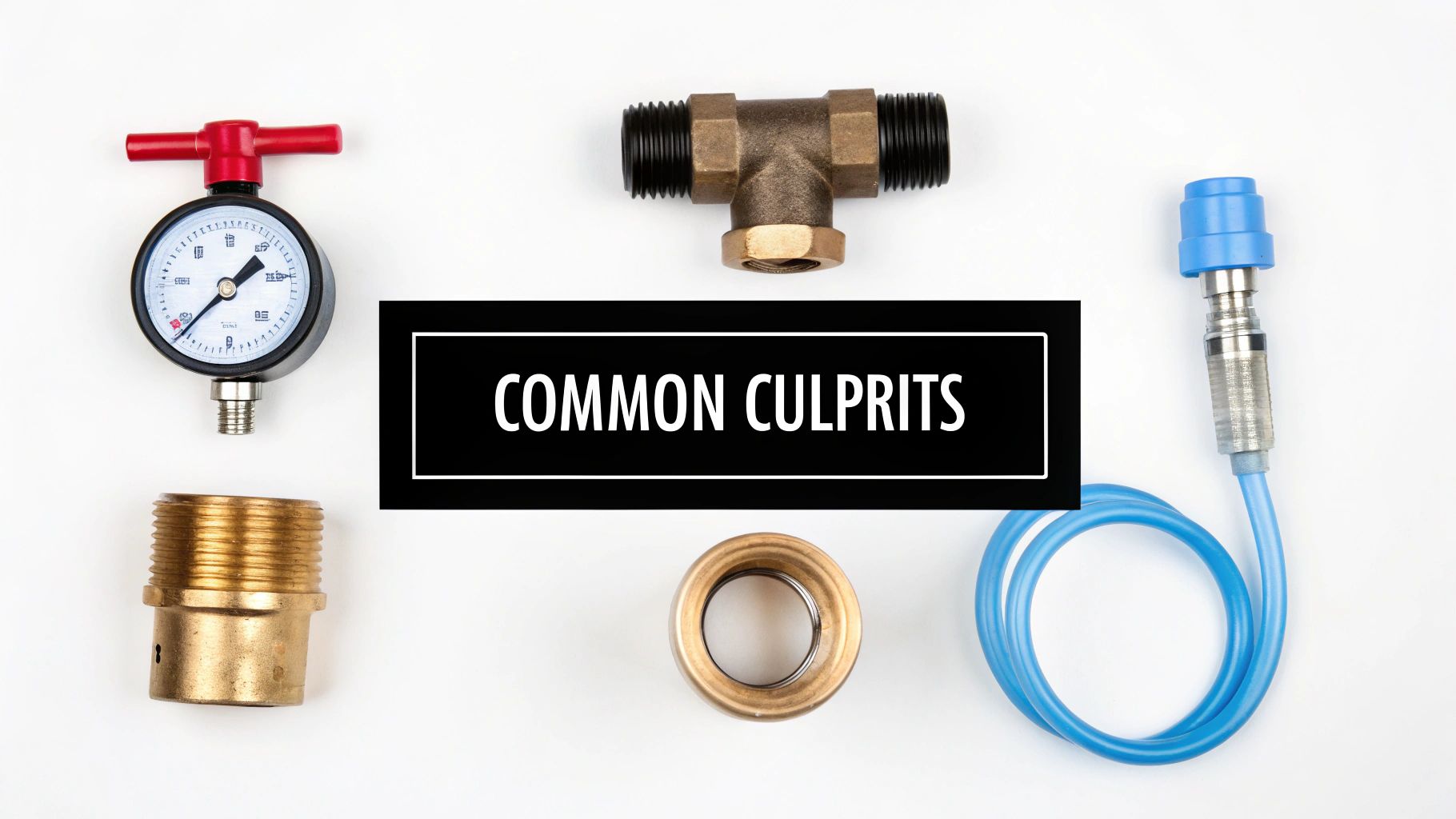
Let's break down the seven most common triggers that can turn your quiet home into what sounds like a construction site.
1. Fast-Closing Solenoid Valves
Think about your dishwasher or washing machine. They use solenoid valves to control the water, and these things are designed to snap shut in an instant once the machine has enough water. It’s incredibly efficient, but that abrupt stop is easily the number one cause of water hammer in Australian homes today. This is a common issue for homeowners in suburbs like Kew and Camberwell.
2. Modern Quarter-Turn Taps
Gone are the days when you had to turn a tap handle several times to shut it off completely. Today’s mixer taps and quarter-turn taps are a godsend for convenience, going from full flow to zero in a fraction of a second. But that rapid closure is a textbook recipe for creating a powerful, hammering pressure surge.
3. Excessive Water Pressure
Your home's plumbing system is built to handle a certain amount of pressure, and not a drop more. If the water pressure feeding your house from the street main is too high, it sends water flying through your pipes with far too much momentum. This makes any shockwave from a sudden valve closure much, much more violent. If this sounds familiar, you can learn how to test water pressure at home. A qualified plumber in Balwyn can also assess and correct this for you.
4. Poorly Secured Pipes
When your plumbing was installed, the pipes should have been securely fastened to the framework of your house. If those clips or straps are missing, have come loose, or are simply too far apart, the pipes have room to move. When a shockwave hits, these unsecured pipes will physically slam against wall studs, floor joists, or even other pipes, making the noise a whole lot worse. This is a frequent issue our Melbourne plumbers encounter.
5. Trapped Air Pockets
Air can sometimes get trapped in the high points of your plumbing. These little pockets of air are a real nuisance because they disrupt the smooth, steady flow of water. When a column of water slams into one of these compressible air pockets, it creates erratic pressure spikes and a whole lot of noise.
6. Faulty or Worn-Out Valves
Nothing lasts forever, and that includes the guts of your taps and valves. Over time, a degraded washer in a tap or a failing toilet fill valve can start to close unevenly or even flutter. This can cause a rapid-fire series of small shockwaves, leading to a shuddering or chattering sound rather than a single big bang.
7. Pump Systems
If your home relies on a water pump—for a rainwater tank or a bore water system, for example—you're also at risk. The sudden start or stop of a powerful pump can send a significant pressure surge through your entire plumbing network if it isn't set up with the right equipment to cushion the blow.
The Hidden Dangers of Ignoring Water Hammer
That startling bang you hear echoing through your walls isn't just an annoying noise. Think of it as your plumbing system's check engine light—a serious warning sign that something is under immense stress. While the sound itself won't hurt you, the powerful forces creating it definitely can.
Ignoring water hammer is a gamble. Sooner or later, it almost always leads to a bigger, messier, and much more expensive problem, often requiring emergency plumbers in Melbourne.
The signature ‘bang’ is the most obvious clue, but keep an ear out for vibrating pipes or a rattling sound that seems to travel through the house. These are all tell-tale signs of a powerful hydraulic shockwave repeatedly battering your plumbing from the inside out.
The Cumulative Cost of Inaction
Every single time you hear that bang, an intense pressure spike is slamming into your pipe walls, joints, and fittings. One knock might not cause a failure, but the damage builds up over weeks and months. It’s a relentless assault that slowly but surely weakens your entire plumbing network.
This constant stress can cause a few costly headaches:
- Weakened Pipe Joints: The intense vibrations can loosen soldered or threaded joints, starting slow, hidden drips that lead to serious water damage and mould growth behind your walls. Modern techniques like pipe relining in Melbourne can address weakened pipes without extensive digging.
- Damaged Appliance Valves: The delicate internal valves in your dishwasher, washing machine, and hot water system weren't built to handle these violent pressure surges, causing them to fail well before their time.
- Loosened Pipe Supports: The violent shaking can actually break the clips and brackets holding your pipes in place, which just makes the noise and vibration even worse.
From a Loud Noise to a Catastrophic Failure
Ultimately, the biggest risk of unchecked water hammer is a complete pipe failure. Over time, that repeated stress can cause a pipe to crack or even burst, leading to a sudden and disastrous flood. This is especially true if you have an older plumbing system.
Research has shown that ageing pipes, like the old cast iron and asbestos-cement mains found in parts of Australia, are far more likely to fail when hit with repeated hydraulic shocks. For a deeper dive, you can explore the link between pressure surges and water main breaks.
A burst pipe can unleash hundreds of litres of water per hour, causing devastating damage to your floors, walls, ceilings, and precious belongings. It turns a simple plumbing issue into a massive home repair nightmare. You can find out more about the risks and what to do in our guide to handling burst water pipes.
Getting it fixed isn't just about stopping a noise; it’s about protecting your home from the very real and very expensive fallout of a plumbing emergency. The small cost of fixing the root cause of water hammer is a smart investment compared to the potential cost of a major flood.
How to Permanently Silence Banging Pipes
Knowing what’s causing that racket is the first step. But actually silencing that disruptive BANG for good? That takes a professional touch from an experienced Melbourne plumber.
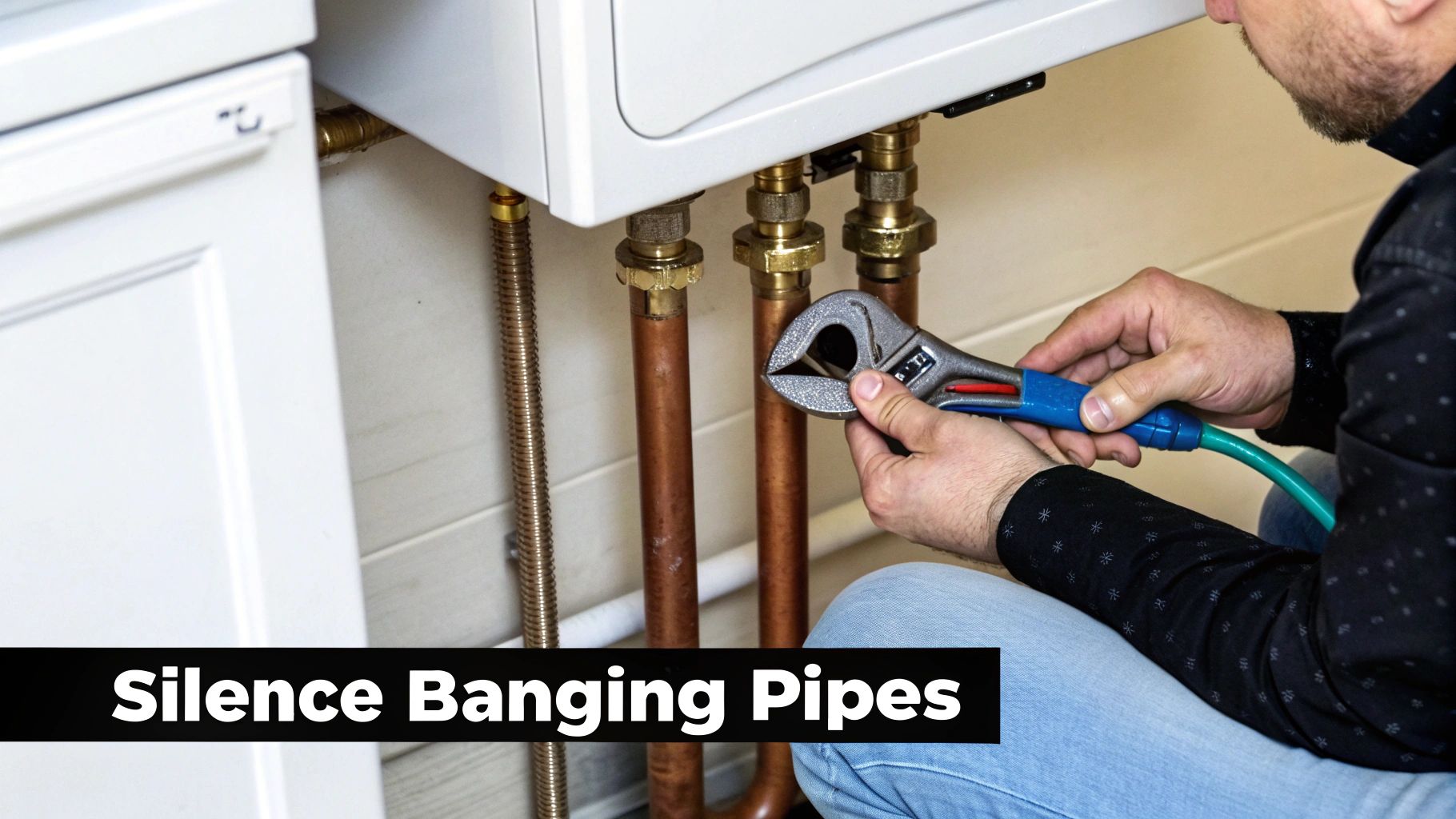
Fortunately, there are a few proven ways to tackle water hammer head-on. These aren't just temporary patches; they're permanent fixes designed to absorb the shock, control the pressure, and secure your plumbing for good.
Installing Water Hammer Arrestors
The most direct way to stop hydraulic shock in its tracks is with a water hammer arrestor.
Think of it as a tiny shock absorber for your pipes. It's a small, sealed chamber with a pocket of air or gas inside, separated from the water by a piston.
When a valve slams shut and sends that pressure wave flying back, the arrestor gives all that energy somewhere to go. Instead of the wave crashing into the pipe walls, it pushes against the piston, compressing the air. This cushions the blow, absorbs the force, and quiets the bang. They work best when installed as close as possible to the noisy culprit—usually a washing machine or dishwasher.
Regulating Pressure with a PLV
Often, the real problem is that the water pressure coming into your home from the street is simply too high. When pressure is excessive, the water has far more momentum, making any sudden stop much more violent.
The fix here is to install a Pressure Limiting Valve (PLV), sometimes called a pressure reducing valve.
A PLV is fitted to your main water line where it acts like a governor, throttling back the high pressure from the mains to a safer, more manageable level for your home’s plumbing. This isn’t just a good idea; in many situations, it’s a requirement.
In Australia, plumbing regulations specifically point to excessive water pressure as a major cause of water hammer. The national standard, AS/NZS 3500, actually mandates that your home's internal water pressure must not exceed 500 kPa to reduce this very risk. For a deeper dive, you can explore Australian plumbing guidance on managing high water pressure.
Other Professional Fixes
While arrestors and PLVs are the go-to solutions, a good plumber will inspect your home's unique setup and might suggest other effective fixes.
- Securing Loose Pipes: Sometimes the noise isn't just the shockwave, but the pipes themselves rattling around. A plumber can get into walls or under floors to add new clips and braces, making sure the pipes are held firm so they can't vibrate or knock against the frame of your house.
- Replacing Problem Valves: If the issue is traced back to one specific tap or valve that closes too quickly, swapping it for a slow-closing model can solve the problem at the source. These are designed to shut off the water flow just a fraction of a second more gently, preventing the sudden stop that creates the shockwave in the first place.
By using these professional strategies, a licensed plumber can pinpoint the exact cause of the noise and put a lasting solution in place.
If you’re sick of the constant banging and worried about what it’s doing to your pipes, it’s time to take action. The expert team at Amari Plumbing and Gasfitting can find the right fix for your Melbourne home. Contact us today for a free, fixed-price quote and get back to enjoying a quieter, safer plumbing system.
When to Call a Professional Melbourne Plumber
That thumping, banging sound from your pipes is more than just an annoyance. While it’s tempting to try and silence it yourself, fixing water hammer is definitely a job you want to leave to the pros. You might figure out which tap is causing the racket, but putting a safe, permanent fix in place needs a licensed expert.
The most reliable solutions, like fitting a water hammer arrestor or a pressure limiting valve, aren't simple weekend DIY projects. They involve cutting into your home's main water lines – something that has to be done by a qualified plumber to make sure everything is up to Australian standards.
Why DIY Fixes Often End in Disaster
Having a crack at fixing water hammer without the proper gear and knowledge can turn a small issue into a massive headache. A poorly installed valve can cause slow, hidden leaks inside your walls, leading to serious water damage and mould. Worse yet, an incorrect 'fix' might not solve the problem at all and could even void the warranty on your dishwasher or washing machine.
This is where getting a professional in really pays off. A licensed plumber won't just slap a band-aid on the problem. They'll get to the bottom of it – whether it's mains pressure that's too high, pipes that aren't properly secured, or a specific faulty valve – and apply the right, code-compliant solution.
A professional plumber gets the job done right the first time, protecting your home from leaks and further damage. It's not just about a quieter home; it's about long-term peace of mind.
Your Local Melbourne Plumbing Experts
For anyone living in Melbourne's eastern suburbs, from Balwyn to Doncaster, getting a real fix is simple. The team here at Amari Plumbing and Gasfitting has the experience to diagnose exactly what's causing the water hammer in your pipes and sort it out for good. Whether you need a plumber in Doncaster or a specialist for gasfitting in Melbourne, our team is ready.
We know that plumbing problems rarely stick to a 9-to-5 schedule. That’s why our team is on call when you need us most. To learn more about our fast-response service, check out our guide to after-hours plumbing solutions.
We believe in being upfront and reliable. You’ll get a clear, fixed-price quote before we start any work, so there are no nasty surprises on the final bill. Our experienced plumbers in Doncaster and the surrounding areas use the right diagnostic tools to get to the heart of the problem quickly and efficiently.
If you’re over the constant banging and worried about what it’s doing to your plumbing, don’t risk a DIY disaster. Contact Amari Plumbing today for a professional assessment and a quiet, secure plumbing system.
Your Questions About Water Hammer Answered
Even after getting your head around the causes and fixes, it's totally normal to have a few more questions about those noisy pipes. This FAQ section cuts straight to the chase, tackling the most common queries we hear from Melbourne homeowners.
The goal here is to clear up any lingering doubts and give you the confidence to take the right next steps for your home.
Can I Fix Water Hammer Myself?
While figuring out which tap or appliance is setting off the racket is a great first step, most real fixes for water hammer need a licensed plumber. Things like installing a pressure limiting valve or a proper water hammer arrestor involve cutting into your main water lines. This isn't just a simple DIY job; it has to be done to Australian Standard AS/NZS 3500 to be safe and legal.
Trying to tackle this yourself can easily end in major leaks, could void your appliance warranties, and might not even solve the problem. Honestly, for a safe, permanent solution and genuine peace of mind, getting a professional in is always the smartest move.
Is Water Hammer Really That Dangerous?
The loud bang itself won't hurt you, but it’s a massive red flag for the health of your plumbing. Think of each 'bang' as a powerful shockwave slamming through your pipes.
This constant abuse weakens joints, wrecks the delicate internal valves in your washing machine or dishwasher, and can eventually cause a pipe to burst. Ignoring water hammer is basically rolling the dice on a sudden, messy, and expensive water damage emergency. It's a clear warning that your system is under serious stress and needs attention before a small annoyance becomes a catastrophe.
How Much Does It Cost to Fix Water Hammer in Melbourne?
This is a classic "how long is a piece of string?" question, because the cost depends entirely on what’s causing the problem.
If it's just a few loose pipes that need to be properly secured, it's a relatively quick and affordable fix. But if the culprit is dangerously high mains pressure, then installing a pressure limiting valve is a more involved job. The final price tag will directly reflect the specific solution your home's plumbing needs.
At Amari Plumbing, we're all about transparency. We give you a clear, fixed-price quote before we even pick up a tool, so you know the exact cost upfront. No nasty surprises.
Will Water Hammer Just Go Away on Its Own?
In a word: no. Water hammer will never fix itself. In fact, it almost always gets worse over time.
With every hydraulic shock, pipe supports get a little bit looser and fittings become progressively weaker. The root cause—be it high pressure, fast-closing valves, or wobbly pipes—is still there and won't disappear until it's properly diagnosed and sorted out. Waiting just lets the damage build up, increasing the risk of much bigger, more expensive repairs down the track. The only way to silence the noise for good is to tackle it head-on.
If you're sick of the constant banging and worried about what it's doing to your plumbing, don't wait for things to get worse. The expert team at Amari Plumbing and Gasfitting can pinpoint the problem and deliver a lasting, professional fix for your Melbourne home. Contact us today for a free, fixed-price quote and enjoy a quieter, safer home.