

That icy blast in the shower on a chilly Melbourne morning isn't just a rude awakening—it's your hot water system screaming for help. Looking after your hot water tank isn't just a ‘nice-to-do’; it’s a critical part of maintaining your home’s comfort, safety, and your bank balance. It's the best way to dodge those expensive emergency call-outs.
Why Regular Hot Water Servicing Is Essential
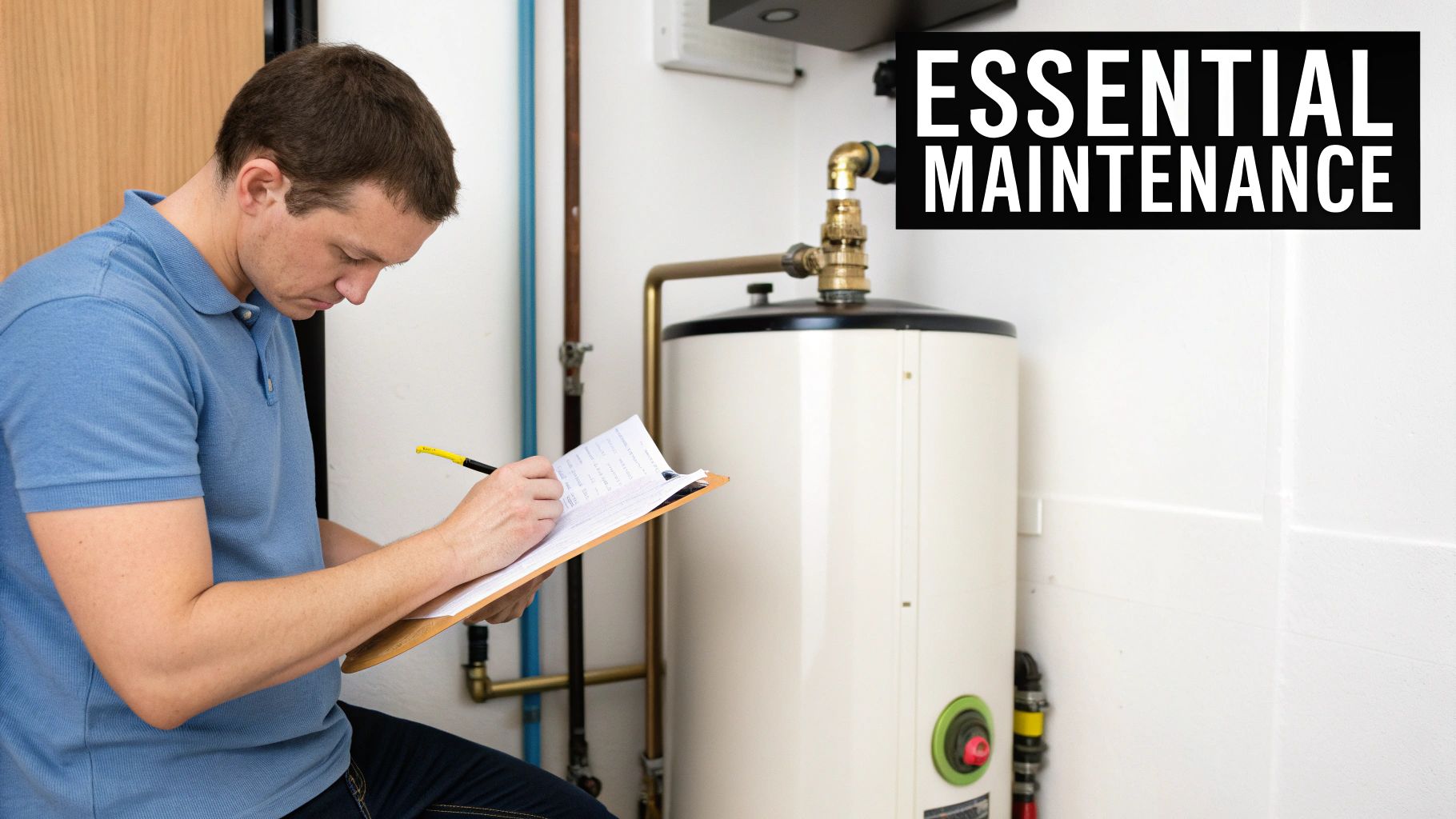
Your hot water system is one of the hardest-working appliances in your home. It’s on the job 24/7, and that constant use inevitably leads to wear and tear. Without a bit of regular TLC from a professional Melbourne plumber, small, unnoticed issues can quickly spiral into major, costly headaches.
Here in Melbourne, our water quality can be a mixed bag, which often leads to sediment and mineral scale building up inside the tank. This gunk forms an insulating layer at the bottom, forcing your heater to work overtime just to get the water hot. The result? A serious dip in energy efficiency and a nasty surprise on your next utility bill. Over time, that extra strain can kill your unit years before its time.
The Financial and Safety Benefits
Getting ahead of problems with proactive servicing is just plain smart. Scheduling a regular check-up means you can spot and fix potential failures before they leave you in the cold. A qualified plumber in Kew or a plumber in Hawthorn has the tools to keep your system running optimally.
This approach pays off in a few key ways:
- Cost Savings: An efficient unit uses less energy, which means lower bills. You also sidestep the massive cost of an emergency replacement when the old one finally gives up the ghost.
- Extended Lifespan: It’s just like servicing your car—regular maintenance keeps it running for longer. You can find out more by reading our guide on how long hot water systems last.
- Enhanced Safety: A proper service includes checking crucial safety gear like the temperature and pressure relief (TPR) valve. If this valve fails, pressure can build to dangerous levels—a risk you never want to take, especially with gas units requiring expert gasfitting in Melbourne.
Regular hot water system servicing isn't just a good idea; it's essential here in Australia. We recommend getting a licensed plumber in for a check-up at least once a year to prevent costly breakdowns and extend the unit's life, which is especially important given Melbourne’s variable water conditions.
A minor service each year and a major one every five years is the gold standard for keeping your system in top shape. In fact, for homes in hard water areas across metro Melbourne, flushing out sediment might be necessary every six months to prevent an efficiency drop of up to 25% and avoid a premature breakdown. It's a small investment that delivers a massive return in performance and peace of mind.
At-a-Glance Hot Water Maintenance Schedule
To make things easier, here’s a quick guide to how often you should be thinking about servicing your specific type of hot water system here in Melbourne.
| Hot Water System Type | Recommended Service Frequency (Melbourne) | Key Maintenance Task |
|---|---|---|
| Electric Storage Tank | Minor service annually, major every 5 years | Anode rod check/replacement, flush sediment, test TPR valve |
| Gas Storage Tank | Annual service by a licensed gasfitter | Burner clean, flue check, thermostat & thermocouple test |
| Continuous Flow (Tankless) | Every 1-2 years | Descale heat exchanger, clean filters, check gas pressure |
| Heat Pump | Annual service | Clean filters & coils, check refrigerant, inspect sensors |
| Solar Hot Water | Every 2-3 years | Check panels, inspect pumps & controllers, top up fluid |
This table is a general guide, but factors like your local water quality and how much hot water your family uses can influence the ideal schedule.
If it’s been more than a year since your system had a look-over, or if you’re noticing it’s not performing like it used to, don't wait for it to fail completely. The qualified team at Amari Plumbing and Gasfitting is here to make sure your system is safe, efficient, and reliable. Give us a call today to book in a comprehensive service.
Telltale Signs Your Hot Water System Needs a Check-Up
Your hot water system almost never gives up the ghost without a bit of a warning first. Long before that dreaded cold shower hits, it’s usually sending out little distress signals. Paying attention to these clues can be the difference between a simple service call from a plumber in Bulleen and a ridiculously expensive, inconvenient replacement.
Sure, the most glaring sign is having zero hot water, but the warnings usually start much, much earlier. Getting to know these symptoms is the key to staying ahead of the game. If you spot them early, a licensed plumber can often sort the problem out before it blows up into a full-blown catastrophe.
Strange Noises Coming From the Tank
Is your hot water tank suddenly rumbling, popping, or making a weird crackling sound? That’s the classic sign of sediment build-up. Over time, minerals and gunk from Melbourne’s water supply settle at the bottom of your tank, forming a hard crust. When your heating element fires up, it has to cook the water through that layer of muck, which causes the water trapped underneath to boil and make those strange noises.
This isn't just annoying; it’s a massive red flag.
- It’s Killing Your Efficiency: That sediment layer acts like insulation, forcing your system to work way harder and burn more energy just to heat the same amount of water. You’ll see the impact on your power bills.
- It’s Causing Wear and Tear: The constant overheating puts a huge strain on the tank and its parts, which can seriously shorten the life of your unit.
- It Could Cause a Leak: All that intense heat can eventually weaken the tank's inner lining, which dramatically increases the risk of it cracking and leaking everywhere.
If you’re hearing these sounds, it's a dead giveaway that servicing for your hot water tank is well overdue. A professional plumber near me can drain and flush the tank, get rid of all that sediment, and get it running efficiently again.
Changes in Water Colour or Quality
Another huge warning sign is what’s actually coming out of your taps. If you turn on the hot water and it’s looking rusty, cloudy, or has a metallic smell, your system is crying out for help. This discolouration is almost always a sign of corrosion happening inside the tank.
Your tank has a little hero inside it called a sacrificial anode rod. This metal rod is specifically designed to corrode away instead of the tank's steel lining. Once it’s completely gone—which usually happens every few years—the water starts eating away at the tank itself, and that’s when you see rust.
Ignoring rusty water is a big gamble. It means the structural integrity of your tank is compromised, and a leak or even a burst is becoming a real possibility. This is just one of the many issues we cover in our guide on what to do when your hot water system is not working.
From water that won't stay hot to little puddles forming around the base of the unit, these signs all point to one thing: your hot water system needs a professional to look at it. Don’t wait for it to fail completely. Get in touch with the experts at Amari Plumbing and Gasfitting for a proper inspection and service.
What a Professional Hot Water Service Actually Involves
When you call a licensed plumber for a hot water service, you’re getting a whole lot more than just a quick glance. Think of it as a comprehensive health check for one of your home's hardest-working appliances. The entire process is designed to bring back its efficiency, tick all the safety boxes, and spot those little problems before they turn into big, wet, expensive disasters.
A good technician won't just rock up and start draining things. There's a method to it, starting with a thorough visual inspection to see what's what. From there, they dive into the core tasks that are absolutely essential for keeping your system running well for years to come.
Flushing Out the Gunk
First up is the big one: draining the tank completely. This isn't just about emptying the water; it's about flushing out all the sediment and mineral scale that’s been quietly building up at the bottom. This sludgy layer is a real performance killer—it acts like insulation, forcing your heating element to work overtime and pushing your energy bills sky-high.
By flushing the tank until the water runs clear, a plumber gets rid of that efficiency-robbing buildup. It’s a simple move that can instantly improve how fast your water heats up and reduce the strain on the whole unit. It's basically a spring clean for your heater's insides.
Inspecting the Critical Safety Gear
With the tank empty, the focus shifts to the really important safety and preventative stuff. Two parts, in particular, get a lot of attention:
- The Sacrificial Anode Rod: This is the unsung hero inside your tank. True to its name, this metal rod is designed to corrode and break down so the steel tank lining doesn't have to. During a service, a plumber will pull it out for a look and replace it if it's on its last legs. This single step prevents the internal rust that eventually causes those dreaded tank leaks.
- The TPR Valve: The Temperature and Pressure Relief (TPR) valve is a non-negotiable safety feature. If the pressure inside the tank gets dangerously high, this valve opens to release it. The technician will test the valve to make sure it's working properly, preventing a potential tank rupture.
This diagram shows the key warning signs—strange noises, weird water colour, or drips—that often mean these parts are failing.
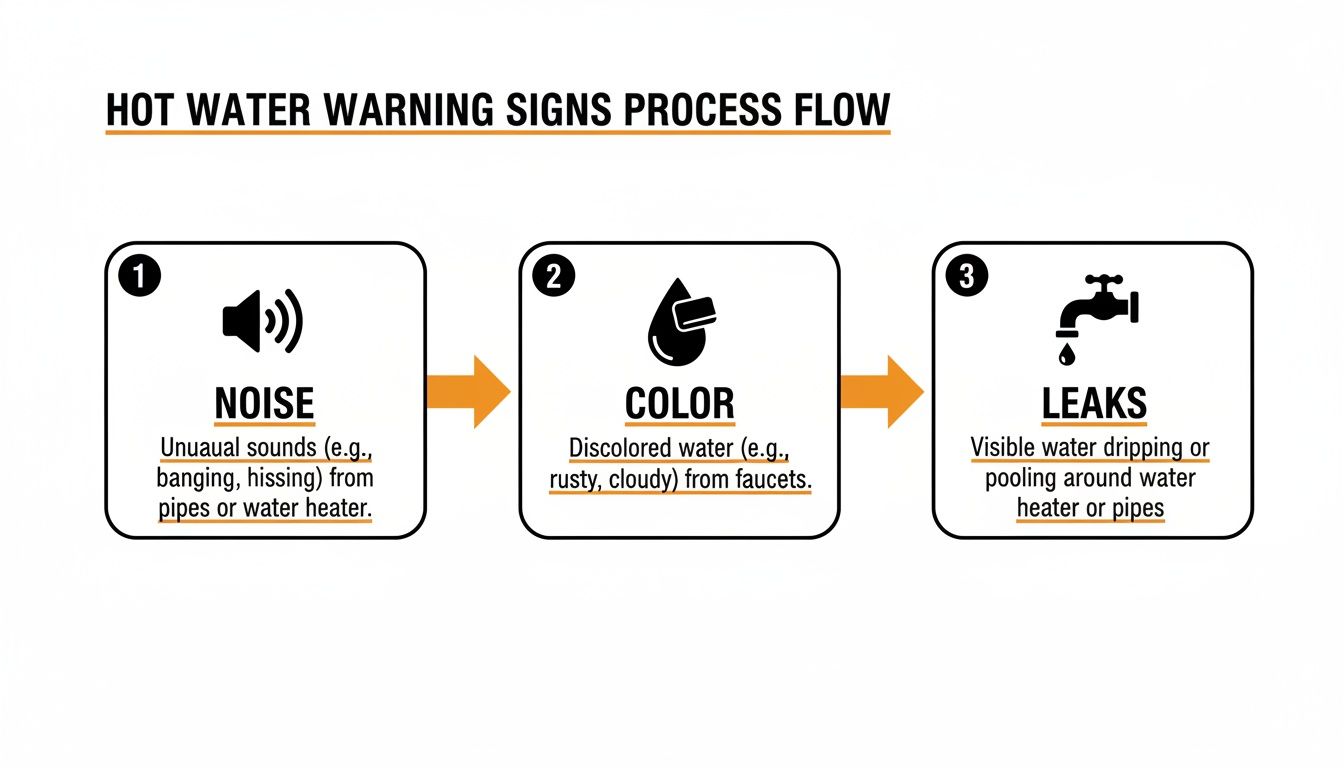
If you spot any of these, it's a clear signal that something's wrong, and a professional service is exactly what’s needed to fix it.
For gas hot water systems, the service is even more detailed. A qualified gasfitter from a company like Amari Plumbing and Gasfitting will inspect the burner assembly, clean the flue, and test gas pressures and the thermocouple to ensure safe and efficient combustion. This is not a DIY task and requires specialised expertise.
Here in Australia, hot water systems can be responsible for 15% to 27% of a household's total energy bill, so efficiency really matters. Skipping maintenance doesn't just waste energy; it dramatically shortens the unit's lifespan. An electric storage tank might last 8-12 years, but annual servicing helps push it toward the upper end of that range, delaying a costly replacement. You can discover more insights about Australian hot water usage.
Once all the checks, cleaning, and replacements are done, the plumber will refill the tank, double-check for any leaks, and make sure everything is firing on all cylinders. It's this thorough, transparent process that shows the real value of getting a pro in, giving you peace of mind that your hot water system is in good hands. If you're due for a service, contact the Amari Plumbing and Gasfitting team today.
Knowing When to DIY and When to Call the Pros
When it comes to your hot water tank, it's vital to know the difference between a quick, safe check you can do yourself and a job that absolutely needs a licensed plumber.
While a bit of hands-on maintenance is great, most of the work on a hot water system is strictly off-limits for DIY. Tackling complex jobs without the right training isn't just risky—it can lead to serious injuries, costly damage, or even void your home insurance. The best way to find a plumber you can trust is to check their credentials and reviews.
The line is pretty clear: if a task involves no special tools and doesn't touch gas lines, electrical parts, or pressurised components, you're generally in the clear. Anything beyond that is a job for a professional.
Safe DIY Maintenance Checks You Can Do
If you're a hands-on homeowner, a few simple checks can help you keep an eye on your system's health. Think of these as observation, not intervention.
-
Look for Leaks: Every so often, take a good look around the base of your hot water tank. Are there any drips, puddles, or signs of moisture? Catching a tiny leak early can save you from a massive water damage headache later on.
-
Test the TPR Valve: Find the Temperature and Pressure Relief (TPR) valve and gently lift the little lever for a few seconds. A quick spurt of water should come out of the overflow pipe. If nothing happens, or if it keeps dripping after you let go, that valve needs a professional's attention.
-
Listen for Odd Noises: Get used to the normal sounds of your unit. If you start hearing anything unusual like popping, hissing, or a low rumbling, it’s often the first sign of sediment build-up or another internal problem that needs an expert diagnosis.
These simple checks are a great way to get familiar with your system. The more you know about what's normal, the quicker you'll spot something wrong.
When to Pick Up the Phone Immediately
Some jobs are strictly for licensed and insured Melbourne plumbers—no ifs, ands, or buts. The risks from electricity, gas, and high-pressure water are just too high to mess with. Imagine a well-meaning homeowner in Balwyn North trying to sort out a suspected gas leak; the potential for disaster is huge. A plumber from Balwyn has the specific training to handle these dangerous situations safely.
Any job that involves taking parts of the unit apart, messing with gas or electrical connections, or replacing major components is non-negotiable. Your safety and your home depend on calling in a professional.
This isn't about gatekeeping; it’s about keeping you safe. It's the same reason you'd call us for a tricky job like sewer relining—some tasks, including pipe relining in Melbourne, just require specialised gear and years of expertise to get right without causing more problems.
To make it crystal clear, here’s a breakdown of what’s safe for you to handle and what’s not.
DIY Maintenance vs Professional Service
| Maintenance Task | Safe for DIY? | Why It's a Professional's Job |
|---|---|---|
| Visual Leak Check | Yes | It’s just a simple observation. No tools, no touching. |
| Testing TPR Valve Lever | Yes | You're just gently testing a mechanical safety lever. |
| Replacing the Anode Rod | No | Requires shutting off water, depressurising the tank, and using specific tools to get inside the unit. |
| Draining & Flushing the Tank | No | Involves handling litres of scalding hot water and needs a specific procedure to avoid injury or damage. |
| Fixing Electrical Components | Absolutely Not | Huge risk of electrocution. All electrical work on a hot water system must be done by a licensed pro. |
| Gas Burner or Line Inspection | Absolutely Not | Extremely dangerous. Working on gas lines can lead to leaks, fires, or explosions. A licensed gasfitter is essential. |
If you spot any red flags during your visual checks, or if your system needs any of the services in the "professional" column, your next move is simple. Contact Amari Plumbing and Gasfitting and let us handle it. We’ve got the skills and tools to service your hot water tank safely and correctly.
Why Regular Hot Water Maintenance Is a No-Brainer for Your Wallet

It’s easy to connect the dots between an annual service and your household budget. Think of it this way: proactive hot water maintenance isn't really a cost. It’s a direct investment that pays you back in real savings and priceless peace of mind.
When your system is clean and running efficiently, it uses less energy to do its job. That simple fact translates directly to lower gas or electricity bills, every single month.
And then there's the long game. Skipping a small, predictable annual service might feel like you're saving a few bucks now, but it often leads to a sudden, four-figure emergency replacement years ahead of schedule. Regular servicing of your hot water tank is hands-down the best way to protect that big metal box you rely on every day.
Getting More Years Out of Your System
A well-looked-after hot water system simply lasts longer. Here in Australia, lifespans can vary quite a bit. A standard electric storage model might give you 8-12 years, while a gas system could push on for 10-15 years.
But—and this is a big but—local conditions like Melbourne's hard water can drastically shorten those numbers if sediment isn't flushed out annually. Curious about what a new one might set you back? You can get a clearer picture of the typical hot water system replacement cost.
By pushing your unit’s lifespan from a potential 8 years to over 12, you defer the significant cost of a full replacement by several years. That’s thousands of dollars that stay in your bank account, not to mention the comfort of knowing your system won’t give up the ghost during a cold Melbourne winter.
The Clear Financial Case for Looking After It
Let’s just compare the two scenarios.
Scenario one involves a small, budgeted fee for an annual service with a trusted local plumber. The other involves a frantic, middle-of-the-night call to an emergency plumber in Melbourne when the tank finally bursts. That situation leads to not just the cost of a new unit, but often a whole lot of water damage repairs too.
The logic is pretty undeniable. A little bit of preventative maintenance gives you:
- Predictable Expenses: You know what a service will cost and can plan for it. No nasty surprises.
- Lower Energy Bills: An efficient system saves you money on every single bill.
- Avoidance of Catastrophe: You seriously minimise the risk of a sudden, expensive, and wet failure.
Whether you need a reliable plumber in Doncaster for a routine check-up or are looking into bigger jobs, proactive care is always the smarter, more affordable choice. Don't wait for a cold shower to tell you it's too late.
Your Hot Water Servicing Questions Answered
We get a lot of the same questions from homeowners across Melbourne, so I've put together the most common ones right here. The goal is to give you some straight, no-nonsense answers to help you figure out what's best for your hot water system.
Think of this as a quick guide to clear up any confusion and give you the confidence to protect your investment. If your question isn't on the list, our team is always ready to help.
How Often Should I Service My Hot Water Tank?
This is the big one, and the honest answer is: it depends on your system and the water quality in your area. For most storage tank systems (both gas and electric) in suburbs like Camberwell or Balwyn, a professional service once a year is the gold standard.
- Electric Storage: A smaller service every year and a major one every five years is the sweet spot. This covers flushing out sediment and checking the crucial anode rod.
- Gas Storage: These absolutely need an annual check by a licensed gasfitter in Melbourne. It’s not just about efficiency; it's about making sure the burner and gas lines are completely safe.
- Continuous Flow: These slick units run best with a service every one to two years. This is mainly to descale the heat exchanger and keep them ticking over perfectly.
Can I Flush My Hot Water Tank Myself?
Look, while it might seem like a simple job for a Saturday afternoon, I'd strongly advise against it. You're dealing with a huge volume of scalding hot water, and the risk of a serious burn is very real.
Beyond the safety aspect, a professional service is much more than just a simple drain and flush. It's about the vital safety checks on parts like the TPR valve and the sacrificial anode rod. This is especially true when dealing with blocked drains, which can complicate the flushing process.
A professional plumber has the proper gear and safety measures to flush the tank right, without any risk to you or your home. It’s one of those jobs that’s truly best left to the experts.
What Does a Standard Hot Water Service Cost in Melbourne?
The price tag can shift a bit depending on your system and what we find during the service. A basic flush and check-up will naturally cost less than a service where we discover the anode rod or TPR valve needs replacing.
At Amari Plumbing, we're all about clear, upfront pricing so you know exactly what you’re in for before we even pick up a tool. Think of it as a small, predictable cost that helps you dodge the massive, unexpected expense of an emergency replacement down the track.
Is It Worth Servicing an Old Hot Water System?
Absolutely. If your older unit is still chugging along but has been neglected, a professional service can often squeeze several more years of life out of it.
A plumber can give it a proper assessment, flush out years of gunk that's killing its performance, and replace any worn-out parts. It’s a really cost-effective way to put off buying a whole new system, especially if the tank itself is still sound. If you're dealing with constant problems, though, we'll give you an honest opinion on whether a replacement makes more sense financially in the long run.
For professional, affordable, and reliable servicing of your hot water tank across Melbourne's eastern suburbs, trust the experts at Amari Plumbing and Gasfitting. We ensure your system is safe, efficient, and ready when you need it. Contact us today for a free estimate and to schedule your service.