

That gut-wrenching moment when you flush and the water starts rising instead of falling? We've all been there. It’s a moment of pure panic, but what you do in the next 60 seconds can mean the difference between a simple fix and a bathroom flood.
Your first instinct might be to flush again, hoping it will just push through. Don't. That's the single worst thing you can do.
Your First Moves When a Toilet Won't Flush
Okay, the water's creeping up. Take a breath. A calm, methodical approach will save you a world of mess. The absolute golden rule is to stop flushing. Hitting it again will only send more water into an already overloaded bowl, guaranteeing it spills over onto your floor.
Next, you need to cut off the water. Look for a small, oval-shaped tap on the wall behind your toilet—that's the water supply valve. Give it a firm turn clockwise until it stops. This cuts the water flow to the cistern and puts you back in control.
Before you grab any tools, it's a good idea to lay down some old towels or newspaper around the base of the toilet. Trust me, even a simple plunging job can get splashy, and this little bit of prep makes cleanup a breeze.
When your toilet's blocked, every second counts. Here’s a quick-reference guide for what to do immediately to prevent an overflow.
Immediate Actions for a Blocked Toilet
| Action | Why It Matters | Pro Tip |
|---|---|---|
| Do NOT Flush Again | A second flush adds water to a blocked bowl, almost guaranteeing an overflow. | Resist the urge! Step away from the flush button. |
| Turn Off the Water Valve | This stops the cistern from refilling, preventing more water from entering the bowl. | Find the small tap on the wall behind the toilet and turn it clockwise until it’s tight. |
| Prepare the Area | Lay old towels or newspaper on the floor around the toilet base. | This contains any splashes and protects your flooring from contaminated water. |
| Open a Window | Let some fresh air in to help dissipate any unpleasant odours. | Good ventilation is always a smart move when dealing with plumbing issues. |
With the immediate danger of a flood sorted, you can take a moment to figure out what you're up against.
Identifying the Likely Cause
Most toilet blockages at home boil down to a few usual suspects.
- Too Much Toilet Paper: This is, without a doubt, the most common reason we see. Modern low-flow toilets are great for saving water, but they can sometimes struggle to clear a large wad of paper in one go.
- Foreign Objects: If you've got young kids, you know anything can end up in the loo. From toy cars to wet wipes and sanitary products (which should never be flushed!), these items create instant, stubborn blockages. A trusted plumber near me can quickly identify and remove these objects.
- A Deeper Problem in the System: Is your shower draining slowly too? Are other drains in the house gurgling? This could be a sign the blockage isn't in your toilet, but further down in your main sewer line. That's a definite cue to call in a professional who handles blocked drains.
It's no secret that we Aussies get through a lot of toilet paper—about 88 rolls per person each year, on average. This habit is a leading cause of blocked drains right across Melbourne. While the Essential Services Commission noted a recent drop in sewer blockages in the metro area, residential toilets are still a massive contributor, especially in the densely populated eastern suburbs. For issues like this, you may need to find a plumber who is local to your area.
Pro Tip: A toilet that isn't flushing properly might not always be a blockage. Sometimes, the issue is with the flushing mechanism inside the cistern. If the bowl is clear but the toilet won't flush, the problem lies elsewhere.
Knowing what you're dealing with is half the battle. A simple paper clog is usually a straightforward DIY fix. But if you suspect a foreign object is jammed in there or the problem runs deeper, it's often best to get an expert opinion. For those really stubborn clogs, calling an emergency plumber in Melbourne will save you a ton of time, stress, and potential damage.
Proven DIY Methods to Clear a Clogged Toilet
Alright, so you've managed to stop the immediate crisis and the water isn't spilling onto your bathroom floor. Good job. Now, let's get down to business and deal with the actual clog. Before you pick up the phone, there are a couple of tried-and-true methods that often sort the problem out with tools you might already have lying around.
First things first, let's recap the emergency steps. Getting this part right is what allows you to safely move on to the DIY fix.
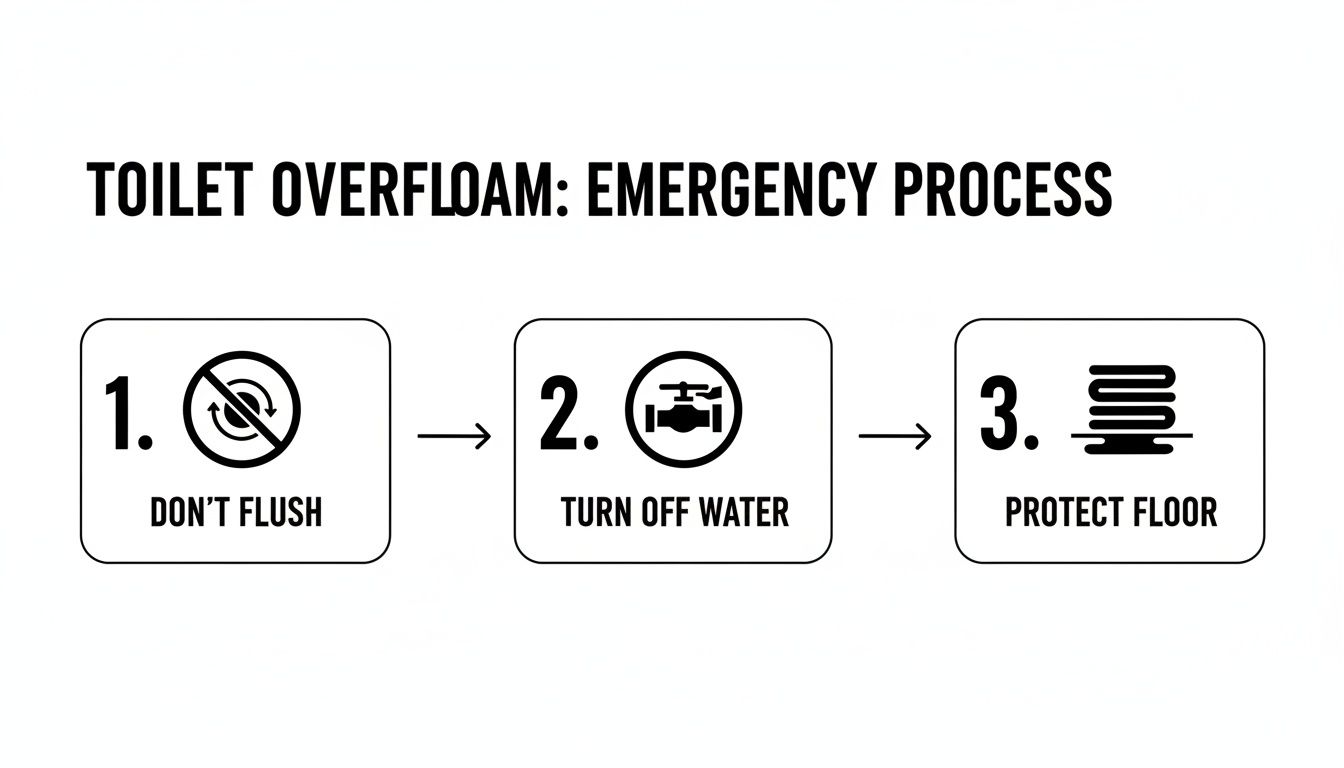
This visual is a great reminder that damage control always comes first. Once the area is secure, you can roll up your sleeves and tackle the blockage.
Mastering the Flange Plunger
Your first and best weapon in this fight is a flange plunger. Don't confuse this with the simple cup-style plunger for sinks. A proper toilet plunger has a soft, fold-out flap (the flange) that extends from the bell, which is crucial for getting a tight seal on the curved drain opening of a toilet.
To get it working, you need enough water in the bowl to completely cover the rubber bell. If the water level has dropped, just pour a bit more in from a bucket.
- Get a good seal. Angle the plunger as you lower it into the water. This lets the bell fill up, preventing you from splashing dirty water everywhere. Now, press it down firmly over the drain hole to create a vacuum.
- Use a vertical motion. The real magic happens with the push-and-pull action. You need to be forceful but controlled, moving it straight up and down. Remember, the upward pull is just as important as the downward push for dislodging whatever is stuck.
- Give it a solid go. Don't give up after a few pushes. You'll need about 15-20 vigorous plunges to build up enough pressure. Pull the plunger away quickly and see if the water starts to recede. You might need to repeat this a few times before you see results.
Using a Toilet Auger or Plumber's Snake
If the plunger just isn't cutting it, the blockage is likely too solid or too far down the pipe for suction alone to fix. It's time to bring in the next level of tool: the toilet auger, also known as a plumber's snake. This nifty device is specifically designed to navigate the toilet's S-trap without damaging the porcelain.
A word of warning here: never use a standard drain snake from your toolbox. The exposed metal tip can easily chip or scratch the inside of your toilet bowl. Always use a proper toilet auger that has a protective rubber or plastic sleeve.
Using an auger is pretty straightforward. You gently feed the cable into the drain until you feel it hit the blockage. Then, crank the handle clockwise. This action will either break up the clog so it can be flushed away or hook onto it, allowing you to pull the obstruction back out.
These are the same fundamental techniques we use for other fixtures around the house. You can get more insight into how we tackle different blockages in our guide on how to clear blocked drains.
If you've tried both the plunger and the auger and that toilet still won't drain, you're likely dealing with something more serious. For those really stubborn clogs, your best bet is to call a plumber in Melbourne to get a professional on the job.
Common Mistakes That Make a Blocked Toilet Worse
When you're staring down a stubborn blocked toilet, the urge to grab the nearest thing and just fix it can be overwhelming. But in that moment of panic, it's incredibly easy to make a bad situation a whole lot worse. Knowing what not to do is just as crucial as knowing the right steps to take.
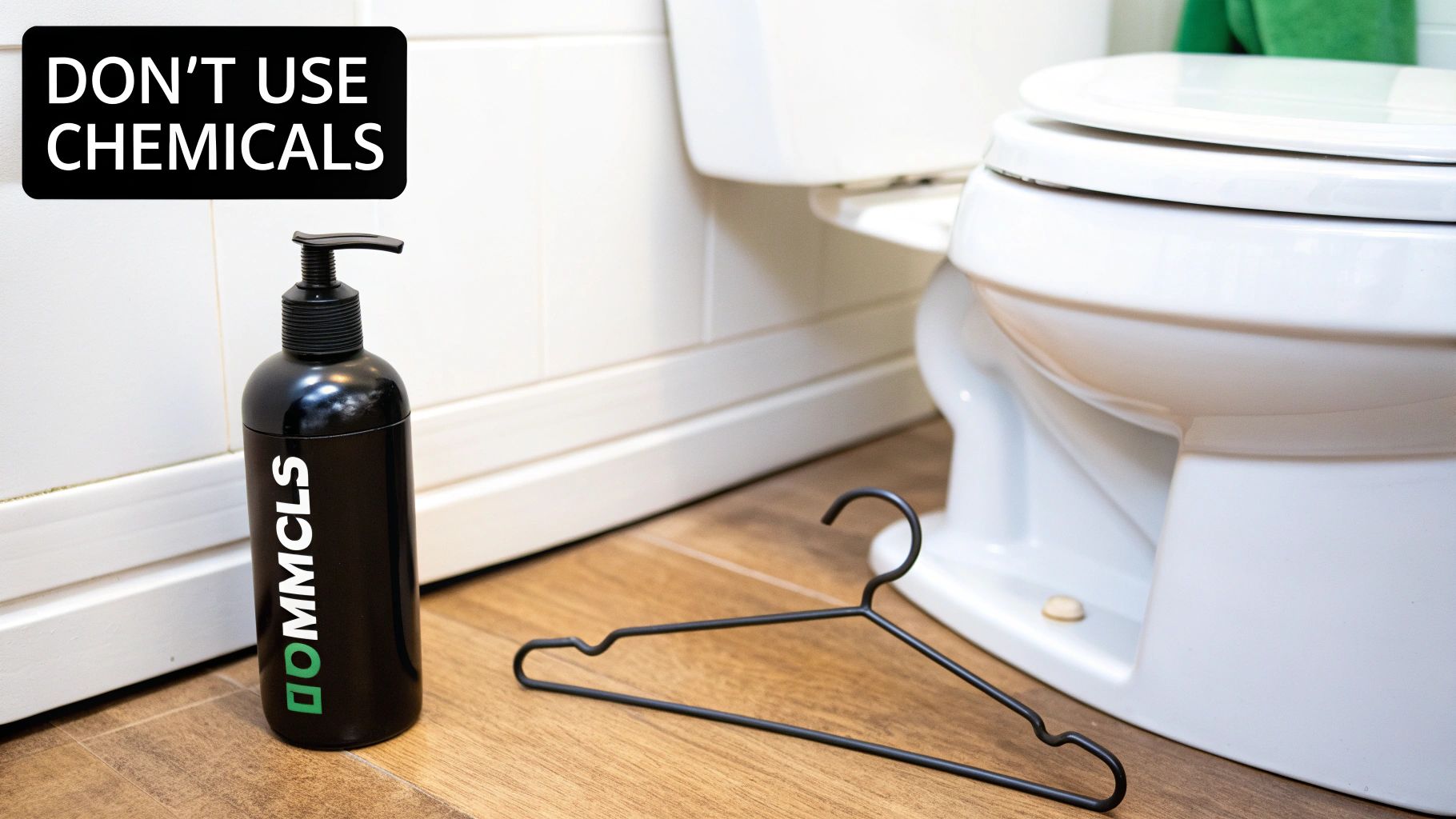
The Dangers of Chemical Drain Cleaners
The first thing many people reach for is a bottle of heavy-duty chemical drain cleaner from the supermarket. Honestly, this is probably the biggest mistake you can make. These products use powerful chemicals that create heat to dissolve clogs, but that very process can spell disaster for your plumbing.
Many older homes across Melbourne, especially in established suburbs like Kew or Hawthorn, have PVC or even old-school cast iron pipes. The intense heat from these chemical reactions can soften, warp, or even crack those pipes. Suddenly, you've turned a simple blockage into a much more expensive plumbing repair, requiring a visit from a plumber in Bulleen.
Worse still, these chemicals kick off some pretty toxic fumes, which are seriously bad news in a small, poorly ventilated bathroom. And if the chemical fails to clear the clog? You’re left with a toilet bowl full of corrosive, hazardous sludge, making any follow-up attempts with a plunger or auger downright dangerous.
Makeshift Tools Cause Permanent Damage
Desperation often leads to some creative, but ultimately damaging, solutions. One we see all the time is the straightened-out wire coat hanger. It might seem like a clever idea, but a metal hanger will almost certainly scratch and permanently damage the porcelain surface of your toilet bowl.
These scratches aren't just cosmetic. They create tiny grooves where grime and bacteria can build up, making your toilet a nightmare to keep clean down the track. In a worst-case scenario, the wire can snap off inside the S-bend, leaving you with an even bigger problem for a plumber in Doncaster East to sort out.
Critical Warning: Never, ever flush non-degradable items. Things like wet wipes, nappies, or paper towels are the leading cause of severe blockages that DIY methods simply can't handle. They contribute to thousands of dollars in removal costs and cause serious environmental harm.
The Endless Flushing Fallacy
This one is pure instinct, but it’s a trap. If the first flush didn't work, a second or third definitely won't. All you're doing is pouring more water into a bowl that has nowhere to go. This is the fastest way to cause a disgusting, unhygienic overflow all over your bathroom floor.
Sewer spills from blocked toilets are a major issue in metro Melbourne. While the network is generally reliable, incidents are often linked directly to flushing things that shouldn't be flushed. Data shows hundreds of blockages every year are caused by items like nappies and paper towels, costing tens of thousands in cleanup fees and damaging our local waterways. You can explore more on what not to flush on the Barwon Water site.
If you’ve already made one of these mistakes or your DIY attempts just aren't cutting it, don't stress. A professional plumber has the right gear to fix the problem safely and quickly. For any stubborn clog you can't shift, contact Amari Plumbing for fast, expert help.
When to Stop DIY and Call a Professional Plumber
You’ve plunged, you’ve tried the hot water trick, and maybe you've even wrestled with an auger, but that stubborn water level just isn't budging. Look, a hands-on approach can sort out plenty of simple clogs, but the real skill is knowing when to throw in the towel.
Recognising when to put down the tools and pick up the phone can be the difference between a quick fix and a full-blown plumbing disaster (and a much, much bigger bill).
Sometimes the blockage isn’t just about what went down the loo; it’s a symptom of a much larger problem lurking deep in your pipes. It's time to call in the experts when you spot specific red flags that your plunger just can't handle.
Warning Signs of a Serious Blockage
Keep an eye out for these tell-tale signs. Ignoring them is a surefire way to have wastewater backing up into your home, and nobody wants that.
- Recurring Blockages: Does your toilet seem to clog up every few weeks, no matter how careful you are? This almost always points to an obstruction or build-up way further down the line than a plunger can ever hope to reach. This may indicate a need for professional sewer relining.
- Multiple Slow Drains: If flushing the toilet makes your shower gurgle, or if the bathroom sink is draining like it's in slow motion, you’ve likely got a blockage in your main sewer line. That's a whole different ball game.
- Foul Odours That Linger: A persistent sewer gas smell hanging around your drains, even after the clog seems to have cleared, is a big hint. It often means there’s a problem in the main sewer line or the vent stack, which requires expert gasfitting in Melbourne.
- Water Backing Up Elsewhere: This is the most urgent sign. If you flush the toilet and see dirty water coming up into your bathtub or shower drain, stop everything. It’s a clear signal your main drain is blocked, and any more water you use is going to end up on your floor.
A professional diagnosis is absolutely essential in these situations. An experienced plumber can use a CCTV drain camera to get eyes inside your pipes, pinpointing the exact location and cause of the blockage—whether it's invasive tree roots, a collapsed pipe, or just years of build-up.
This is especially true here in Melbourne, where the strain on the plumbing industry really highlights the value of getting it sorted right the first time. DIY attempts on these serious clogs fail around 50% of the time. Older homes, like many you'll find in suburbs such as Balwyn, often have old-school pipe configurations that are more prone to major issues. A local plumber in Balwyn North will have the experience to handle these unique challenges.
A professional can nail the problem on the first visit, saving you a world of stress and time. Discover more insights about Victoria's plumbing industry challenges.
When you’re staring down a plumbing emergency that just won't wait, having reliable after-hours plumbing services on speed dial is a lifesaver. For any persistent or widespread issues, it's always the smart move to call in a professional.
Why Melbournians Trust Amari Plumbing
When you’ve tried everything and that toilet still won’t flush, you don’t just need a plumber. You need someone fast, professional, and honest who can sort it out without any fuss.
For homeowners all over Melbourne's eastern suburbs, from Balwyn to Doncaster, that's us—Amari Plumbing and Gasfitting. We get how stressful a plumbing emergency is, and our entire service is built around getting your home back to normal, quick smart.
A blocked toilet has a nasty habit of showing up at the worst possible moments. That’s why we’re committed to a rapid emergency response, often getting to you in as little as 90 minutes. We're the emergency plumbers Melbourne residents rely on, 24/7.
No-Nonsense, Upfront Pricing
Let's be honest, one of the biggest worries when calling a tradie is the final bill. We take that stress right out of the equation with our fixed-price-by-the-job model.
Give us a call about your blocked loo, and we’ll give you an affordable, upfront quote right there on the phone. No hidden fees, no ticking hourly rates. You know exactly what it'll cost before we even pull into your driveway, giving you total peace of mind. It’s a core part of how we do business and a big reason we're a go-to plumber in Melbourne.
A Reputation Built on Happy Customers
You don't have to take our word for it—our reputation really does speak for itself. With over 120 five-star Google reviews, our clients consistently mention our professionalism, speed, and friendly service. This feedback is what we're all about; we don't just fix problems, we aim to deliver a positive experience from the moment you call.
"Called Amari Plumbing for a blocked drain. The plumber was professional, arrived on time, and fixed the issue quickly with no hidden costs. Highly recommend their service!" – A genuine customer review.
We Leave Your Home Spotless
The last thing you need after a plumbing drama is a mess to clean up. We treat your home like it's our own. Our 'clean site promise' is simple: we guarantee to leave your home just as tidy as we found it. We use mats to protect your floors and clean up properly after every single job.
Whether it's a standard blocked drain or something more complex that needs pipe relining in Melbourne, our team has the right tools and the know-how to get it done. We’re not just plumbers; we’re your local problem-solvers, here to provide reliable solutions with integrity. We also handle commercial plumbing projects with the same level of care.
If you’re staring down a stubborn blocked toilet or any other plumbing emergency, don't let it get any worse. Contact Amari Plumbing today for immediate, 24/7 help and see what a difference professional, straightforward service makes.
Your Blocked Toilet Questions Answered
Even after you've managed to clear a clog, it's natural to have a few more questions rattling around. To help you feel completely on top of things, we’ve put together some straight answers to the queries we hear most often from homeowners around Melbourne.
How Much Does It Cost to Unblock a Toilet in Melbourne?
This is a big one, and the honest answer is: it depends. The cost can really swing based on how bad the blockage is and where it’s located in your pipes. Many Melbourne plumbers work on a call-out fee plus an hourly rate, and that can add up faster than you’d think, especially for a stubborn clog.
Here at Amari Plumbing, we don’t like nasty surprises any more than you do. That’s why we offer affordable, fixed-price quotes for most standard toilet blockages right over the phone. You’ll know the exact cost before we even pull into your driveway. If the problem is more complex, like a blockage in the main sewer line, we'll get on-site, diagnose it properly, and give you a full, transparent quote before starting any work. This commitment makes us one of the most trusted Melbourne plumbers.
Do Flushable Wipes Actually Block Toilets?
Yes. A thousand times, yes. This is, without a doubt, one of the biggest culprits behind the serious blockages we see every week in suburbs like Camberwell and Kew.
Don't be fooled by the "flushable" label on the packet. These wipes simply don't break down in water the way toilet paper is designed to. Instead, they travel down the pipes, snag on something, and start catching grease, hair, and other bits of gunk. Before you know it, you’ve got a dense, fibrous blockage that a plunger won't touch. We always tell our clients to stick to the three P's: only flush pee, poo, and (toilet) paper. Anything else goes in the bin.
My Apartment Toilet Is Blocked. What Should I Do?
Living in an apartment or unit block definitely adds another layer to any plumbing drama. The very first thing you should do is figure out if the problem is just in your apartment or if it's a building-wide issue.
The easiest way is to quickly ask a neighbour on your floor or the one below if they're having any toilet troubles. If they are, it points to a clog in a shared drain pipe (the "stack") or the main sewer line. That kind of problem is the responsibility of the body corporate, so you’ll need to let your building or property manager know right away. If it's only your toilet that’s acting up, then you can try the DIY steps we’ve covered or give a professional Melbourne plumber a call.
Can Pipe Relining Prevent Future Blockages?
Absolutely. If you feel like you're constantly dealing with blocked drains, it's a huge red flag that the pipe itself is the real problem. Over time, old pipes can crack, collapse, or get choked by tree roots, creating rough, snag-prone surfaces that catch everything that goes down.
Pipe relining is a brilliant, modern fix for this exact scenario. It's a 'no-dig' repair where we insert a tough, resin-soaked liner into your old, damaged pipe. This liner then hardens, creating a brand-new, perfectly smooth pipe inside the old one. It restores proper flow and completely seals off any entry points for tree roots. It’s a proper, long-term solution to stop those recurring blockages for good.
If you're staring down a stubborn clog that refuses to budge, or if you just need some expert advice, the team at Amari Plumbing and Gasfitting is here to help. For a fast, fair, and no-fuss solution from a trusted Melbourne plumber, contact us today for a free quote.