

That miserable trickle from your shower isn't just annoying; it's a sign that something's not right. Before you can fix the problem, you need to play detective. The very first step is figuring out if the low pressure is hitting just one tap, your whole house, or only the hot water. Nailing this down will point you straight to the most likely culprit, saving you a whole lot of time and potential expense.
First Steps to Pinpoint Your Water Pressure Problem
Before you start imagining the worst-case scenario (like a massive hidden leak), a little bit of investigation often uncovers a surprisingly simple fix. I've seen countless homeowners solve their own water pressure woes in minutes, no plumber required. The trick is to work through the possibilities logically, starting with the easiest and most common issues first.
Let's walk through the diagnostic process. We'll check specific points in your plumbing system to see exactly where the pressure is dropping off.
Is the Problem with Just One Tap?
Start where you first noticed the issue. If it's only the kitchen sink or a single showerhead playing up while every other tap in the house is fine, then you can breathe a sigh of relief. The problem is almost certainly contained right there at that one fixture.
More often than not, the offender is a clogged aerator—that little screw-on screen at the end of the tap. Over time, it gets gunked up with mineral deposits and tiny bits of debris, creating a physical blockage. Just unscrew it, give it a good scrub with an old toothbrush, and pop it back on. You'd be amazed how often this simple trick brings a tap back to life.
Checking Your Main Shut-Off Valves
If every tap in your house has lost its oomph, the problem is affecting the whole system. The first places to check are your home's main water shut-off valve and the valve at the water meter. These two control the entire water supply to your property.
- Main Shut-Off Valve: You'll usually find this where the main water pipe enters your house—often in the laundry, a utility cupboard, or on an outside wall. Make sure the handle is turned all the way anti-clockwise to the fully "open" position.
- Water Meter Valve: This one is located near your water meter, typically at the front boundary of your property. Just like the main valve, it needs to be fully open. Sometimes, after plumbing work has been done in the area, a valve doesn't get opened up all the way again.
This simple decision tree can help you visualise where to start.
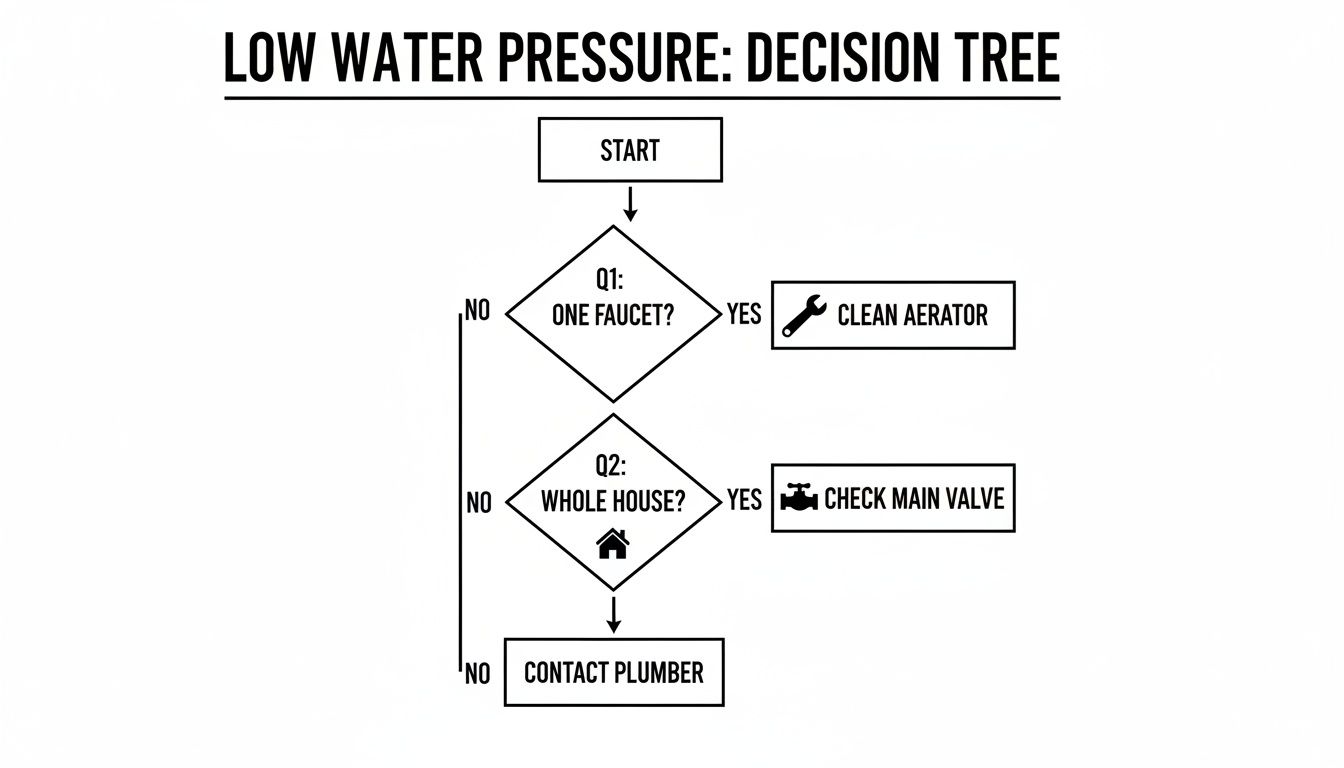
As you can see, figuring out if the issue is isolated or widespread is key. It immediately narrows the search from a single clogged part to a much broader system-wide problem.
To get a really accurate picture of what's happening, it's a good idea to get a specific reading. You can learn more from our guide on how to test water pressure at home. This gives you a hard number to work with as you continue troubleshooting.
If these initial checks don't solve the problem, it's time to dig a little deeper. Use this table to match your symptoms to the most likely causes.
Common Water Pressure Symptoms and Likely Causes
This quick diagnostic table can help you match the water pressure problems you're seeing with their most probable cause and the first action you should take.
| Symptom | Potential Cause | First Action to Take |
|---|---|---|
| Low pressure at one tap | Clogged aerator or faulty fixture | Unscrew and clean the aerator. |
| Low pressure in the whole house | Partially closed shut-off valve | Check main shut-off and water meter valves. |
| Low hot water pressure only | Sediment buildup in the hot water system | Check the hot water system's inlet valve. |
| Pressure suddenly drops everywhere | A major leak or municipal water issue | Check for visible leaks; contact your water supplier. |
| Pressure has slowly worsened over time | Clogged pipes or failing pressure regulator | Test pressure and inspect for pipe corrosion. |
Matching your specific issue in the table is a great next step to zeroing in on the solution before you need to make a call.
The Hidden Impact of Leaks on Water Pressure
If your water pressure has suddenly taken a nosedive, it’s more than just an annoyance during your morning shower. It could be a tell-tale sign of a hidden leak somewhere in your plumbing. Even a tiny pinhole leak, tucked away inside a wall or under the floor, can drain a surprising amount of water and cause a very real drop in pressure at all your taps.
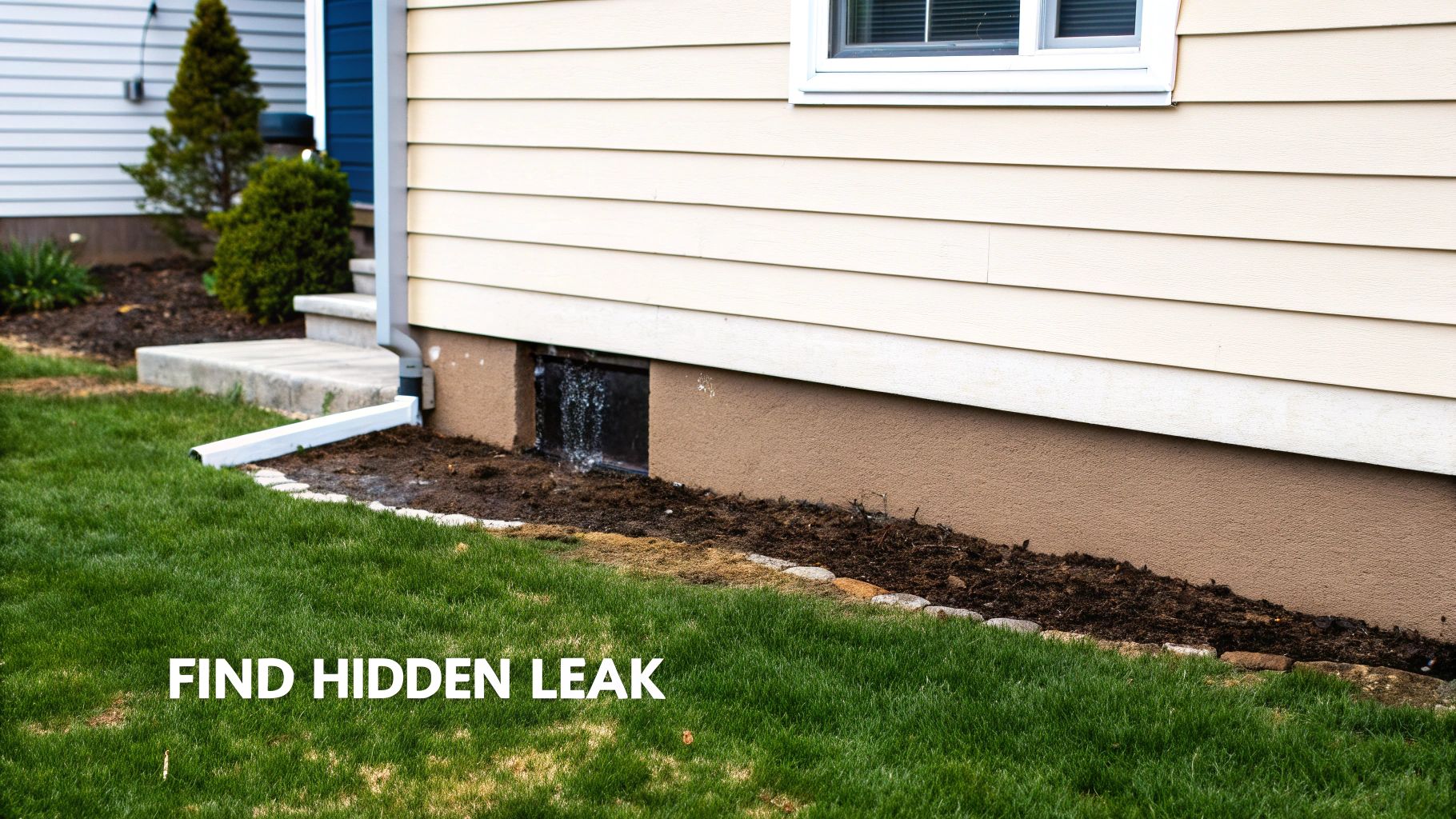
This constant water loss doesn't just mess with your flow; it's also quietly driving up your water bill. This is a common story in many of Melbourne's older eastern suburbs, where ageing pipes are more prone to developing these kinds of slow, sneaky leaks.
Performing a Simple Leak Detection Test
You don’t need any fancy gear to find out if you have a leak. Your water meter is your best friend here. It’s the most straightforward way to confirm if water is escaping somewhere it shouldn’t.
First things first, make sure everything that uses water in your house is completely off. No taps dripping, no dishwasher running, no washing machine on—nothing. Once you’re sure the house is silent, pop outside and find your water meter.
Snap a quick photo of the dial or just write down the numbers. Then, the hard part: don’t use any water for at least an hour. Two hours is even better if you can manage it. Head back out and check the meter again. If those numbers have moved at all, you've got a leak. For a more detailed guide, check out our post on how to detect water leaks.
Spotting the Subtle Clues of a Hidden Leak
The meter test is the definitive proof, but your house will often give you little hints that something’s amiss. Learning to spot these clues can help you catch a leak before it turns into a major disaster.
Keep an eye (and nose) out for these signs:
- Mysterious Damp Patches: Unexplained wet spots, peeling paint, or discolouration on walls, floors, or ceilings.
- A Persistent Musty Odour: That damp, mouldy smell that just won't go away, especially in rooms without obvious moisture.
- Unusually Lush Patches of Grass: If one spot in your lawn is thriving and much greener than the rest, it might be getting a secret drink from a leaking pipe underground.
- The Sound of Running Water: When all the taps are off, you shouldn't hear anything. If you do, it's a dead giveaway.
This is a huge issue across Melbourne. Low water pressure is often traced back to leaks in older pipes, a problem that keeps popping up in state reports. It's not just a local problem, either. Across Australia, our urban water systems lost a massive 269 billion litres of treated water in 2023-24. That works out to an average of 65.5 litres per connection every single day—a loss that directly hits the pressure in our homes. You can dig into the data yourself in Victoria's Water Performance Report.
Pro Tip: Never ignore a "small" leak. A drip that fills a coffee cup in 10 minutes will waste over 11,000 litres of water in a year. That’s a whole lot of pressure and money literally going down the drain.
Modern Solutions for Hidden Pipe Leaks
When a leak is buried underground or inside a wall, the old-school fix usually meant digging up the garden or cutting open walls. It’s messy, destructive, and a massive headache.
Luckily, plumbing technology has come a long way. At Amari Plumbing, we use trenchless pipe relining in Melbourne to solve these problems without the destruction. This "no-dig" approach lets us repair the damaged pipe from the inside. We feed a tough, resin-soaked liner into the pipe, which then hardens to create a brand new, seamless pipe inside the old one.
This technique seals every crack and pinhole, restoring the pipe's strength and bringing your water pressure right back up. It’s a cleaner, faster, and often cheaper solution for those hard-to-reach leaks. If you think a hidden leak is behind your pressure woes, contact Amari Plumbing and Gasfitting and we can talk you through some modern, non-invasive options.
Alright, if you’ve checked for leaks and you know the main valves are wide open, but your shower still feels more like a light drizzle, it’s time to look at one of the most important (and often forgotten) parts of your plumbing: the water pressure regulator.
This little gadget, sometimes called a pressure reducing valve or PRV, is a real workhorse for your home's plumbing system.
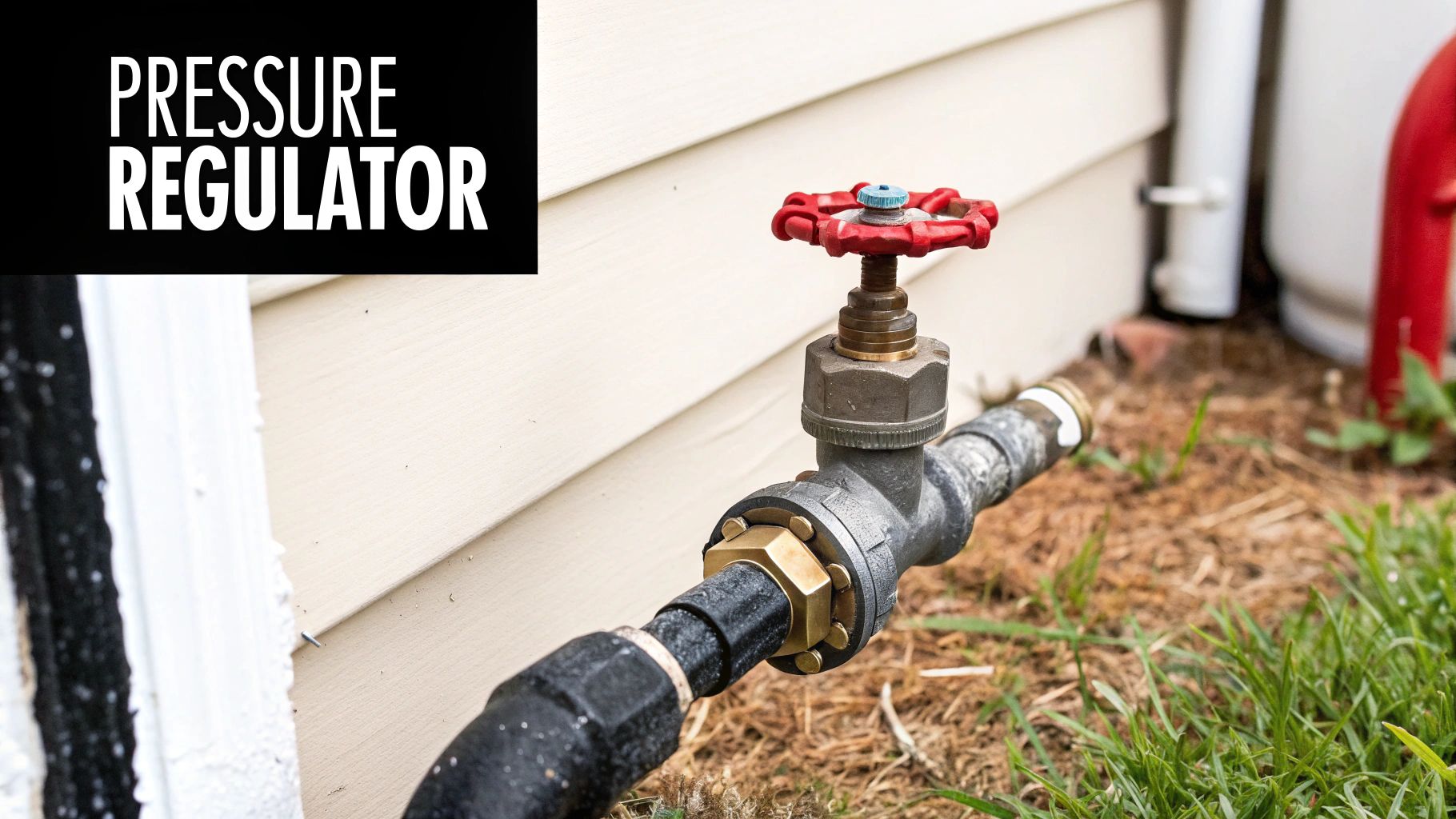
Heaps of homes across Melbourne have a PRV installed, especially where the council water pressure is quite high. Its entire job is to take that powerful pressure from the street and dial it back to a safer level for your pipes and appliances, usually somewhere between 300 and 500 kPa.
Like any mechanical part, though, they don't last forever. When a PRV starts to fail, it often does so by slowly choking the water flow, which is what leads to that frustratingly weak pressure you’re noticing all over the house.
Where to Find Your Pressure Regulator
First things first, you need to find the thing. A PRV is typically a bell-shaped brass fitting right on your main water line, usually very close to where the pipe first enters your house.
Have a look near your main water shut-off valve—it's often just after the valve or sometimes before your water meter. You're searching for that distinctive bell shape. Once you've spotted it, you can start to figure out if it's the source of your problems.
Spotting the Signs of a Failing PRV
A faulty regulator can cause more than just low pressure; it can lead to all sorts of weird plumbing behaviour. Think of it like a dodgy dam—it might let too little water through, or it could suddenly let a huge surge pass, causing chaos down the line.
Here are the tell-tale signs to look out for:
- Weak pressure everywhere: This is the classic symptom. The guts of the valve (a spring or diaphragm) get stuck and permanently restrict the water flow.
- Sudden water pressure surges: Have you ever turned on a tap and it blasts water for a second before calming down? That’s a big red flag the regulator is having trouble keeping things steady.
- Banging or humming pipes: Odd noises, especially a humming or vibrating sound when water is running, can be a sign of a worn-out regulator. Plumbers often call this "water hammer."
- No water at all: In a worst-case scenario, the valve can fail completely in the closed position, cutting off your water supply altogether.
If any of this sounds familiar, your PRV is the number one suspect. While some have an adjustment screw on top of the bell housing, fiddling with it is a delicate operation.
A Quick Word of Warning: Trying to adjust a pressure regulator yourself can go wrong, fast. Cranking the pressure up too high (over 500 kPa) can seriously damage your appliances, void warranties, and even cause your pipes to burst. This is a job for a professional plumber with the right tools, like a pressure gauge, to get it set just right.
While you can do a basic visual check, figuring out for sure if the PRV is the culprit requires a pro. A licensed plumber can test the pressure on both sides of the regulator to confirm it’s faulty. And when it comes to reliable gasfitting in Melbourne, especially if your PRV is near a gas hot water system, getting a professional is absolutely non-negotiable.
For homeowners in suburbs like Balwyn or Doncaster, a faulty regulator is an issue we see all the time in both older and newer homes. The Amari Plumbing team can quickly diagnose the problem and let you know if it can be repaired or needs a full replacement.
Don't let a dodgy valve get in the way of a decent shower. If you think your PRV is on its last legs, contact us today for a proper assessment. We'll help you get that strong, reliable water flow back.
How Your Hot Water System Can Reduce Pressure
Ever notice your water pressure is perfectly fine, right up until you turn on the hot tap? If that sad trickle is an all-too-familiar sight, you can probably stop blaming the mains water supply. This is a classic tell-tale sign that your hot water system is the real culprit.
When low pressure is isolated to just the hot water, it’s a massive clue. It means we can shift our focus from the pipes coming into your property and look directly at the heater itself and its immediate connections.
Uncovering Common Hot Water Pressure Killers
For homes with the old-school storage tank hot water systems, the problem is often brewing inside. Over many years, sediment and mineral deposits naturally settle at the bottom of the tank, forming a thick, sludgy layer. This build-up can literally clog the outlet pipe, strangling the flow of hot water before it even has a chance to reach your taps.
But it’s not just sludge you have to worry about. Several other parts can fail and kill your pressure. A clogged or faulty tempering valve – the part that mixes hot and cold water to a safe temperature – can get choked up with mineral scale. In other cases, internal parts like the dip tube or anode rod can corrode and break apart, sending little bits of debris down the plumbing lines.
Got one of the newer, instantaneous hot water systems? The issue is likely a bit different. These tankless units are designed to heat a certain amount of water per minute. If your system is too small for your family’s needs, it just can't keep up. Running the hot tap in the kitchen while someone’s showering can easily overwhelm it, leading to a frustrating pressure drop for everyone.
An undersized instantaneous system is like asking a small car engine to pull a heavy trailer—it will struggle to keep up with demand, and you'll notice the strain immediately in the form of weak water flow.
Maintenance and Professional Help
You can try a few things yourself, but it's vital to know your limits. For a storage tank system, flushing it out periodically can help clear some of that loose sediment. It’s a simple process of draining the tank to wash the build-up away. But if the blockage is really bad or there’s a broken part inside, a simple flush just won’t cut it.
This is where you need a professional, especially if you’re dealing with a gas appliance. Trying to service a gas hot water system without the right qualifications isn't just a bad idea—it's incredibly dangerous. Anything involving the gas line or internal burners needs a licensed gasfitter, no exceptions. If you find your hot water system is not working properly, calling in a pro is the safest and smartest move.
A qualified Melbourne plumber can get to the bottom of it. We can inspect the unit, pinpoint the exact cause of the pressure drop, and let you know if it's a simple blockage, a failing valve, or a sign that the whole unit is on its last legs. For any hot water system drama—whether it’s poor pressure, weird noises, or no hot water at all—it's always best to contact Amari Plumbing and Gasfitting. Our team has the right tools and know-how to sort it out safely, ensuring your hot water gets back to flowing freely and reliably.
When High Mains Pressure Becomes a Problem
It might sound odd to bring up high water pressure in an article about fixing low pressure, but the two are often two sides of the same coin. While a weak shower is frustrating, pressure that's too high can be genuinely destructive. It silently wages war on your home's plumbing, eventually causing the very leaks that make your pressure plummet.
It’s a classic case of too much of a good thing.
Excessive force coming in from the street mains—anything over 500 kPa is generally considered too high—puts constant, relentless stress on every single part of your plumbing system. Think of it like overinflating a car tyre; sooner or later, something has to give. This strain weakens pipe joints, wears out tap washers, and destroys the delicate seals inside your dishwasher and washing machine.
The Silent Threat to Your Plumbing
The real danger with high mains pressure is that it’s a slow burn. You probably won't notice it day-to-day, but that constant force is accelerating the wear and tear across your entire network of pipes. This is a massive issue for many homes right across Melbourne, where high municipal pressure can be all too common.
This excessive pressure is a direct cause of several nasty problems:
- Burst Pipes: The constant strain is a leading cause of catastrophic pipe failures, which can lead to major water damage.
- Dripping Taps: High pressure forces water past washers and seals, causing those annoying drips that waste water and signal a component is failing.
- Damaged Appliances: Your expensive appliances are only built to handle a specific pressure range. Pushing past those limits can void warranties and lead to costly breakdowns.
Ironically, all these issues—burst pipes, leaky seals, stressed joints—end up creating leaks. And as we've already covered, leaks are one of the biggest culprits behind a sudden drop in your household water pressure.
Your Home's Best Defence: A Pressure Reducing Valve
The single most effective way to protect your home from this silent threat is with a Pressure Reducing Valve (PRV). This crucial bit of kit is installed on your main water line and acts like a gatekeeper. It takes the high, unpredictable pressure from the street and dials it down to a safe, consistent level for your home, usually somewhere between 300-500 kPa.
A PRV isn't just about fixing a problem; it's a preventative measure. Think of it as safeguarding the entire lifespan of your plumbing system, ensuring consistent pressure and heading off expensive repairs down the track.
A professional plumber can quickly test your home's static water pressure with a gauge to see if it’s pushing past the recommended limits. If it’s too high, they can install a new PRV or correctly calibrate the one you already have. This is definitely not a DIY job—setting it incorrectly can either fail to protect your pipes or choke your water flow unnecessarily.
Melbourne's Pressure Problem and Proven Solutions
High mains pressure is a known headache in many Melbourne suburbs. It accelerates pipe wear and causes leaks that ultimately kill your household water pressure. But we know that managing it works. Barwon Water's initiative in Geelong, for example, has been targeting high-pressure zones since 2012. The result? Fewer pipe bursts and leaks, all without residents noticing any drop in performance. It just goes to show how managing pressure at the source protects the whole system. You can explore more on how regional water authorities manage this issue to protect local homes.
For individual homeowners, taking control of your property's pressure is key. The team at Amari Plumbing has helped countless property managers and homeowners across Melbourne's eastern suburbs maintain an optimal pressure of 300-500 kPa, preventing damage from spikes over that 500 kPa threshold. If you're hearing things like noisy pipes or dealing with constantly dripping taps, it's worth getting it checked out.
Protecting your home from high pressure is one of the most proactive steps you can take for long-term plumbing health and reliable water flow. If you suspect your pressure is too high, contact Amari Plumbing and Gasfitting for a professional assessment.
Alright, you've given it a good crack. You’ve cleaned the aerators, fiddled with all the shut-off valves, and your shower still feels more like a sad trickle than a refreshing blast. This is the point where stepping back from the DIY approach is the smartest move.
Some plumbing issues just aren't weekend warrior material. Pushing on when you're out of your depth can quickly turn a frustrating problem into a very expensive, very wet disaster.
Things like deep-seated pipe blockages from invasive tree roots, a busted pressure regulator, or a sneaky leak hiding behind a wall require specialised gear and years of know-how. Honestly, these are jobs for a licensed professional with the right diagnostic tools to sort things out safely and properly.
When to Throw in the Towel and Call a Plumber
It’s probably time to get an expert in if you're facing any of these situations:
- The pressure is down everywhere. If you've double-checked that your main valves are wide open and the whole house has gone weak, it's a big red flag. This often points to a faulty pressure-reducing valve (PRV) or, worse, a significant leak on your main water line.
- You think there's a hidden leak. Did your water meter test fail? Are you noticing damp patches on the walls, a musty smell, or a squishy spot on the lawn? You need professional leak detection to pinpoint the source without tearing your house apart.
- The problem is only with the hot water. When it's just the hot taps acting up, the culprit is usually inside the hot water system itself—think sediment build-up or a failing component. For your own safety, especially if you have a gas system, this is a job for a qualified gasfitting Melbourne expert.
- Your pipes are making strange noises. Hearing banging, juddering, or humming sounds (often called "water hammer") is usually a sign of a pressure regulation issue that needs a professional touch to adjust or replace parts.
For a lot of homeowners in Melbourne's eastern suburbs, from Balwyn to Doncaster, getting a professional diagnosis is simply the fastest way to get your water pressure back to normal. Trying to fix complex issues without the right experience can lead to a world of pain.
The team here at Amari Plumbing can give you a clear, upfront price and a fast response. Stop the guesswork and get a real solution that lasts.
If your water pressure woes are getting the better of you, contact us today, and we'll get it sorted.
Got Questions About Your Home's Water Pressure? We’ve Got Answers.
When your taps start to trickle instead of gush, it’s easy to feel a bit lost. Don’t worry, you’re not the first Melbourne homeowner to deal with this. Let's tackle some of the most common questions we hear about water pressure.
Is This a Me Problem, or a Council Problem?
This is always the first, and most important, question to ask. Thankfully, it’s a simple one to figure out.
Before you start tearing things apart, just pop next door for a quick chat with your neighbours. Ask them if their water pressure has dropped off too. If the whole street is dealing with a weak flow, it’s a pretty safe bet the issue is with the municipal supply. It could be anything from scheduled maintenance to a burst water main somewhere in the area.
If it’s just you, and your neighbours are enjoying a perfectly normal shower, then the culprit is hiding somewhere in your property’s plumbing. That’s your signal to start investigating your own system.
Can a New Water Filter Kill My Water Pressure?
Yes, absolutely. We see this one all the time. While filters are great for cleaner, better-tasting water, they can definitely put a dent in your flow rate, especially right after you’ve installed a new one.
Whole-house filtration systems or cartridges with super-fine filters are usually the main offenders. Think about it: the filter creates a physical barrier that water has to push through. If your pressure problems started the moment that new filter went in, you’ve likely found your suspect.
Always make sure the filter you choose is properly sized for your household's needs. And remember, all filters eventually get clogged with the gunk they're catching, which will slowly choke your water pressure over time. A good plumber can install a pressure gauge before and after the filter, which is a brilliant way to see exactly how much pressure it’s costing you.
What’s the Ideal Water Pressure for a House in kPa?
In Australia, the sweet spot for home water pressure sits between 300 and 500 kPa (kilopascals). This range gives you that satisfying, strong flow for your shower without putting your pipes and appliances under dangerous stress.
Anything below 300 kPa is going to feel frustratingly weak. On the flip side, pressure over 500 kPa is too high. It can strain pipe joints, wreck seals in your appliances, and lead to some very expensive leaks down the track.
A licensed plumber in Melbourne can get an exact reading of your home’s static water pressure using a proper gauge. If it’s too high, they can fit or adjust a pressure-reducing valve (PRV) to bring it back into that safe, happy zone and protect your entire system.
If you've worked through these checks and are still scratching your head over low water pressure, it's time to bring in the pros. For a fast, reliable diagnosis and a clear, upfront price, trust the experts at Amari Plumbing and Gasfitting. We service homes right across Melbourne, solving everything from simple blockages to complex hidden leaks.
Contact us today for a free, no-obligation phone estimate.