

We’ve all been there. That heart-stopping moment when you flush, and instead of the water going down, it starts to rise. It’s a moment of pure panic for most Melbourne homeowners, but the first thing to do is take a breath. For residents in suburbs like Kew or Camberwell, a reliable plumber in Melbourne is the best call for peace of mind.
Your first move is always the most important: stop flushing. Then, immediately shut off the water supply. Getting this right stops a simple clog from turning into a full-blown bathroom flood.
Your Immediate Response Plan For A Blocked Toilet
I can't stress this enough: whatever you do, do not flush again. It’s a natural instinct, hoping the second go will fix it, but trust me, it almost never does. All you’ll achieve is a floor covered in toilet water, which is a much bigger problem to clean up.
The key here is to stay calm and work through the problem methodically. Before you even think about reaching for a plunger, you need to get the area prepped. A quick search for a "plumber near me" might be tempting, but a few simple steps can often solve the issue.
Get The Area Ready and Turn Off The Water
First things first, clear the decks. Move any bathmats, rubbish bins, or scales out of the splash zone. It’s a smart move to lay down some old towels or a stack of newspapers around the base of the toilet—just in case things get a little messy.
Now for the most critical step: kill the water supply to the toilet. Look for the small tap (usually a silver valve) on the wall behind or next to the loo, connected by a flexible hose. Turn the valve clockwise as far as it will go. This stops the tank from refilling, putting you firmly back in control of the situation.
This whole process is about making the right call at the right time.
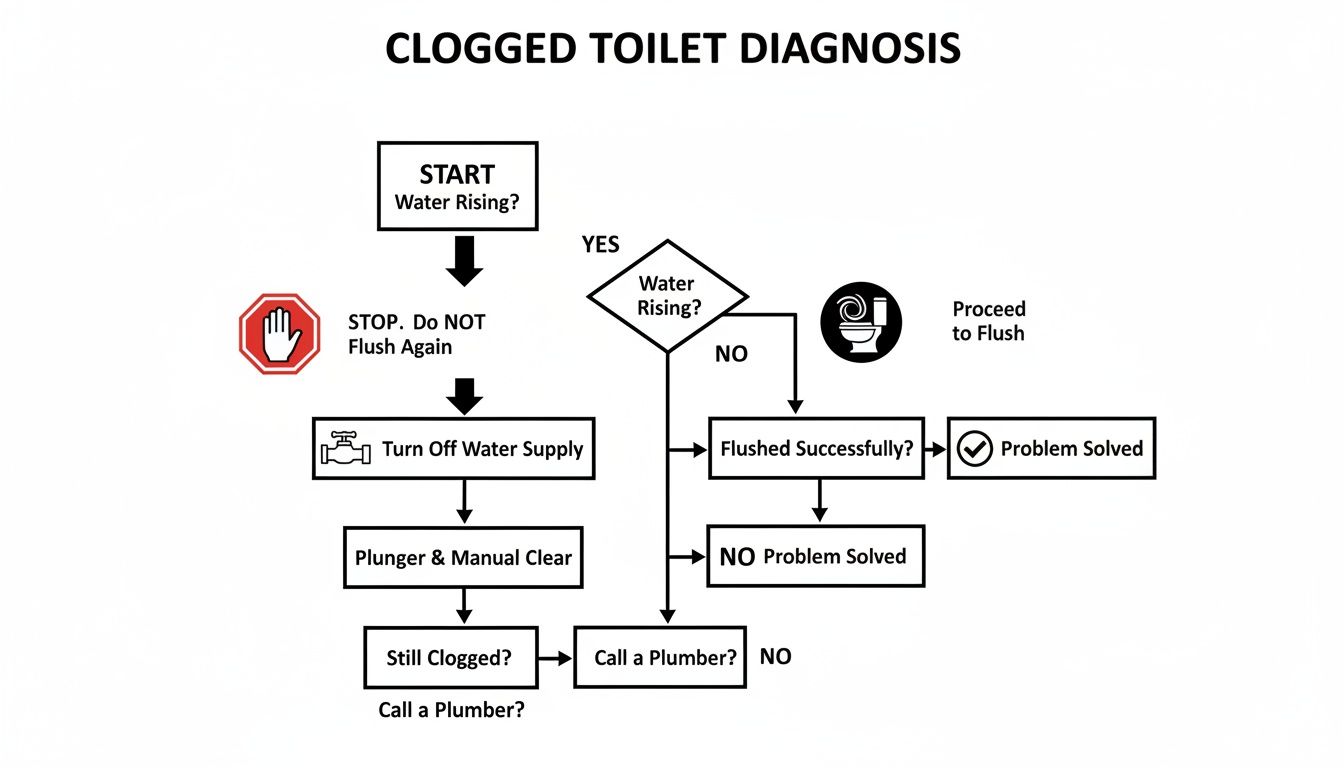
As you can see, that initial decision to stop the water flow is the fork in the road between a quick fix and a serious mess.
Sometimes, the problem isn't a clog but a faulty flush mechanism that causes the toilet to run continuously. If that sounds like your issue, we’ve got more detailed advice in our guide on what to do when your toilet won't flush properly.
With the water off and the area prepped, you're ready to tackle the blockage head-on.
Mastering The Plunger With The Right Technique
Using a plunger seems simple enough, right? But believe me, there's a real technique that separates a quick fix from a splashy, frustrating mess. Most people don't realise that not all plungers are built the same. For a toilet, you absolutely need a flange plunger—it’s the one with that extra rubber flap that folds out from the bottom.
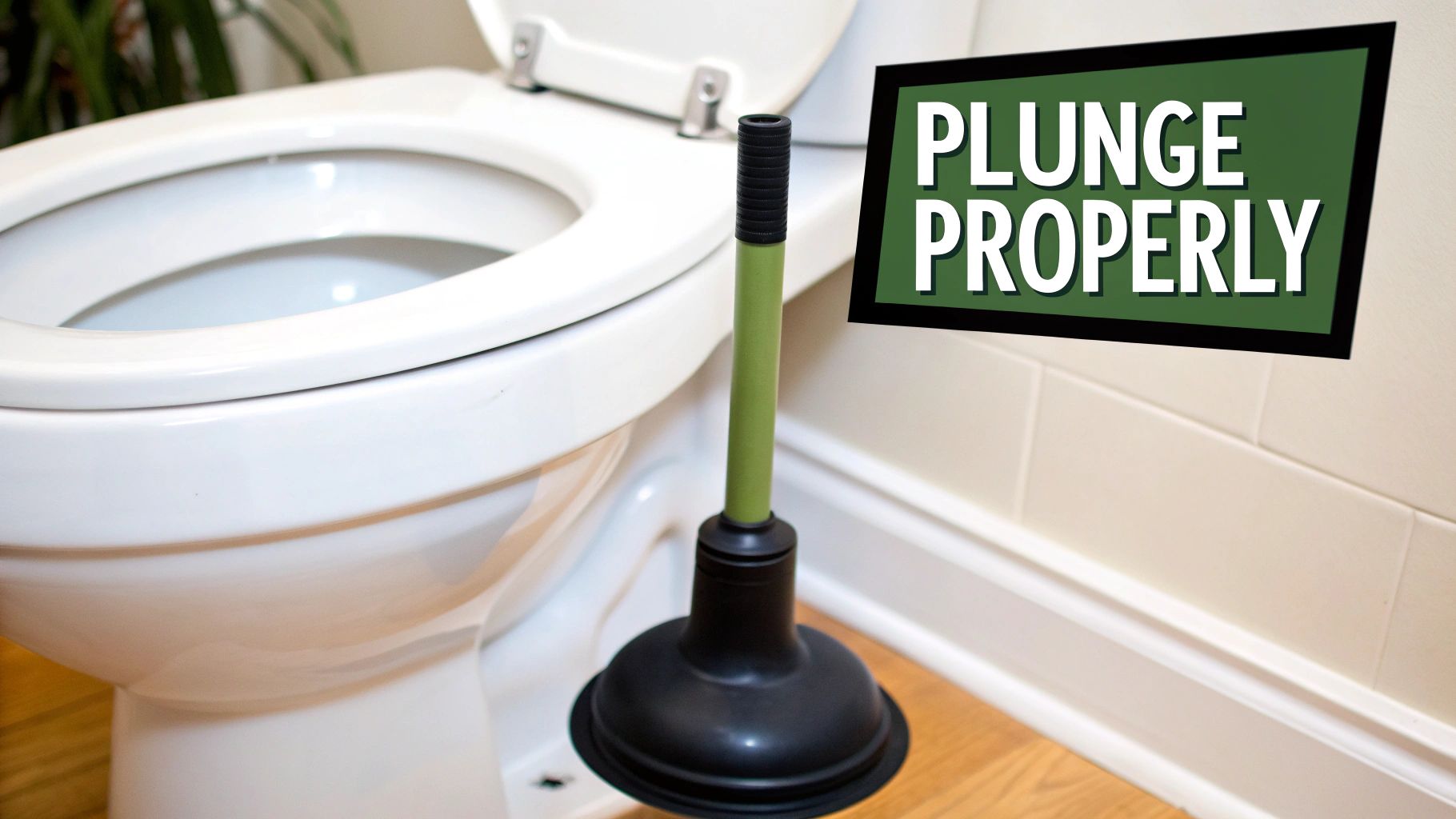
That flat, cup-style plunger you might have lying around? That’s for sinks and showers. It just can’t get the seal you need in a toilet bowl. The flange is the game-changer, designed to fit snugly into the toilet's drain opening to create a powerful vacuum. For any recurring blocked drains, it’s best to call a professional.
Creating The Perfect Seal And Motion
First things first, check the water level. You need enough water in the bowl to completely cover the plunger's rubber head. If it’s a bit low, just add some from a bucket until it’s submerged. This is critical—it ensures you’re pushing water, not just air, into the clog.
Now, guide the flange directly into the drain opening. Your first push should be a gentle one. This is all about getting the air out from under the plunger’s bell without sending a wave of toilet water back at you.
Pro Tip: Once that air is gone, keep the seal tight and start plunging with firm, vertical thrusts. It’s a push-and-pull motion. A lot of people focus on the push down, but the suction created by the pull-up is often what really dislodges the blockage.
Common Plunging Mistakes To Avoid
Knowing how to plunge properly also means knowing what not to do. I’ve seen a few common mistakes turn a small problem into a much bigger one.
- Going in too aggressively: Plunging with all your might or at a weird angle can break the airtight seal at the base of your toilet—the wax ring. A damaged wax ring means you’ll get a slow, smelly leak on your floor every time you flush.
- Giving up too soon: A stubborn clog isn't going to budge on the first try. Give it a solid 20-30 seconds of consistent plunging, take a breather, and then go again. It often takes a few rounds to build up enough pressure.
- Using the wrong tool: Like I said before, a cup plunger just won't cut it. You'll get weak pressure, a lot of splashing, and zero results.
For most everyday blockages, like too much toilet paper, mastering this technique is all you’ll need. It’s your best first line of defence before having to move on to anything more serious.
Advanced DIY Methods When Plunging Is Not Enough
So, you’ve given the plunger a solid go, but that stubborn clog just isn’t budging. Don't reach for the phone just yet. Before you start searching for a plumber in Melbourne, there are a couple of powerful, chemical-free methods that often get the job done when plunging alone fails.
These are the next logical steps for anyone dealing with a more serious blockage, whether you're in Balwyn, Doncaster, or anywhere across the eastern suburbs.
The Dish Soap And Hot Water Trick
It might sound too simple to work, but this is a surprisingly effective trick that uses two things you definitely have in your kitchen: dish soap and hot water. It works wonders on organic clogs, like too much toilet paper, because it helps lubricate and break down the blockage.
First, squirt a generous amount of liquid dish soap into the toilet bowl – about half a cup should do the trick. Let it sit for 20-30 minutes. This gives the soap time to sink down and coat whatever is causing the jam, making it slick and much easier to dislodge.
Next, you'll need some hot water. Grab a bucket and fill it with water that’s about as hot as a fresh cup of tea. Do not use boiling water. Pouring boiling water straight from the kettle into a cold porcelain bowl can cause it to crack from thermal shock, turning a simple clog into a very expensive disaster.
Pour the bucket of hot water into the bowl from about waist height. The force of the water, combined with the heat and the lubricating soap, is often all it takes to push the clog through. It's a gentle approach that's always worth a shot before you bring out the heavy-duty tools.
Using A Toilet Auger For Deeper Blockages
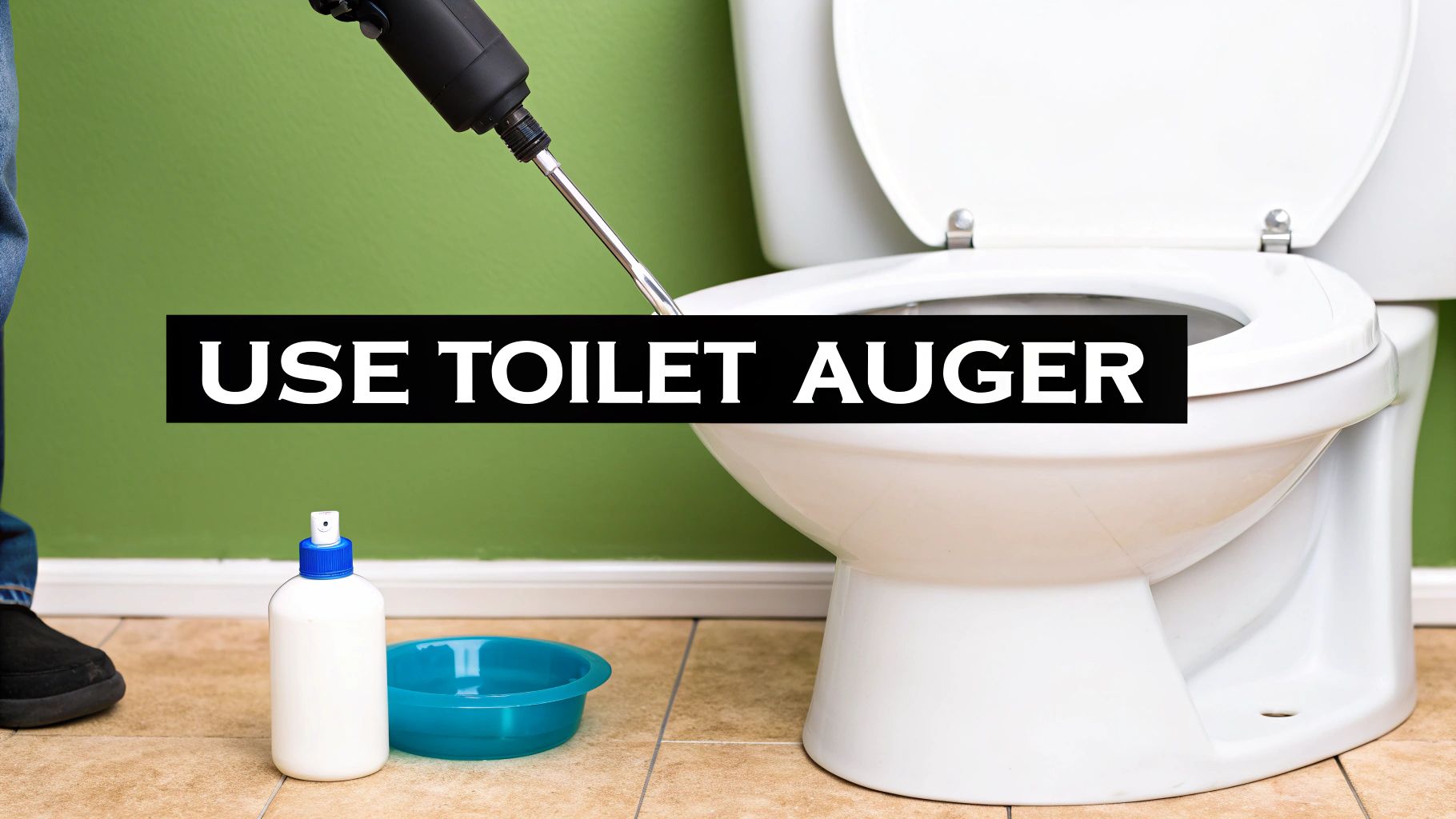
If the hot water trick didn't cut it, it's time to step up to a more specialised tool: the toilet auger. You might also hear it called a plumber's snake. This gadget is specifically designed to navigate the S-bend (or trap) of a toilet without scratching the porcelain, which is a real risk if you try to use a standard drain snake.
A toilet auger is basically a flexible cable inside a protective guide tube, with a crank on one end and a corkscrew tip on the other. Using one is pretty straightforward:
- Get it in position: Start by pulling the handle up so the cable is fully retracted inside its protective sleeve. Carefully place the end of the sleeve right into the drain opening at the bottom of the toilet bowl.
- Feed the cable: Now, a professional from a commercial plumbing service would slowly push the handle down. This will feed the cable into the toilet's drain pipe. You'll probably feel a bit of resistance as it works its way around the bends.
- Break up the clog: Once you feel the cable hit the obstruction, start turning the crank handle clockwise. This motion will either drill into the clog to break it apart or hook onto it so you can pull it back out.
If you're noticing that your toilet isn't the only thing draining slowly – maybe your shower is backing up too – it could be a sign of a bigger problem in your main sewer line. In that case, have a look at our guide on how to unblock a shower drain pipe for more clues.
After you've cranked for a minute or so, pull the cable back out and give the toilet a flush. If the water goes down, you're all clear! If not, you might need to repeat the process a couple of times. For stubborn clogs just out of a plunger's reach, the toilet auger is your best bet for a DIY fix.
Figuring Out Why Your Toilet Blocked in the First Place
Getting a blocked toilet to flush again is one thing, but making sure it doesn't happen again next week is the real win. To do that, you need to play detective and figure out what caused the blockage. Most of the time, the answer is pretty simple – it’s about what’s going down the loo.
In homes all over Melbourne, the number one cause of a blocked toilet is flushing things that just don't belong in our plumbing. Your toilet is only built for two things: human waste and toilet paper. That’s it. Anything else is just asking for trouble. Whether you need a plumber in Balwyn North or a plumber in Bulleen, understanding the cause is key.
The Usual Suspects
More often than not, the clog is caused by everyday items that seem innocent enough but build up over time to create a serious headache. These are the things that belong in the bin, not the bowl.
- Wet Wipes: This is the absolute worst offender for modern plumbing. Even the ones that say they're 'flushable' simply don't break down like toilet paper. They’re notorious for snagging in pipes and creating blockages that just won't budge.
- Sanitary Products: Tampons and pads are designed to do one thing: absorb liquid. When you flush them, they expand and get stuck very, very easily.
- Cotton Buds and Floss: Think about it – things like cotton balls, swabs, and dental floss don't dissolve in water. They just clump together, catching other bits and pieces until you have a dense, stubborn clog.
- Too Much Toilet Paper: Sometimes it’s the simplest things. Trying to flush a huge wad of toilet paper all at once can easily overwhelm older pipes or a toilet with a less-than-powerful flush.
Don't just take my word for it. It’s a massive problem across Victoria. In fact, non-degradable wipes are responsible for over 70% of all blockages in Australian sewers. Closer to home, Melbourne's Yarra Valley Water reported a 15% jump in residential toilet clogs in 2023, pointing the finger directly at these items. You can learn more about the impact of flushing the wrong items from local water authorities.
When the Problem Is Deeper in the Pipes
But what if you're doing everything right and the toilet still keeps blocking up? If it’s happening over and over, you might be looking at a symptom of a much bigger issue lurking further down your sewer line.
A recurring clog is your plumbing system's way of telling you there's an underlying problem. Ignoring it often leads to a much bigger, messier, and more expensive emergency down the track.
One of the most common hidden culprits, especially in Melbourne’s leafy suburbs, is tree root intrusion. Tiny, hair-like roots can work their way into the smallest cracks in your underground pipes. Once inside, they grow and expand until they completely choke off the pipe. That's not a blockage you can fix with a plunger.
This is where professional techniques come in. A modern solution like pipe relining melbourne creates a brand new, tough-as-nails pipe right inside the old damaged one. It completely seals out roots for good, without needing to dig up your entire garden. If you suspect you've got a deeper issue, a permanent fix like sewer relining is the only way to break the cycle of constant blockages.
When It's Time to Call an Emergency Plumber in Melbourne
Knowing your limits is probably the most important part of any DIY job around the house, and plumbing is no exception. While a plunger or a toilet auger can sort out plenty of minor blockages, there are some very clear signs that it’s time to put the tools down and call in a professional. Pushing a DIY fix too far can quickly turn a simple blocked loo into a very expensive plumbing disaster.
If you’ve given the plunger and the auger a red-hot go and you’re getting absolutely nowhere, the clog is probably too far down the line or too solid for your tools. Trying to force it at this point is a bad idea—you could easily damage the pipes or even crack the toilet bowl. This is your first big clue that you need to find a plumber who knows the area, whether you're in Hawthorn or the surrounding suburbs.
Red Flags That Mean You Need a Professional
Sometimes, a clog isn't just a clog. It’s a warning sign of a much bigger problem brewing deep in your plumbing system. Ignoring these red flags is a gamble you really don’t want to take.
Keep a close eye out for these tell-tale signs:
- Water Backing Up Elsewhere: This is the big one. If you flush the toilet and water starts gurgling or rising in your shower or floor drains, stop what you're doing. This is a classic sign of a blockage in the main sewer line, a serious issue that is well beyond a DIY fix.
- Persistent Gurgling Sounds: Hearing strange gurgling noises from your pipes long after the toilet has been flushed? That’s often a sign of trapped air in the system, which is usually caused by a partial blockage somewhere downstream.
- Recurring Clogs: Does your toilet seem to block up every few weeks, no matter how careful you are? There's definitely an underlying issue that needs a professional diagnosis to sort out for good.
A professional diagnosis from an experienced plumber isn't just about clearing the immediate blockage. It's about finding the root cause to make sure it doesn't happen again, saving you a world of time, money, and future headaches. For specialised tasks like gasfitting Melbourne residents trust, it's always best to call an expert.
The Dangers of Pushing a DIY Fix Too Far
Having a crack at fixing a major blockage yourself can lead to some serious damage. While things like too much toilet paper are a common cause of clogs, failed DIY repair attempts can make things so much worse. In fact, recent plumbing data shows that a staggering 55% of homeowners who try to use hot water or harsh chemicals on stubborn clogs end up making the problem worse, leading to repairs costing upwards of $500.
Compare that to a professional, who will get the job done right the first time in 98% of cases. That’s a world away from the 30% success rate for tough DIY jobs.
When you’re staring down a plumbing emergency, you need a solution that’s fast and reliable. For those urgent situations that pop up after hours, knowing your options for after-hours plumbing support in Melbourne is crucial. A licensed emergency plumber has the specialist gear, like high-pressure water jetters and CCTV drain cameras, to find and clear any blockage safely and effectively. The best Melbourne plumbers are available 24/7 for such emergencies.
Don't let a stubborn clog turn into a watery catastrophe. If you're in any doubt at all, making the call to a professional is always the smartest and safest decision for your home.
Your Toilet Questions Answered
Even when you’ve tried everything, it's natural to still have a few questions. As plumbers working across Melbourne, we've heard just about every query imaginable when it comes to a stubborn blocked toilet. Let's tackle some of the most common ones we get.
What Should I Do If I Don't Have a Plunger?
Caught without a plunger? Don't panic. Your best first move is the old dish soap and hot water trick.
Pour about half a cup of dish soap straight into the toilet bowl and just let it sit for 30 minutes or so. The soap works as a lubricant, helping everything… slide on through.
Once you’ve waited, carefully pour a bucket of hot water (but never boiling—that can crack the porcelain!) into the bowl from about waist height. The force of the water, combined with the heat and the slippery soap, is often all it takes. As a last resort, a bent wire coat hanger can work, but be incredibly careful not to scratch up the inside of your bowl.
Are Chemical Drain Cleaners a Good Idea?
Honestly? We’d give them a miss. We strongly advise against pouring harsh chemical drain cleaners down your toilet.
These products are incredibly corrosive and can do real damage to your pipes, especially in older Melbourne homes with plumbing that’s seen a few decades. Beyond that, they pose serious health risks to your family and are terrible for the environment.
The worst-case scenario? The chemicals don’t even clear the clog. Now you’re left with a toilet bowl full of toxic, hazardous sludge, which is a dangerous situation for you and for any plumber who has to come in and deal with it later. It's always safer to stick with the mechanical methods.
Why Does My Toilet Keep Blocking Up?
If your toilet is clogging up all the time, that’s a red flag for a bigger issue. This isn’t something that’s just going to fix itself.
More often than not, the culprit is one of these:
- An old, first-generation low-flow toilet that just doesn't have the oomph to clear the bowl properly.
- A partial blockage somewhere further down the drainpipe that keeps snagging waste.
- A major problem in your main sewer line, like tree roots forcing their way in or even a collapsed section of pipe.
This is where you stop the DIY efforts. A recurring clog needs a professional diagnosis from emergency plumbers Melbourne residents can rely on, usually with a CCTV drain camera, to find out exactly what’s going on before it turns into a serious sewage backup.
How Can I Stop This From Happening Again?
The best way to deal with a blocked toilet is to make sure it never happens in the first place. The golden rule is simple: only flush the three P's. That’s pee, poo, and (toilet) paper.
Nothing else should ever go down the loo. This is particularly true for things people think are flushable. We get a huge number of callouts in the eastern suburbs for blockages caused by stuff that belongs in the bin, like serviettes and paper towels. In 2023 alone, Melbourne plumbers saw an 18% increase in clogs from sanitary pads and nappies, which are designed to absorb water and expand—the absolute last thing you want happening inside a pipe. A good Melbourne plumber will always advise against flushing anything other than the three P's.
You can read more about the impacts of non-flushable waste on local council systems. A little education for everyone in the house can prevent the vast majority of these headaches.
Still staring down a stubborn blockage? The team at Amari Plumbing and Gasfitting offers fast, reliable, and fixed-price solutions across Melbourne. Don't let a blocked toilet ruin your day—contact us now for a free, no-obligation quote!