

That sinking feeling when you see water pooling around your ankles in the shower is one we all know too well. It’s a classic sign of a blocked shower drain, a frustrating but incredibly common plumbing headache for Melbourne homeowners.
Nine times out of ten, the culprit is a slow, steady buildup of hair, soap scum, and body oils. Before you panic and search for a "plumber near me," there are a few simple things you can try right away.
Your First Response to a Blocked Shower Drain
This quick-start guide will walk you through what to do in the first 10 minutes, using things you probably already have at home. Let’s get that drain flowing freely again.
How Bad Is It Really?
First, play detective. Is the water just draining a bit sluggishly, or has it come to a complete standstill? A slow drain usually means a partial clog, which is often much easier to sort out. If the water isn't going anywhere, you're looking at a complete blockage that will need a bit more persuasion.
Another dead giveaway is the smell. If you're getting a persistent, nasty odour coming up from the drain, that’s a clear sign that hair, soap, and other gunk are rotting away down there. It's not just a physical blockage; it's a buildup that needs to go.
The Immediate Action Plan
Your first moves should be simple and safe. My advice? Steer clear of harsh chemical drain cleaners, especially if you live in one of Melbourne's older eastern suburbs homes. Those chemicals can be tough on old pipes. An experienced plumber in Melbourne will often advise against them for this very reason.
Instead, let’s start with the basics:
- The Boiling Water Flush: Carefully pour a full kettle of boiling water straight down the drain. This is often enough to melt and break down greasy soap scum.
- Go in by Hand: It’s not a glamorous job, but it’s effective. Pop on some rubber gloves, lift off the drain cover (you might need a screwdriver), and get in there. Pull out all the visible hair and gunk you can reach. You'd be surprised how often this solves the problem on its own.
A blocked drain might seem like a small thing, but it’s not something to ignore. Did you know clogged drains are responsible for a massive 13.4% of all water damage incidents in Australia? It's a leading cause of headaches for homeowners. Dealing with it quickly stops a small annoyance from turning into a big, expensive emergency. If you're curious, you can explore the research on household water damage and see for yourself.
Getting Your Tools and Safety Gear Ready
Before you dive in and start trying to clear that pesky shower drain, a little prep work will make the whole job smoother and safer. Trust me, having the right gear within arm's reach is half the battle won.
Think of it this way: you wouldn't start a recipe without having your ingredients laid out. For a blocked drain, your "ingredients" are a handful of simple but effective tools. You don't need a professional-grade workshop, just a few key items to tackle most common clogs.
Your Go-To DIY Drain Clearing Kit
Chances are, you already have most of these bits and pieces lying around the house. It’s always a good idea to double-check before you’re standing in a puddle of shower water. A well-stocked kit can save you a last-minute dash to the hardware shop.
Here’s what you should have on hand:
- Rubber Gloves: Don't even think about starting without them. Drains are a pretty gross mix of bacteria, hair, and soap scum, so you’ll want to protect your hands.
- A Screwdriver or Pliers: Many drain covers have a screw holding them in place. For older pop-up drains, you might need pliers to gently lift the cover off. Either way, this is your ticket to getting inside the drain.
- A Bucket or Old Container: When you start pulling out clumps of gunk, you'll need somewhere to put it. A bucket nearby keeps the mess contained and your shower floor clean.
- A Basic Drain Snake (or Auger): For those deeper blockages you just can't reach, a simple plastic or metal drain snake is a game-changer. It’s flexible enough to get around the pipe’s bends and great at snagging stubborn clogs.
Putting Safety First
When you’re laser-focused on clearing a blockage, it's easy to forget about basic safety. But these steps are absolutely crucial to stop a simple fix from turning into a nasty accident. Your wellbeing is always more important than a fast-flowing drain.
Always make sure the bathroom is well-ventilated—open a window or flick on the exhaust fan. This is non-negotiable if you end up using any kind of cleaning solution, as the fumes can build up fast in a small space. A pair of safety glasses is also a smart move to protect your eyes from any unexpected splashes.
Crucial Safety Warning: Never, ever mix different chemical drain cleaners. It can create a chemical reaction that produces toxic gases, which are incredibly dangerous to breathe in. If one product fails, flush the drain completely with plenty of water before you even think about trying something else.
If you feel like you're getting nowhere or the blockage just won't budge, that's your cue to stop. A really stubborn clog might point to a bigger problem deeper in your plumbing. For professional help with blocked drains across Melbourne, from Kew to Hawthorn, calling in an expert is your safest and best option. If you’re stuck with a plumbing puzzle that’s more than a simple DIY, contact us for a free, no-obligation quote.
A Practical Guide to Clearing Shower Clogs
With your tools and safety gear at the ready, it’s time to get stuck in and tackle that stubborn blockage. Most of the time, you can clear a shower clog yourself with a bit of patience and the right approach. We’ll walk you through it, starting with the easiest fixes before moving on to the tougher stuff.
It's always best to start simple. More often than not, the clog is right near the surface, and a quick manual fix is all it takes to get the water flowing again.
Starting With Manual Removal
The most common culprit behind a blocked shower drain is a good old-fashioned clump of gunk sitting just below the drain cover. Before you pour anything down there, the best first step is to see if you can pull it out by hand. It’s not a glamorous job, but it’s incredibly effective.
First, grab your screwdriver or pliers and carefully pop off the drain cover. Once that's out of the way, get your gloves on, shine a torch down the hole, and have a look. Chances are you’ll be greeted by a lovely matted ball of hair, soap scum, and other build-up.
Reach in and pull out as much of the gunk as you can. If there's anything just out of arm's reach, a bent wire coat hanger works wonders for hooking onto the last bits and pulling them out. Just be sure to chuck all that mess into your bucket to keep your shower clean.
The Natural Approach with Baking Soda and Vinegar
If pulling out the gunk doesn't quite do the trick, or the blockage seems to be a bit deeper, a simple home remedy can often finish the job. By mixing baking soda and white vinegar, you can create a powerful fizzing reaction that eats away at grease and grime without damaging your pipes.
This is a much safer option than harsh chemical drain cleaners, particularly in older Melbourne homes in suburbs like Balwyn or Kew, where the plumbing can be a bit more fragile. Your local plumber in Balwyn North would agree that preserving old pipework is a top priority.
Here's how to do it:
- Pour about half a cup of baking soda straight down the drain.
- Follow it up immediately with half a cup of white vinegar.
- Pop a cloth or plug over the drain opening. This keeps the fizzing action concentrated inside the pipe where it’s needed.
- Let it work its magic for at least 30-60 minutes. For really tough clogs, leaving it for a few hours is even better.
- Finally, flush everything through with a full kettle of boiling water.
This bicarb and vinegar trick is especially good for blockages caused by soap scum. The fatty acids in soap can react with minerals in our water, creating a stubborn, waxy residue. The chemical reaction from this mix helps break that down beautifully.
For a deeper dive into different ways to clear drains, check out our comprehensive guide on how to clear blocked drains.
Using a Drain Snake for Deeper Blockages
When the clog is too far down for your fingers or a vinegar solution to reach, a drain snake is your next best friend. Also known as a plumber's auger, this handy tool is flexible enough to wiggle its way through the bends in your pipes to either break up or pull out whatever's causing the problem.
Using it is pretty straightforward, but you do need a bit of a gentle touch.
- Feed the Snake: Gently push the end of the snake down the drain. Keep going until you feel it stop or hit some resistance—that’s the clog.
- Engage the Clog: Once you’ve found the blockage, start turning the handle of the snake clockwise. The corkscrew tip will either chew through the clog or latch onto it so you can pull it out.
- Retrieve the Debris: Slowly and carefully pull the snake back out of the drain. With a bit of luck, the entire blockage will come with it.
- Flush the Drain: After you’ve pulled the snake out, run the hot tap for a few minutes to wash away any leftover bits and pieces.
This little diagram shows the basic tools you'll need for most common DIY drain clearing jobs.
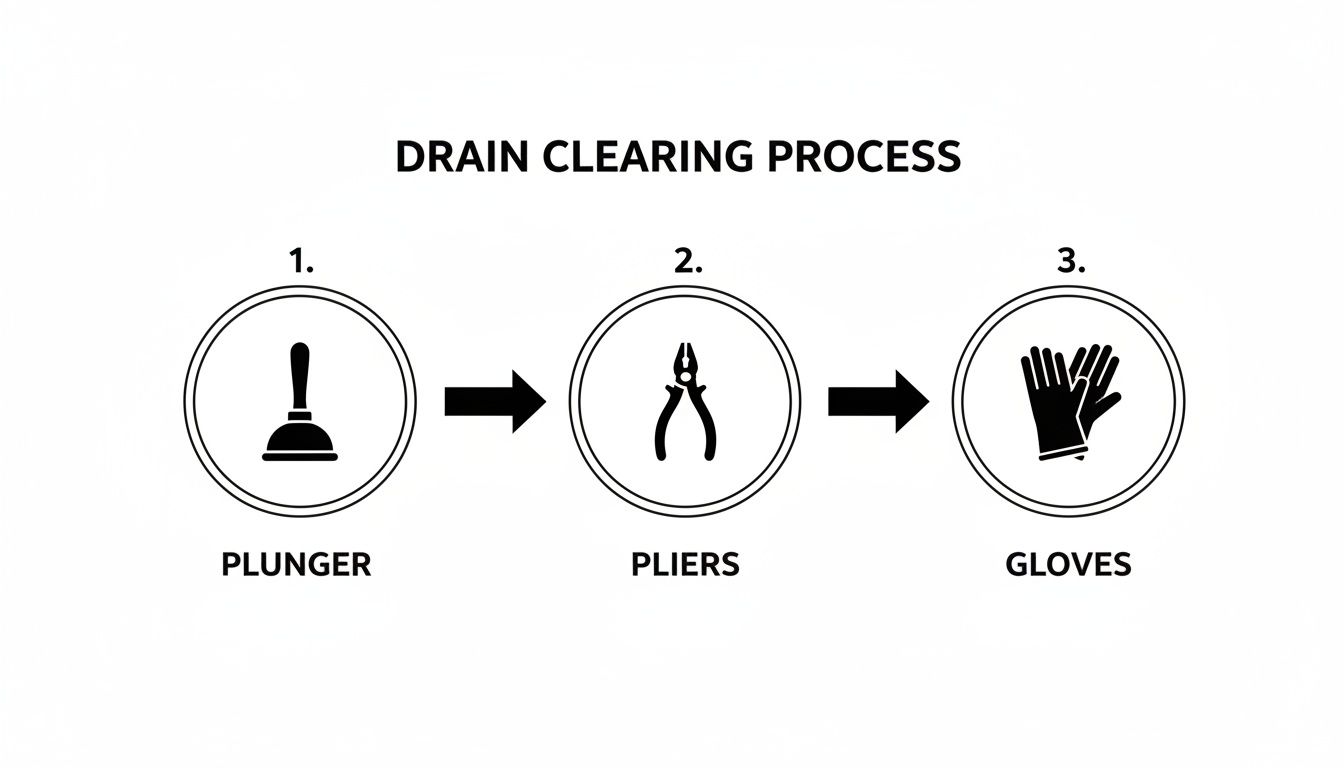
Having the right gear on hand, from a simple plunger to a good pair of gloves, is half the battle won.
When to Call a Professional Melbourne Plumber
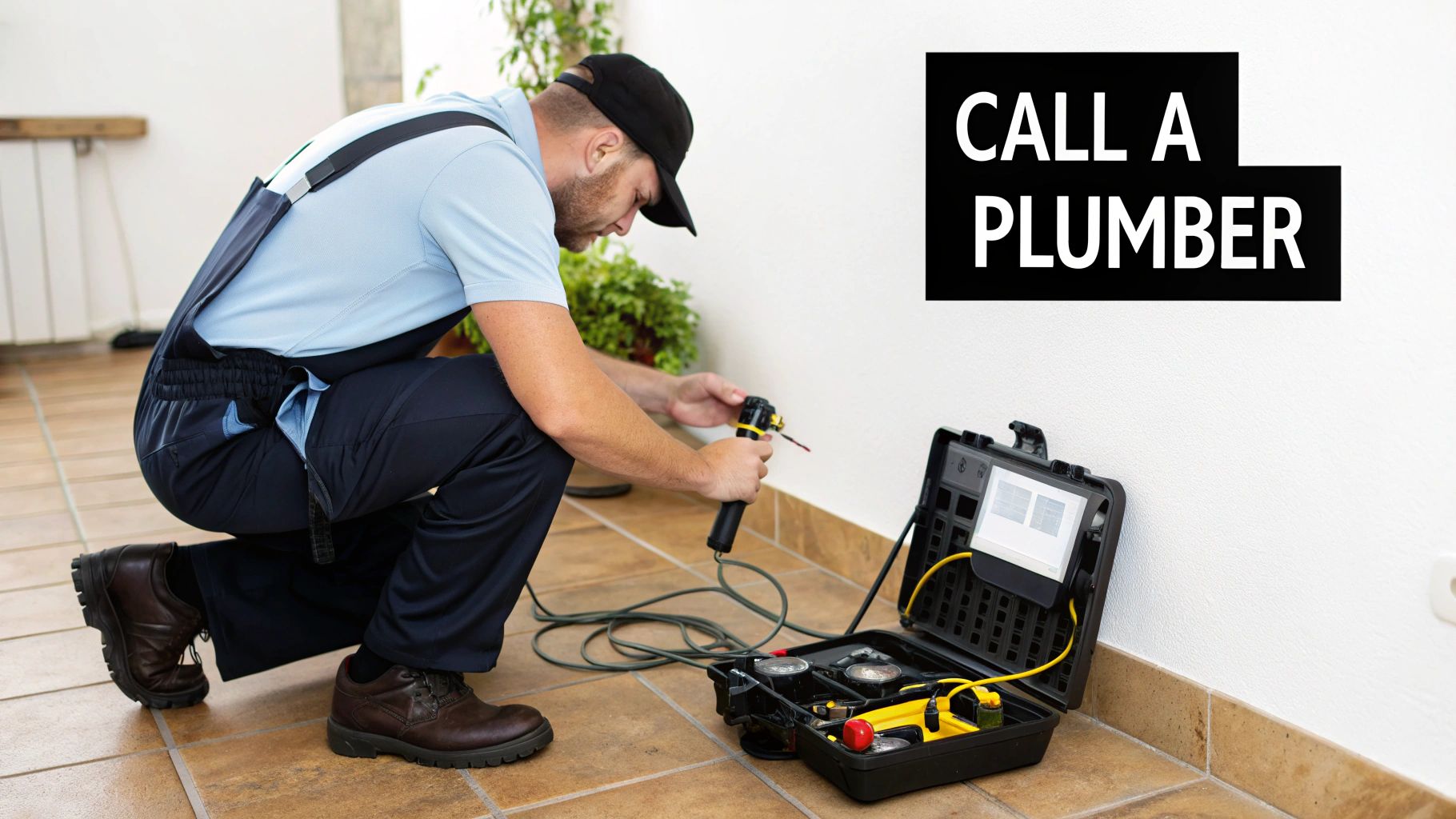
While the DIY methods we’ve covered are brilliant for simple clogs, it's just as important to know when to put the tools down. Pushing a home remedy too far can turn a small hassle into a full-blown plumbing nightmare, potentially damaging your pipes and leaving you with a hefty repair bill.
Knowing your limits is key. Some blockages are just too deep or too stubborn for a drain snake or bicarb soda to handle. If you're in Doncaster and struggling, it's time to find a plumber. These are the red flags that point to a bigger problem, and ignoring them is a recipe for disaster.
Recurring Clogs That Just Won't Quit
Have you cleared the same annoying clog three times this month? If that blockage keeps coming back no matter what you throw at it, you’re likely only dealing with the symptom, not the cause. A recurring blockage is a classic sign that the real obstruction is much further down the pipeline than your tools can reach.
This is something we see a lot in older homes across Melbourne's eastern suburbs, where things like pipe degradation or invading tree roots create these persistent issues. A professional Melbourne plumber can use a CCTV drain camera to get eyes on the real source of the problem and fix it for good.
Foul Odours and Gurgling Sounds
That persistent, sewer-like smell wafting up from your shower drain is more than just unpleasant—it's a warning sign. It often means there’s decaying gunk trapped deep in the system or, more seriously, an issue with your main sewer line. This can also indicate issues requiring gasfitting in Melbourne, as sewer gases can sometimes be mistaken for gas leaks.
You should also listen out for gurgling sounds from your toilet or other drains when the shower is running. This weird plumbing symphony is caused by trapped air being forced through the system, pointing to a significant blockage that’s affecting more than just the shower.
A gurgling drain is your plumbing system's cry for help. It signals a pressure imbalance caused by a blockage, which can put stress on your pipes and lead to leaks if not addressed by a professional.
Multiple Drains Backing Up
If it's not just the shower playing up, but your sinks and toilet are also slow to drain or backing up, you've almost certainly got a main sewer line blockage. This is a serious plumbing emergency that no DIY fix can touch. The blockage is in the main artery that carries all the wastewater away from your home.
When this line is blocked, that wastewater has nowhere to go but back up through the lowest points—often the shower. Using any more water in the house will only make the flooding worse.
In these situations, you need help, and you need it fast. For urgent issues that can't wait, knowing your options for emergency plumbers in Melbourne can save you from catastrophic damage and give you real peace of mind.
The Cost of Ignoring a Serious Blockage
Putting off a call to a plumber might feel like you're saving money, but it almost always leads to much higher costs down the track. In Australia, a staggering 40% of residential water damage claims are caused by shower failures, including overflows from blocked drains. The repair bills for that kind of water damage can easily spiral into the $15,000 to $50,000 range—a devastating hit for any homeowner.
Why You Need an Expert for Deep-Seated Issues
For complex problems like a main sewer line clog or damaged pipes, you need a team with the right gear. At Amari Plumbing and Gasfitting, we use advanced technology to get to the root of the problem and solve it properly. Our expertise extends to commercial plumbing as well as residential services.
Our professional toolkit includes:
- CCTV Drain Inspections to get a clear look inside your pipes and find the exact location and nature of the clog. No guesswork involved.
- High-Pressure Hydro-Jetting to blast away the most stubborn blockages, including tree roots and greasy build-up, leaving your pipes perfectly clean.
- Sewer and Pipe Relining to repair damaged pipes from the inside, avoiding the need for destructive and costly excavation work on your property. Our pipe relining in Melbourne service is a trenchless solution that saves time and money.
If you’re seeing any of these warning signs, don't risk making things worse. Calling in a professional is the safest, fastest, and most cost-effective solution in the long run.
Keeping Your Shower Drains Clear for Good
There's nothing quite like the relief of finally clearing a blocked shower drain. But the real victory? Making sure you don't have to go through all that hassle again in a month's time.
When it comes to clogs, the best offence is a good defence. A few simple, proactive habits are all it takes to keep your pipes flowing freely and save you from the headache of another blockage. This isn't about adding a bunch of complicated chores to your list; it's about small, consistent actions that make a world of difference, especially for those of us in Melbourne's eastern suburbs with older homes in areas like Balwyn, where preventative care is key to avoiding a costly emergency call-out.
The Single Most Effective Tool in Your Arsenal
If you take only one piece of advice away from this guide, let it be this: get a shower drain hair catcher. Seriously. This simple, inexpensive little gadget is your number one defence against the main culprit behind shower blockages.
It just sits over or inside your drain, trapping hair and other gunk before it ever gets a chance to wash down and bind with soap scum. They come in all sorts of styles, from basic mesh screens to silicone stoppers, and cleaning them is a breeze. Just pull it out after a shower, chuck the trapped hair in the bin (never flush it!), and pop the catcher back in. It's a two-second job that honestly prevents 90% of future clogs.
Simple Weekly and Monthly Maintenance Routines
Beyond putting up a physical barrier, a little bit of regular TLC will keep your pipes in great shape. Think of it as a quick health check for your plumbing.
- Weekly Hot Water Flush: Once a week, pour a full kettle of boiling water straight down the shower drain. This simple act helps melt away the greasy, waxy build-up left behind by soaps and conditioners, flushing it out before it hardens and starts trapping hair.
- Monthly Natural Cleanse: Give your drain a deeper clean once a month with the old baking soda and vinegar trick. Pour about half a cup of bicarb soda down the drain, follow it with half a cup of white vinegar, and let the fizzing action do its thing for about an hour. Finish by flushing it all out with hot water.
This kind of routine maintenance is crucial for avoiding that slow-draining frustration. In fact, shower drain clogs are a massive headache for tenants and landlords across Melbourne. Plumbing problems are behind a staggering 21% of all tenant complaints in Australia, which really shows how important proactive care is.
In rental properties, especially in high-density areas, a slow drain can quickly become a major point of conflict. The best formula for a happy, clog-free home is a combination of simple, regular maintenance by the tenant and scheduled professional checks organised by the landlord.
Thinking Long-Term About Your Plumbing Health
While these DIY habits are fantastic, sometimes your pipes need a bit more attention, particularly if you're dealing with an older plumbing system. If you're looking for a few more tricks up your sleeve, we've got other guides you might find helpful, like our one detailing 11 effective ways to clear your blocked drain.
By mixing daily prevention with regular maintenance, you can stop reacting to plumbing emergencies and start getting ahead of them. It ensures your shower stays a place of relaxation, not a source of stress. And if you ever feel like you're out of your depth or just want a professional to give your plumbing a once-over, our team is always here to help.
Your Top Questions Answered
To wrap things up, let's tackle a few of the most common questions we get from Melbourne residents dealing with a blocked shower drain. Getting straight answers can help you make smarter decisions and know exactly when it’s time to call for backup.
How Often Should I Clean My Shower Drain?
For general upkeep, a quick clean once a week is a great habit. This doesn’t have to be a major job. Just pull out the hair catcher, get rid of any gunk, and give it a quick rinse.
Follow that up with a kettle of boiling water to help dissolve any soap scum that’s starting to build up. To really keep things flowing, we recommend a deeper clean once a month with something like baking soda and vinegar. Honestly, a little regular maintenance is the best way to stop a serious blockage from ever forming.
Are Chemical Drain Cleaners Actually Safe for My Pipes?
This is a big one, and our professional advice is to be very, very careful. While they can be powerful, many of the chemical drain cleaners you buy at the supermarket contain harsh acids that can do serious damage to your plumbing over time.
This is especially true for older homes you'll find in Melbourne suburbs like Camberwell or Hawthorn, where the original pipework can be more fragile. Even a local plumber in Bulleen would advise caution with these products. These chemicals can eat away at metal pipes and even soften some types of PVC, which can lead to frustrating and expensive leaks down the track.
We’ll almost always tell you to try manual removal or a natural solution first. If you absolutely have to use a chemical cleaner, please follow the instructions to the letter, never mix different chemicals, and only use it as a last resort.
What’s the Cost for a Professional Drain Service in Melbourne?
The cost for a plumber in Melbourne to clear a blocked drain really depends on how bad the clog is and where it’s located. For a simple blockage in a single fixture like your shower, you can often get a very affordable, fixed-rate price.
However, if the blockage is deeper in the main sewer line and needs specialised gear like a hydro-jetter or a CCTV camera inspection, the cost will naturally be higher. A good plumber will always give you a clear, upfront quote over the phone before starting any work, so there are no surprises. At Amari, we are known as affordable Melbourne plumbers, and we charge by the job, not the hour, for that exact reason.
Can a Simple Clog Turn Into a Serious Water Leak?
It absolutely can. A blocked drain that’s left alone puts a huge amount of pressure on your pipes and their seals. All that standing water will eventually find its way through any weak point in the plumbing, causing slow leaks behind your walls or under the floor.
Over time, this can lead to major structural damage, mould, and a skyrocketing water bill. This is why knowing how to unblock a shower drain quickly is so important—it’s not just about getting the water to go down; it’s about protecting your home. If a clog just won’t budge, it might be a sign of a bigger problem, and calling in a professional is always the safest move.
If you're staring down a stubborn blockage or just have concerns about your plumbing, don't put it off. The expert team at Amari Plumbing and Gasfitting is ready to provide fast, reliable, and affordable solutions right across Melbourne. For a free quote or immediate emergency service, contact us today.