

Regular hot water tank maintenance is one of those things that’s easy to put off, but it’s a genuinely smart move. Think of it as a small investment to prevent those dreaded cold showers and the massive headache of an emergency repair bill. A few simple, proactive checks can boost your system's energy efficiency, trim your utility bills, and add years to its life. As expert Melbourne plumbers, we know that a little care goes a long way.
Why Proactive Maintenance Is Your Best Defence
We’ve all been there. Your hot water system is the unsung hero of your home, quietly doing its job in the background. It's completely forgotten until you’re shivering in an icy shower on a frosty Melbourne morning. The trick is to stop seeing maintenance as a chore and start seeing it for what it is: a crucial investment in your home's comfort and your financial well-being.
Regular check-ups are about much more than just keeping the water hot. The small, predictable cost of an annual service pales in comparison to the sudden, high-stress expense of a full replacement. That kind of unexpected bill can really disrupt your life and your budget, which is why having a reliable plumber in Melbourne on call is essential.
Extend Your Unit's Lifespan
It’s simple: proactive care directly impacts how long your system will last. Over time, things like sediment build-up, internal corrosion, and unchecked pressure can wear down vital components, forcing you to replace the whole unit years earlier than you should have to.
For homeowners in Melbourne suburbs like Balwyn, Kew, and Doncaster, just understanding these basics is the first step towards a more reliable system. Consistent maintenance helps you get the absolute most value out of your investment. We go into more detail in our guide on how long hot water systems last.
Improve Energy Efficiency and Prevent Hazards
A well-maintained unit is an efficient one. Simple tasks like flushing out sediment stop gunk from building up and insulating the heating element from the water. When that happens, the system has to work much harder—and use more energy—to do its job. A quick flush directly translates to lower power or gas bills.
Proactive maintenance also nips dangerous issues in the bud, like excessive pressure build-up. A faulty temperature and pressure relief (TPR) valve can turn your tank into a serious safety hazard, which is why regular checks by a professional like a plumber in Kew or a plumber in Balwyn North are completely non-negotiable.
Here’s a quick overview of what to keep an eye on.
Hot Water System Maintenance at a Glance
This table breaks down the essential maintenance tasks, why they matter, and how often you should be thinking about them. It's a handy cheat sheet for keeping your system in top shape.
| Maintenance Task | Primary Benefit | Recommended Frequency |
|---|---|---|
| System Flush | Removes sediment build-up, improves efficiency, prevents corrosion. | Every 6-12 months |
| TPR Valve Test | Ensures the safety valve works, preventing dangerous pressure build-up. | Every 6 months |
| Anode Rod Inspection | Protects the tank from rust and corrosion, extending its lifespan. | Every 3-5 years |
| Insulation Check | Reduces heat loss, saving energy and lowering utility bills. | Annually |
| Leak Inspection | Catches small drips before they become major, costly water damage. | Every few months |
Following this schedule is the best way to avoid nasty surprises and keep everything running smoothly.
The average lifespan for a hot water system in Australia is somewhere between 8 to 15 years, but this is heavily influenced by how well it's maintained. Here in Melbourne, where the water quality is generally quite good, a properly serviced system can easily hit the upper end of that range.
Don't wait for a cold shock or a growing puddle on the floor. If you're due for a check-up, contact Amari Plumbing and Gasfitting today for professional, reliable service.
Your Essential Hot Water Maintenance Checklist
Getting hands-on with your hot water tank maintenance can feel pretty good, and thankfully, a few key tasks are perfectly safe for any confident homeowner to tackle. Think of these checks as your own early warning system, helping you catch those little annoyances before they turn into a full-blown, expensive disaster that requires one of our emergency plumbers in Melbourne.
Your first line of defence is a simple walk-around. Get in the habit of giving your tank a good look-over. Check the pipes going in and out, the drain valve at the bottom, and any seams on the tank itself. You’re on the hunt for small drips, water stains on the floor, or any reddish-brown rust starting to form on the fittings.
Next, use your ears. Your hot water system should be a quiet achiever. If you start hearing strange popping, hissing, or a low grumbling sound, that's a tell-tale sign that sediment has built up inside. This sludgy layer of minerals makes the heating element work overtime, chewing through energy and putting a huge strain on the whole unit.
This flowchart breaks down the simple cycle of proactive maintenance. It's all about how regular check-ups boost efficiency and, most importantly, extend the life of your system.
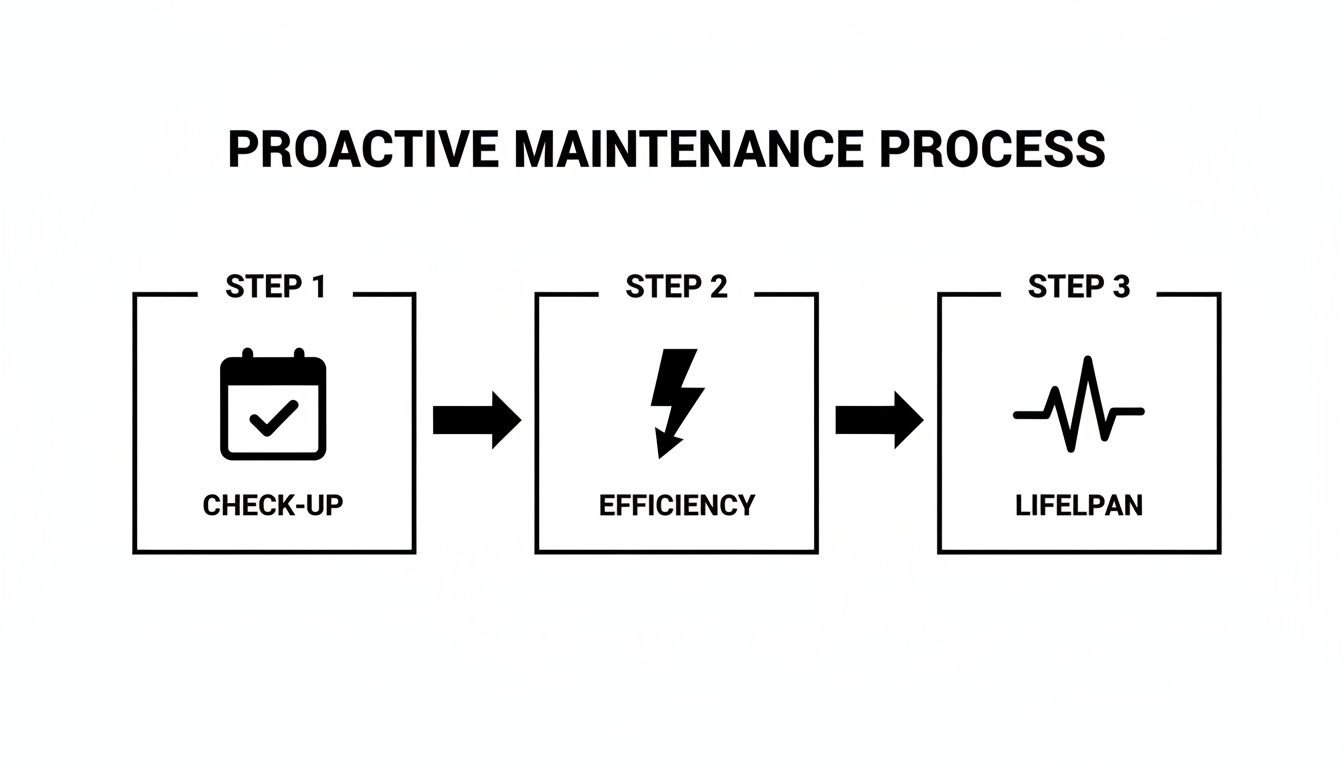
The main takeaway here is that each step feeds into the next. A little bit of consistent attention now prevents a world of hurt later and keeps everything running smoothly.
Testing The TPR Valve
One of the most critical DIY jobs is testing the Temperature and Pressure Relief (TPR) valve. This is a non-negotiable safety feature, designed to automatically release water if the pressure or temperature inside the tank hits a dangerous level.
Here’s how to give it a quick test:
- Shove a bucket under the discharge pipe to catch the water.
- Gently lift the valve's lever for a couple of seconds.
- You should hear a rush of air and see a bit of hot water gush out.
- Let the lever go. It should snap back into place and stop the water flow completely.
If you get nothing out of it, or worse, it keeps dripping after you’re done, it’s time to call a pro immediately. A faulty TPR valve is a serious safety hazard.
A sticky or failed TPR valve can't do its job, which could allow pressure to build to hazardous levels. This simple, twice-a-year test is one of the most important things you can do for your hot water system.
When To Call The Professionals
While the checks above are fantastic habits to get into, some jobs are strictly for licensed plumbers. Trying to tackle these yourself can be dangerous and could even void your system’s warranty.
Leave These Tasks To The Pros:
- Inspecting the Sacrificial Anode Rod: This little rod is a hero, attracting all the corrosive elements to protect your tank. But checking it requires special tools to remove, and it's not a simple job.
- Servicing Gas Components: Anything to do with a gas hot water system—the burner, gas lines, or pilot light—is a job for a licensed gasfitter. Our team specialises in gasfitting in Melbourne and can handle this safely.
- Replacing a Faulty TPR Valve: You can test it, but replacing it needs to be done by a professional to ensure it’s fitted correctly and safely.
- Flushing the Tank: While some people give this a go, a professional flush is way more thorough. We make sure every bit of sediment is gone and that the system is refilled and restarted safely.
Knowing where to draw the line between DIY and calling in an expert is key. If you're ever in doubt, always play it safe. For any of these complex jobs or if you spot something that just doesn't look right, give us a call at Amari Plumbing and Gasfitting for some expert help.
Decoding Your System's Warning Signs
Your hot water system rarely just gives up the ghost one morning. Long before you're left shivering in a cold shower, it usually sends out little clues—and sometimes some not-so-subtle ones—that trouble is brewing. Learning to spot these signs is one of the smartest things you can do, letting you get ahead of a minor hiccup before it turns into a major, costly disaster.
Many of these red flags are pretty obvious once you know what you’re looking for. These are the symptoms that mean you should pick up the phone and call a plumber straight away, as they often point to a serious internal problem or even a safety risk. Don't ever ignore them.
Sounds and Smells You Can't Ignore
Sometimes, your own senses are the best diagnostic tools you've got. If you notice any weird changes in how your system is running, it’s often the very first sign that something’s not right.
- Loud Banging or Rumbling: Does your tank sound like it's boiling a kettle full of rocks? That's almost certainly sediment buildup. A persistent, loud banging noise, often called water hammer, can also signal pressure problems that are putting serious stress on your pipes.
- The Smell of Gas: This is a genuine emergency. If you have a gas hot water system and you smell gas, turn the supply off at the meter immediately (if it's safe to do so) and call for professional help from a safe distance. Do not try to fix this yourself.
- Visible Leaks or Puddles: A tiny bit of dripping from the TPR valve while the water is heating up can be normal. However, a constant puddle forming at the base of your tank is a massive red flag. It’s a classic sign of imminent tank failure.
Trying to tackle complex problems like gas leaks or serious internal corrosion on your own is incredibly dangerous. You could end up causing more expensive damage, voiding your warranty, and creating a massive safety risk for your family. If you're looking to find a plumber you can trust, Amari Plumbing is here to help.
Visual Clues That Spell Trouble
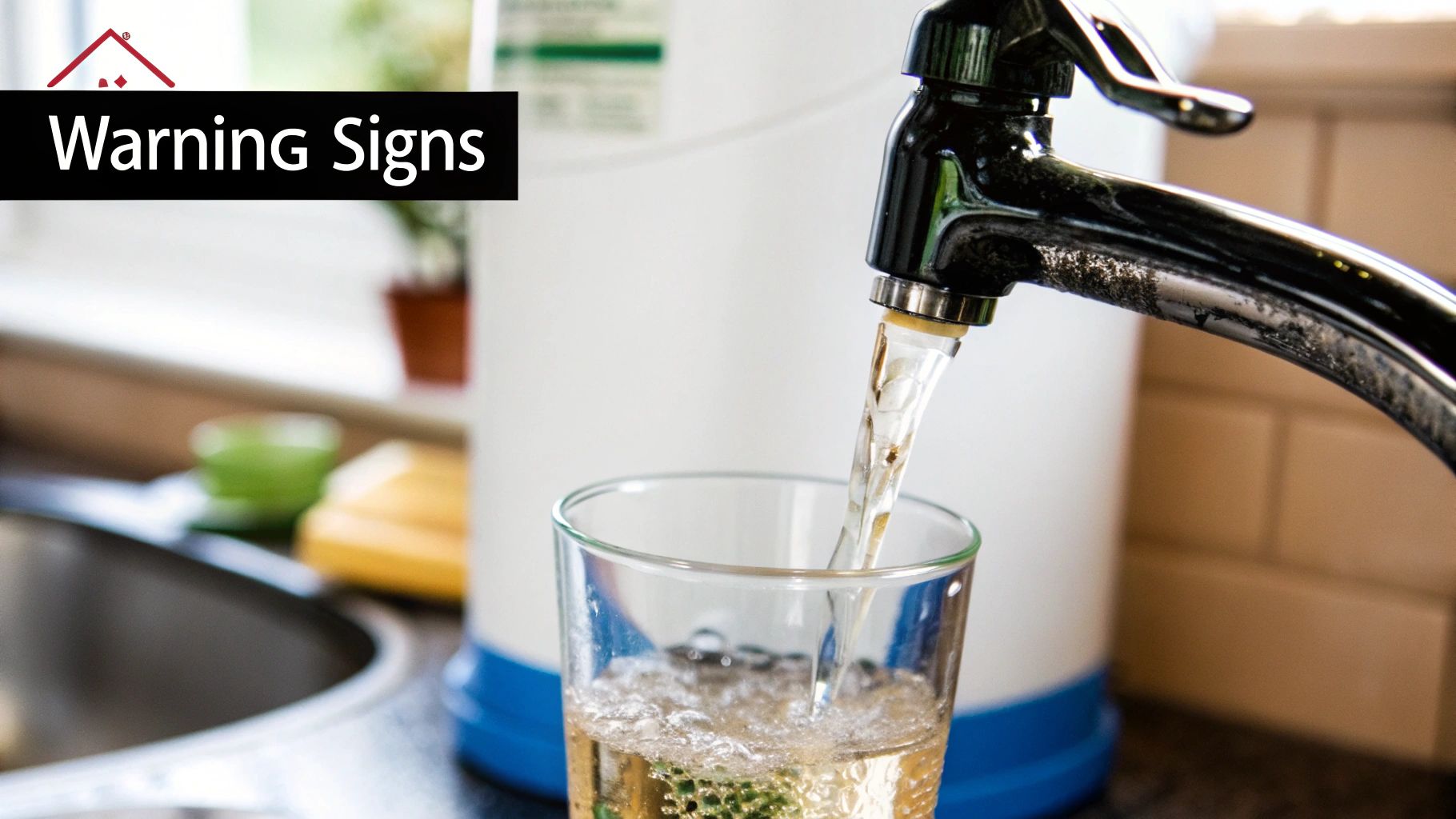
Often, the water itself will tell you what's going on. Any sudden change in the colour or clarity of your hot water is a clear sign that the inside of your tank is deteriorating.
Rusty or discoloured water flowing from your hot taps is the textbook symptom of a failing anode rod and advanced internal corrosion. Put simply, the tank is rusting from the inside out, and it's only a matter of time before it springs a leak. If you're seeing this and also dealing with other pipe issues around the house, it might be worth investigating more permanent long-lasting pipe relining solutions.
Recognising these warnings early helps homeowners in areas like Hawthorn and Camberwell know exactly when to call for help. If you spot any of these signs, don't wait for the problem to escalate. Contact a professional plumber in Balwyn or your local area to diagnose the issue safely. For a reliable assessment and fast service, get in touch with Amari Plumbing and Gasfitting today.
Finding the Right Service Schedule for Your System
So, how often should you really get your hot water system serviced? It's a common question, and honestly, there's no single answer that fits every home across Melbourne. The right timing really depends on a few things: what type of system you have, how old it is, and even the water quality in your specific suburb.
Think about it – a shiny new continuous flow unit in Kew has very different needs compared to a ten-year-old storage tank that’s been working hard in Balwyn North. Age is probably the biggest factor. For most modern systems that are under eight years old, getting a comprehensive professional service every two years is a solid rule of thumb.
But once your unit ticks past that eight-year mark, it’s a smart move to step it up to an annual check-up. Older systems are just more prone to things like anode rod decay and sediment build-up. A yearly once-over is the best way to catch these issues before they turn into a no-hot-water emergency on a cold Melbourne morning.
What a Professional Service Actually Involves
When you get a professional service from us at Amari Plumbing and Gasfitting, it’s not just a quick glance. We treat it as a full system health check to make sure everything is safe, efficient, and built to last. Our commercial plumbing services follow the same rigorous standards.
Our licensed plumbers and gasfitters will get hands-on and run through a complete inspection, which includes:
- Checking the Sacrificial Anode: We'll take a look at this critical part to make sure it's still doing its job of protecting your tank from rusting from the inside out.
- Testing Thermostats and Elements: For electric models, we make sure the heating elements and thermostats are working properly so you’re getting the right water temperature.
- Inspecting Gas Connections: If you have a gas unit, our licensed gasfitters will meticulously check the burners, gas lines, and pilot assembly for safety and efficiency.
- Assessing Valves and Fittings: We’ll test the crucial Temperature Pressure Relief (TPR) valve and inspect all the connections for any sneaky leaks or signs of wear.
After we’re done, we’ll give you a full report on your system’s health. It’s a straightforward breakdown that gives you a clear picture of its condition, helping you map out a sensible maintenance plan for the future.
How Melbourne’s Water Affects Your Plan
Across Australia, you’ll hear different advice on servicing, often ranging from every one to two years. This usually comes down to local water quality. We're pretty lucky here in Melbourne; our water is relatively clean. This means we can often stick to that two-year service schedule without worrying about the heavy sediment build-up that causes headaches in other parts of the country. If you're curious to learn more, it's worth reading up on how often hot water systems should be serviced.
Even with our great water, skipping a service altogether is a bit of a gamble. Anode rods still wear out, valves can still seize up, and gas components absolutely need regular safety checks. Think of a consistent service schedule as your insurance policy against an unexpected breakdown.
At the end of the day, it’s all about creating a schedule that gives you peace of mind. If you’ve got an older unit or live in an area with known hard water, an annual service is a small price for reliability. For most other homeowners, a check-up every two years is a smart standard to follow.
Still not sure what's right for your system? The best thing to do is get a professional opinion. Contact Amari Plumbing and Gasfitting today to book in a check-up and we'll give you expert advice tailored to your home.
Troubleshooting Common Hot Water Problems
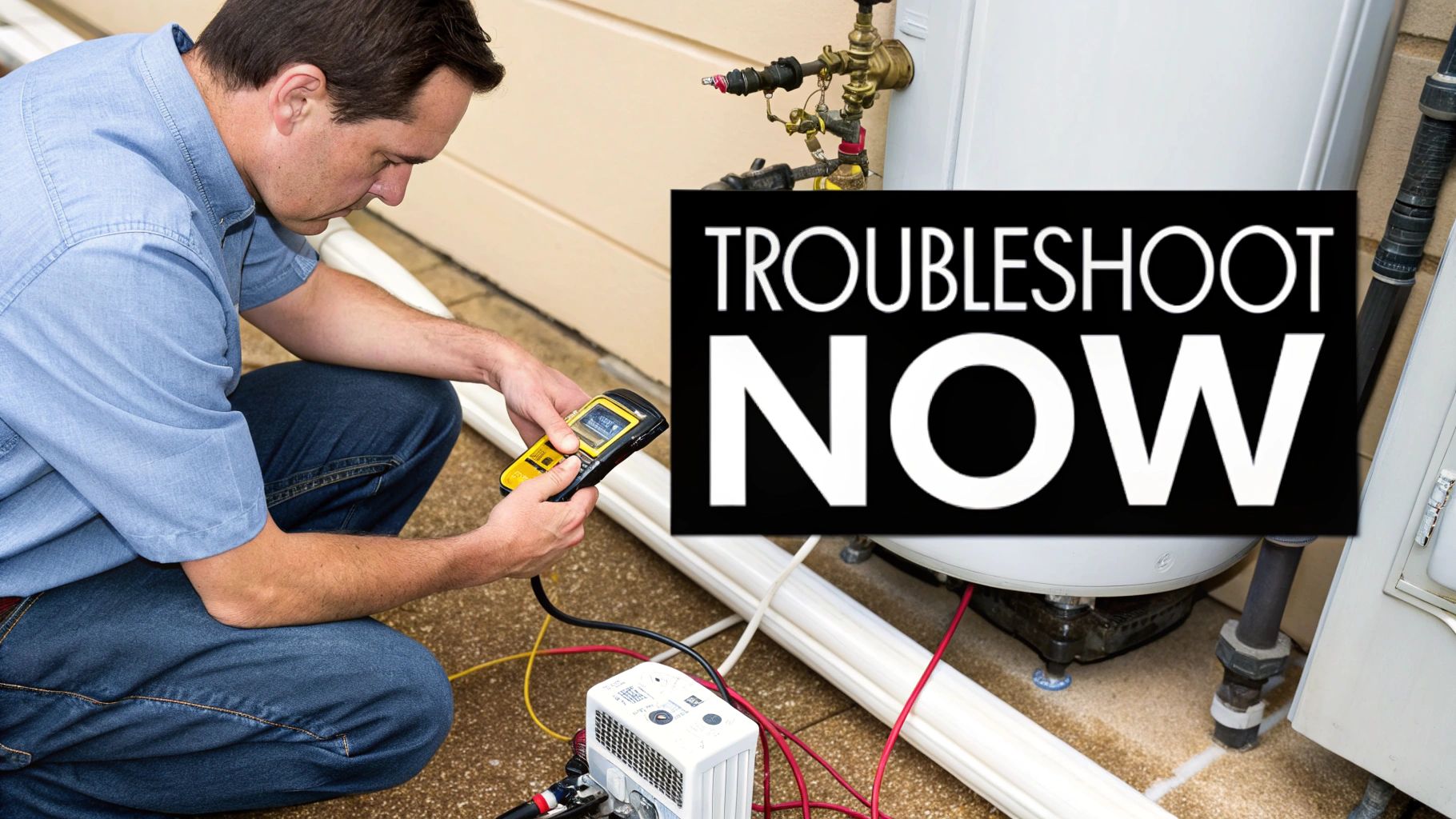
There's nothing quite like a cold shower on a winter morning to ruin your day. When the hot water suddenly gives out, it can feel like a major disaster, but don't panic just yet. Often, a few quick checks can point you in the right direction. Whether you need a plumber in Hawthorn or a plumber near me for an emergency, let's walk through some of the most common hot water headaches.
Issue: Lukewarm Water or Water That's Not Hot Enough
This is easily the number one complaint we get from homeowners. You hop in the shower, and just as you start to relax, the water turns tepid. It’s a classic sign that something is stopping your system from doing its one job: heating water properly.
- For electric systems, your first port of call should always be the fuse box. A tripped circuit breaker is a surprisingly common culprit and, thankfully, a very easy fix. If the breaker is fine, you might be looking at a faulty thermostat or a burnt-out heating element.
- For gas systems, the problem could be as simple as an extinguished pilot light. Most tanks have instructions printed right on them for a safe relight. If you manage to relight it but it won't stay on, that's a dead giveaway you need a professional gasfitter to take a look.
Problem: Visible Leaks Around the Tank
Spotting a puddle around your hot water tank is never a good feeling, but the source of the leak tells you everything about how serious the problem is.
Start by having a good look at all the pipes and fittings connected to the top and bottom of the unit. A drip from a loose connection is often a straightforward fix for a plumber.
However, if you see water weeping from the body of the tank itself, especially around the seams or rusty spots, it's a critical red flag. This almost always means the tank has corroded from the inside out and is on its last legs. You'll want to shut off the water and power to the unit immediately and call for an emergency service.
Don't ever underestimate a "small" leak coming from the tank body. The pressure inside can cause it to rupture completely, leading to major water damage in your home. It’s a situation that requires immediate professional attention from a qualified plumber in Camberwell or your local area.
Symptom: Low Hot Water Pressure
Is your hot water just trickling out of the tap while the cold water is blasting out as usual? This tells you the problem is almost certainly isolated to your hot water system.
Over time, sediment can build up inside the tank and clog the outlet pipe, which severely restricts the flow. On the flip side, excessively high water pressure in your home's plumbing can also create issues for the system. To get a better handle on this, our guide on how to test water pressure at home is a great starting point.
While these checks can help you diagnose the issue, remember that anything beyond the basics requires specialised tools and a licensed professional. Attempting complex repairs yourself isn't just risky—it can be downright dangerous.
If you’re facing any of these issues in Melbourne, our team at Amari Plumbing and Gasfitting is ready to provide a safe, reliable fix.
Your Hot Water Maintenance Questions Answered
We get asked these questions all the time by Melbourne homeowners, so let's get right to it. Here are some quick, no-nonsense answers to help you look after your hot water system.
How Much Can I Actually Save By Maintaining My Hot Water Tank?
Proper, consistent hot water tank maintenance can genuinely save you hundreds over the life of your unit. When we flush out all that sediment, the system runs more efficiently, which you'll notice on your monthly gas or electricity bills.
But the real saving? It’s avoiding that sudden, middle-of-winter emergency replacement, which can easily set you back thousands of dollars. Think of a regular service as a small investment to prevent a massive, unexpected bill down the track.
Is It Safe To Perform Hot Water Tank Maintenance Myself?
Some of the smaller jobs are perfectly fine for a confident DIY-er. Keeping an eye out for small drips or leaks and testing the pressure relief valve (as long as you follow the safety instructions to the letter) are great habits.
However, anything that involves touching the sacrificial anode rod, fiddling with gas fittings, or messing with electrical components is a job strictly for a licensed professional. Gas systems, in particular, are not something to experiment with—the risks are just too high. When it comes to something as crucial as a gas leak or dealing with blocked drains, you need a professional Melbourne plumber.
What Are The Signs My Hot Water Tank Needs To Be Replaced?
Your system will usually give you a few tell-tale signs that it’s on its last legs. The biggest red flag is recurring leaks coming from the tank itself, not just a fitting. If you start seeing rusty or brown-coloured water, that’s another major warning.
Loud, rumbling noises from the tank that don't go away after a flush also point to serious internal wear and tear. As a general rule, if your system is over 10-12 years old and seems to need one repair after another, it’s probably time to start thinking about a replacement. It's best to get a professional opinion to see if a new, more efficient unit makes more sense financially.
Putting off the replacement of a failing tank is a huge gamble. A sudden burst can cause serious water damage to your floors and walls, turning a manageable expense into a much bigger, more chaotic emergency.
Why Is My Hot Water Running Out So Quickly?
This is probably the most common complaint we hear, and nine times out of ten, it’s due to a thick layer of sediment that has built up inside the tank. This sludge takes up valuable space, leaving you with much less hot water than you should have.
In an electric unit, it could also be a burnt-out heating element. Another common culprit is a broken dip tube. This tube is meant to direct incoming cold water to the bottom of the tank to be heated. When it breaks, cold water mixes in at the top, and your water goes lukewarm in no time. Our plumbers can pinpoint the exact cause and get you back to enjoying long, hot showers again.
For professional hot water tank maintenance with clear, upfront pricing, you can always rely on the team at Amari Plumbing and Gasfitting. We service homes right across Melbourne. Schedule your service call today!