

When you've got a drain pipe clogged, the first clues are usually pretty subtle. You might hear a weird gurgling sound long after the water's gone, notice it's draining slower than usual, or catch a faint, funky odour. These are your drain's early warning signs that a blockage is building up from the usual suspects—hair, grease, or soap scum. Getting on top of it quickly can save you from a seriously messy and expensive plumbing disaster down the line. As a leading plumber in Melbourne, Amari Plumbing and Gasfitting has seen it all.
How to Spot a Clogged Drain Before It Becomes a Disaster
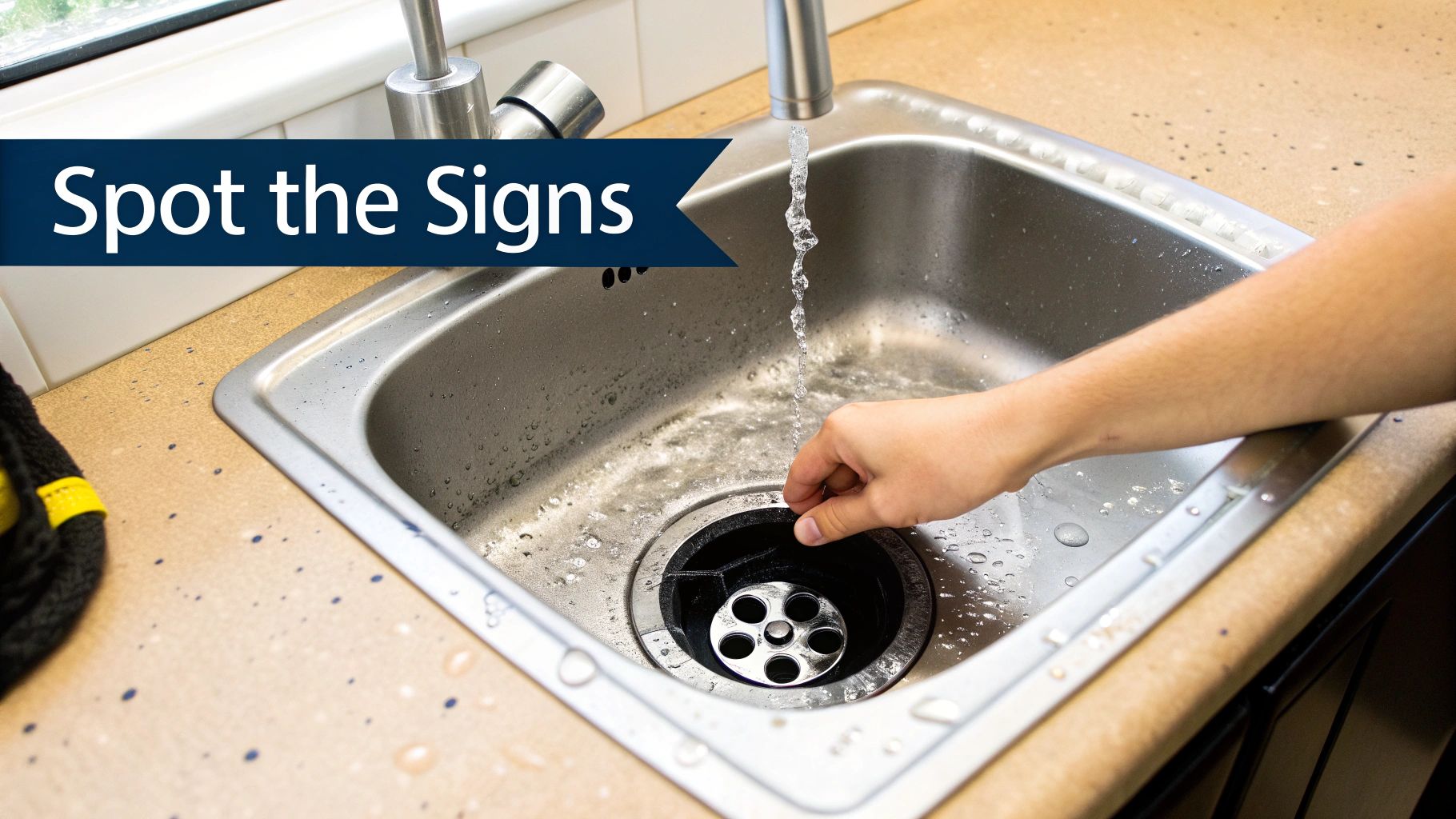
That gurgling you hear from the sink? It's not just your house settling—it's your plumbing system sending out an SOS. When a drain pipe is clogged with gunk, air gets trapped and has to bubble its way back up, which creates that classic glugging noise. Ignore it, and you're letting a small inconvenience snowball into a potential catastrophe.
For homeowners right across Melbourne's eastern suburbs, from a plumber in Kew to a plumber in Hawthorn, these signs are often the first hint of a bigger problem brewing just out of sight. Learning to recognise them is the key to preventing water damage, awful smells, and the dreaded cost of an emergency call-out. If you're searching for a "plumber near me," you need a local team that understands these specific issues.
Early Warning Signs of a Blockage
Your plumbing will almost always give you a heads-up before it completely gives up. If you pay attention to these little changes, you can save yourself a lot of trouble.
- Slow Draining Water: This is the big one. If the shower floor starts turning into a shallow pool around your ankles or your kitchen sink takes forever to empty, you’ve got a partial clog restricting the flow.
- Foul Odours: Nasty smells wafting up from your drains are a dead giveaway that food scraps, grease, or other waste are trapped and starting to rot inside the pipe.
- Gurgling Noises: Like we said, these sounds are caused by trapped air getting pushed out by water that's struggling to squeeze past an obstruction.
- Water Backups: This is a more serious sign. If water starts reappearing in a sink or shower after you've used a toilet or washing machine nearby, it points to a significant blockage deeper in your plumbing system.
The Common Culprits Behind Clogged Drains
In most homes, the things causing these blockages are pretty predictable. Hair is the number one offender in bathrooms, where it loves to tangle up with soap scum to form rock-solid clogs. In fact, hair buildup is behind over 80% of drain clogs in Aussie bathroom sinks and showers, making it the top trigger for blocked drains in Melbourne households. Everyday shedding quickly combines with soap and toothpaste residue, forming dense mats that can slash a pipe's flow by 50% in just a few weeks. You can find out more about what causes these common issues and how to fix them.
Don't wait for the water to stop moving completely. A slow drain today is almost always tomorrow's overflow. Acting on these early warnings saves you the stress and expense of dealing with water damage and emergency repairs. If you spot any of these signs, it's time to either investigate or call one of the best Melbourne plumbers.
When you’ve got a blocked drain, it’s tempting to blame whatever you just washed down the sink. But the truth is, most blockages are the result of a slow, silent creep of gunk that’s been building up for months, or even years.
Getting a handle on what causes these clogs is your best bet for avoiding a nasty surprise down the line, especially here in Melbourne where our local environment throws a few curveballs. Our team of emergency plumbers in Melbourne are on call to handle any crisis.
What's Really Clogging Up Your Pipes?
While things like hair and soap scum are the usual suspects inside the house, some of the most destructive problems actually start outside. We all love the leafy eastern suburbs, but the beautiful, mature trees that give areas like Balwyn and Camberwell their character have seriously aggressive root systems—and they’re a massive threat to your plumbing.
The Unseen Enemy: Tree Roots
Tree roots are hardwired to seek out moisture and nutrients, and your sewer pipes are a five-star restaurant. Older homes with terracotta or clay pipes are especially at risk. All it takes is a tiny crack for a root to find its way in, eventually creating a thick, tangled web that catches everything coming down the pipe. A specialist plumber in Balwyn North or a plumber in Bulleen knows how to handle these specific challenges.
It's a huge issue in Australia. In fact, tree root intrusion is the number one culprit behind blocked drains, causing over 90% of all pipe blockages.
Here in Melbourne's eastern suburbs, those big native trees like eucalypts are constantly on the hunt for water. They can sense a hairline fracture in an old pipe and, within months, reduce its flow capacity by up to 70%. These root-related blockages lead to a staggering 15,000 emergency plumbing calls every year in Victoria alone. You can get more insights into how roots damage pipes and create chaos for homeowners.
Common Culprits Inside the Home
Back inside, the kitchen sink and the toilet are the two main hotspots for clogs that are easily avoided. It's the little things you do every day that add up to a big, messy problem. From gasfitting in Melbourne to dishwasher installs, we handle all plumbing needs.
To help you pinpoint the issue, here's a quick rundown of the most common causes we see.
Common Drain Blockage Culprits and Prevention Tips
| Cause of Clog | Affected Drains | Prevention Strategy |
|---|---|---|
| Grease, Fats & Oils | Kitchen Sinks | Pour used cooking grease into a jar and throw it in the bin. Never pour it down the sink. |
| 'Flushable' Wipes | Toilets, Main Sewer Line | Only flush the 3 P's: pee, poo, and (toilet) paper. Wipes belong in the bin, always. |
| Food Scraps | Kitchen Sinks | Scrape plates clean into the compost or bin before rinsing. Coffee grounds, pasta, and rice are big offenders. |
| Hair & Soap Scum | Bathroom Sinks, Showers, Bathtubs | Use a drain catcher or strainer to catch hair before it goes down. Rinse drains with hot water regularly. |
| Foreign Objects | Toilets, Floor Drains | Keep the toilet lid down. Be mindful of kids flushing toys, and never flush cotton swabs or dental floss. |
As you can see, a bit of prevention goes a long way.
A seriously blocked drain rarely happens overnight. It’s almost always the result of bad habits and outside factors building up over time. By being more mindful of what you’re sending down your drains and staying aware of threats like tree roots, you can seriously cut down your risk of a plumbing emergency.
If you think one of these culprits might be brewing trouble in your pipes, don't wait until you've got water backing up onto your floor. Catching it early can save you from a world of damage and expensive repairs.
For a professional eye and a permanent fix for your blocked drains, it's always best to get in touch with the experts.
Effective DIY Methods for Clearing Minor Clogs Safely
When you’re staring down a slow-draining sink, your first instinct might be to reach for a heavy-duty chemical cleaner. Hold that thought. More often than not, those harsh chemicals can cause more damage to your pipes than the clog itself.
The good news is that for minor blockages, you can often get things flowing again yourself with a bit of know-how and the right approach. Let's walk through the safer, mechanical methods that a professional would try first. These are the go-to first steps for any savvy homeowner.
Mastering the Plunger
The humble plunger is your first line of defence, but there's a real technique to it. You’re not just splashing water around; the goal is to create a powerful vacuum that jolts the clog loose.
For a sink or a tub, you need enough water in the basin to completely cover the rubber cup of the plunger. This is key. If you're working on a double kitchen sink, remember to block the other drain with a wet cloth. This simple step ensures all the force you generate is aimed squarely at the clog.
Now, press down firmly to get a good seal, then give it several sharp, powerful vertical pumps. After about a dozen pumps, pull the plunger away abruptly. That sudden release of pressure is often all it takes to break up minor gunk and get the water moving.
Using a Basic Drain Snake
If the plunger didn't do the trick, the blockage is probably a bit more stubborn—think a dense clump of hair tangled up with soap scum. This is where a basic drain snake (also called an auger) comes into its own. It's a long, flexible tool that can reach deep into the pipe to physically grab the obstruction.
Gently feed the snake down the drain until you feel it hit some resistance. Don't force it. Once you've found the clog, start turning the handle. The corkscrew tip will work its way into the blockage, grabbing onto it like a hook. Then, just carefully pull the snake back out, bringing all that nasty gunk with it. It’s not pretty, but it's incredibly effective.
For a more detailed walkthrough on tackling hair-related blockages, have a look at our guide on how to unblock a shower drain pipe.
The image below shows some of the most common culprits we find causing these exact types of clogs.
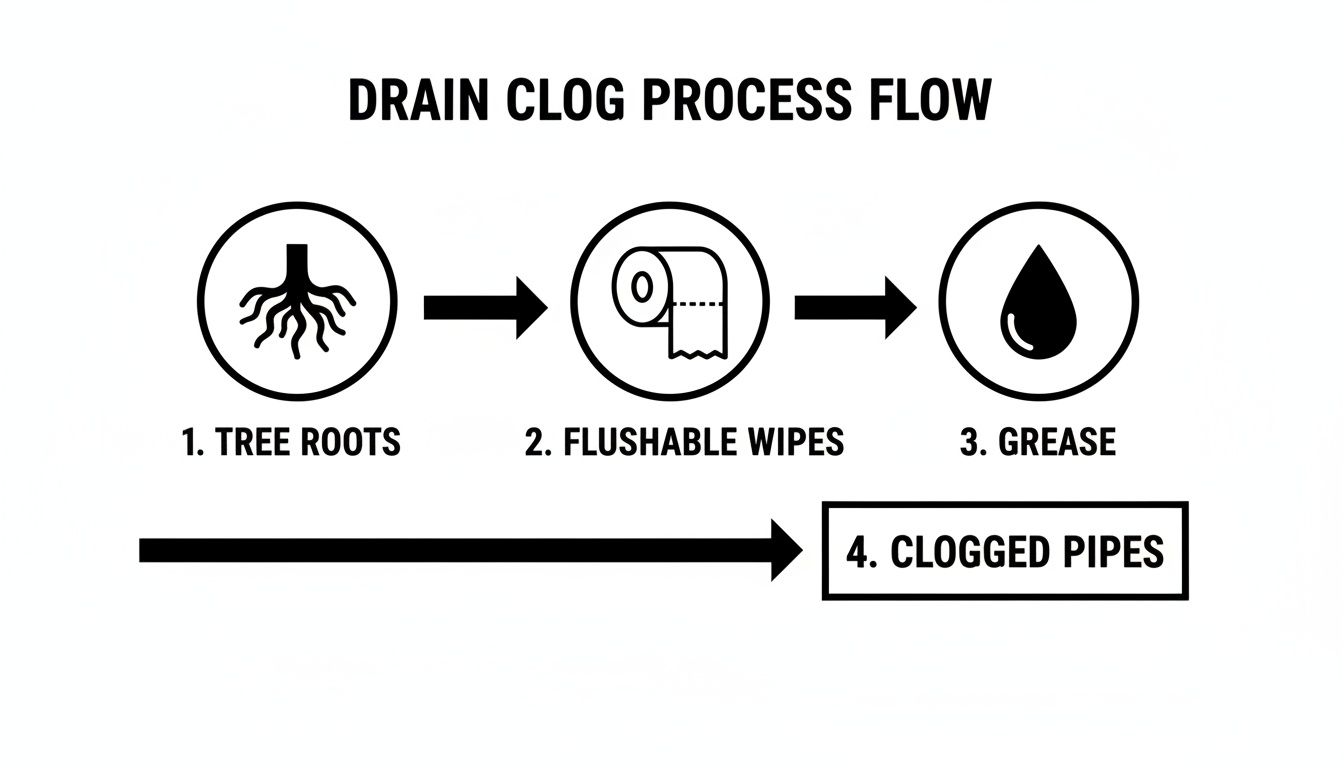
It’s a clear reminder that things like grease, wipes, and even tree roots are the usual suspects behind serious pipe blockages.
The Safer, Natural Alternative
Looking for a less hands-on approach? A simple mix of baking soda and vinegar can work wonders on the grease and soap buildup that causes slow drains. The natural chemical reaction creates a fizzing action that helps break down softer clogs without being corrosive to your pipes.
Here’s how to do it:
- First, pour about half a cup of baking soda straight down the drain.
- Follow it up with half a cup of white vinegar.
- Immediately plug the drain opening to trap the fizzing reaction below. Let it work its magic for at least an hour—overnight is even better for tougher jobs.
- To finish, flush it all out with a kettle full of hot (not boiling) water.
This is a far better choice than aggressive, store-bought chemical cleaners. But it’s important to be realistic about what DIY methods can achieve. An astonishing 90% of Melbourne households deal with at least one blocked drain every year, often caused by things that should never have been flushed. While a plunger is the go-to tool, it's only successful about 50% of the time. Worse, it can actually compact the blockage and worsen the problem in 25% of cases.
For comparison, a professional plumber with the right gear has a 95% first-visit clear rate.
Safety First: Always wear rubber gloves when you're working on a drain—you don't want to know what kind of bacteria is lurking in there. And critically, never mix different cleaning chemicals or methods. If one technique doesn't work, flush the drain thoroughly with plain water before you even think about trying something else.
Knowing When to Call a Professional Plumber
Look, DIY methods are fantastic for those simple, annoying clogs. But you've got to know when you’re out of your depth. Pushing a DIY fix too far can quickly turn a minor blockage into a cracked pipe or a serious water backup. That’s a whole new level of cost and mess.
Knowing the red flags is the key to protecting your home.
Some drain problems are just too complex for a plunger and a bit of elbow grease. Trying to tackle a major blockage without professional gear isn't just ineffective—it can be downright destructive. That’s when you need an expert who knows Melbourne’s eastern suburbs, from Balwyn to Doncaster, and has the right tools for the job. To find a plumber you can trust, look for local experts like a plumber in Camberwell.
Red Flags That Demand an Expert
If you spot any of these signs, it's time to put down the DIY tools and pick up the phone. These aren't just simple clogs; they're symptoms of a much bigger issue lurking in your plumbing system.
- Multiple Drains are Clogged at Once: Is your shower, toilet, and bathroom sink all draining slowly at the same time? That’s a classic sign the blockage isn't in the individual fixture but in your main sewer line.
- The Clog Keeps Coming Back: Did you clear a stubborn blockage last month, only for it to return with a vengeance? Recurring clogs almost always point to a deeper problem, like tree roots creeping into the pipes or a massive grease buildup that your drain snake just can't reach.
- Severe Water Backup: This is a big one. If flushing the toilet causes water to gurgle up into your shower or tub, you've got a serious blockage. The wastewater has nowhere to go and is being forced back up through the lowest point in your system. For more on this, our guide on how to handle a toilet clog fix has some immediate steps you can take.
- Foul Odours Won't Go Away: A persistent sewer gas smell hanging around your home, even after you've cleared a minor clog, often signals a major blockage or a ventilation problem in the main drain.
Trying to clear a main sewer line clog yourself is a recipe for disaster. Professional plumbers use high-tech gear like CCTV drain cameras to see exactly what’s going on down there, pinpointing the cause and location without any guesswork.
The Professional Toolkit
When you call in an expert, they don't show up with just a plunger. They arrive with a van full of advanced tools designed to sort out any clogged drain pipe, safely and effectively.
DIY vs Professional When Your Drain Is Clogged
Not sure whether to have a go yourself or call in the cavalry? This quick guide should help you decide.
| Symptom | Recommended Action | Why It Matters |
|---|---|---|
| One Slow-Draining Sink | DIY First: Try a plunger or baking soda and vinegar. | It's likely a simple, localised clog from hair or soap that you can easily dislodge. |
| Multiple Blocked Drains | Call a Professional: This points to a main sewer line blockage. | DIY methods won't reach the main line and can cause wastewater to back up into your home. |
| Recurring Clogs | Call a Professional: An expert can diagnose the root cause. | The clog is a symptom of a larger problem, like tree roots, pipe damage, or major build-up. |
| Water Backing Up in Showers | Emergency Call: Stop using water and call a plumber immediately. | This is a major blockage that poses an immediate risk of flooding and property damage. |
At the end of the day, knowing your limits protects your home and your wallet.
At Amari Plumbing, we use powerful hydro-jetters that can blast away years of grease and scale, leaving your pipes far cleaner than any store-bought drain snake ever could. And for tough jobs like tree roots, we have specialised cutting tools that get the job done right. We also specialise in commercial plumbing and can handle jobs of any scale.
Trusting a professional means you're not just getting a temporary fix; you're getting a lasting solution. If you're facing a stubborn blockage, it's time to contact us for a guaranteed fix.
A Permanent Fix for Recurring Blockages with Pipe Relining
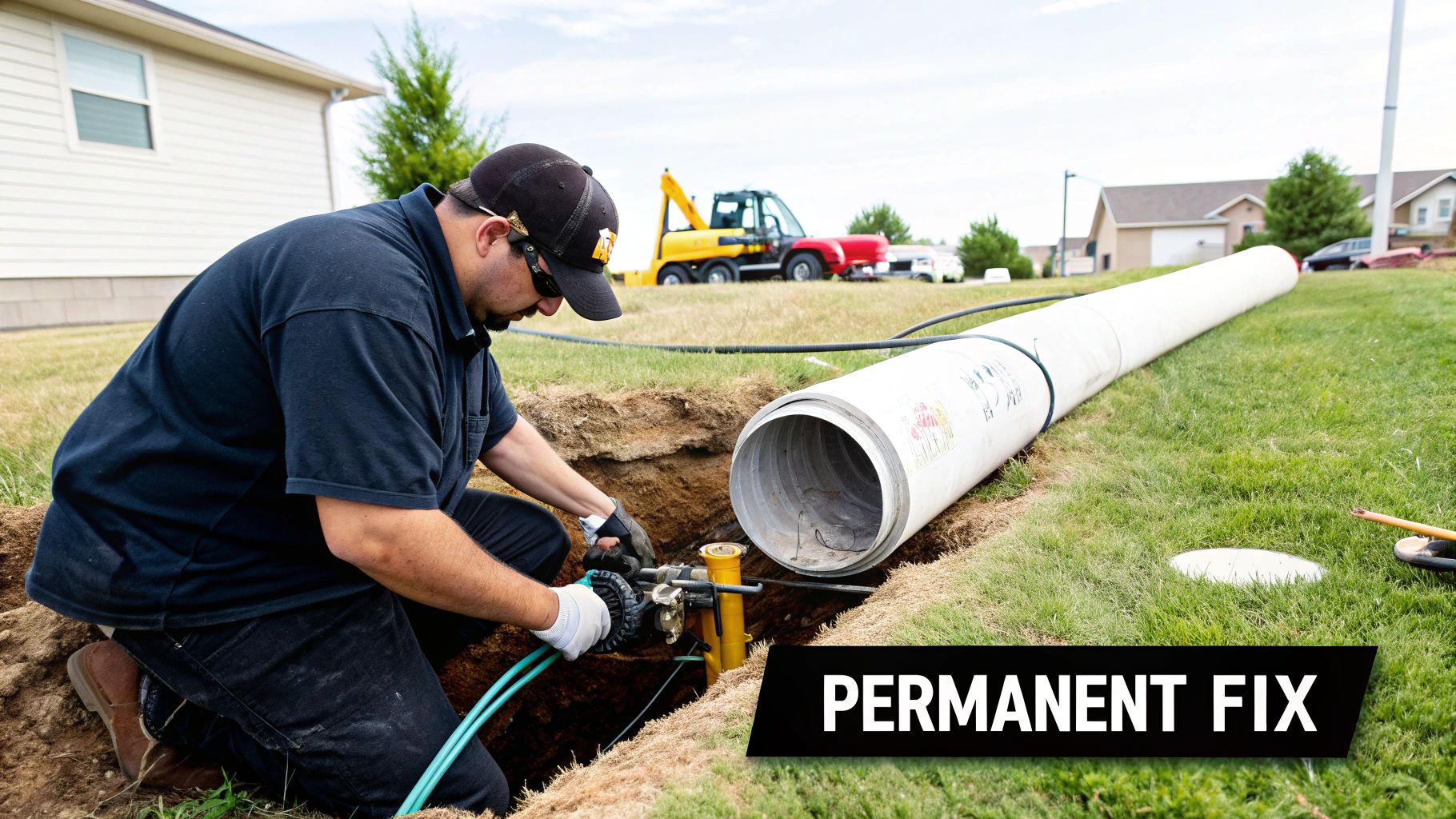
If you feel like you’re clearing the same stubborn drain every few months, you’re not just unlucky—it’s a sign of a much deeper problem.
Recurring blockages, especially those caused by sneaky tree roots or cracks in older pipes, will never be truly solved with a plunger or a drain snake. Those are just temporary patches for a persistent issue. To break the cycle for good, you need a permanent solution that gets to the source of the problem. This is where modern plumbing technology like sewer relining offers a far better alternative to digging up your whole yard.
The Modern 'No-Dig' Solution
For homeowners battling a constantly clogged drain pipe thanks to roots or structural damage, pipe relining is the definitive answer. This clever method essentially creates a brand-new, tough pipe directly inside the old, damaged one. The best part? There’s no need to dig up your garden, driveway, or patio.
It’s an absolute game-changer for properties in established Melbourne suburbs like Camberwell and Hawthorn that often have older, more fragile plumbing. Our expertise in pipe relining in Melbourne is second to none.
The process involves inserting a flexible liner soaked in a powerful epoxy resin into the existing pipe. Once it’s in place, we inflate it and let it cure, which hardens it into a seamless, joint-free pipe that’s often stronger than the original.
This new internal pipe is completely impenetrable to tree roots. It seals off all the old cracks and weak points, blocking the very entry points that roots use to get into your sewer line. It’s not just a repair; it’s a long-term upgrade for your entire plumbing system.
Long-Term Benefits of Pipe Relining
While the initial investment is more than a simple drain clearing, pipe relining saves you a huge amount of money and stress over time. Think of it as a one-off fix that prevents countless future emergency call-outs and messy clean-ups.
- Built to Last: The new pipe is corrosion-resistant and has a life expectancy of up to 50 years.
- Better Flow: The smooth inner surface of the relined pipe improves water flow and makes it harder for future build-up to stick.
- Zero Disruption: The entire process is done from above ground, protecting your landscaping and property from excavation damage.
If you're tired of temporary fixes, it’s time to consider a permanent solution. At Amari Plumbing, we are the local experts in pipe relining for Melbourne homes, offering a lasting fix for your most frustrating drain problems. Don’t let recurring blockages disrupt your life—get in touch to see how we can solve your drain issues for good.
Of course. Here is the rewritten section, crafted to sound like an experienced human expert and match the provided examples.
Got Questions About Blocked Drains? We've Got Answers
Even when you know the basics, a blocked drain can throw up a few tricky questions. We get calls about these all the time from homeowners across Melbourne, so I've put together some straight answers to the most common queries we hear.
How Much Does It Really Cost to Unblock a Drain in Melbourne?
This is the big one, and the honest answer is: it depends.
A simple clog in your kitchen sink that we can clear quickly will probably set you back between $90 and $250. But if we're dealing with a serious blockage in your main sewer line, that's a different story. This often requires serious gear like a CCTV camera inspection or a hydro-jetter, and you could be looking at a cost anywhere from $300 to over $800.
At Amari Plumbing, we're not fans of nasty surprises. That's why we give fixed, transparent pricing over the phone for standard jobs. You'll know the exact cost before we even pull into your driveway. No hidden fees, just honest work. Feel free to give us a buzz for a free estimate.
Are Those Chemical Drain Cleaners from the Supermarket Safe?
Short answer: we really don't recommend them.
It might seem like a cheap and easy fix, but pouring a bottle of harsh chemicals down your pipes can be a disaster waiting to happen. Those corrosive agents can eat away at older metal pipes, causing leaks that lead to far more expensive and disruptive repairs down the track. Plus, they're not great for the environment or your family's safety.
For a minor clog, try a simple mix of baking soda and vinegar first. It's a much safer bet. If that doesn't shift it, it's a sure sign you need a professional to clear the blockage properly without risking damage to your plumbing.
What's the Difference Between a Drain Snake and a Hydro Jetter?
It’s a bit like the difference between pulling a stubborn weed out by hand versus pressure-washing your entire driveway. Both have their place.
- A drain snake (or as we often call it, an electric eel) is essentially a long, flexible cable with a cutting head on the end. We feed it into the pipe to physically break up or pull out a solid obstruction, like a big clump of hair or a few small tree roots. It's great for targeting a specific, solid blockage.
- A hydro-jetter, on the other hand, is the ultimate clean-out tool. It blasts water at incredibly high pressure to scour the entire inside of your pipes. It strips away years of built-up grease, sludge, and scale, leaving them looking almost brand new inside. It's a far more thorough and longer-lasting solution.
We'll always figure out exactly what's causing your drain pipe to be clogged before deciding which tool is the right one for the job.
How Can I Stop Tree Roots from Blocking My Pipes for Good?
Ah, tree roots. A classic problem, especially in leafy suburbs like Balwyn and Doncaster. If you're constantly fighting this battle, the only truly permanent fix is pipe relining.
Pipe relining is a clever process where we create a brand-new, seamless pipe inside your old, damaged one. This tough new internal barrier completely seals off all the little cracks and joints that tree roots sneak into. It's not a temporary patch; it's a long-term upgrade for your plumbing system.
If you’re sick of dealing with roots, ask us about our permanent pipe relining solutions.
If you're staring down a stubborn blockage or just want some expert advice, the team at Amari Plumbing and Gasfitting is here to help. We offer reliable, expert service across Melbourne's eastern suburbs to get your plumbing flowing perfectly again. Don't let a clogged drain ruin your day—get in touch with us now for a fast, guaranteed solution.