

That uneasy moment when your latest water bill arrives can be the first clue something’s amiss below ground. Uncovering an underground leak starts with tuning into the quiet—and not-so-quiet—signals your garden and yard are sending. Spotting these hints early can stop a small drip turning into a major headache.
Recognising The Signs Of A Hidden Water Leak
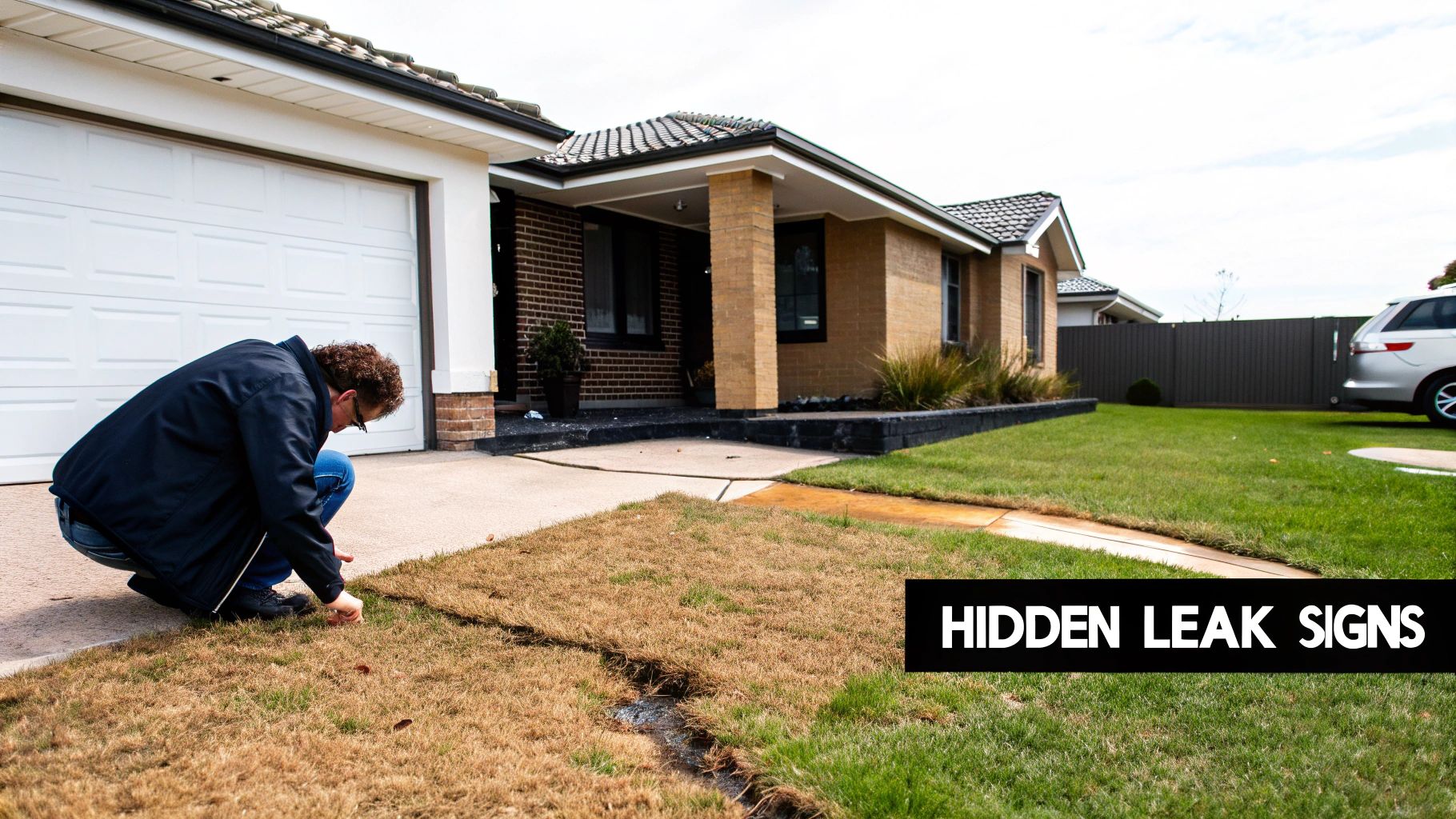
Before you grab a shovel, make sure you really have a leak to chase down. Some clues surface overnight; others build up over weeks. In my time servicing Melbourne’s eastern suburbs, from Balwyn to Camberwell, I’ve learnt that paying attention to even the smallest oddities can save thousands later on.
Unchecked leaks don’t just waste precious H₂O—they undercut the very soil that holds up driveways, foundations and fences. Here’s what to watch for.
Obvious Visual And Auditory Clues
These red flags hardly go unnoticed—especially if you spend weekends tending a lush lawn or tidy garden in Balwyn, Doncaster or surrounds.
-
Soggy Patches Or Lush Spots
Does one corner of your lawn look like it’s on steroids? Constant dampness or wildly lush grass often means water is pooling right beneath the surface, often a sign of blocked drains. -
Unexplained Puddles Or Running Water
No rain? No irrigation system? If water is dripping or forming puddles on paths and patios, a pressurised pipe could be the culprit. -
The Sound Of Running Water
Turn off every tap and appliance, then pause. A faint hissing or gurgling behind walls or underfloor could be your buried pipe talking back.
Subtle And Indirect Warning Signs
More discreet shifts can creep up on you, hiding the problem until significant damage has already started.
A typical fast leak or burst pipe can release a minimum of 5 litres per minute, which adds up to over 2.6 million litres of wasted water in a single year. These hidden leaks often go undetected until they cause serious surface damage.
Across Australia, utilities lose roughly $840 million annually to underground leaks. When you spot any of the following, it’s time to dig deeper:
-
Sudden Drop In Water Pressure
Showers that sputter or taps that trickle? Water might be escaping before it ever reaches your fixtures. -
New Cracks In Foundations Or Walls
Moist soil shifts and settles, placing stress on brickwork. Fresh fissures are a sure sign moisture is on the move. -
Shifting Pavers Or Uneven Ground
If footpaths or patios begin to slump or tilt, eroded soil beneath could be to blame.
Notice one or more of these issues? Don’t wait for collapse or saturation to get worse. Call in a specialist—whether you’re in Balwyn, Doncaster or beyond. For friendly local advice on confirming a leak and planning next steps, contact our team today.
Got a Hunch? Here's the Simple Water Meter Check to Prove It
Before you start digging up the garden or getting a professional on the phone, there’s a simple, zero-cost test you can do right now to confirm if you actually have a leak. This should always be your first move. Your water meter is the ultimate truth-teller for your property, and learning how it works is a game-changer.
First things first, you need to find it. In many Melbourne homes, particularly the older ones in the eastern suburbs, the meter is usually at the front of the property near the boundary fence. Look for a small plastic or metal lid set into the footpath or your garden bed.
How to Run the Test
Once you’ve found your meter, the test itself is dead simple. The idea is to stop all water use on your property, creating a closed system. If the meter still shows water flowing, you’ve got your proof.
-
Turn everything off. And I mean everything. This is the most important step. Go through the house and make sure every tap, shower, and water-using appliance is off. That includes the washing machine, dishwasher, and any garden irrigation. A good tip is to make sure all your toilets have finished refilling their cisterns before you start.
-
Take your first reading. Lift the meter cover and jot down the numbers you see on the dial. A lot of meters also have a small spinning wheel or a little triangle that moves when water is flowing – snap a quick photo with your phone or sketch its exact position.
-
Wait it out. Now, leave all the taps and appliances off for at least 30 to 60 minutes. If you can wait longer, even better. A longer wait time makes it easier to spot those really slow, sneaky leaks.
-
Check it again. Head back to the meter and compare the new reading with what you recorded earlier. If the numbers have climbed or that little dial has moved even a fraction, you’ve confirmed it: there’s a leak somewhere between the meter and your house.
This simple check gives you solid proof that you’ve got a problem on your hands. Knowing for sure that water is being wasted gives you the confidence to take the next step.
While this test confirms a leak exists, it won’t tell you where it is. Pinpointing the exact underground location often takes more advanced gear. For a bit more insight into the kind of tech the pros use, you can read up on professional water leak detectors.
Now that you know you have an issue, you can decide whether to investigate further yourself or call in an expert team who services areas like Balwyn or Doncaster to find and fix it for good.
How the Pros Pinpoint an Underground Leak
So, you’ve done the water meter test and confirmed what you suspected: there’s a leak somewhere underground. The big question now is, where exactly is it? You could start digging, but that’s a surefire way to turn your garden into a muddy mess and potentially hit the wrong pipe.
This is where calling in an expert really pays off. A professional plumber in Melbourne, especially one who knows the ins and outs of Melbourne's eastern suburbs, won't show up with just a shovel and a hunch. We use specialised, non-invasive gear to find the exact source of the problem without tearing up your property. It's all about working smarter, not harder.
This little flowchart breaks down the basic process for confirming you've actually got a leak before you pick up the phone.
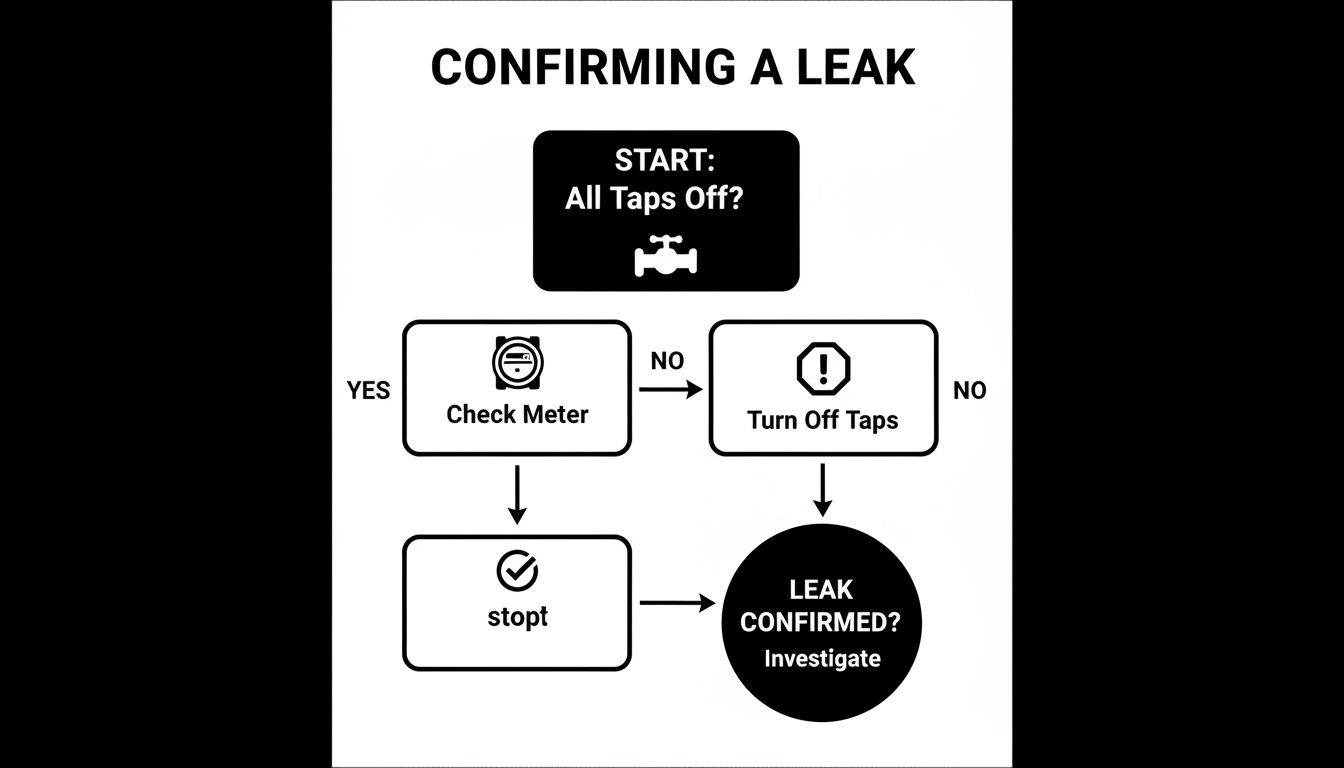
The bottom line is simple: once you're certain every tap is off, your water meter gives you the final, definitive answer. If that little dial is still spinning, you've got a leak.
The Tools of the Trade: How We Find Hidden Leaks
When a plumber arrives to find a hidden leak, they bring a toolkit that goes far beyond wrenches and cutters. We use advanced diagnostic equipment to "see" and "hear" what's happening underground, ensuring we only dig exactly where we need to.
This table gives you a quick rundown of the common technologies we use.
Comparing Professional Underground Leak Detection Methods
| Detection Method | How It Works | Best For | Key Advantage |
|---|---|---|---|
| Acoustic Listening | A highly sensitive ground microphone amplifies the distinct hissing or gurgling sound of water escaping a pressurised pipe. | Leaks under soft surfaces like lawns, gardens, and soil. | Quick and effective for locating leaks that produce audible noise. |
| Tracer Gas | The line is filled with a safe, non-toxic gas (hydrogen/nitrogen mix). A sensor detects where the gas escapes to the surface. | Very small leaks, leaks under concrete or pavement, or when acoustic methods are inconclusive. | Extremely precise, even for tiny or silent leaks. |
| Thermal Imaging | An infrared camera detects temperature differences in the ground. Leaking water cools the surrounding soil, creating a visible cold spot. | Leaks from hot water lines or when a large volume of water creates a clear thermal signature. | Completely non-invasive way to visualise the potential leak area. |
| Pressure Testing | A section of pipe is isolated and pressurised with air or water. A drop in pressure confirms a leak is present within that section. | Verifying the existence and severity of a leak within a specific pipeline. | Confirms a leak's presence before committing to more detailed location methods. |
Each tool has its place, and an experienced technician will often use a combination of methods to be absolutely certain before breaking ground.
A Closer Look at the Technology
Acoustic listening devices are often our first port of call. Think of them as a doctor's stethoscope, but for your plumbing. A skilled technician methodically scans the suspected area, listening intently. As they get closer to the leak, that tell-tale hissing sound gets louder, allowing them to mark the ground with an 'X' for a precise excavation.
For those really stubborn leaks that are too small to make a noise, we bring out the tracer gas. We'll safely drain the water from the pipe and replace it with a harmless gas mixture. Because the gas is lighter than air, it works its way up through the soil, concrete, or paving right above the break. Our specialised sensor then "sniffs" it out, pinpointing the leak's location with incredible accuracy. This is a common practice for gasfitting in Melbourne.
"Modern leak detection isn't about digging bigger holes; it's about smarter diagnostics. By using technology to map the problem first, we can resolve the issue with minimal disruption, often in a single visit."
We also use thermal imaging cameras to spot temperature anomalies. Water escaping a pipe—especially a hot water line—changes the temperature of the ground around it. The camera sees this as a distinct cold or warm patch, giving us another valuable clue.
Finally, pressure testing is how we confirm our suspicions. By sealing off a section of pipe and pumping it with air or water, we can watch the pressure gauge. If it drops, we know for a fact there's a leak in that line. This systematic approach is the foundation of professional water leak detection in Melbourne. It eliminates guesswork and ensures we get the job done right the first time.
When You Need to Call an Emergency Plumber
Knowing when to hang up your detective hat and call in a professional is the key to protecting your property. Sure, the water meter test tells you there’s a leak, but it doesn’t tell you the most critical piece of the puzzle: where it is.
And let's be honest, grabbing a shovel and digging randomly is a gamble. You could very easily turn a small, contained problem into a sprawling, expensive mess across your whole yard.
Clear Signs It's Time for a Professional
If your meter is spinning but you can’t see any obvious soggy patches or puddles, that’s your first major clue. The leak is likely deep underground or tucked away in a spot you just can't get to.
Here are a few scenarios where you should absolutely pick up the phone:
- The Leak is Under Concrete: If you have a sneaky suspicion the leak is hiding under your driveway, concrete slab, or paved patio, specialist gear is the only way forward. Without it, you're just guessing and breaking up perfectly good concrete for nothing.
- Proximity to Other Utilities: This is a big one. Digging anywhere near gas, electrical, or data lines is incredibly dangerous. We’re trained to locate and work around these safely—it’s not worth the risk of going it alone.
- The Problem is Inside: Hear water running in your walls? Noticing damp spots on the floorboards? That leak could be doing serious damage to your home's frame.
- You See Foundation Cracks: If new cracks are suddenly appearing in your home’s foundation, it's a massive red flag. Escaping water can erode the soil supporting your house, leading to serious structural issues.
In these situations, the potential for causing more damage far outweighs any savings from a DIY attempt. One wrong move with a shovel can turn a simple pipe repair into a major crisis.
The Risks of Waiting or Guessing
Ignoring a leak or trying to excavate it yourself can have some pretty severe consequences. Water damage from burst water pipes doesn't just waste water; it destabilises the ground. Over time, that can lead to sinking pavers, cracked retaining walls, and even foundation failure.
Modern solutions like pipe relining can often fix these issues without needing to dig up your entire garden—a technique professionals rely on to save time and mess.
This just shows why getting an expert diagnosis from emergency plumbers in Melbourne is so important. We can find the most cost-effective and least disruptive solution for your specific problem.
For homeowners in Balwyn, Doncaster, and across Melbourne's eastern suburbs, this is the moment to call on a trusted emergency plumber. Quick action is what stops a manageable issue from turning into an expensive catastrophe.
Don't let a hidden leak put your biggest asset at risk. If you've confirmed there’s a problem but can't pinpoint the source, or if you suspect it's in a critical spot, it's time to make the call. An emergency plumber has the technology to find the exact location, saving you time, money, and a whole lot of unnecessary damage.
So You’ve Found the Leak. What's Next?
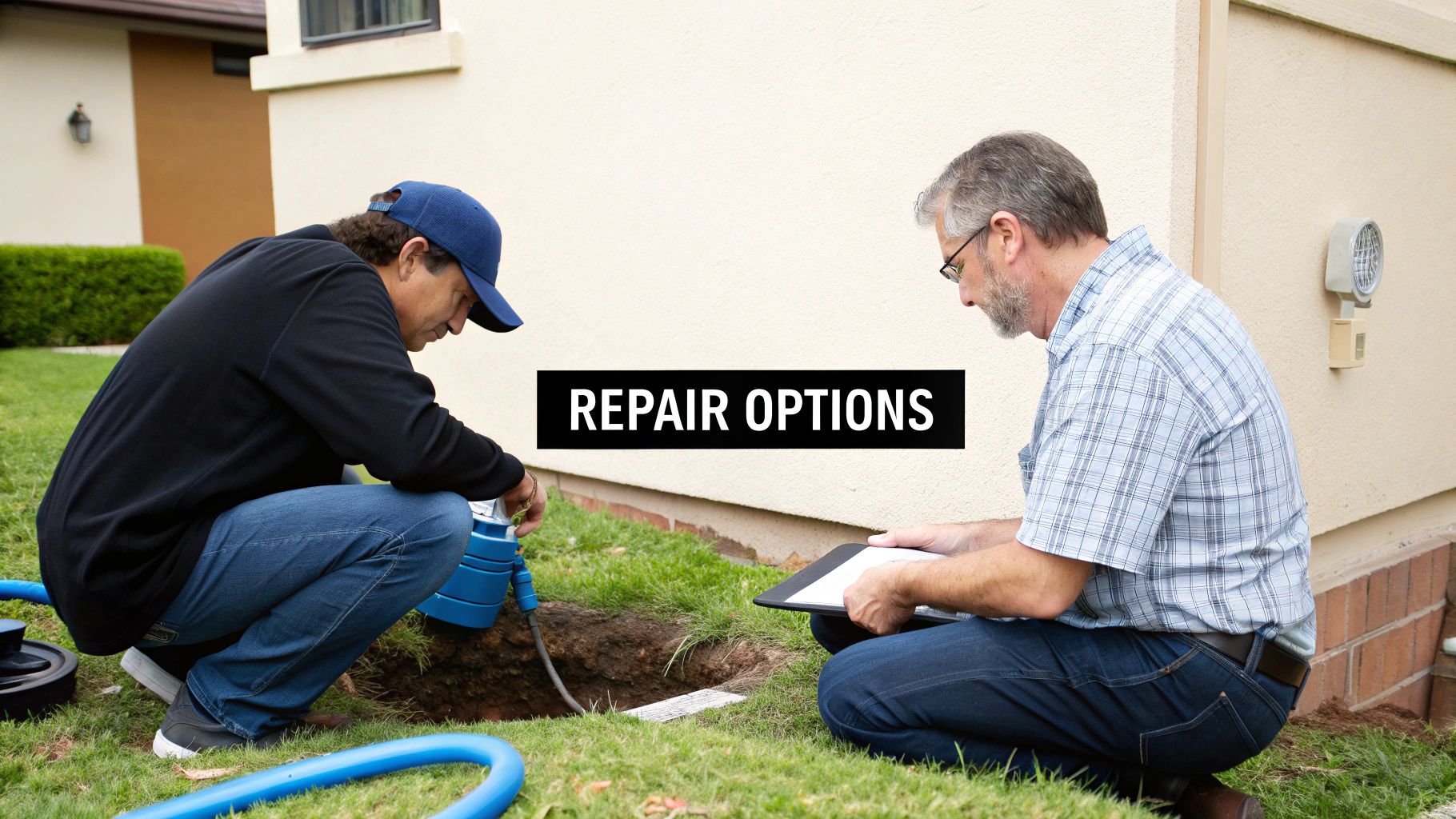
Okay, so the detective work is done and you know exactly where that pesky underground leak is hiding. Now the real work begins. This is where a professional plumber will step in, talk you through the repair process, and make sure you’re completely in the loop. No mysteries, just a straightforward plan to get things fixed with as little fuss as possible.
We’ll start by physically marking the spot on the ground right above the damaged pipe. Then, we'll have a proper chat about the best way to get to it. This conversation is key – it's all about balancing the most effective repair with the least amount of disruption to your property.
Choosing the Right Way to Fix It
Traditionally, fixing a pipe buried underground meant one thing: digging. A lot of digging. While sometimes the old "dig and replace" method is unavoidable, it can absolutely wreck your lawn, garden beds, or driveway, leaving you with a whole new set of restoration costs.
Thankfully, we have much smarter, less invasive options these days. For many situations, especially with damaged sewer or stormwater pipes, sewer relining is a game-changer. It's a trenchless technology that basically creates a brand-new, super-tough pipe inside your old one, all without digging up your yard.
- How it Works: We insert a flexible liner saturated in a special resin into the damaged pipe and inflate it. The resin then cures hard, forming a seamless and structural new pipe that’s often even stronger than the original.
- The Big Wins: This technique saves your landscaping, driveway, and precious garden features. It’s also much faster and can be more cost-effective once you factor in what you're saving on replanting that prize-winning rose bush.
For anyone living in established suburbs like Kew or Hawthorn, where beautiful, mature gardens are the norm, services like pipe relining in Melbourne offer a brilliant alternative to destructive excavation.
Making Sure the Job Is Truly Done
Fixing the pipe isn't the final step. The last, and most critical, part of the job is testing the repair to make sure it's perfect. We’ll run another pressure test or send a CCTV camera back down the line to confirm the fix is 100% secure and sealed tight.
A good repair isn't just one that's fixed—it's one that's verified. This final check gives you total peace of mind that there are no other hidden surprises and your plumbing is back to working exactly as it should.
This verification is our professional guarantee to you. It's how you know that your underground leak is officially a problem of the past.
If you’ve tracked down a leak and need an expert to handle the next steps, give us a shout. Contact us for a clear repair plan and service you can count on.
Your Questions About Underground Leaks, Answered
Got a nagging question about a hidden water leak? You’re not alone. Here are some quick, no-nonsense answers to the most common queries we get from homeowners across Melbourne. This is the essential info you need to make the right call for your property.
How Much Does It Cost to Pinpoint an Underground Leak?
This is the big one, and the honest answer is: it depends. The cost really hinges on how tricky the leak is to find. A simple job might only take an hour or two. But if you've got a stubborn leak hiding under a concrete driveway in a suburb like Balwyn, that’s a different story and will naturally take longer.
Most professional plumbers will have a call-out fee and then an hourly rate for the detection work itself. The best advice? Always ask for an estimate upfront so there are no nasty surprises.
Can I Just Dig Where I See a Wet Spot?
It’s tempting, I know. You see a soggy patch on the lawn and think, "Aha! Got it." But hold on before you grab the shovel. While a damp area is a massive clue, it’s rarely the exact spot of the leak.
Water is sneaky. It can travel a fair way underground before it finally decides to pop up to the surface, especially if your property is on a slope. Digging based on a wet spot alone often leads to a series of unnecessary holes and a much bigger mess. We use specialised gear to confirm the precise location before even thinking about breaking ground.
How Long Does This Whole Leak Detection Thing Take?
For a pretty straightforward leak under your lawn, a skilled plumber can usually pinpoint it within 1-2 hours. It's often quicker than people think.
But for more complex situations—like leaks buried under concrete slabs or tucked away in awkward spots—it could take several hours. Things like how deep the pipe is, the type of soil you have, and even background noise from a busy road can all add time to the job.
The thing to remember is this: investing a few hours in precise, non-invasive detection is always better than spending days (and thousands of dollars) on random digging and restoration work. It's all about finding the problem with accuracy, not just speed.
Are My Pipes Covered by Insurance?
This is a critical question, and the answer is buried in the fine print of your home insurance policy. Generally speaking, many policies will cover the damage caused by a sudden, unexpected leak (like ruined floors or foundation issues), but they don't always cover the cost of actually repairing the faulty pipe itself.
It's vital that you check your policy for a couple of key clauses:
- Trace and Access: This is the part that covers the cost of finding the leak. Not all policies have it.
- Escape of Liquid: This clause deals with the resulting damage from the leak.
- Age and Maintenance Exclusions: Some insurers are sticky about this. They might not cover damage from pipes they consider old or poorly maintained.
Your first move should always be to contact your insurer as soon as you suspect a leak to get clear on your coverage. This is especially important for anyone in areas like Doncaster, where you find a real mix of older and newer properties with all sorts of different plumbing systems.
If you’re staring at a soggy lawn or a climbing water bill and suspect an underground leak, don't wait for it to get worse. The expert team at Amari Plumbing and Gasfitting uses the latest acoustic and thermal gear to find and fix leaks with minimal disruption to your home and garden. For a clear diagnosis and an upfront quote, get in touch with us today.