

That gurgling toilet or slow-draining sink isn't just a minor hassle—it’s your plumbing system’s way of sending up a flare. It's a heads-up that a blocked drain plumbing problem is starting to take hold somewhere down the line. For most of us here in Melbourne, these headaches are caused by a mix of everyday habits and local environmental factors.
Figuring out what’s really causing the blockage is the crucial first step to fixing it for good. As a leading plumber in Melbourne, Amari Plumbing and Gasfitting has seen it all, and we're here to help you understand your drains.
Common Causes of Blocked Drains in Melbourne Homes
A seriously blocked drain rarely just appears out of nowhere. It's almost always the result of a slow, steady buildup over weeks, months, or even years. What starts as water taking a bit longer to drain can quickly turn into a full-blown plumbing emergency if you ignore the root cause.
It might surprise you just how common this is. Blocked drains are one of the biggest plumbing nightmares for Aussie homeowners. In fact, plumbers spend a massive 75% of their working hours just dealing with blocked drains. That single statistic shows you this isn't a rare problem—it affects everyone from those in Hawthorn apartments to families in larger homes in Balwyn. Our team, a trusted plumber Balwyn residents rely on, can attest to this.
The Everyday Culprits Inside Your Home
Most blockages start with the seemingly harmless things we send down our drains every single day. They might seem small, but over time, they build up into some seriously stubborn clogs.
- Grease, Fats, and Oils: When you rinse that greasy pan in the kitchen sink, the hot fat and oil might look liquid, but it cools and turns solid inside your pipes. This sticky gunk acts like glue, grabbing onto food scraps, coffee grounds, and anything else that flows past.
- Hair and Soap Scum: The bathroom is a classic trouble spot. Hair is the main offender, tangling up with soap scum and conditioner to form thick, dense clumps that just love to choke up shower and basin drains.
- Food Waste: Even if you have a garbage disposal, some foods should never go down the sink. Things like rice, pasta, and stringy veggies can swell up with water or wrap themselves around the blades, creating a major blockage.
To really grasp the scale of the problem, you need to understand what are fatbergs and why they matter. These are huge, solid masses of congealed fat, wet wipes, and other waste that can block entire city sewer systems.
Identifying Your Drain Blockage Symptoms
Not sure what’s causing your specific issue? A few tell-tale signs can point you in the right direction. Here’s a quick guide to help Melbourne residents decode what their drains are trying to tell them.
| Symptom | Likely Culprit | Affected Area |
|---|---|---|
| Slow draining sink, foul smells | Grease, fats, oil, and food scraps | Kitchen Sink |
| Water pooling around your feet in shower | Hair and soap scum build-up | Shower or Bathtub |
| Toilet gurgles when you use the sink | A deeper blockage in the main sewer line | Multiple Fixtures, Main Sewer Line |
| Water backs up in multiple drains | Tree roots or a significant main line obstruction | Main Sewer Line, Outdoor Pipes |
| Unpleasant odours from outdoor drains | Debris, leaves, and dirt accumulation | Stormwater Drains, Outdoor Grates |
This table is a great starting point, but remember that some symptoms can overlap. If you’re seeing issues across multiple drains, it often points to a more serious problem further down the line.
External and Environmental Threats
Sometimes, the real problem is lurking outside your four walls. Melbourne's gorgeous, leafy suburbs, while beautiful, can pose a unique threat to your home’s plumbing.
Tree roots are hardwired to seek out water and nutrients, and your sewer pipes are the perfect source. They can force their way into the tiniest cracks or joints in your pipes, growing into a thick, tangled web that traps waste and can eventually crush the pipe itself. This is a particularly common headache for homeowners in established suburbs like Kew and Camberwell, where beautiful old trees and ageing clay pipes are part of the landscape. As your local plumber Kew specialists, we see this issue frequently.
A professional plumber in Melbourne has the right tools to find and fix these complex issues properly. If you're dealing with a stubborn blockage that just won't quit, don't hesitate to contact us for an expert opinion.
Alright, when you first spot the tell-tale signs of a blockage – a slow-draining sink or that awful gurgling sound from the shower – the immediate reaction is often to panic. But hold off on calling a plumber near me just yet. For many minor blockages, a few simple and surprisingly effective DIY methods can get things flowing again.
These first-response techniques are often enough to tackle the problem before it gets any worse.
One of the easiest and most effective things to try is a bit of boiling water. This works a treat on kitchen sinks where grease, oils, and fat build-up are usually the prime suspects. Just pour a full kettle of boiling water straight down the drain. This can often melt and flush away all that sticky gunk, clearing the path.
Simple Tools and Household Remedies
For bathroom clogs, where hair is the common enemy, you don't need any fancy gear. A simple bent wire coat hanger can work wonders as a makeshift plumbing snake. Carefully feed it down the drain, give it a bit of a jiggle, and you can often hook and pull out that nasty tangled mess of hair and soap scum.
Another classic is the old baking soda and vinegar combo. It’s a powerful, non-corrosive alternative to harsh chemicals. The fizzing reaction it creates is fantastic for breaking down organic matter and dislodging minor clogs.
- First, pour about half a cup of baking soda down the drain.
- Follow it up with half a cup of white vinegar.
- Quickly pop the plug in or cover the drain opening. You want to trap that fizzing reaction inside the pipe to do its work.
- Let it sit for at least 15-30 minutes, then flush it all out with plenty of hot water.
This chart is a great way to figure out what's likely causing your specific problem.
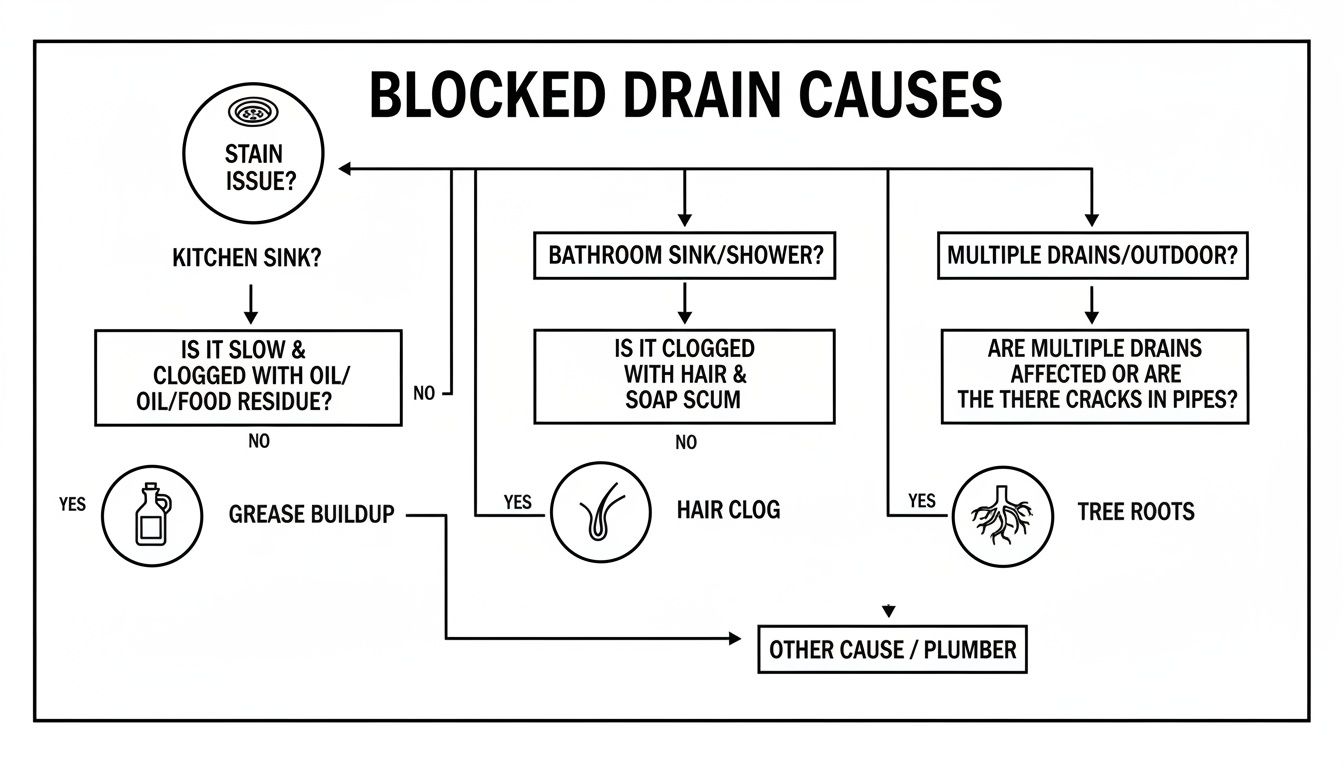
As you can see, the location of the clog gives you a massive clue about the cause – whether it's grease in the kitchen, hair in the bathroom, or tree roots in your outdoor pipes. If you're dealing with a stubborn shower, you might find our specific guide on how to unblock a shower drain pipe really helpful.
What You Must Avoid
While it's great to have a go yourself, there's one popular "solution" you should steer clear of: harsh chemical drain cleaners. These products might seem like a quick fix, but the potent acids they use to dissolve clogs can also eat away at your pipes. This is especially risky in the older homes dotted across Melbourne's eastern suburbs.
The real danger with chemical cleaners is that the damage isn't always obvious straight away. Over time, they can weaken pipe walls and joints, turning a simple clog into a much more expensive leak or even a burst pipe. Sticking to gentler, mechanical, or natural methods is always the safer bet for your home's blocked drain plumbing.
If these DIY tricks don't cut it, or if the problem keeps coming back, it’s a clear sign you’re dealing with something more serious. That's your cue to stop and call in a professional to avoid causing any more damage.
When to Call a Professional Plumber
DIY fixes can be great for a simple clog, but it's vital to know when you're out of your depth. Some blocked drains aren't just a nuisance; they're waving a big red flag that there's a serious underlying issue your homemade solutions just can't touch.
Spotting these signs early is the key to stopping a minor problem from spiralling into a full-blown, expensive plumbing catastrophe.
Ignoring the warning signs of a major blockage can lead to serious water damage, which is a much bigger headache than a slow-draining sink. Clogged drains don't just mess with your daily routine—they can threaten your home's structure. In fact, blocked drains were behind 13.4% of all water damage claims across Australia in 2021. That number really hits home in rental-heavy areas like the Melbourne metro.
Critical Warning Signs You Cannot Ignore
If you're dealing with any of the following, it's time to put down the plunger and pick up the phone. These aren't just signs of a simple clog; they point to a deeper problem within your blocked drain plumbing system. When you need to find a plumber you can trust, these are the signs that it's time to call Amari Plumbing.
- Recurring Blockages: You clear a clog, and things seem fine… for a few days. Then it's back again. This frustrating cycle means your DIY efforts are just a band-aid, not a cure. The real problem is likely a bigger obstruction further down the pipe.
- Multiple Fixtures Draining Slowly: Is your shower, bathroom sink, and toilet all struggling at the same time? This is the classic signature of a blockage in your main sewer line. No amount of baking soda and vinegar is going to sort that out.
- Strange Noises: Hearing gurgling sounds from the toilet when the washing machine is on, or from your sink when the shower is running? That's not normal. Those noises mean air is getting trapped by a significant blockage and is fighting to escape.
- Foul, Persistent Odours: A constant sewage smell wafting up from your drains that cleaning just won't shift is a major red flag. It usually means waste is trapped and decomposing somewhere in your system because it can't flow away properly.
The Dangers Lurking Beneath
These symptoms often point to serious issues that need an expert eye and specialised equipment. For instance, a recurring blockage in an established Melbourne suburb like a plumber in Hawthorn might encounter, could easily be caused by tree roots working their way into older clay pipes.
Ignoring these signs is a gamble with your property. A blocked sewer main can lead to raw sewage backing up into your home through showers, toilets, and floor drains—an unsanitary, distressing, and expensive disaster to clean up.
Likewise, that persistent gurgling and multiple slow drains might mean you've got a partially collapsed pipe. Calling a professional plumber isn't an overreaction; it's a smart, preventative move. An expert from Amari Plumbing can use CCTV camera technology to get a clear look inside your pipes, pinpoint the exact cause, and deliver a solution that lasts.
For those situations that just can't wait, our guide to understanding after-hours plumbing services can be a real lifesaver.
When you're faced with these serious warning signs, don't put it off. Contact us straight away for an expert assessment.
A Look Inside Professional Drain Cleaning Services
When you’ve tried everything and that drain still won’t budge, it’s time to call in the professionals. Professional blocked drain plumbing isn't about using a bigger plunger; it's about deploying some seriously smart technology and proven techniques to sort the problem out for good.
Let's pull back the curtain on what really happens when a pro turns up at your door. The first thing we do is diagnose the problem properly. No guesswork, just facts.
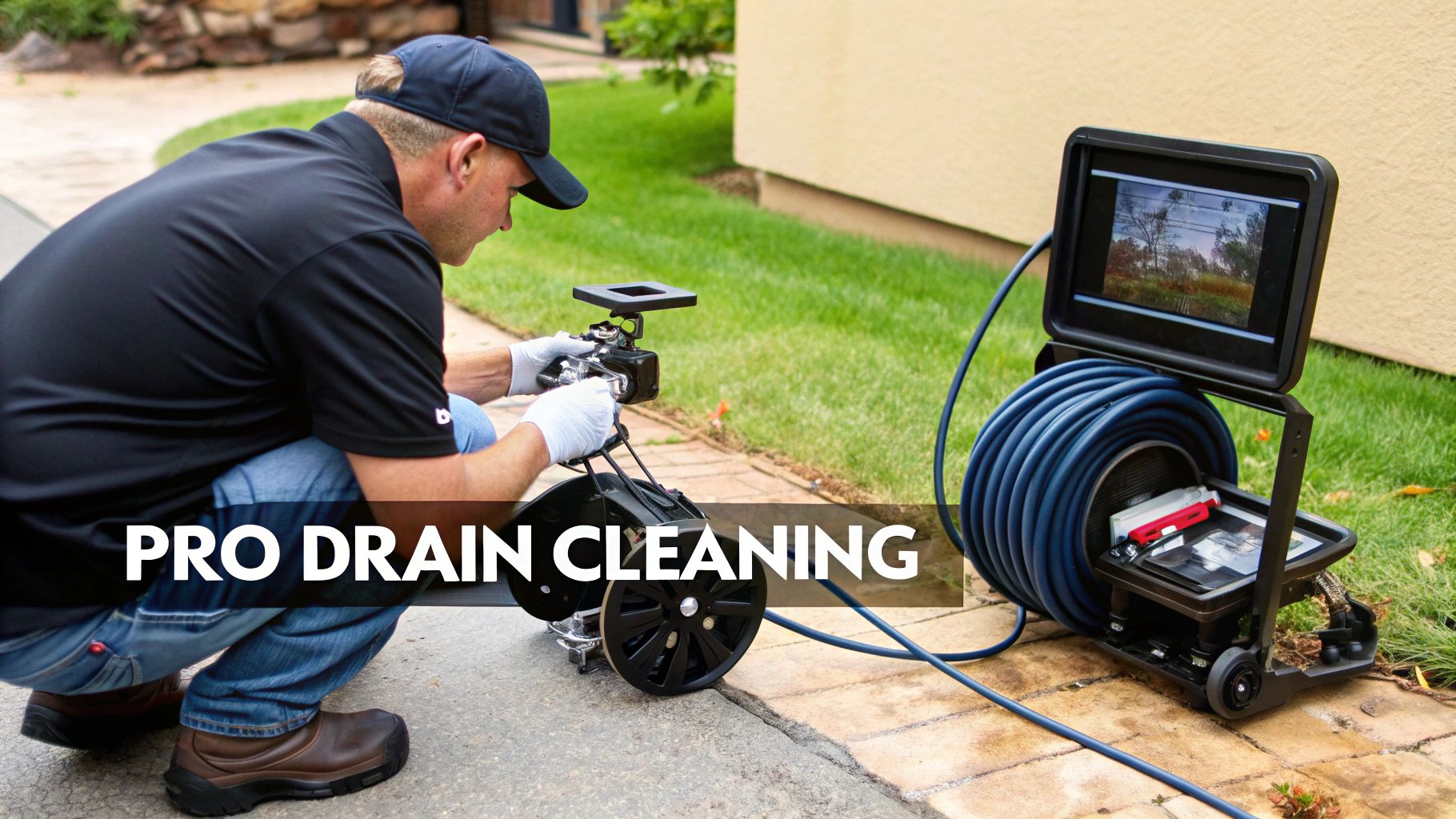
Seeing is Believing with CCTV Drain Cameras
One of the best tools we have is the CCTV drain camera. Think of it as keyhole surgery for your pipes. We feed a small, high-definition camera on a flexible cable right into your drain, giving us a live video feed of what's going on down there.
This bit of tech is a game-changer. It lets us see the exact cause and location of the blockage, whether it's a massive build-up of grease, stubborn tree roots that have snuck in, or even a cracked or collapsed pipe. No more digging up your garden on a hunch.
A proper diagnosis with a CCTV camera is the difference between treating a symptom and curing the disease. It ensures the solution we propose is the right one for your specific problem, saving you time and money on ineffective fixes.
The Power of High-Pressure Hydro-Jetting
Once we know what we're dealing with, we bring out the big guns. For those really nasty, stubborn blockages, hydro-jet drain cleaning is often our go-to solution.
This isn't just a blast of water; it’s a highly pressurised stream that literally scours the inside of your pipes. It obliterates years of grease, sludge, scale, and even slices through tree roots. The best part? It cleans the pipe walls so thoroughly that it returns them to a near-new condition, all without using harsh chemicals that can cause damage over time.
Long-Term Solutions with Pipe Relining
Sometimes, the camera inspection shows us the problem isn't just a blockage—the pipe itself is damaged. In the old days, that meant digging up your lawn or driveway to replace the broken section. A huge, messy, and expensive job.
Thankfully, we now have a much smarter alternative: trenchless pipe relining. It's a clever way to repair a pipe from the inside out. We insert a flexible liner saturated in a special resin into the damaged pipe. Once it's in place, we inflate it, and the resin cures to form a brand new, super-strong pipe inside the old one. This technique of sewer relining is a core part of modern plumbing.
It’s faster, cleaner, and often cheaper than digging everything up. If you want to know more about this modern fix, check out our pipe relining solutions in Melbourne.
Proactive Tips to Keep Your Drains Flowing Freely
Let’s be honest, the best way to fix a major blocked drain plumbing nightmare is to stop it from ever happening. Shifting from a reactive panic to proactive prevention will save you a world of stress, mess, and money down the track.
It all boils down to a few simple, consistent habits. Think of it as routine maintenance for your home’s arteries. If you’re mindful of what’s going down the sink or shower, you can stop common culprits like grease, hair, and food scraps from building up in the first place.
Simple Habits for Healthy Drains
You don't need to overhaul your life to keep your drains happy. These are just small, smart adjustments to your daily routine that really pay off.
- Get a Drain Strainer: This is your number one defence. A simple mesh strainer in your kitchen sink and shower drain is an absolute game-changer. These cheap and cheerful gadgets catch all the gunk before it has a chance to disappear into your plumbing.
- Be Ruthless with Grease: Never, ever pour cooking fats, oils, or grease down the sink. Get into the habit of pouring it into an old jar or container. Once it's solid, you can just chuck the whole thing in the bin. For greasy pans, give them a quick wipe with a paper towel before washing.
- Weekly Hot Water Flush: Once a week, boil the kettle and pour it straight down the kitchen sink. It’s a super simple trick that helps melt and wash away any greasy residue that’s starting to build up.
The Hidden Danger in New or Renovated Homes
While your daily habits are crucial, there’s another, more sinister cause of blockages that catches a lot of homeowners by surprise: building debris. If you've recently moved into a new home or just finished a big renovation, your shiny new pipes could be hiding a serious problem. Our commercial plumbing team often deals with these issues on new sites.
Unfortunately, it’s all too common for construction materials to be carelessly washed down drains. In fact, builders' debris is a notorious saboteur in Australia's new builds. A shocking case in Melbourne back in 2018 saw an entire apartment block of 100 units suffer from massive drain failures because builders had dumped grout, cement, and oils down the pipes. This mistake cost the developers thousands in rectification works. You can read the full story of how builders' debris blocks drains on jabplumbingsolutions.com.au.
If you’re in a newer property and dealing with stubborn drainage issues that don't make sense, construction debris is a very real possibility. The only way to know for sure is to get a professional CCTV drain inspection.
By adopting these preventative tips and being aware of the less-obvious risks, you can dramatically cut down your chances of facing a messy and expensive blockage. If you think you might have a deeper issue or just want peace of mind with a preventative inspection, don't hesitate to contact us.
Answering Your Melbourne Blocked Drain Questions
Even when you’re on top of maintenance, questions about blocked drains are bound to crop up. We’ve pulled together some of the most common queries we get from folks across Melbourne's eastern suburbs, from a plumber in Camberwell to a client in Balwyn North, to give you some clear, no-nonsense answers.
What’s This Going to Cost? Blocked Drain Plumbing Prices
This is always the first question, and the honest answer is: it really depends. A simple clog in a kitchen sink that we can knock over with basic tools is usually a straightforward, fixed-rate job.
But, the price will naturally go up if the problem is deeper and needs specialised gear for a full blocked drain plumbing solution.
A few things influence the final cost:
- Where the clog is and how bad it is: A blockage in your main sewer line is a much bigger deal than a bit of hair in the shower drain.
- The tools needed for the job: If we need to get a CCTV camera in there for a look or bring out the high-pressure hydro-jet, it’ll cost more than a simple manual fix.
- What’s actually causing it: Clearing a simple grease blockage is one thing; cutting out invasive tree roots or repairing a collapsed pipe with sewer relining is another entirely.
Here at Amari Plumbing, we give you a fixed price over the phone for common jobs, so you know exactly what you’re up for before we even start. No surprises.
Is This a Real Plumbing Emergency?
Not every blockage is a five-alarm fire, but some situations are absolutely critical and need immediate attention to prevent serious damage to your property.
You need to call emergency plumbers in Melbourne, and fast, if you’re seeing:
- Sewage Backflow: If wastewater is coming back up your drains, toilets, or showers, stop what you’re doing and call. This is a serious health hazard.
- Multiple Blocked Fixtures: When your toilet, shower, and sinks all stop draining at once, it’s a massive red flag for a major problem in your main sewer line.
- Any Risk of Flooding: If a blockage is causing water to spill out and flood any part of your home, it’s an undeniable emergency.
Who Pays for a Blocked Drain in a Rental?
In Melbourne and right across Victoria, who foots the bill usually comes down to what caused the blockage in the first place.
As a general rule, if the blockage is caused by something the tenant has done—like flushing wet wipes or pouring fat down the sink—then the tenant is usually responsible for the repair costs. If the blockage is due to a bigger issue like tree roots, old pipes, or a fault in the main line, it’s on the landlord to fix it.
If you’re a tenant in suburbs like Doncaster or Kew, it's so important to let your property manager know about any drainage issues straight away. Reporting it immediately helps you avoid being held liable for any further damage caused by the delay and gets the right person on the job quickly. Our services extend throughout the eastern suburbs, whether you need a plumber in Balwyn North or a plumber in Bulleen.
For a professional eye on any blocked drain plumbing issue, big or small, you can count on the expert team at Amari Plumbing and Gasfitting. As leading Melbourne plumbers, we offer transparent pricing and solutions that last, from general plumbing and gasfitting in Melbourne to emergency repairs. Contact us today for a free phone estimate.